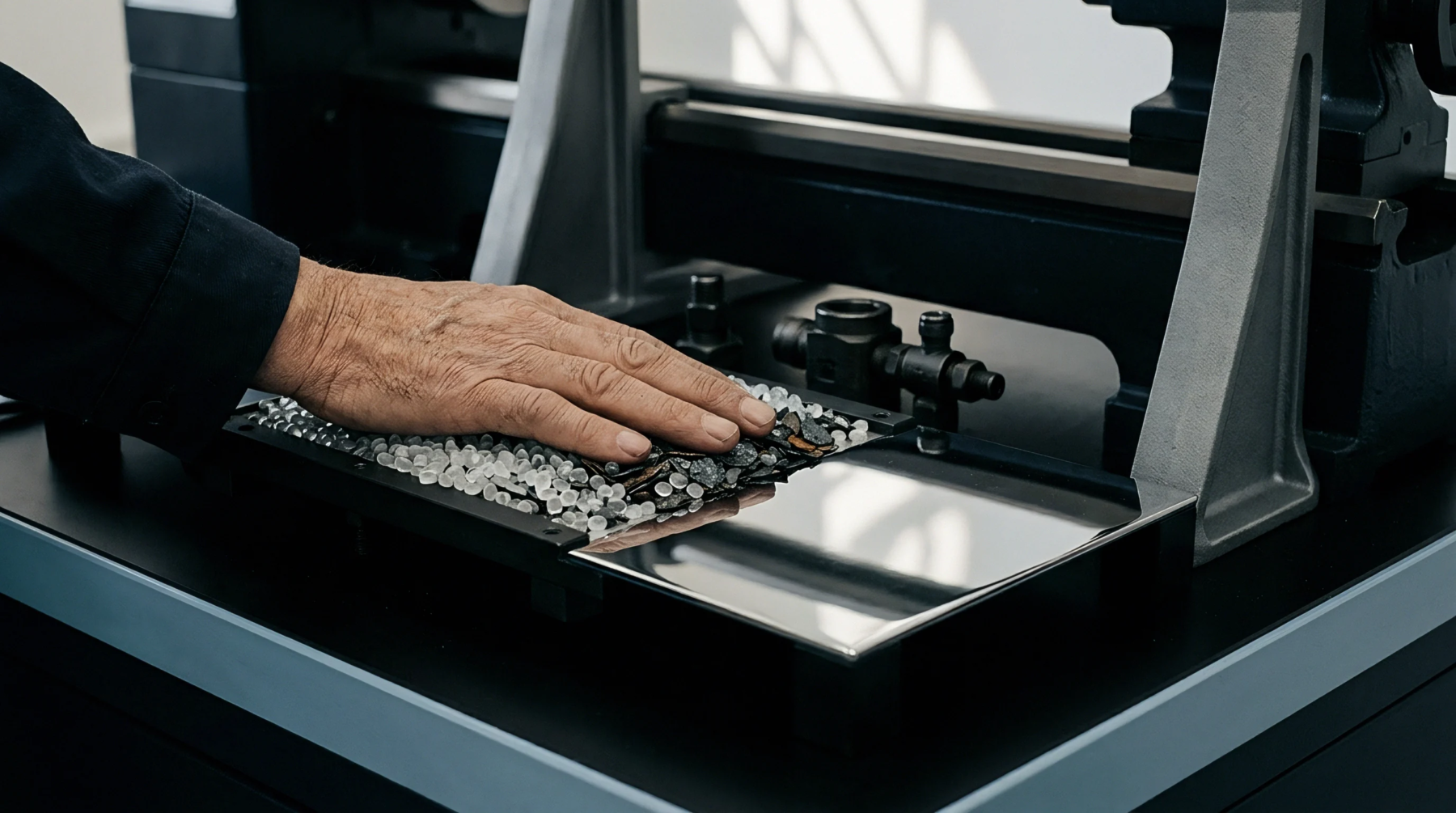
Thermoplastic Polymer Moisture Absorption Mechanics during Storage
Polymer moisture absorption follows Fickian kinetics, requiring hermetic packaging, Karl Fischer verification, and desiccant drying to prevent hydrolytic cleavage.
Micro pinholes are microscopic structural discontinuities in packaging film or protective coatings that allow for the transmission of gas or moisture across a barrier. The General Administration of Customs of China classifies these perforations as non-conforming defects when they compromise the integrity of food contact materials or sensitive electronic packaging. Regulatory inspection protocols determine the acceptability of such gaps by measuring the oxygen transmission rate or the moisture vapor transmission rate through the affected material.
Enforcement practice differentiates between incidental defects inherent in thin-film production and systematic failures indicative of faulty lamination or heat sealing processes.
Quality management systems within manufacturing facilities identify these ruptures through vacuum decay or helium leak testing. Practitioners verify the seal strength of a batch by subjecting the package to a pressure differential that forces air through any microscopic aperture. High voltage discharge testing acts as an alternative method for locating conductive paths created by these tiny holes in non-conductive polymer substrates.
Technical standards mandate that a maximum number of detected leaks per square meter determines the rejection threshold for high-barrier films. Approval for export rests upon the documented ability of the manufacturer to maintain the physical barrier below these specified leakage tolerances during standard transit conditions.
Statutory requirements under the Food Safety Law of the People Republic of China hold producers accountable for the total containment of shelf-stable goods. Inspectors apply the principle of zero tolerance for pathogens or contaminants entering through the package boundary even when the defect remains invisible to the naked eye. Legal liability rests with the party responsible for the final sealing operation when external audits reveal a high density of micro pinholes in the shipment.
Remediation of such findings usually requires an immediate halt to production and a full audit of the roller alignment or the temperature profile of the sealing equipment. Foreign parties must ensure that their local suppliers maintain certification records that explicitly detail the testing frequency for these minute structural gaps.
Non-compliance with packaging standards leads to the detention of goods at the border or the mandatory destruction of the entire commercial lot. Customs authorities exercise the right to perform destructive sampling to prove the existence of these apertures whenever a visual inspection of the outer shipping container suggests moisture ingress or product spoilage. Exporters face financial losses because the cost of re-packaging or replacing the compromised inventory falls entirely upon the supplier under standard international trade terms.
Courts in jurisdictions governed by Chinese law rarely accept the argument that these small defects constitute a negligible variance if the product fails to meet the specified storage life requirement. Liability for damage resulting from these microscopic failures remains with the entity that provides the flawed protective layer.
Polymer moisture absorption follows Fickian kinetics, requiring hermetic packaging, Karl Fischer verification, and desiccant drying to prevent hydrolytic cleavage.
Expertise is a utility, not a secret. sentiention™ publishes its working knowledge as open reference: intelligence layer covering the materials it sources, the markets it enters, and the reference that serves both.