Subcontractor Post Holiday Material Moisture Audit Practices in Pearl River Workshops
Enforce instrumental moisture audits on subcontractor stock after holidays to prevent production restarts with water-saturated materials.


Air
Relative humidity inside unconditioned Pearl River Delta industrial spaces routinely stays between 82% and 94% across late February and March. The seasonal onset of the wet spring pattern, locally recognized as huinan tian, pushes humid maritime airflow over indoor machine surfaces, concrete warehouse slabs, and raw inventory that retain the lower ambient temperatures of January. Cold surfaces force warm, moisture-laden air beneath its dew point, producing immediate surface condensation across metals, stacked corrugated packaging, unbaked laminates, and kiln-dried wood components.
Tier-1 assembly plants across Dongguan, Shenzhen, and Zhongshan manage this atmospheric transition through central HVAC plant loops or continuous commercial dehumidification. Subcontractors handling specialized process steps rarely operate secondary mechanical climate systems. Plating shops, secondary stamping units, wood-forming stations, die-casters, and packaging contractors run large roll-up bay doors open to natural drafts to evacuate process heat and fumes.
Raw materials, semi-finished goods, and secondary subassemblies stand in passive thermal equilibrium with ambient outdoor air throughout the Spring Festival shutdown, which spans two to four weeks of zero production activity.
A surface temperature difference of three degrees Celsius below ambient air temperature initiates active condensation across hygroscopic raw stock inside non-climate-controlled factory shells.
Ambient moisture deposition during factory dormancy degrades production lots before equipment restarts. Moisture infiltration into paperboard packaging reduces burst strength. Salt residues and plating salts hydrolyze into active corrosive acids on exposed metal pins.
Fiberboards and engineered timber absorb atmospheric water vapor, altering critical physical dimensions and inducing internal shear stress. Polymer granules stored in permeable unlined bags saturate their molecular matrix, causing polymer chain scission during subsequent injection moulding or thermoforming passes.
Auditing this exposure requires direct verification of physical warehouse conditions prior to production runs. Auditing personnel measure air wet-bulb temperatures, relative humidity gradients, and indoor wall temperatures across raw stock bays. A single warehouse floor often exhibits internal variations of 15% relative humidity between stock pallets positioned adjacent to external perimeter roll-up doors and pallets shrink-wrapped within internal storage aisles.
Moisture audit protocols document these environmental baselines before approving the release of post-holiday staging inventory to production lines.
Specimen
Auditing raw material and subassembly condition requires destructive and non-destructive moisture measurement across distinct material classifications. Surface-level pin meters read boundary layers, while loss-on-drying balances determine internal bound water. Subcontractors frequently present surface readings to clear staging stock rapidly.
Verification programs mandate specific testing apparatus and sample preparation matched to the physical chemistry of the substrate.
Polymer feedstocks require Karl Fischer titration or automated loss-on-drying moisture balances operating at temperatures specified by resin type. Polyamides, polycarbonates, and thermoplastic polyurethanes present hygroscopic polar bonds that attract atmospheric water molecules deep into pellet cores. Surface wiping does nothing to alleviate hydrolytic degradation during processing.
Staged polymers require core moisture audits below manufacturer thresholds before feeding into barrel hoppers.
| Material Class | Test Protocol Standard | Audit Apparatus | Target Moisture Limit | Quarantine Threshold |
|---|---|---|---|---|
| Polyamide 66 Pellets | ASTM D6869 | Karl Fischer Titration | 0.15% by weight | Over 0.20% by weight |
| Polycarbonate Granules | ISO 15512 Method B | Loss-on-Drying Balance | 0.02% by weight | Over 0.035% by weight |
| Solid Hardwood Components | GB/T 1931 / ASTM D4442 | Insulated Core Pin Meter | 8.0% to 10.0% MC | Over 12.0% MC |
| Corrugated Outer Cartons | TAPPI T 412 / ISO 287 | Capacitive RF Dielectric Meter | 6.5% to 8.5% MC | Over 11.0% MC |
| FR-4 PCB Unassembled Panels | IPC-1601A Section 3.2 | Analytical Oven Bake Weighing | 0.10% by weight | Over 0.15% by weight |
Cellulosic materials follow distinct moisture equilibrium dynamics. Solid timber stock and fibreboard components absorb ambient moisture until their moisture content matches local vapor pressures. In the Pearl River Delta during March, wood materials normalize toward an equilibrium moisture content between 14% and 17%.
Solid wood assemblies destined for export to heated, dry interior environments require equilibrium states between 6% and 9%. Unchecked inventory processing locks elevated moisture within sealed finishes, leading to checking, joint separation, and warpage once cargo enters containerized transit.
Bare printed circuit boards and electronic subassemblies absorb water into the resin-glass interface. Trapped moisture expands explosively during solder reflow, delaminating inner traces and creating internal barrel cracking across plated through-holes. Verification protocols require weighing coupon specimens directly from subcontractor racks before wave soldering or surface mount passes.
Audits identify lots requiring controlled desiccant baking prior to assembly.
The lot selection rate follows ANSI/ASQ Z1.4 sampling plans under Level II normal inspection, indexed to an Acceptance Quality Limit of 0.65 for functional moisture defects. Auditors extract samples from core positions within wrapped pallets. Pallet perimeters exchange moisture rapidly, obscuring deeper ambient absorption within central pack stacks.
Core sampling prevents non-conforming, high-moisture specimens from entering active feeds.


Shrinkage
Dimensional instability tracks moisture movement across porous and composite engineering materials. Non-metallic components change physical dimensions along grain lines, moulding flows, and fiber orientations as absorbed moisture enters or leaves the substrate matrix. Auditing subcontractor parts requires tracking physical tolerances alongside raw moisture percentage values.
A part meeting print specifications at 15% moisture content shrinks below tolerance limits when it dries to 7% inside an ocean container or destination warehouse.

Wood and Composite Fiber Movement
Solid wood exhibits anisotropic dimensional change. Longitudinal shrinkage along the grain remains negligible, whereas radial and tangential shrinkage create severe structural distortion. In typical beech, ash, or oak components processed in regional workshops, tangential dimension changes run between 0.25% and 0.38% per single percentage point shift in moisture content below the fiber saturation point.
An unverified frame component manufactured at 14% moisture content shrinks by 2.1% across its width when drying to an 8% in-service target equilibrium.
Engineered boards experience thickness swelling following prolonged humidity exposure. Medium-density fiberboards and high-density particleboards absorb water along unsealed edges, producing non-reversible thickness growth as resin adhesives relieve internal compaction stresses. Auditors record edge thickness and flat-center thickness across sample boards using digital micrometers.
Edge swelling over 4% relative to center-panel thickness flags irreversible core degradation, requiring outright board rejection.
Under Section 5.3 of standard purchase contract frameworks, secondary processing of hydro-expanded timber invalidates subcontractor warranty protections against dimensional rupture.

Polymer Creep and Hydrolytic Instability
Excessive moisture within hygroscopic polymer chains triggers chain scission during melt processing. When wet polyamide, polybutylene terephthalate, or polycarbonate enters an injection screw, processing temperatures vaporize trapped water molecules. Water reacts with molten polymer chains at high temperatures, cleaving polymer backbones into shorter lengths.
The process lowers intrinsic viscosity and degrades structural properties.
Moulding wet material introduces internal voids, splay marks, and micro-porosity within wall sections. The processed part may outwardly match nominal tool cavities upon cooling. Under structural load or accelerated thermal testing, degraded material experiences sudden brittle failure at half of nominal yield stress.
Mold shrinkage also increases unpredictably as altered polymer chains pack erratically into cooling dies. Auditors identify processed wet stock through melt flow index benchmarking against baseline resin certificates.
Critical dimensional verification takes place across thirty components chosen randomly from staging crates. Technicians inspect datum points using coordinate measuring machines or pin gauges within a controlled inspection bay. High dimensions correlate with water absorption; low dimensions downstream indicate resin breakdown from premature processing of wet feed.
Parts moving outside mechanical limits face immediate quarantine.

Corrosion
Metallic components, stamped terminals, and plating subassemblies face severe galvanic and oxidative risks during the wet post-holiday transition. Stagnant inventory left in unsealed staging bins develops surface oxidation within days under condensing humidity. Residual flux, cleaning agents, and airborne acidic particulate settle onto metal surfaces, forming conductive electrolytic pathways that accelerate corrosion across dissimilar metal contacts.
Which Verification Methods Catch Interstitial Terminal Rust?
Terminals, connectors, and plated contact pins require deep optical inspection under stereo magnification down into mating recesses. Surface inspections pass parts because exposed outer faces dry rapidly under ceiling fans. Auditors slice connector housings and disassemble crimped joints to verify interstitial surfaces.
Moisture wicks into crimp barrels and terminal housings through capillary draw, corroding copper alloys and degrading micro-ohm resistance profiles.
- Stereo Optical Microscopic Examination across contact interfaces identifies early zinc bloom, white rust, and localized pinhole pit formation on zinc-plated, nickel-plated, and tin-plated connector pins under 40x magnification.
- Contact Resistance Micro-Ohm Verification according to EIA-364-23 tests millivolt drops across mated pin pairs, confirming that invisible interstitial oxidation layers have not compromised connection integrity.
- Destructive Crimp Cross-Sectioning cuts the mechanical crimp barrel to expose the wire-strand compaction zone, verifying that no moisture tracking or galvanic oxidation has formed between copper wire filaments.
- Wipe Solvent Residue Testing uses pure isopropyl alcohol swabs across plated stamping surfaces to detect hydrolyzed ionic salts and water-borne residues that trigger latent oxidation after packaging.
Bare sheet metal stampings, cast aluminum housings, and turned steel fasteners stored in open cardboard boxes degrade rapidly. Cardboard retains atmospheric moisture and holds damp paper fibers directly against adjacent metal edges. Contact points develop localized pitting cells driven by differential aeration.
Auditors require subcontractors to unpack dense cartons and inspect items at bottom pallet layers, where moisture accumulation reaches peak concentrations.
Corroded components require scrap declarations or aggressive chemical remediation. Acid pickling to remove oxidation alters external component dimensions and introduces hydrogen embrittlement hazards into high-tensile steel fasteners. Subcontractors frequently polish outer faces with scouring pads to disguise oxidation lines.
Auditors look for non-uniform surface striations, removed plating layers, and raw copper strike exposure during visual audits.
Vapor-phase corrosion inhibitor packaging bags require active inspection during storage reviews. Bags that remain unsealed, pierced, or folded loosely lose protective vapor pressure within forty-eight hours in humid rooms. Auditors reject dry packaging that failed to isolate stored steel or bronze parts throughout February shut-downs.


Protocol
Establishing operational control across subcontractor networks requires a formal, dated moisture verification program executed immediately upon factory reopening. Subcontractors may not release pre-holiday inventory or restart subassembly lines until designated quality inspectors sign off on material audit dossiers. This inspection gates material transfer from raw storage racks to primary assembly feeds.

Stepwise Staging and In-Line Audit Gate
The on-site moisture audit workflow follows a strict physical sequence across raw stock, processing machines, and output bins. Skipping checkpoints exposes primary assembly lines to latent component failures.
- Inventory Hold Segregation isolates every pallet of moisture-sensitive raw stock, unbaked circuit panels, fasteners, and timber blanks with high-visibility red quarantine bands immediately upon facility restart.
- Atmospheric Baseline Logging records air dry-bulb temperature, dew point, and relative humidity across five distinct heights within subcontractor warehousing zones before material testing begins.
- Core Pallet Extraction pulls representative samples from deep internal pallet volumes according to ANSI/ASQ Z1.4 sampling tables, avoiding exterior corner cartons that reflect ambient fluctuations.
- Instrumental Laboratory Verification measures moisture percentages against engineering prints using calibrated loss-on-drying balances, titrators, or core resistance pin meters in an isolated test room.
- Remediation Bake Authorisation specifies baking temperatures, dwell times, and air-exchange rates for materials exceeding threshold limits, requiring secondary re-testing before line release.
- Disposition Sign-Off And Logging records final verified moisture values on batch control cards, binding the supplier to explicit mechanical warranties for downstream dimensional drift.
Subcontractors frequently claim that standard pre-shipment inspections catch moisture-induced defects. That reasoning fails because moisture damage manifests downstream after units are sealed into hot cargo containers. Latent solder failure, post-cure warpage, internal corrosion, and fungal blooms emerge weeks after the factory stamp clears the dock.
A lot failing initial moisture verification requires full bake-out logs and a secondary twenty-four-hour stabilization cycle before re-audit submission.
Verification protocol documents remain on the factory floor attached directly to audited material bins. Traceability requires marking batch numbers, test instrument serials, calibrated test dates, and actual recorded moisture percentages directly on bin placards. Operations managers reject lots carrying verbal approvals or generic pass stickers lacking empirical test metrics.

Drying
Remediating high-moisture stock requires calibrated thermal baking cycles executed in uniform, forced-air industrial ovens. Subcontractors often attempt rapid drying by cranking temperatures on basic heating units, or by pointing commercial quartz space heaters at stacked inventory. Rapid, uneven heating destroys engineering components through surface skinning, localized heat distortion, and internal thermal stress cracking.
Thermal Bake Cycles and Desiccation Metrics
Baking profiles must account for glass transition temperatures, thermal degradation limits, and the diffusion coefficient of water within specific substrates. Polyamide 66 requires vacuum baking or desiccant hot-air drying at 80 degrees Celsius for 16 to 24 hours to drive internal moisture below 0.15% without yellowing or oxidizing the resin surface. Accelerating the cycle at 120 degrees Celsius oxidizes pellet jackets and initiates premature thermal degradation.
| Substrate Material | Bake Temperature | Minimum Dwell Time | Oven Atmospheric Condition | Cooling Requirement |
|---|---|---|---|---|
| Polyamide Granules | 80 °C | 18 Hours | Desiccant Air Dew Point -40 °C | Sealed hopper feed |
| Polycarbonate Pellets | 120 °C | 4 Hours | Forced Air Circulation | Immediate closed barrel entry |
| Printed Circuit Boards | 105 °C to 110 °C | 6 Hours | Vented Convection Oven | Desiccant dry cabinet storage |
| Solid Hardwood Parts | 45 °C to 55 °C | 72 Hours | Controlled Wet-Bulb Ramp | Equilibrium chamber 48 hours |
| Die-Cast Metal Zinc Pins | 65 °C | 3 Hours | Circulating Forced Convection | Cooling in sealed foil bags |
Printed circuit boards require staged pre-heating to prevent layer blistering. Raising oven temperatures instantly above 100 degrees Celsius boils trapped moisture inside the FR-4 matrix, forming internal steam pockets that shear copper via barrels. The profile ramps at 2 degrees Celsius per minute up to 105 degrees Celsius, soaking panels for six continuous hours to allow gradual vapor diffusion through porous outer masking inks.
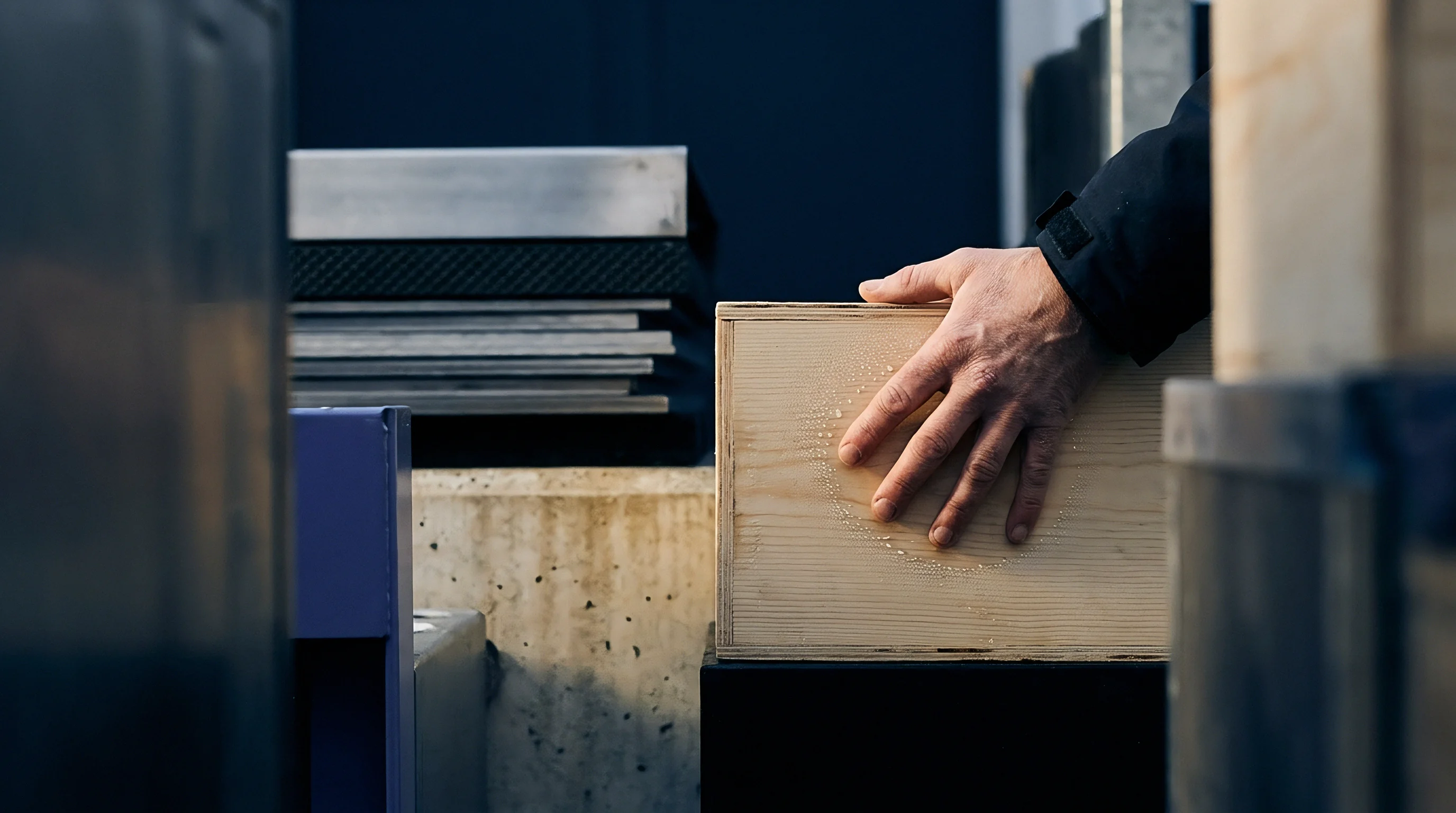
Wood components demand controlled kiln environments featuring steam injection to manage external drying rates. Subjecting high-moisture timber parts to dry heat evaporates surface moisture rapidly while cores remain saturated. This moisture gradient induces severe tensile stress on the outer shell, causing extensive surface checking, end-splitting, and permanent case-hardening.
Thermal remediation must gradually lower surrounding relative humidity over days while stepping temperatures upward.
A worked scenario demonstrates the operational cost and time impact of holiday moisture recovery. Take a subcontractor lot of 12,000 stamped and populated sub-assemblies stored in corrugated cartons across twenty days of spring shutdown. Ambient relative humidity averaged 88% at 21 degrees Celsius.
Incoming inspection reveals PCB moisture content at 0.38%, well over the 0.10% threshold. The lot requires complete de-traying, transfer to metal bake racks, a six-hour thermal dwell at 105 degrees Celsius, two hours of controlled cooling within dry boxes, and secondary moisture confirmation.
The intervention requires 48 labor hours across technicians and packaging handlers, absorbs 320 kilowatt-hours of electrical oven capacity, and delays downstream final assembly lines by four full working days. The subcontractor absorbs the direct remediation cost of approximately 4,200 RMB in power and internal labor, alongside downstream schedule penalties under late delivery clauses. Skipping this bake profile risks a 3.5% field failure rate from micro-cracked vias during container transit, translating into warranty liabilities exceeding 180,000 RMB.
Baking ovens require physical temperature mapping using ten-channel thermocouple data loggers. Ovens in smaller subcontractor plants frequently exhibit hot spots and dead zones, varying by 25 degrees Celsius between upper exhaust ports and lower loading trays. Parts placed near heating coils suffer heat warping, while parts in lower bins never reach target desiccation temperatures.
Auditors demand multi-point thermal profiles before approving oven runs.

Cargo
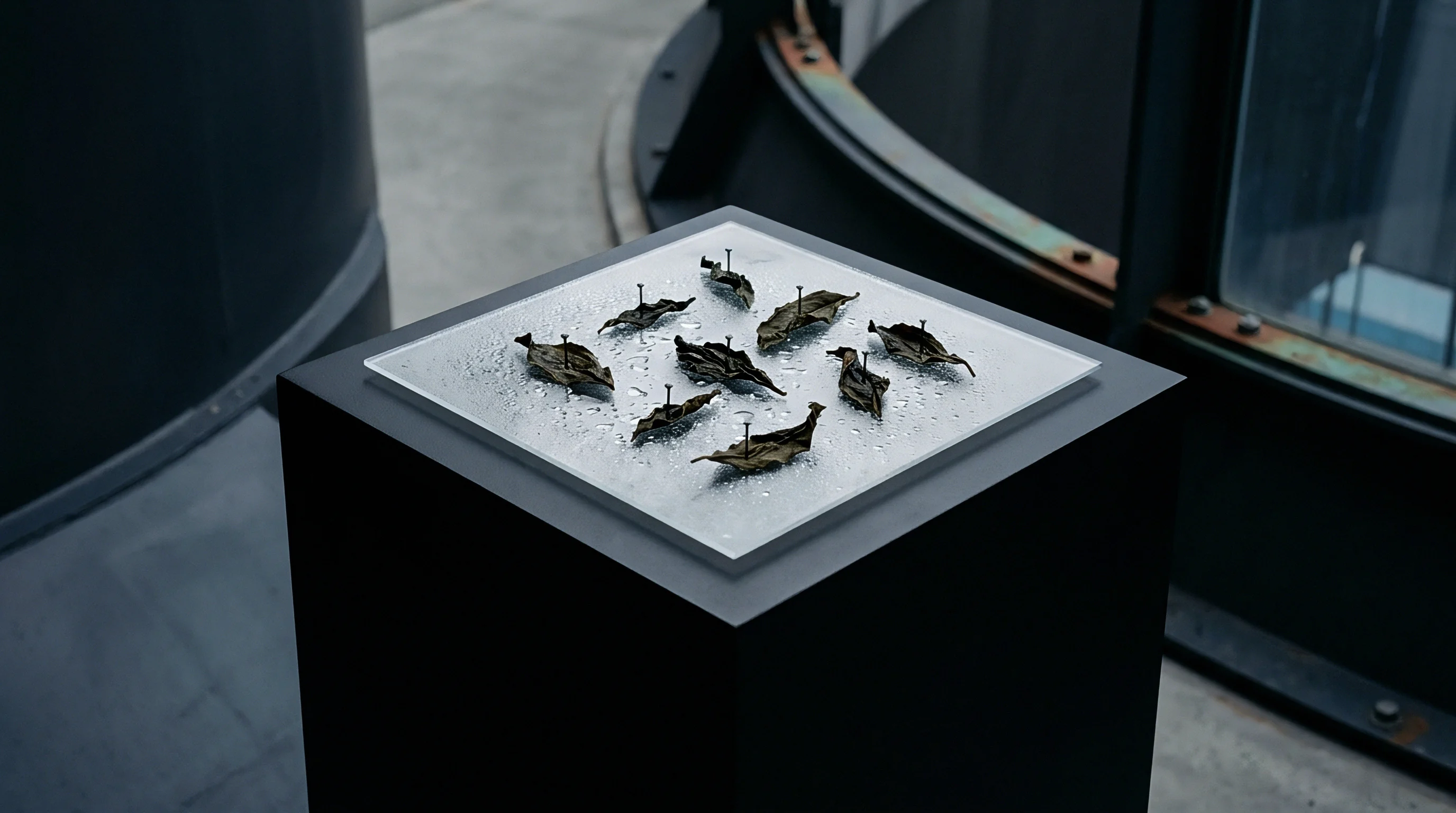
The final vulnerability occurs when verified, desiccated goods are packed into corrugated containers and sealed inside steel shipping units. Ocean freight containers parked at Yantian, Nansha, or Shekou ports heat rapidly under sunlight, driving internal temperatures above 50 degrees Celsius. At night, the container roof cools instantly, causing moisture inside the internal air and packing cartons to evaporate, rise, condense on the steel ceiling, and rain down onto top-tier cargo boxes.

Are Desiccant Strips Placed in Cartons Sufficient?
Small calcium chloride packs inside individual product boxes fail to protect entire ocean shipping containers from seasonal condensation. Individual packs saturate within forty-eight hours when surrounded by moist unbaked corrugated boxes. Effective container protection requires structural moisture barriers and high-capacity desiccant poles suspended along internal container walls.
- High-Yield Calcium Chloride Pole Bags featuring continuous absorption capacities over 200% by weight extract moisture directly from ambient container headspace, preventing ceiling rain cycles across thirty-day sea transit routes.
- Heavy Polyethylene Liner Envelopes line internal container floors and side walls, preventing rising water vapor from wet wood floorboards from permeating export cartons.
- Moisture-Barrier Aluminum Foil Bags seal sensitive subassemblies and printed boards with vacuum flushing, isolating parts entirely from external atmospheric fluctuations.
- Electronic Humidity Data Loggers fixed to top and bottom central pallets record real-time relative humidity and dew point profiles from factory sealing through destination deconsolidation.
Corrugated paperboard packaging acts as a primary moisture sponge during wet spring operations. A typical double-wall corrugated master carton weighs roughly 1,200 grams when dry. After seven days in an ambient workshop running at 90% relative humidity, that same box absorbs between 120 and 180 grams of water vapor.
Stacking thirty wet boxes on a pallet causes lower cartons to crush as moist paper loses up to 60% of its vertical compression strength.
Auditors measure box board moisture using non-destructive flat-face capacitive sensors before packing lines run. Packaging lots reading over 10% moisture content are returned to dry staging or rejected outright. Pallet stretch-wrapping over moist packaging traps water against products, accelerating mould proliferation and corrosion during transport.
Verification mandates wrapping only verified, dry cartons using ventilated wrap or desiccant top sheets.
A supplier often claims that cardboard moisture normalizes once container doors close. Closed containers function as sealed vapor retorts where heat cycles pump trapped moisture between paper packaging and metal surfaces repeatedly. Preventing transit rust demands rigorous moisture limits across packing materials before container latching occurs.
Settlement
Commercial exposure from holiday moisture ingress surfaces weeks after finished goods depart Pearl River workshops. Resolving disputes over corroded terminals, blistered laminates, cracked timber joints, and collapsed cartons requires clear contractual allocation of moisture verification responsibilities. Subcontractors routinely disclaim liability for environmental damage, characterizing high seasonal humidity as an unavoidable act of nature.
Supply agreements must explicitly counter this defense by defining ambient post-holiday humidity as a normal operating condition across southern China. Standard quality agreements should stipulate that the subcontractor bears sole responsibility for environmental controls, staging isolation, and raw stock desiccation between January and April. Purchase orders must condition lot acceptance upon complete moisture audit documentation, including signed bake logs and instrumental calibration records.
When high moisture triggers line stoppages, cost-recovery mechanisms determine who pays for remediation, sorting, and schedule delays. Contracts enforce charge-backs against subcontractor security deposits or pending invoices for oven running hours, third-party laboratory verification, and air-freight premiums required to recover lost schedule days. When inventory shows irreversible moisture degradation, the subcontractor re-procures raw materials at their sole expense under expedited delivery schedules.
Clear audit protocols eliminate ambiguous arguments regarding where moisture entered the supply chain. Measuring, recording, and certifying component moisture at the subcontractor gate prevents costly arguments over ocean transit conditions versus factory floor neglect. The cost of comprehensive on-site moisture audits remains negligible compared to the commercial damage of scrap lots, warranty claims, and missed retail delivery windows.
The operational framework leaves one open question: how can buyers reliably monitor humidity controls inside remote lower-tier subcontractor facilities during the shutdown period without maintaining physical auditor presence throughout the holiday break?