Meaning
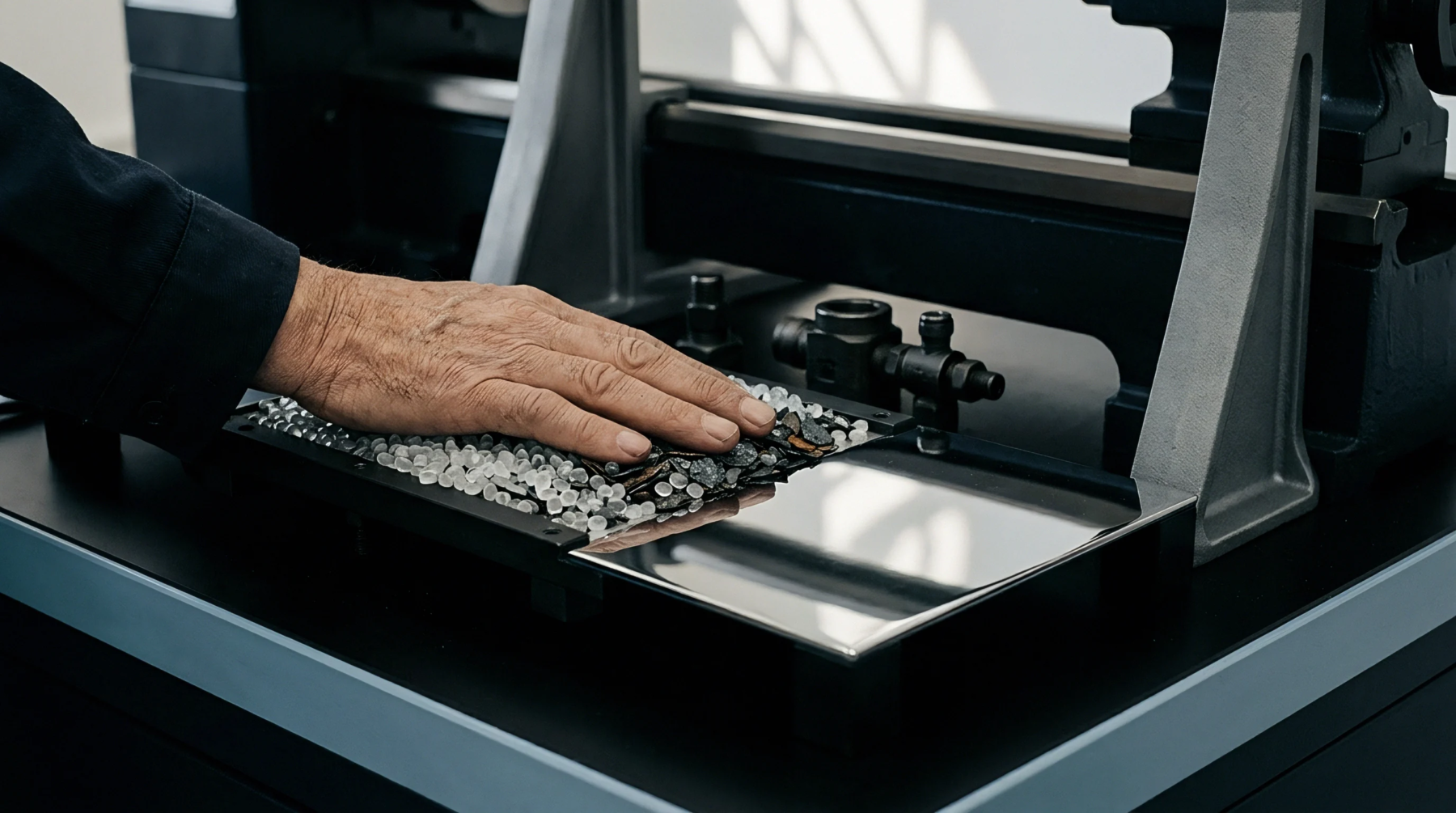
Thermogravimetric measurement techniques evaluate the moisture content of a sample by measuring the change in mass after heating. Through loss on drying, the material is heated to a specified temperature, and the weight reduction is recorded. This method cannot distinguish between water and other volatile substances.
Analytical Limit
Hygroscopic polymers like polyamide or polyester often release low-molecular-weight additives, lubricants or residual monomers when heated. In these cases, the recorded weight reduction reflects both the evaporated moisture and the lost additives, which yields an overestimation of the true water content. This limitation makes the technique less suitable for materials requiring high-precision dryness measurements.
Weight Measurement
Standard lab equipment for this test consists of a heating chamber combined with an analytical balance. The specimen is weighed before heating, heated until its mass stabilizes and then weighed again to determine the loss. This procedure requires careful control of the heating temperature to prevent thermal degradation of the polymer matrix itself.
Process Application
Factories use this method as a quick screening tool to check the status of resins that do not release non-aqueous volatiles. It provides a rapid way to verify whether the drying hopper is functioning before starting the molding cycle. This test acts as a primary check that can be executed quickly by production line personnel, which helps avoid large-scale processing errors and reduces the startup scrap rate in the extrusion hall.