Coupled Transient Moisture Diffusion and Non-Linear Viscoelastic Stress Relaxation in Molded Engineering Thermoplastics
Molded thermoplastics lose fastener clamp load across humid transit through coupled swelling and viscoelastic relaxation unless foil sealed or pre-equilibrated.

Swell
Relative humidity inside a shipping container idling on a Shenzhen tarmac routinely exceeds eighty-five percent at fifty degrees Celsius. Unfilled polyamide grades absorb atmospheric water vapor until reaching thermodynamic equilibrium with the surrounding air. In a molded polymer component, this uptake proceeds as a non-steady-state mass transport phenomenon described by classical diffusion equations containing concentration-dependent coefficients.
Water molecules diffuse into the amorphous domains between crystalline lamellae, breaking interchain hydrogen bonds between adjacent carbonyl and amine groups. Free volume expands instantly. This molecular separation increases polymer chain mobility, shifting the glass transition from roughly sixty-five degrees Celsius down to sub-ambient levels under full saturation.
Molding conditions establish a distinct structural morphology across the part cross-section that dictates local transport rates. Fast cooling rates at the tool wall produce an amorphous skin layer with low crystallinity, while slower thermal decay toward the center yields a highly crystalline core. Diffusivity within the skin layer exceeds that of the core by up to an order of magnitude.
Fickian models assuming constant diffusion coefficients fail to predict concentration distributions in wall sections exceeding two millimeters. Saturated surfaces expand against dry cores, generating steep internal hygroscopic strain profiles that induce compressive skin stresses and tensile core stresses long before the center absorbs a single milligram of moisture.
Equilibrium water absorption in thirty percent glass-filled polyamide six reaches approximately seven percent by weight under total immersion at twenty-three degrees Celsius.
A moisture front migrates through an injection-molded geometry at rates governed by the temperature of the environment and the local resin architecture. In materials such as polyphthalamide or polybutylene terephthalate, diffusion rates remain low due to aromatic backbone stiffness and reduced hydrogen bonding affinity. In aliphatic polyamides, diffusion accelerates non-linearly with moisture concentration.
Moisture migrates along concentration gradients.
- Anisotropic swelling coefficients drive differential dimensional growth between the tool flow direction and the cross-flow transverse direction because aligned reinforcing glass fibers restrain longitudinal expansion.
- Skin core microstructural gradients create localized variations in transport resistance, causing rapid initial surface plasticization while the interior structural matrix retains its dry-as-molded state for weeks.
- Environmental humidity fluctuations introduce secondary absorption and desorption cycles at exterior boundaries, producing cyclic hygrothermal fatigue stresses that distort precision mating planes.
Tooling engineers in coastal workshops routinely tell quality inspectors that dimensional drift observed three weeks after molding represents normal settling of the material.
Decay
Relaxation modulus in thermoplastic components drops over time under sustained mechanical displacement. When moisture enters the molecular network during prolonged stress exposure, relaxation accelerates through combined free volume expansion and plasticization. The mathematical description of this coupled behavior incorporates the Schapery non-linear viscoelastic representation, where stress-dependent non-linear factors scale the instantaneous and transient compliance kernels.
Water acts as an internal lubricant, shifting the mechanical response across logarithmic time decades in accordance with time-temperature-moisture superposition principles. A stress relaxation test conducted at dry conditions yields a mechanical half-life that drops by several orders of magnitude once relative humidity rises to fifty percent.
Linear viscoelastic assumptions break down rapidly at functional operating strains. In automotive under-hood clips and industrial electrical connectors, local assembly strains frequently exceed one and a half percent. At these deformation levels, stress-induced dilatation couples directly with moisture-induced free volume growth.
The material response deviates sharply from Boltzmann superposition linearity. The effective relaxation time spectrum shifts toward shorter durations, speeding up the decay of holding forces.
Under ISO 527 tensile testing, plasticized polyamide six demonstrates a tensile modulus drop exceeding seventy percent when moisture content rises from dry-as-molded status to equilibrium at fifty percent relative humidity.
Modulus degradation follows a dual-stage kinetic profile when ambient humidity fluctuates. Surface layers relax almost immediately under high moisture concentrations, shedding mechanical load into the stiffer, drier core. This load transfer elevates the true stress carried by the inner core, accelerating non-linear creep in regions that have not yet absorbed moisture.
Glass transitions drop sharply.
- Instantaneous elastic response establishes initial peak joint tension during component installation, determined entirely by the dry instantaneous modulus of the resin matrix.
- Transient surface relaxation initiates within minutes as exterior moisture plasticizes unreinforced skin regions, shedding twenty to thirty percent of peak contact pressure.
- Core redistribution phase forces the dry central core to support elevated shear stresses, accelerating secondary viscoelastic relaxation before moisture arrives physically at the neutral axis.
- Asymptotic saturation plateau locks the assembly into an equilibrium retention force governed by the long-term relaxed modulus of the fully plasticized polymer matrix.
Viscoelastic characterization models must confront whether localized micro-yielding at the roots of molded retaining features accelerates moisture diffusion pathways by opening micro-voids in the polymer matrix.
Interference
Threaded connections, interference press-fits, and snap-fit cantilevers depend entirely on residual contact pressure to maintain assembly integrity. Fasteners loosen without external rotation. A screw driven into a molded thermoplastic boss induces high hoop stresses in the boss wall.
As moisture enters the outer perimeter of the boss, the local yield point drops, allowing the polymer to relax away from the steel thread flanks. Preload vanishes under static displacement. The clamping tension holding mated housings together decays along a non-linear trajectory that mirrors the combined diffusion-relaxation rate.
A typical engineering case demonstrates the scale of this retention failure. Consider a molded boss manufactured from thirty percent glass-filled polyamide sixty-six (PA66-GF30) with an outer diameter of 8.0 millimeters and an internal core diameter of 3.4 millimeters, designed to receive an M4 thread-forming steel screw. Seating torque during automated assembly is specified at 2.4 Newton-meters, producing an initial axial clamp load of 3,200 Newtons and an average hoop stress of 42 Megapascals in the inner boss wall.
Assembly takes place in an air-conditioned room at twenty-two degrees Celsius with parts in dry-as-molded condition containing less than 0.2 percent moisture by weight.
Once packed and loaded into ocean freight containers, parts encounter thirty-five degrees Celsius and eighty percent relative humidity for twenty-eight days. The outer perimeter absorbs moisture, establishing a concentration gradient where the outer 0.8 millimeters reaches 4.5 percent moisture, while the inner thread-interface core reaches 1.2 percent moisture. At 1.2 percent moisture, the local glass transition drops from seventy degrees to forty degrees Celsius.
The non-linear viscoelastic relaxation modulus drops from 8,500 Megapascals down to 3,100 Megapascals at thirty-five degrees Celsius under continuous 42 Megapascal hoop stress.
The remaining clamp load drops from 3,200 Newtons to 1,350 Newtons after thirty days of transit. Clamping tension drops forty percent. The fastener retains its thread engagement depth, but the sealing pressure across the elastomeric housing gasket falls below the critical threshold required to prevent water ingress.
Torque guns mask early yielding.
| Polymer Formulation | Equilibrium Moisture (wt%) | Dry Modulus (MPa) | Equilibrated Modulus (MPa) | One Thousand Hour Stress Retention (%) |
|---|---|---|---|---|
| Polyamide 66 Unfilled | 2.7 | 3,000 | 1,200 | 28 |
| Polyamide 66 30% Glass Filled | 1.9 | 8,800 | 5,900 | 48 |
| Polyphthalamide 33% Glass Filled | 1.1 | 11,500 | 9,800 | 68 |
| Polybutylene Terephthalate 30% Glass Filled | 0.2 | 9,200 | 9,100 | 82 |
| Polyoxymethylene Copolymer Unfilled | 0.8 | 2,800 | 2,600 | 72 |
Failure to account for coupled diffusion and relaxation produces catastrophic joint loosening during overseas ocean transport, generating extensive warranty rework, field seal failures, and rejected incoming containers at western distribution hubs.
Conditioning
Factory floors rarely execute the slow moisture stabilization cycles required to reach true thermodynamic equilibrium. Technical standards such as ISO 1110 specify conditioning at seventy degrees Celsius and sixty-two percent relative humidity, requiring hundreds of hours inside tightly controlled environmental test chambers to achieve homogeneous water distribution across a three-millimeter wall. Under production pressures, moulding workshops substitute accelerated hot water immersion tanks.
Submerging parts in ninety-degree water forces rapid surface hydration within several hours, but creates an extreme moisture gradient across the cross-section.
Water tanks warp thin ribs. The exterior skin swells while the core remains dry, introducing severe internal shear stresses that distort flat mounting flanges once parts exit the tank. Halogen balances miss deep moisture.
Workshop operators weigh five parts on a bench scale, record an overall weight gain of two percent, and declare the batch equilibrated. This practice masks the presence of dry structural cores that will continue to absorb moisture and warp inside customer warehouses over the following three months.
Accelerated conditioning cycles that raise water bath temperatures beyond the glass transition temperature of the resin induce permanent dimensional distortion through relief of molded-in flow stresses.
Correct verification requires cross-sectional micro-tomography or serial microtome slicing paired with Karl Fischer titration across the part thickness. Moisture meters operating on loss-on-drying heating cycles fail because they measure total mass loss without revealing whether moisture resides in the skin or the core. Desiccant bags saturate within days.
| Conditioning Environment | Process Temperature (°C) | Target Moisture (wt%) | Cycle Duration (Hours) | Skin to Core Moisture Ratio |
|---|---|---|---|---|
| Ambient Storage (50% RH) | 23 | 2.6 | 2,160 | 1.05 |
| Accelerated Chamber (ISO 1110) | 70 | 2.6 | 168 | 1.12 |
| Atmospheric Boiling Water Tank | 95 | 7.5 | 8 | 4.80 |
| Pressurized Steam Autoclave | 110 | 6.8 | 4 | 3.60 |
A batch of molded components displaying verified weight gain without documented cross-sectional moisture homogeneity will eventually twist out of blueprint tolerance during transit.
Escrow
Commercial protections must counter the operational temptation to skip lengthier conditioning procedures. Injection molders face immense pressure to clear factory floors within forty-eight hours of press ejection. When parts leave the machine in a dry-as-molded state, they match print dimensions perfectly because hygroscopic expansion has not yet occurred.
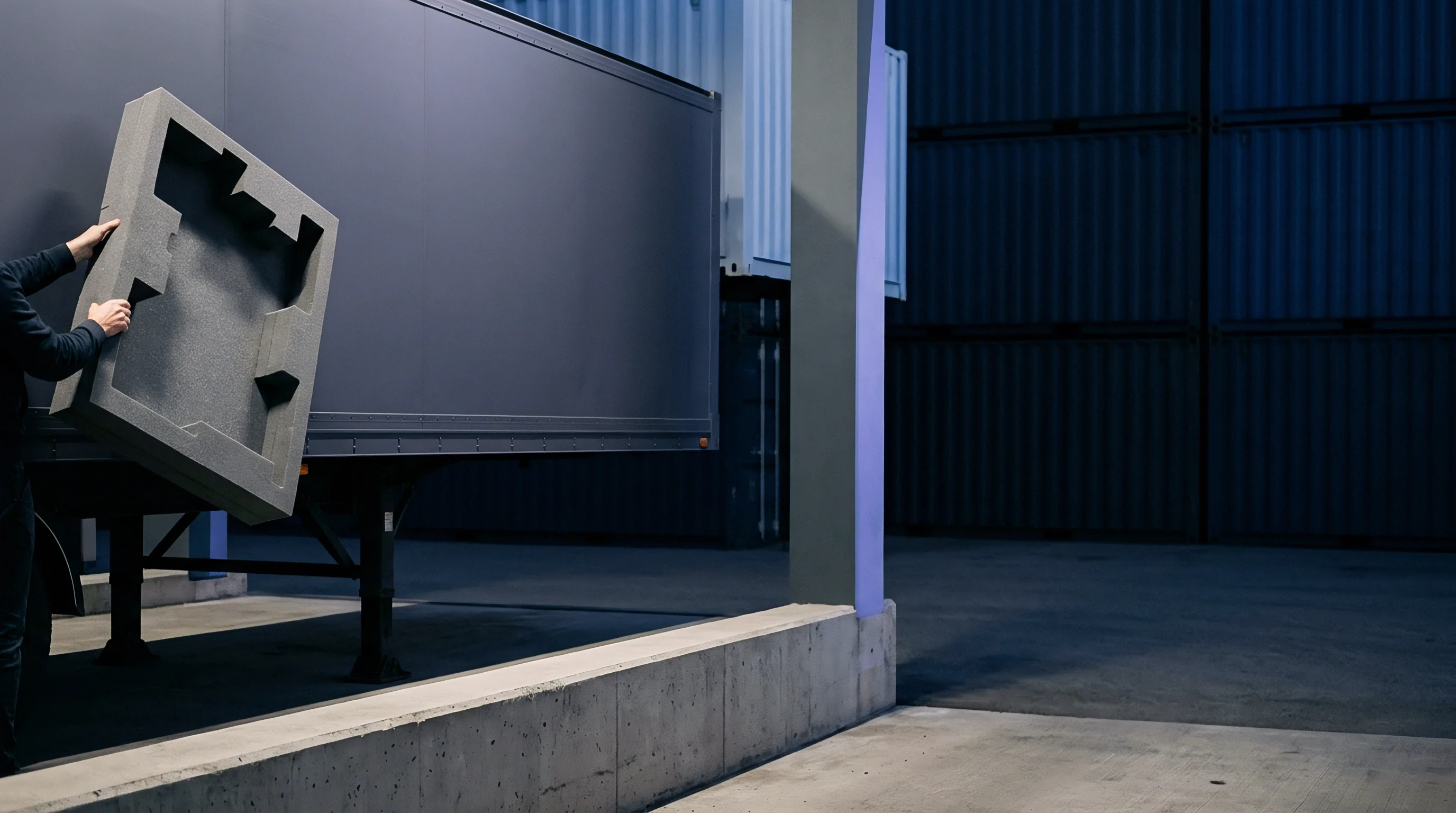
Shipping containers reach extreme heat. Polyethylene liners leak water vapor. Packaging dry-as-molded components in standard single-layer low-density polyethylene bags allows atmospheric moisture to penetrate the packaging during maritime shipping, initiating uncontrolled dimensional expansion and stress relaxation en route.
Procurement agreements must link milestone release payments directly to physical moisture verification criteria. Financial retentions held in escrow protect the buyer against joint failures that do not surface until components clear customs three months after production. Aluminum foil moisture-barrier packaging containing vacuum-sealed nitrogen and measured desiccant loads prevents ambient water exchange during transit, freezing the transient diffusion cycle until the assembly line receives the container.
Purchase orders must specify that lots displaying non-uniform moisture absorption or post-shipment clamp load retention below seventy-five percent of nominal specification trigger immediate full-lot rejection at the supplier’s expense under the standard defect warranty provision.