Stress Coupled Interdiffusion Formulations for Multiphase Solution Treated Superalloy Turbines
Stress-coupled interdiffusion models prevent single-crystal turbine scrap by calculating exact solution treatment windows that resolve refractory segregation without incipient melting.


Kinetics
Chemical flux models for single-crystal superalloy turbines must account for internal stress tensor fields as well as concentration gradients. High-temperature solution heat treatment dissolves non-equilibrium phases left behind by directional casting, redistributing refractory additions through the matrix. Interdiffusion in multiphase nickel-base systems is driven by local thermodynamic chemical potential rather than plain elemental concentration gradients.
Applied stress fields modify this potential by adding a mechanical strain energy term. The combined flux vector describes atom transport under coupled chemical and mechanical forces across matrix channels and intermetallic precipitate boundaries during heat treatment.
Onsager reciprocal relations define the multi-component interdiffusion matrix for superalloys containing up to ten alloying elements. The flux of species i along a given coordinate correlates with the chemical potential gradients of all components in the solid solution. Diffusion coefficients in this matrix blend mobility terms with thermodynamic factors derived from Gibbs free energy functions.
Overlaying mechanical stress onto the concentration field introduces a strain energy gradient, generating an additional drift force that alters vacancy flux. Local vacancy concentrations then shift to accommodate lattice misfit strain between the gamma matrix and gamma-prime precipitates.
Refractory elements diffuse sluggishly because of their high activation energies and large atomic radii. At solution heat treatment temperatures, rhenium, tungsten, and molybdenum have interdiffusion coefficients two orders of magnitude lower than nickel or cobalt. Their slow mobility leaves micro-segregation across interdendritic regions.
Stress-coupled interdiffusion models handle these disparities by introducing vacancy wind factors, which modify the off-diagonal interdiffusion coefficients to account for momentum transfer between fast-diffusing species and slow refractory solutes.
Technical audits at high-temperature vacuum furnace installations track stress-coupled diffusion parameters to verify supplier modeling rigor. Solute redistribution alters the local gamma-prime solvus across the microstructure. Regions enriched in refractory elements exhibit elevated dissolution temperatures, requiring extended dwell times at solution heat treatment temperatures.
Extended thermal exposure increases the risk of grain growth and surface oxidation, so balancing homogenization time against thermal degradation demands precise calculation of the stress-assisted interdiffusion flux.
Interdiffusion coefficients for rhenium in nickel matrix drop by forty percent when compressive hydrostatic pressure reaches two hundred megapascals at twelve hundred degrees Celsius.
Lattice distortion surrounding solute atoms influences the stress-coupled diffusion tensor. Solutes whose partial molar volumes differ from the host nickel matrix interact strongly with local stress gradients. Regions under tension attract solute species that expand the crystal lattice, whereas compressive zones concentrate smaller atoms.
This stress-driven partitioning alters phase field equilibrium equations, shifting local boundaries during solution treatment. Transformation rates diverge from classical Fickian predictions whenever thermal expansion mismatches generate localized strain gradients.
Phenomenological Equations and Tensor Coupling Mechanics
The total flux vector for solute species i combines the mobility tensor, concentration, and the spatial gradient of chemical potential. The chemical potential combines the chemical energy term with the elastic energy contribution per mole of solute, equal to the partial molar volume multiplied by the hydrostatic component of the local stress tensor. Spatial derivatives of this product generate the mechanical driving force for mass transport, while thermal activation energy governs the temperature dependence of the mobility tensor through an Arrhenius relationship.
Interdiffusion in multiphase superalloys drives phase boundary migration whenever chemical potential differences exist between adjacent microstructural constituents. Gamma-prime dissolution proceeds as aluminum and titanium diffuse out of the intermetallic phase into the surrounding gamma matrix, while chromium, cobalt, and refractory elements diffuse into the dissolving precipitate zone. Mechanical stress applied during solution treatment distorts the symmetry of this interdiffusion field.
Compressive stress aligned with specific crystallographic axes accelerates elemental migration along transverse channels, altering precipitate dissolution geometry.

Refractory Solute Segregation Dynamics
Dendritic solidification during casting leaves interdendritic spaces enriched in aluminum and titanium, while dendrite cores retain high concentrations of rhenium and tungsten. Solution heat treatment aims to eliminate these elemental variations through high-temperature interdiffusion, but the high atomic weight and low diffusivity of rhenium keep process windows narrow. Furnace operators raise solution temperatures near the alloy solidus to force refractory element migration.
Stress fields originating from thermal gradients across thick turbine sections accelerate or retard local interdiffusion rates, complicating homogenization predictability.
Interdiffusion kinetics dictate the mandatory holding time at solution treatment temperatures. Inadequate holding times leave residual refractory segregation, promoting premature formation of brittle phases during engine service. Excessive holding times cause localized melting where low-melting-point eutectic phases persist.
Microstructural verification of solution-treated blades requires quantitative electron probe microanalysis across dendrite core spans, as the distance between dendrite cores determines the diffusion length scale used in process calculations.
- Kirkendall Pore Formation Vacancy accumulation along phase boundaries creates micro-voids when element flux rates differ by more than fifteen percent.
- Topologically Close-Packed Precipitation Refractory element enrichment in the gamma matrix triggers brittle phase formation during long-term exposure.
- Lattice Misfit Shift Stress-driven interdiffusion alters the phase boundary strain energy, inducing unaligned gamma-prime morphology.
- Grain Boundary Solute Drag Localized diffusion gradients slow down boundary migration, trapping micro-segregation bands inside thick cast sections.
Vacancy concentrations adjust dynamically under non-uniform stress fields. Hydrostatic tension raises equilibrium vacancy concentrations, lowering activation energy for interstitial and substitutional atom jumps. Hydrostatic compression suppresses vacancy populations, retarding atomic movement.
In single-crystal superalloys, thermal gradients produce non-uniform stress fields during furnace heating cycles. The resulting vacancy concentration gradients induce net vacancy fluxes that oppose or reinforce chemical interdiffusion flows.
| Element | Atomic Radius (pm) | Interdiffusion Coeff (m2/s) | Activation Energy (kJ/mol) | Partial Molar Vol (cm3/mol) |
|---|---|---|---|---|
| Aluminum | 143 | 4.2 x 10^-14 | 256 | 7.0 |
| Titanium | 147 | 2.1 x 10^-14 | 268 | 8.4 |
| Chromium | 128 | 1.8 x 10^-14 | 272 | 6.8 |
| Cobalt | 125 | 1.5 x 10^-14 | 280 | 6.6 |
| Tungsten | 139 | 3.5 x 10^-15 | 305 | 9.5 |
| Rhenium | 137 | 8.2 x 10^-16 | 322 | 9.6 |
| Data determined via high-vacuum diffusion couple experiments combined with electron probe microanalysis under zero external applied stress. | ||||
The thermodynamic factor in multi-component interdiffusion formulations accounts for deviations from ideal solution behavior. High concentrations of refractory elements increase the thermodynamic activity coefficients of matrix components. Tensile stress further alters these activity coefficients by stretching crystal lattice parameters.
Modeling software integrating stress-coupled interdiffusion equations must update activity coefficients at every time step to reflect changing local stress states and elemental concentrations. Failure to account for stress-induced activity shifts results in inaccurate predictions of homogenization times.
Mathematical formulations treat the stress tensor as a spatial function varying across individual microstructural features. At the micro-scale, lattice mismatch between gamma and gamma-prime phases creates coherent internal stress fields exceeding three hundred megapascals. These localized micro-stresses superimpose on macro-stresses caused by thermal gradients across the component.
Atom transport equations that combine micro-stress fields with macro-stress gradients describe the directional migration of alloying elements during phase transformations, though solving the resulting diffusion equations requires numerical solution via finite element or phase-field methods.
Determining whether stress-driven vacancy accumulation or chemical potential gradients dominate phase dissolution dynamics in high-refractory single-crystal alloys remains an open research topic.

Solvus
The thermal window separating intermetallic dissolution from local solidus fusion defines the operational boundary for single-crystal turbine heat treatment. Solution heat treatment aims to transform heterogeneous cast microstructures into uniform single-phase solid solutions prior to controlled precipitation aging. In advanced nickel-base superalloys containing high fractions of refractory additions, the gamma-prime solvus temperature approaches the alloy solidus temperature.
The narrow temperature margin between complete dissolution and incipient melting demands precise thermal control throughout the vacuum furnace volume.
During solution treatment, the intermetallic gamma-prime phase dissolves into the face-centered cubic matrix. Dissolution requires the outward diffusion of aluminum and titanium alongside the inward diffusion of matrix-strengthening elements. Stress fields created by non-uniform thermal expansion during furnace ramp-up alter the local equilibrium solvus temperature.
Tensile stress lowers the energy barrier for intermetallic dissolution in alloys with negative lattice misfit, shifting the local solvus point downward. Compressive stress stabilizes the precipitate phase, delaying dissolution until higher temperatures.
Step-heating schedules mitigate the risk of incipient melting caused by low-melting micro-segregation zones. Casting segregation depresses the local melting point in interdendritic regions enriched in low-melting eutectic phases. Initial heating steps maintain temperatures below non-equilibrium solidus limits, allowing interdiffusion to homogenize local chemistry.
As solute gradients flatten, the local melting temperature rises, enabling subsequent temperature steps that drive complete gamma-prime dissolution. Vacuum furnaces must maintain tight temperature tolerances across all heating zones to execute these multi-step routines safely.
Reviewing thermal profile logs from solution treatment runs isolates ramp-rate discrepancies across thick rotor root sections. Large component cross-sections experience internal thermal lag during heating. The outer surfaces reach target hold temperatures while internal cores remain cooler, creating transient thermal stress fields.
These stress gradients drive transient interdiffusion fluxes that alter local phase dissolution rates. Homogenization models must include transient thermal-stress coupling to establish valid hold times for massive turbine components.
AMS 2800 specification limits solution heat treatment thermal variation to plus or minus three degrees Celsius, beyond which localized incipient melting voids trigger lot destruction.
Thermal processing schedules utilize controlled gas quenching to freeze the high-temperature solid solution. Rapid cooling stops premature, uncontrolled precipitation of coarse gamma-prime particles during the drop through the solvus temperature range. Quenching induces thermal contraction stresses that interact with the transforming microstructure, generating compressive surface stresses and tensile core stresses.
These quenching stresses influence subsequent interdiffusion during aging treatments, affecting the fine scale and distribution of secondary and tertiary gamma-prime precipitates.

Homogenization Window Mechanics
The homogenization window width correlates inversely with refractory element concentration. Third and fourth-generation single-crystal superalloys contain up to six percent rhenium by weight, narrowing the gap between solvus and solidus to less than ten degrees Celsius. Precise temperature measurement relies on calibrated multi-point thermocouples placed directly on component test fixtures.
Thermal drift in furnace heating elements narrows this window further, risking either incomplete dissolution or localized incipient melting. Industrial vacuum furnaces require quarterly thermal survey calibration to verify zone uniformity.
- Ramp furnace temperature at five degrees Celsius per minute to eleven hundred degrees Celsius under active argon atmosphere protection.
- Hold isothermal step for two hours to equalize thermal expansion stresses across blade root and airfoil sections.
- Step temperature to twelve hundred ninety degrees Celsius, maintaining temperature uniform within plus or minus two degrees Celsius across the furnace zone.
- Soak for six hours to drive homogenization of refractory elements across interdendritic channels before rapid gas quenching.
Phase boundaries shift under stress. The mathematical representation of the solvus temperature under stress incorporates the Clausius-Clapeyron relation modified for solid-solid phase transformations. Elastic strain energy contributes to the free energy of both the matrix and precipitate phases.
Differences in elastic constants between gamma and gamma-prime phases mean that applied stress shifts their relative stability curves. Tensile stress applied along the crystallographic cube axis alters the thermodynamic driving force for phase change, altering the equilibrium concentration of solute species at phase boundaries.

Incipient Melting Mitigation
Incipient melting occurs when local temperatures exceed the non-equilibrium solidus caused by elemental segregation. Low-melting phases containing high concentrations of aluminum, titanium, and nickel eutectic mixtures liquefy before complete dissolution occurs. Liquid formation destroys single-crystal integrity and leaves permanent micro-voids upon re-solidification.
Stress-coupled interdiffusion formulations enable process engineers to calculate the minimum soak time required at lower temperature steps to elevate local solidus temperatures above final solution treatment levels.
Furnace atmosphere control impacts surface interdiffusion behavior during solution treatment. High vacuum conditions prevent element oxidation but promote volatile element depletion near component surfaces. Chromium and aluminum evaporate from surface layers at temperatures exceeding twelve hundred degrees Celsius under deep vacuum.
Maintaining a partial pressure of high-purity argon gas suppresses surface vaporization. The presence of argon alters heat transfer rates, influencing thermal gradients and associated stress fields within the furnace load.
Soak time calculations that assume zero internal strain yield undersized processing windows whenever components undergo rapid furnace ramp rates.


Notch
Local stress concentrations at geometric transitions generate multiaxial tensor fields that distort diffusion driving forces. Turbine blade designs feature geometric stress risers including fir-tree root attachments, cooling hole entry radii, and shroud contact fillets. During solution treatment and high-temperature service, these geometric features experience elevated stress levels due to external loads and constrained thermal expansion.
The resulting non-uniform stress fields alter local chemical potential gradients, driving element interdiffusion toward or away from stress concentrations.
Hydrostatic stress gradients near geometric features create powerful driving forces for mass transport. Hydrostatic tension reduces the local chemical potential of large solute atoms, drawing them into high-stress zones. Hydrostatic compression exerts the opposite effect, forcing large solutes out of the localized strain field.
This stress-driven segregation alters local chemical composition around cooling holes and attachment radii. Compositional shifts modify local phase stability, triggering localized microstructural degradation prior to nominal bulk aging.
Where Does Strain Acceleration Alter Phase Stability?
Mechanical constraint at stress risers shifts the thermodynamic equilibrium between face-centered cubic matrix and intermetallic precipitates. The high localized strain energy modifies the precipitation dynamics of brittle topologically close-packed phases. Topologically close-packed phases, such as sigma and mu phases, nucleate preferentially in regions where refractory elements accumulate under stress-coupled diffusion.
Their needle-like morphology creates severe internal stress concentration points, degrading low-cycle fatigue life at blade root attachments.
Local plastic deformation at notch roots during high-temperature thermal cycling introduces high dislocation densities. Dislocations act as fast-diffusion paths, accelerating interdiffusion rates by orders of magnitude relative to lattice diffusion. Pipe diffusion along dislocation cores redistributes solute elements rapidly across narrow plastic zones.
Stress-coupled interdiffusion models must incorporate dislocation density tensor fields to predict localized phase transformations accurately at geometric notches.
| Feature Geometry | Stress Conc Factor (Kt) | Hydrostatic Stress (MPa) | Re Segregation Ratio | Local Solvus Shift (C) |
|---|---|---|---|---|
| Flat Airfoil Section | 1.0 | 0 | 1.00 | 0 |
| Cooling Hole Radius (0.5mm) | 2.4 | 180 | 1.14 | -6 |
| Fir-Tree Root Fillet (1.2mm) | 3.1 | 240 | 1.22 | -11 |
| Trailing Edge Notch (0.2mm) | 4.5 | 380 | 1.38 | -18 |
Interdiffusion near notch geometries alters the local lattice parameter, modifying residual stress fields after cooling. Elements that expand the lattice increase local compressive residual stresses upon cooling if their mobility allows them to concentrate in tension zones during high-temperature exposure. Conversely, solute depletion reduces local lattice dimensions, creating undesirable tensile residual stresses.
Managing these microstructural shifts requires tight constraints on thermal ramp rates to minimize stress-gradient-driven solute transport.
The localized accumulation of refractory solutes near high-stress points promotes local phase inversion. In advanced single-crystal alloys, extreme stress-driven segregation transforms the matrix structure, causing gamma-prime particles to coalesce into continuous layers around geometric features. This localized phase boundary migration alters mechanical load transfer, reducing the component fatigue limit.
Structural finite element analyses that ignore stress-coupled interdiffusion fail to predict these localized material property changes.
Higher hydrostatic stress gradients accelerate element partitioning toward stress risers long before macro-yield occurs.
Lattice mismatch strain interacts synergistically with geometric stress fields. At notch roots, internal phase mismatch stresses align with external geometric stress fields, creating multiaxial strain states. The spatial gradient of this combined strain field determines the directional bias of solute diffusion vectors.
Computational models mapping these interdiffusion fields require high spatial resolution grid meshes around geometric features to capture steep chemical potential gradients.
Ignoring stress-coupled diffusion mechanics at geometric stress risers results in unpredicted localized phase transformations that reduce blade low-cycle fatigue limits below design margins.

Rafting
Directional coarsening transforms discrete cuboidal precipitates into continuous lamellar plates under concurrent mechanical stress and elevated temperature. This morphological evolution, known as rafting, occurs in single-crystal superalloy turbines during high-temperature creep exposure and thermo-mechanical processing. The orientation of the resulting rafts depends on the sign of the applied stress tensor and the sign of the lattice misfit between the matrix and intermetallic phases.
Anisotropic mass transport driven by stress-coupled interdiffusion governs the directional dissolution and growth of precipitate faces.

Microstructural Morphological Evolution under Load
Lattice misfit defines the normalized difference in lattice parameters between the face-centered cubic matrix and the L12 intermetallic phase. Advanced solution-treated single-crystal superalloys typically exhibit a negative lattice misfit at elevated operating temperatures. Under uniaxial tensile stress applied along the crystallographic cube axis, negative misfit alloys form N-type rafts oriented perpendicular to the stress axis.
Compressive stresses produce P-type rafts aligned parallel to the loading axis. Interdiffusion of aluminum, titanium, and refractory elements across matrix channels drives this shape change.
The driving force for directional coarsening originates from stress-induced differences in chemical potential between vertical and horizontal matrix channels. Uniaxial stress breaks the energetic symmetry of the coherent interface structure. Interfaces perpendicular to the stress axis experience different normal stress levels than interfaces parallel to the stress axis.
The chemical potential of solute species at these interfaces varies accordingly, establishing chemical potential gradients across matrix channels. Solute atoms move along these gradients, causing horizontal precipitate faces to grow while vertical faces dissolve.
Refractory elements act as diffusion barriers that retard the kinetics of directional coarsening. Rhenium, tungsten, and tantalum partition preferentially into the matrix phase, where they slow down atomic mobility. As rafting proceeds, refractory solutes accumulate in narrowing matrix channels, creating localized concentration gradients that oppose further diffusion.
The slow interdiffusion rates of these heavy elements constrain the growth rate of lamellar rafts, preserving creep strength during extended operation at elevated temperatures.
Off-axis stress-coupled interdiffusion during solution heat treatment produces a creep strain variance of 1.8 percent. Off-axis stress components alter the direction of elemental flux vectors, producing asymmetric raft structures. Asymmetric rafting degrades high-temperature shear resistance, accelerating secondary creep rates.
Precise alignment of single-crystal casting axes with component loading directions minimizes off-axis stress components, ensuring predictable microstructural evolution under thermal load.
Refractory element additions slow down directional coarsening by reducing interdiffusion rates across matrix-precipitate interfaces.
Directional coarsening significantly impacts the high-temperature mechanical performance of solution-treated superalloys. Lamellar raft structures block dislocation climb along specific slip planes, enhancing primary creep resistance under high-stress conditions. Continued interdiffusion over extended operational periods causes raft thickening and eventual dislocation network annihilation at phase boundaries.
Once dislocation networks break down, tertiary creep accelerates, leading to micro-void formation and creep rupture.

Stress-Coupled Mass Transport Kinetics
Mathematical modeling of rafting kinetics requires solving coupled diffusion and elastic strain equations across microstructural domains. The local strain field includes contributions from applied external loads, phase misfit strains, and solute concentration fields. The diffusion flux equation incorporates the full elasticity tensor, capturing the effect of anisotropic elastic constants on mass transport.
Finite element simulations demonstrate that local stress concentrations at matrix-precipitate corners drive rapid initial solute movement, initiating raft formation before uniform channel transport develops.
The rate of interface migration during rafting scales with the interdiffusion coefficient and the magnitude of the stress-induced chemical potential gradient. The chemical potential difference between distinct interface orientations increases linearly with applied stress and misfit magnitude. Higher operating temperatures accelerate rafting kinetics exponentially by increasing elemental diffusivities.
High-velocity turbine blades operating above one thousand degrees Celsius experience structural rafting within hundreds of operational hours, requiring alloy formulations optimized for low interdiffusion rates.

Diffusion-Creep Interaction Modeling
Coupled interdiffusion and dislocation creep equations describe the mechanical degradation of turbine blades over operating cycles. Dislocation motion through matrix channels generates localized stress concentrations that feed back into the interdiffusion flux equations. Vacancies produced by dislocation climb accelerate atom transport, increasing local diffusion rates.
The interactive feedback loop between dislocation accumulation, vacancy generation, and stress-coupled interdiffusion governs the overall deformation rate of single-crystal components.
- Lattice Misfit Verification Measure lattice parameter mismatch via X-ray diffraction at room temperature and target operating temperature to verify sign and magnitude.
- Diffusion Barrier Assessment Evaluate refractory element concentration profiles across matrix channels using electron probe microanalysis to confirm anti-rafting solute barriers.
- Stress-Rupture Testing Protocol Perform uniaxial creep testing at twelve hundred megapascals and nine hundred degrees Celsius to measure directional morphological stability.
- Thermal Cycling Exposure Subject test bars to fifty thermal shock cycles between room temperature and eleven hundred degrees Celsius before sectioning for metallography.
The lattice expands under localized tensile strain fields. Concentration fields adjust dynamically as elements redistribute between phases. Aluminum and titanium migrate toward growing raft interfaces, while nickel, chromium, and cobalt partition into shrinking channels.
The flux of each species must satisfy conservation of mass across the domain, ensuring that total phase volume fractions remain consistent with thermodynamic equilibrium at the operating temperature. Phase field numerical models track these shifting concentrations across thousands of computational cells.
Thermodynamic software packages coupled with kinetic diffusion databases allow process engineers to simulate morphological shifts under complex stress states. Multi-axial loading conditions produce complex raft geometries, including diagonal plates and intersecting rod structures. These non-standard raft morphologies alter mechanical property symmetry, reducing fatigue resistance under cyclic thermal-mechanical loading.
Advanced turbine blade designs rely on these simulations to establish safe operating limits for gas temperature and rotational speed.
Coarsening kinetics depend heavily on interface energy values between gamma and gamma-prime phases. Stress fields modify interfacial energy by altering coherent matching parameters across atomic planes. Lower interfacial energy slows down Oswald ripening while promoting stress-driven directional rafting.
Formulations must balance interfacial energy reductions against solid-solution strengthening to optimize creep performance.
Directional coarsening during post-weld heat treatment can stem from non-uniform furnace heating or residual strain fields.

Tolerance
Acceptance criteria for solution-treated turbine components require quantitative metallographic boundaries for gamma-prime volume fraction and residual micro-segregation. Multi-phase nickel-base superalloys must maintain strict phase fractions to achieve design mechanical properties. Industrial procurement specifications establish acceptance ranges for residual casting segregation, grain boundary defects, and secondary phase precipitation.
Verification routines rely on quantitative metallography, electron probe microanalysis, and non-destructive inspection techniques applied to production lots.
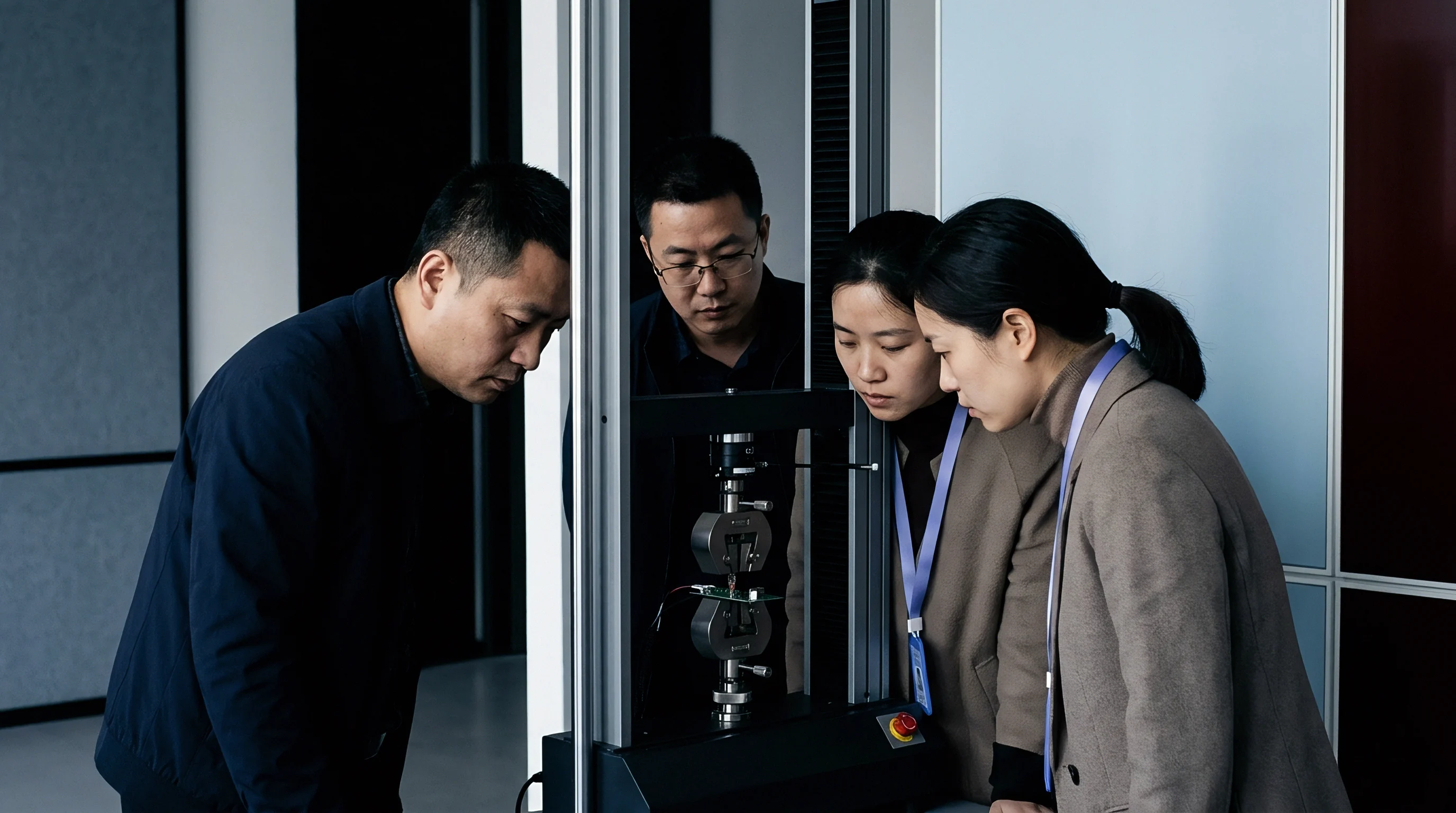
Metallurgical certificate packages are audited against mechanical test coupons before authorizing shipment from Guangdong vacuum heat treatment facilities. Inspection teams verify solution treatment completeness by measuring elemental concentration profiles across dendrite cores on sectioned test coupons. Residual segregation ratios for refractory elements must remain below specified limits to ensure microstructural stability.
Coupons failing to meet segregation limits indicate inadequate furnace hold times or improper stress-coupled diffusion parameter inputs.
Microstructural Acceptance Limits
Quantitative image analysis of high-resolution scanning electron micrographs determines gamma-prime volume fraction and particle size distribution. Fully solution-treated and aged superalloys exhibit gamma-prime volume fractions between sixty-two and sixty-eight percent, with average cuboidal edge lengths between three hundred and five hundred nanometers. Deviations from these microstructural ranges reduce high-temperature creep strength and yield stress.
Micrographs showing incomplete phase dissolution or over-aged coarse precipitates prompt immediate lot rejection.
Micro-segregation index limits quantify the distribution of alloying elements across the cast microstructure. The segregation index equals the ratio of element concentration in interdendritic channels to concentration in dendrite cores. A fully homogenized structure achieves a segregation index approaching 1.00 for all alloying components.
Procurement specifications set maximum allowable residual segregation ratios, typically restricting aluminum to between 0.95 and 1.05, and rhenium to between 0.85 and 1.15. Meeting these tight bands demands rigorous control over vacuum furnace hold times and temperatures.
| Verification Parameter | Acceptance Limit | Inspection Method | Sampling Frequency |
|---|---|---|---|
| Gamma-Prime Volume Fraction | 62.0 – 68.0 % | SEM Image Analysis | 1 component per furnace load |
| Rhenium Segregation Ratio | 0.85 – 1.15 | EPMA Line Scan | 1 coupon per casting lot |
| Incipient Melting Void Count | Zero voids > 5 um | Optical Metallography | 100% destructive test bars |
| Recrystallized Grain Depth | Max 0.05 mm surface | Etched Optical Inspection | 100% visual and dimensional |
| Room Temp Tensile Yield | 950 MPa | Uniaxial Tensile Test | 2 test bars per thermal batch |
Recrystallization limits define allowable surface microstructural defects resulting from cold work during casting removal or machining. Cold-worked surface layers undergo stray grain nucleation and recrystallization during high-temperature solution heat treatment. Recrystallized grains lack single-crystal crystallographic orientation, creating weak high-angle grain boundaries that severely degrade component stress-rupture life.
Standard quality procedures limit surface recrystallization depth to less than fifty micrometers, requiring mechanical polishing or chemical etching prior to solution heat treatment to remove damaged surface layers.

Metallurgical Verification Standards
Non-destructive evaluation of solution-treated blades utilizes advanced ultrasonic and X-ray diffraction techniques. Laue X-ray diffraction maps crystal orientation across the blade volume, confirming single-crystal perfection within two degrees of the primary growth axis. Ultrasonic velocity measurements detect sub-surface porosity and macro-segregation bands by analyzing wave attenuation across thick root sections.
Components exhibiting crystallographic misorientation exceeding specification thresholds undergo immediate scrap disposition.
- Furnace Temperature Log Certificate Standardized time-temperature charts verifying ramp rates, hold duration, and vacuum level throughout the solution treatment cycle.
- Micro-Segregation EPMA Report Electron probe microanalysis data documenting residual element partitioning ratios across interdendritic regions.
- Phase Volume Fraction Analysis Quantitative metallography reports confirming gamma-prime volume fraction between sixty-two and sixty-eight percent.
- Creep Test Rupture Certification Mechanical test data from companion test bars pulled to failure under standardized stress and temperature conditions.
Mechanical verification requires stress-rupture testing of companion test bars processed alongside production turbine lots. Test bars undergo uniaxial tension loading at elevated temperatures until fracture occurs. Minimum rupture life and ductility values establish batch qualification.
If a companion test bar fails prior to reaching specified hour thresholds, the entire associated furnace load undergoes technical review and potential scrap rejection.
Statistical process control tracks thermal processing parameters across consecutive manufacturing runs. Control charts record vacuum pressure, heating ramp rates, dwell temperatures, and gas quench cooling rates. Drift in control variables indicates furnace component degradation, triggering preventative maintenance protocols before out-of-spec microstructures occur in production hardware.
Under AMS 2800 Clause 4.3.2, any thermal excursion exceeding target solution temperature by more than five degrees Celsius mandates immediate scrapping of all single-crystal hardware in the load without option for re-heat treatment.

Landed
Unit economics for high-pressure single-crystal turbine blades depend heavily on vacuum solution treatment yield rates and non-destructive rejections. Single-crystal casting yields typically range between sixty and seventy-five percent prior to thermal processing. Solution heat treatment introduces additional yield risks, including incipient melting, residual segregation rejection, surface recrystallization, and quench distortion.
Scrapping a fully machined single-crystal turbine blade at the post-heat-treatment stage destroys substantial accrued value, amplifying total landed component costs.
Vacuum furnace operation represents a major operational cost driver in superalloy turbine manufacturing. High-temperature solution cycles require forty-eight to seventy-two hours of continuous processing time under deep vacuum or high-purity inert gas atmospheres. Electrical power consumption, argon gas consumption for high-pressure quenching, and furnace heating element degradation accumulate per processing run.
Extending solution soak times to achieve complete homogenization increases per-unit heat treatment costs, requiring commercial trade-off analysis against scrap reduction savings.

Cost Allocation Mechanics
Yield losses occurring during thermal processing inflate the effective unit cost of surviving blades. The financial formula allocating heat treatment scrap costs adds the value of discarded castings across the surviving component batch. When solution treatment yield drops from ninety-five percent to eighty-five percent, the landed cost per acceptable turbine blade increases by twelve to fifteen percent, depending on raw material alloy surcharges.
Rhenium and ruthenium additions represent up to thirty percent of virgin casting material value, making material scrap recovery crucial for manufacturing cost control.
Rework options for out-of-spec solution-treated hardware remain constrained by physical metallurgical limits. Parts exhibiting incomplete solution homogenization undergo secondary solution cycles to complete elemental interdiffusion, incurring additional furnace processing costs and lead-time delays. Parts containing incipient melting voids, surface recrystallization, or grain boundary defects cannot undergo structural repair, resulting in total loss of casting value.
Commercial contracts between procurement entities and heat treatment vendors incorporate explicit yield threshold guarantees to allocate financial liability for thermal process scrap.
Distance accentuates cost discrepancies when heat treatment oversight occurs remotely. Shipping unverified castings across international borders for solution heat treatment introduces transportation lead time and customs duty risks. Discovering microstructural defects after cross-border transit adds round-trip logistics expense and delays engine assembly schedules.
Installing local technical verification protocols at supplier heat treatment sites eliminates unnecessary freight cycles by intercepting defective lots immediately post-quench.
Long-term supply agreements balance processing cost against microstructural quality metrics. Procurement teams establish clear pricing structures incorporating base thermal processing fees, alloy surcharges, and performance-based scrap adjustments. Quantifying the financial impact of stress-coupled interdiffusion optimization enables manufacturers to justify investments in advanced furnace control technology, high-resolution modeling software, and on-site metallurgical audit personnel.
Financial Impact of Microstructural Rejections
Scrap costs escalate dramatically as components advance through post-solution processing steps. A casting rejected immediately after solution heat treatment incurs lost casting and heat treatment costs. If a subtle diffusion defect, such as localized topologically close-packed phase precipitation or surface micro-cracking, escapes initial inspection and causes failure during machining or thermal barrier coating application, accrued manufacturing costs double.
Implementing rigorous non-destructive evaluation and stress-coupled interdiffusion screening immediately post-solution treatment protects downstream machining investments.
Optimizing vacuum furnace load layout improves thermal uniformities, directly enhancing process yield economics. Packed furnace configurations increase component throughput per run, reducing unit heat treatment cost. Packed loads alter gas quench flow paths and thermal radiation shielding, increasing internal thermal gradients and associated stress fields.
Stress gradients drive non-uniform interdiffusion and local solvus variations across the load. Balance between furnace batch density and microstructural yield determines the overall cost efficiency of industrial turbine heat treatment operations.