
Intermetallic Phase Transformation Kinetics during Accelerated Isothermal Bake Testing
Accelerated isothermal bake testing demands exact thermal control below phase transition thresholds to derive valid intermetallic growth rate kinetics.
Accelerated isothermal bake testing demands exact thermal control below phase transition thresholds to derive valid intermetallic growth rate kinetics.

Latent packaging delamination liabilities require cross-tier contracts linking physical forensic criteria directly to multi-vendor recovery allocations.

Structure microelectronics packaging indemnity clauses by tying latent defect remedies to acoustic microscopy criteria, retained control samples, and escrow holdbacks.
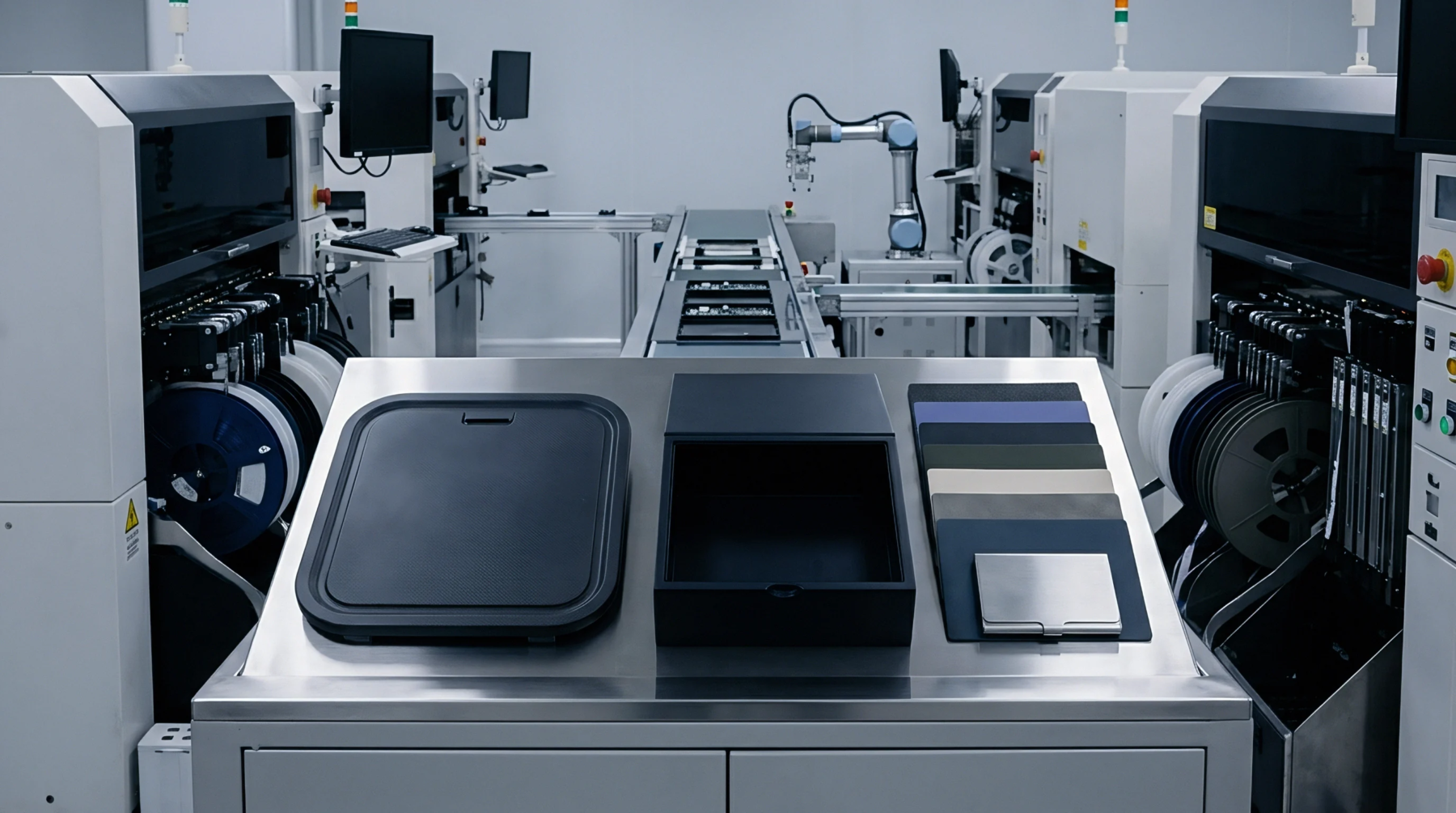
Kirkendall voiding occurs when copper diffuses into tin faster than tin into copper, condensing vacancies in the Cu3Sn layer, accelerated by plating impurities.
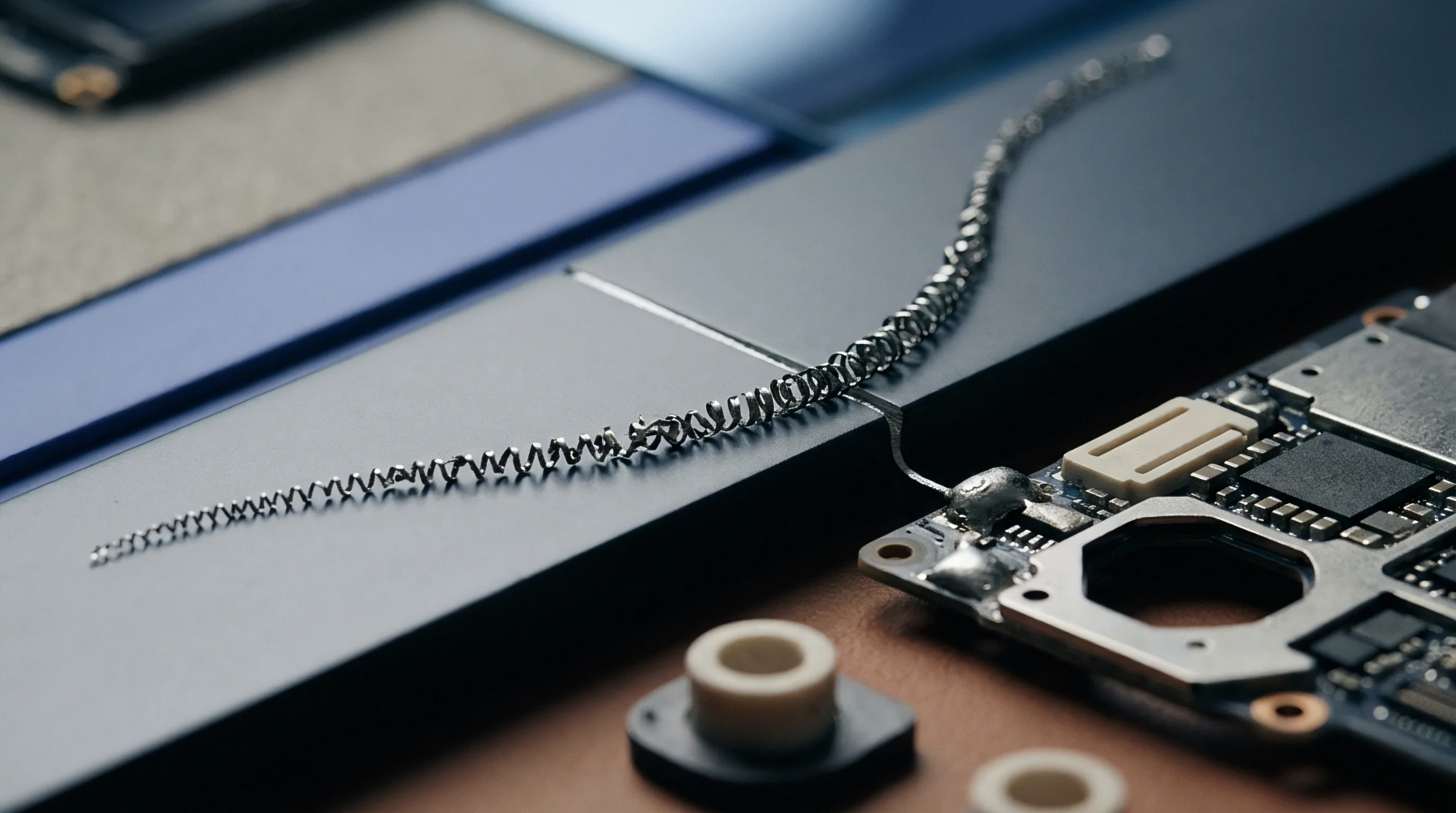
Quantifying offshore PCB joint liability requires linking ionic contamination data to Peck acceleration models and contractual latent defect terms.

Verify post-holiday solder joint reliability through IPC-TM-650 2.1.1 microsectioning to quantify intermetallic growth and detect latent interface voiding.

Planar Kirkendall voiding and ternary phase embrittlement in electroless nickel phosphorus joints are controlled by phosphorus fraction and reflow thermal budgets.

Controlling interfacial intermetallic growth requires optimizing reflow profiles, selecting microalloyed solder alloys, and auditing substrate copper plating quality.
Controlling solder grain texture and cooling profiles during reflow suppresses anisotropic diffusion divergence in microbumps under electromigration stress.

Adding sub-percent titanium or manganese dopants to copper targets suppresses interface vacancy condensation by trapping lattice sites before void nucleation starts.

Manage Kirkendall voiding by capping plating bath sulfur impurities under 10 ppm and clamping reflow time above liquidus strictly between 45 and 60 seconds.
Thermal aging accelerates SAC305 intermetallic growth through parabolic diffusion, where Cu3Sn layer thickening and Kirkendall voiding reduce joint shear strength.

Boundary solute accumulation lowers fracture energy at microbump interfaces, demanding precise surface chemistry and reflow controls to prevent shear failure.

Hydrostatic stress gradients drive vacancy migration in solder interconnects, accelerating interfacial voiding and demanding strict reflow cooling controls.

Calibrate intermetallic vacancy growth by quantifying Cu3Sn void area fractions via focused ion beam milling across discrete thermal stress readouts.

Suppressing Kirkendall voiding demands controlling substrate copper electroplating additives and microalloying solders to balance diffusion rates.

Thermal aging validation of fine pitch solder joints requires argon ion milling and low-voltage FE-SEM to distinguish genuine submicron Kirkendall voids from mechanical polishing artifacts before enforcing contractual lot rejection criteria.

High temperature storage failure in copper substrates requires tight electrodeposition additive control, nitrogen annealing, and strict contract chargeback terms.

Coupled thermo-electro-mechanical fields drive interfacial vacancy accumulation, requiring precise microstructural boundary limits in supply contracts to prevent latent field failure.

Quantifying intermetallic kinetics requires controlling reflow thermal input and substrate metallurgy to prevent brittle interface fracture during service.
Controlling copper interfacial micro-void nucleation requires balancing plating bath organic additives, limiting total organic carbon, and enforcing slow thermal anneal ramps.

Stress-assisted microvoid coalescence at solder interfaces is driven by thermal expansion mismatch and hydrostatic tension gradients during shock cycling.

Quantifying interfacial intermetallic growth kinetics under thermal aging enables accurate interconnect lifetime predictions and prevents field failures.

Modelling vacancy transport in ternary SAC interfaces enables precise prediction of Kirkendall microvoid growth, preventing latent failure in high-reliability packaging.
Managing lead-free solder intermetallic growth requires strict reflow thermal limits to prevent brittle phase formation and latent interfacial field failures.
Lead-free solder microstructures coarsen rapidly under thermal heat, requiring micro-alloying and strict reflow oversight to stop intermetallic failures.

Predict intermetallic growth during reflow by balancing peak temperature and time above liquidus to control Cu6Sn5 scallop thickness between 1.0 and 2.5 µm.

Modeling intermetallic vacancy migration requires coupling chemical, stress, and electrical driving forces to manage Kirkendall void risks in micro-bumps.
Expertise is a utility, not a secret. sentiention™ publishes its working knowledge as open reference: intelligence layer covering the materials it sources, the markets it enters, and the reference that serves both.