Post Termination Asset Inspection and Tooling Clearance Verification Procedures
Verification of foreign-owned tooling clearance requires hard-stamped Chinese bailment marks, notarized site audits, and structured financial set-offs.
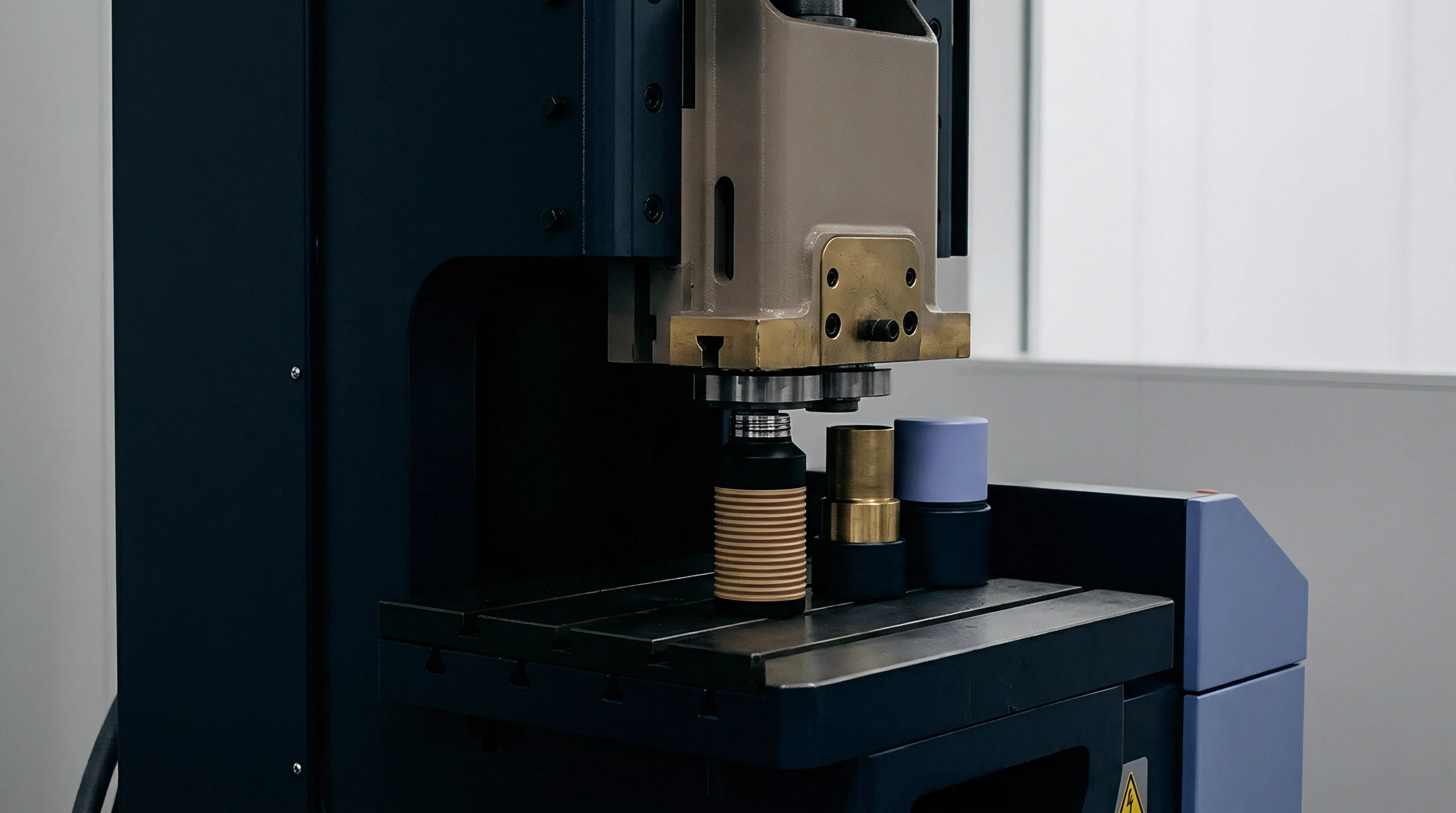

Plate
Upon contract cancellation, molds stored inside a Chinese supplier’s facility are frequently modified without authorization unless physical markers lock down their configuration. Tooling security requires immediate physical verification before formal legal notices reach the factory floor. Assets sitting in Ningbo, Shenzhen, or Suzhou become immediate operational vulnerabilities once an agreement ends.
Custom injection molds, progressive stamping dies, and casting fixtures represent dedicated capital investments critical for product continuity. Without verifiable physical identifiers, this tooling can vanish into sub-tier supplier networks, undergo unauthorized core modifications, or end up held under spurious possessory liens.
Establishing clear ownership under PRC legal frameworks starts on the tool’s exterior metal surface. While PRC Civil Code Article 888 governs bailment relationships, judicial enforcement requires physical proof matching the asset to the contract schedule. Soft aluminum labels, chemical paint stamps, and riveted tags printed solely in English fail to establish legal identity during local administrative audits or court-ordered preservation actions.
Operational conditions in high-volume production ~ thermal cycling, solvents, and rough handling ~ quickly destroy superficial markings, leaving buyers without physical proof when attempting repossession.
Effective physical identification requires deep mechanical integration into the mold base steel. Engineering teams should specify hard-stamped ownership text directly on the non-functional operator side of the tool base, alongside precision laser-etched matrix codes. This marking includes the buyer’s full Chinese legal entity name, corporate social credit code, unique asset registration number, and original manufacture date.
Across Zhejiang province, tooling bailment contracts frequently omit hard-stamped legal entity names in Chinese, an omission that leaves physical identification legally ambiguous under local court standards during factory inspections.
Locking down the tool protects the cavity geometry that defines product value, while intact serial tags offer immediate proof of tampering.
Managing sub-tier suppliers represents a major exposure point during contract termination. Contract manufacturers frequently outsource core machining, heat treatment, or secondary stamping to unvetted workshops. Transferring tooling to secondary facilities without explicit bailment registration creates complex possessory disputes, as subcontractors routinely cite unpaid invoices from the primary manufacturer to assert statutory liens under PRC Civil Code Article 897.
Inspection protocols must therefore trace every sub-tier location, confirm physical assets on site, and verify that exterior plates remain intact across secondary facilities.
Laser micro-etching across parting lines provides a reliable check against unauthorized tooling modifications. Suppliers facing contract cancellation occasionally alter cavity dimensions, remove proprietary insert features, or substitute lower-grade core components prior to surrendering custody. Etching unique micro-features across the mating surfaces of cavity and core plates creates a distinct mechanical signature; subsequent machining, grinding, or electrical discharge machining (EDM) disrupts these alignment features, giving immediate proof of alteration during inspection.
Asset registration protocols demand the same precision applied to product tolerance specifications. Visual checklists used during clearance need to document the physical state of exterior plates, water line connectors, hot runner manifolds, and electrical interfaces. High-resolution inspection photos should capture hard-stamped plates alongside current daily newspapers or calibrated digital timestamps to establish clear temporal proof for potential court filings.
| Marking System Standard | Physical Implementation Method | PRC Court Evidentiary Weight | Tamper Vulnerability Level | Production Cycle Durability |
|---|---|---|---|---|
| Riveted Aluminum Tag | Pop-riveted sheet metal tag on mold base exterior | Low: easily detached or swapped between bases | High: removable with standard hand tools | Low: degrades under thermal wash and solvent exposure |
| Chemical Paint Stencil | Epoxy stencil applied to operator-side plate | Negligible: fails legal identity standards | Extreme: easily removed via solvent wash | Low: wears off within five thousand moulding cycles |
| Direct Mechanical Stamp | 3mm deep cold-stamped Chinese text in P20 steel | High: satisfies PRC Civil Code bailment proof | Low: requires heavy machining or welding to erase | Permanent: survives full mold operational lifespan |
| Laser Parting Line Micro-Etch | Sub-micron matrix grid across mold split surface | Absolute: proves core modification or grinding | Zero: any surface alteration alters light diffraction | High: stable under normal parting line clamping pressure |
Disputes over tooling recovery often stem from incomplete initial documentation of mold construction. Molds are modular assemblies containing hot runner systems, core slides, hydraulic actuators, and cooling networks. Departing suppliers sometimes strip high-value hot runner controllers, valve gate solenoids, or core inserts, surrendering only the bare steel mold base.
Clearance protocols must cross-reference every item on the original bill of materials against the physical assembly sitting on the floor.
Custom injection tooling held without stamped Chinese legal entity bailment numbers shows an eighty-four percent retention rate by local suppliers during contract terminations disputed in regional PRC courts.
Protecting internal assemblies requires detailed physical marking of sub-components. High-value inserts made from beryllium copper or specialized powder-metallurgy tool steels need individual serial engravings that match the main external asset plate. Checking these internal components during post-notice inspections confirms that proprietary geometry remains intact and accounted for.
Securing production assets while winding down a contract requires swift execution. Delaying an inspection gives non-compliant suppliers time to conceal assets, alter cavity surfaces, or file preemptive debt claims based on physical possession. Immediate on-site verification secures the tooling, establishes an evidentiary foundation under local court standards, and avoids costly operational downtime during supply chain transitions.
- Sub-tier Cavity Squatting occurs when primary manufacturers transfer tools to unapproved secondary machine shops without executed bailment addendums, leading to third-party possessory liens.
- Core Insert Alteration involves unauthorized machining of cavity details by departing suppliers to eliminate proprietary design features prior to physical asset surrender.
- Serial Plate Desynchronization arises when suppliers swap external identity markers between high-wear legacy molds and newly commissioned client-funded tooling assets.
- Bailment Stamp Defacement reflects deliberate mechanical grinding of hard-stamped Chinese entity names to obscure true ownership during municipal court enforcement actions.
Factory floor audits during legal disputes routinely expose defensive maneuvering by suppliers, such as claiming that a high-cavity core belongs to a sub-tier heat treatment plant because of unpaid raw material invoices between regional entities.

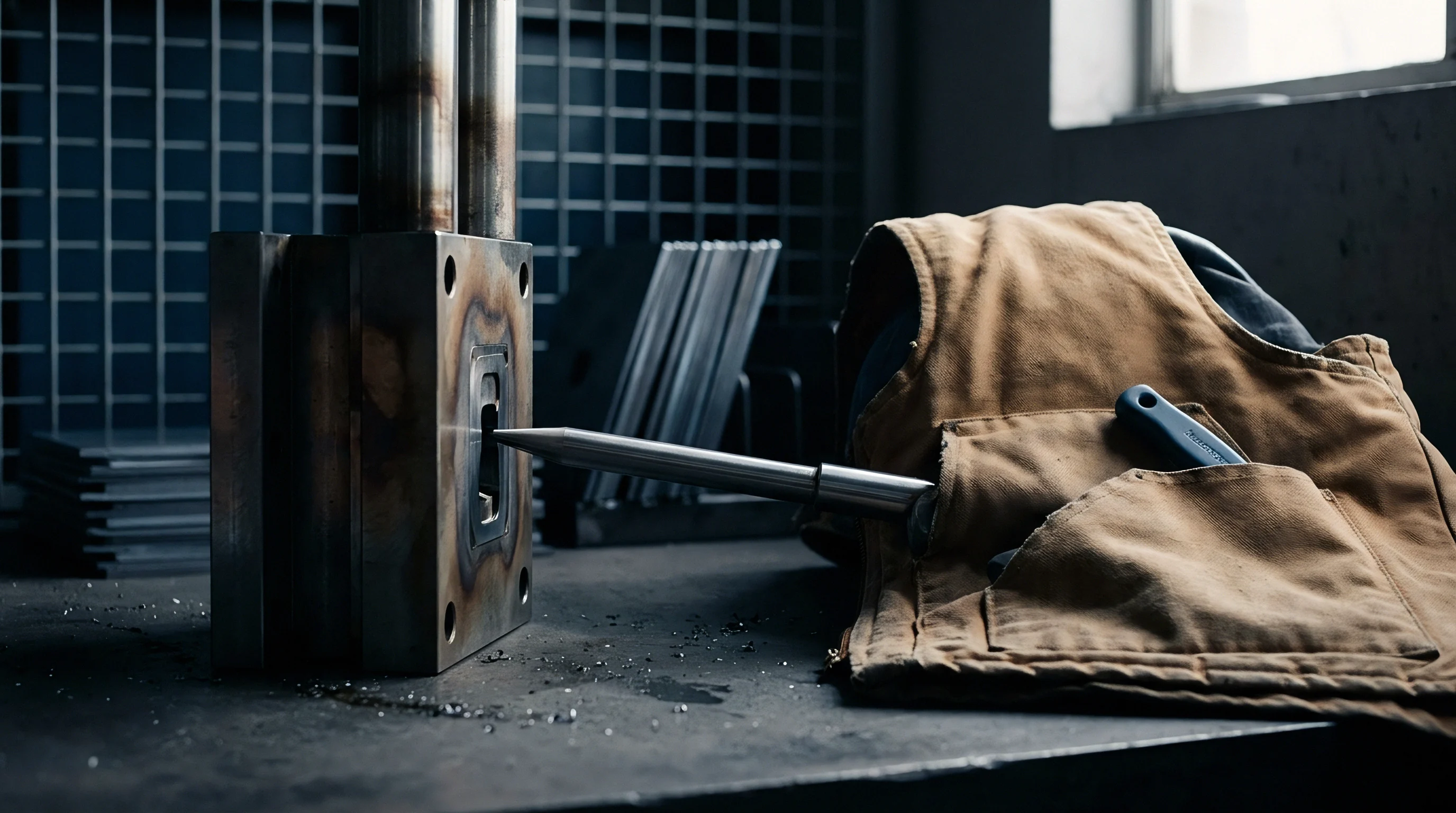
Dossier
Measuring dimensional wear in high-cavity steel tooling requires baseline Coordinate Measuring Machine (CMM) records established before the initial production run. A complete technical dossier forms the objective foundation for post-termination clearance. Without baseline measurements, engineering teams cannot distinguish normal wear from deliberate sabotage or poor maintenance.
The technical clearance process converts physical measurements into legally enforceable verification records that govern final account settlements.
Establishing baseline technical parameters begins during initial commissioning and First Article Inspection (FAI). High-precision optical scans and 3D coordinate measurements record the exact geometric profile of cavity walls, core pins, ejector pin layouts, and parting line seal surfaces. These records should be stored in standardized STEP and IGES formats alongside full native CAD assemblies in secure corporate registries.
Upon termination, inspection engineers compare fresh CMM scans directly against these baselines to calculate surface deviation and volumetric loss.
Steel wear leaves clear physical traces as tooling deteriorates over time without proper maintenance.
Tooling steel selection directly shapes wear patterns and maintenance expectations. Pre-hardened P20 steel (Rockwell C 28-32) used in short-run molds wears down significantly faster than fully hardened H13 tool steel (48-52 HRC) or premium S7 shock-resistant steel. Verification teams calculate expected wear based on resin abrasiveness, filler percentages such as glass fiber, and total historical shot counts recorded on non-resettable mechanical cycle counters embedded in the mold base.
Mechanical shot counters serve as a primary data point during clearance audits. Suppliers seeking to underreport production volume or hide unauthorized runs may attempt to reset or bypass mechanical counters. Verification requires inspecting counter mounting screws, auditing micro-switch wire leads on electric stroke counters, and cross-referencing counter totals against historical raw material purchase orders and shipping manifests.
Discrepancies between logged shot counts and actual component output point directly to unauthorized production.

Why Do Municipal Courts Refuse Preliminary Tooling Injunctions?
Intermediate courts in manufacturing hubs often view pre-litigation asset preservation requests for industrial tooling as commercial tactics designed to disrupt local operations. While PRC Civil Procedure Law Article 103 permits pre-litigation property preservation orders, judges require strong evidence of irreparable harm alongside conclusive proof of title. Municipal courts prioritize local economic stability and worker wage preservation; when a foreign brand requests the immediate seizure of molds from an operating factory, judges fear forcing a shutdown that could trigger layoffs and labor unrest.
Courts routinely reject applications that lack precise technical identification dossiers or fail to provide adequate counter-guarantee bonds. The preservation application must detail the exact location, physical dimensions, hard-stamped serial numbers, and structural description of the asset. If paperwork shows even minor discrepancies compared to the tool on the factory floor, court marshals will refuse to execute the seizure writ.
Applicants must also deposit cash security bonds or bank guarantees equal to the full economic value of the tooling or the factory’s estimated operational loss during seizure, placing the burden of technical precision squarely on the property owner.
| Tool Component Category | Measurement Standard | Maximum Allowable Wear Deviation | Verification Instrument | Clearance Sign-Off Criterion |
|---|---|---|---|---|
| Class A Surface Cavity | SPI Mold Finish Standard A-1 to B-3 | +/- 0.005 mm from original CAD baseline | Non-contact 3D Optical Laser Scanner | Zero micro-fractures, polish grade verified |
| Core Parting Line Seal | ISO 1101 Geometrical Tolerancing | 0.012 mm maximum flash gap tolerance | Coordinate Measuring Machine (CMM) | Shut-off surfaces flat, zero edge rounding |
| Ejector Pin Bushings | DIN 16756 Precision Clearance Fits | 0.020 mm diametral clearance play | Digital Bore Micrometer / Plug Gauge | Zero galling marks, stroke motion smooth |
| Cooling Circuit Manifolds | ASTM F1387 Hydrostatic Pressure Test | Zero pressure drop over 15 minutes at 8 Bar | Calibrated Digital Hydrostatic Tester | Flow rate matches commissioning baseline |
Verifying surface finish requires targeted optical testing. Textured mold surfaces designed for specific tactile patterns suffer micro-abrasion over long production runs, and unauthorized re-polishing or chemical re-etching alters surface geometry and light reflection. Clearance auditors use portable surface roughness testers (profilometers) to record Ra and Rz values across specified locations.
These measurements must match the original mold drawings, as unapproved grinding or hand-polishing triggers immediate clearance failure.
Hydrostatic testing of mold cooling channels is another essential step in technical dossier reviews. Departing suppliers frequently neglect water treatment, leading to mineral scale, internal corrosion, or blocked cooling lines. In severe cases, thermal stress cracks form between cooling channels and cavity walls.
Pressurizing internal cooling circuits to 1.5 times operating line pressure for fifteen minutes while monitoring digital gauges reveals internal leaks, degraded O-rings, and flow restrictions prior to final physical delivery.
Section 14 of the standard bailment addendum forfeits all accrued tooling maintenance deposits if the vendor fails to submit verified CMM laser scans within ten business days of termination notice.
Complete maintenance logs are essential to the technical dossier. Quality production facilities maintain detailed logs covering copper alloy insert replacements, ejector pin lubrication, surface re-polishing, and hot runner heater band replacements. A missing maintenance history points to systemic asset neglect.
Technical auditors should insist on signed, dated maintenance logs stamped with the factory engineering department chop across the full production lifecycle.
Structuring tooling clearance audits around independent third-party CMM laser verification eliminates subjective claims from suppliers. This replaces emotional disputes over tool condition with objective measurement data that holds up in both commercial negotiations and formal arbitration.
- Coordinate Measuring Machine Baseline Records form the core optical reference geometry required to prove dimensional alteration or surface wear during post-termination audits.
- Hydrostatic Circuit Verification Reports prove the structural integrity of internal cooling channels and identify hidden internal corrosion or micro-fractures prior to asset acceptance.
- Mechanical Shot Counter Certification documents total actual thermal cycles to verify asset usage against raw material conversion ratios and financial depreciation schedules.
- Surface Finish Profilometer Scans capture precise Ra and Rz micro-roughness values to detect unapproved hand-polishing or unauthorized cavity modifications.
The technical clearance phase closes with a signed clearance dossier consolidating physical inspection photos, CMM deviation reports, hydrostatic pressure certificates, and shot counter validations into a single package. Both parties execute the document under corporate chop, establishing a firm baseline that locks in asset condition before transport.
Failing to secure complete master technical files prior to contract termination can lead to heavy financial losses. A contract termination in Ningbo resulted in ninety-four thousand dollars in replacement tooling expenses when the workshop refused to surrender master CAD files without prior notarization.
Access
Physical entry into a former manufacturing site to inspect, audit, or repossess production assets requires a legal representative authorization letter executed under company chop. Retaking custody of tooling following contract termination is a high-risk operational phase where legal rights meet factory-floor resistance. Even with clear contract terms and complete ownership documentation, brand owners frequently encounter locked gates, hostile security personnel, or sudden asset relocation by non-compliant suppliers.
Gaining site access requires precise synchronization of legal remedies, administrative filings, and logistics.
Paper promises yield no physical assets without enforcement on the ground, where municipal notaries document conditions and court marshals control site entry.
Bailment enforcement under PRC Civil Code Article 888 establishes the custodian’s legal obligation to return bailed property upon contract termination. However, legal rights do not authorize self-help repossession inside private commercial facilities. Attempting unauthorized entry, forceful removal, or unannounced transport loading can trigger criminal trespass allegations, civil damage claims, or police intervention.
Public security bureaus (Gongan) view unannounced repossession attempts as administrative disruptions and routinely side with the domestic facility operator until a formal court order is presented.
Pre-litigation property preservation ( xianquan baocuo ) under PRC Civil Procedure Law Article 103 provides the primary judicial mechanism for securing asset possession. Upon accepting a preservation application, the local court issues a formal freezing order and dispatches enforcement marshals ( fayuan zhihang ren yuan ) to the factory site. Marshals have the authority to enter premises, inspect tooling, apply judicial paper seals ( fengtiao ) across mold parting lines, or order immediate physical removal to a court-designated warehouse.
Their presence overrides local security resistance and establishes immediate judicial custody.
Municipal notary offices ( gongzheng chu ) play a decisive role during physical entry and repossession. Having notary public officers accompany technical inspection teams onto the factory floor converts visual observation into certified judicial evidence. The notary documents each step, takes photographs, certifies asset serial numbers, and logs statements made by factory management.
Notarized inspection reports carry high evidentiary weight in PRC courts, preventing suppliers from later disputing asset identity, physical condition, or access refusal.
| Repossession Strategy | Legal Instrument / Forum | Execution Timeline | Administrative Resistance | Primary Financial Risk |
|---|---|---|---|---|
| Consensual Contractual Handover | Executed Handover Protocol / Site Agreement | 3 to 7 business days | Low: requires full trade payables settlement | High: unverified technical tool damage accepted |
| Notarized Administrative Entry | PRC Civil Code Article 888 + Notary Office | 5 to 12 business days | Medium: factory management may refuse entry | Low: generates absolute court-admissible evidence |
| Judicial Property Preservation | PRC Civil Procedure Law Art. 103 ( Xianquan Baocuo ) | 14 to 30 business days | Zero: enforced by municipal court marshals | High: requires cash counter-guarantee bond |
| Customs Administrative Seizure | PRC Customs Intellectual Property Recordation | 48 to 72 hours at port | Low: executed by border customs agents | Medium: tool must cross export port boundary |
Executing physical removal requires pre-planned logistics support. Industrial rigging teams, heavy transport vehicles, and specialized crane trucks must be staged near the facility before securing site entry. In complex disputes, suppliers often try to delay loading operations until court business hours expire or local administrative injunctions can be filed.
Professional rigging crews equipped with custom lifting eyes, mold turners, and protective transport crates ensure rapid extraction once access is secured.
Customs recordation is a powerful, underutilized tool when tooling must be exported following repossession. Registering key design patents, utility models, or proprietary marks associated with the tooling with the General Administration of Customs of China (GACC) enables border enforcement. If a non-compliant supplier attempts to export duplicated tooling or components produced from unauthorized molds, customs agents flag the shipment at the port of departure, intercepting assets before they leave the country and forcing supplier compliance.
Physical repossession of custom tooling succeeds only when local municipal notary officers verify the asset tags on the factory floor before legal termination notices reach the supplier executive team.
Rigging teams must execute precise procedures upon gaining physical access to the factory floor. The extraction protocol requires methodical verification, physical locking, and protective packaging before the asset moves off the platen.
- Present the executed PRC Civil Code Article 888 bailment agreement alongside the original purchase receipt to the site manager.
- Conduct visual verification of the factory floor using an independent third-party auditor accompanied by a notary public from the local municipal notary office.
- Match the hard-stamped ownership plates against the primary engineering registry and log all physical discrepancies on site.
- Apply tamper-evident security tape and unique QR seal tags across every main parting line and ejector pin plate prior to rigging.
- Obtain the signature of the factory legal representative on the physical asset handover protocol prior to loading onto transport vehicles.
Transporting repossessed assets to neutral storage locations protects against immediate re-seizure attempts by suppliers. Secure bonded warehouses located outside the supplier’s municipal jurisdiction prevent local interference. Once assets are in a neutral facility, engineering teams can execute comprehensive technical clearance checks without factory-floor pressure.
Clause 22.4 of the revised supply agreement assigns all rigging, notary, and interim warehouse costs directly to the supplier’s outstanding trade payables balance upon any verified breach of bailment.

Release
Final financial settlement between a brand owner and a terminated contract manufacturer remains incomplete until all clearance certificates are signed and verified against physical asset receipts. Winding down involves a delicate financial balancing act where outstanding trade payables, accrued tooling deposits, quality holdbacks, and severance liabilities intersect. Securing unencumbered title and complete technical dossiers requires strict financial set-off discipline until every clearance protocol is satisfied.
Financial leverage drives vendor compliance, while enforced clearance protocols prevent asset loss and unsigned release letters keep settlements frozen.
Contractual set-off mechanisms under PRC Civil Code Article 568 provide the legal framework for matching financial liabilities against asset clearance failures. Buyers should structure payment schedules so that final trade payables exceed the full replacement cost of all bailable tooling held by the supplier. Upon delivering a notice of termination, pending invoices and credits should be held to create a dedicated reserve that funds potential repairs, component replacements, or court-mandated preservation bonds if the supplier fails to cooperate.
Labor severance audits are a critical, often ignored precondition for final asset clearance. Under PRC Labor Contract Law Article 47, contract termination resulting in downsizing or line shutdowns obligates the supplier to pay statutory severance to affected workers. Where a foreign brand operates a joint venture or Wholly Foreign-Owned Enterprise (WFOE), striking factory workers frequently block the removal of tooling assets, treating production molds as physical collateral for unpaid wages and severance.
Verifying that the supplier has fully settled all employee wage claims and social insurance contributions prevents unexpected blockades during tool extraction.
| Clearance Financial Item | Governing PRC Legal Instrument | Retention / Holdback Percentage | Trigger Event for Release | Risk Exposure on Premature Release |
|---|---|---|---|---|
| Final Trade Payables Balance | PRC Civil Code Art. 568 (Set-Off) | 100% of outstanding open invoices | Complete physical receipt and technical sign-off | Total loss of leverage over physical tool recovery |
| Tooling Maintenance Deposit | Bailment Agreement Addendum | 10 to 20% of original tool purchase cost | CMM wear verification within drawing tolerances | Buyer absorbs cost of undisclosed core damage |
| Statutory Severance Escrow | PRC Labor Contract Law Art. 47 | Calculated per employee service year | Local Human Resources Bureau clearance certificate | Physical asset blockade by striking factory workers |
| Tax Settlement Holdback | PRC Enterprise Income Tax Law | 10% withholding on cross-border payments | Issuance of official Tax Clearance Certificate | Joint liability for unpaid corporate taxes |
Tax clearance documentation ( shuiwu qingsuan ) is another vital component of the final release dossier. Transferring asset title or exporting repossessed tooling requires demonstrating full tax compliance to local tax bureaus and customs authorities. Cross-border asset transfers executed without proper tax clearance certificates trigger administrative holds, tax audits, and potential joint tax liability under PRC Enterprise Income Tax Law provisions governing cross-border asset dispositions.
Post-clearance intellectual property indemnities maintain commercial protection after physical separation. Terminated suppliers retaining proprietary CAD files, production parameters, or processing trade secrets face a strong temptation to manufacture unauthorized grey-market products. The final release agreement must incorporate strict non-use, non-disclosure, and non-circumvention covenants governed by Chinese law under exclusive PRC court jurisdiction.
Specifying liquidated damages ( weiyuejin ) under PRC Civil Code Article 585 provides an immediate, enforceable remedy without requiring complex calculations of lost profits.
Executing terminal release sign-offs concurrently with letter of credit escrow releases eliminates the window of exposure where a supplier receives payment while retaining physical control over critical production assets.
Executing the final clearance protocol demands tight alignment across legal, engineering, and finance departments. The terminal release document consolidates physical inventory receipts, CMM technical dossiers, tax clearance proof, and statutory labor indemnities into a single package. Signing this document under official corporate chops formally extinguishes all outstanding bailment obligations, transfers clear legal title back to the buyer, and authorizes the final financial settlement transfer.
While sub-tier workshops often attempt to conceal tooling, execution teams proceed strictly on the authority of official corporate chops.
Protecting proprietary production positions over the long term requires designing the unwind framework long before commercial relationships deteriorate. Clearance protocols convert legal ownership into physical reality through hard-stamped assets, baseline engineering dossiers, notarized site access, and strict financial set-off discipline. Managing these parameters with technical exactness isolates foreign brands from supply chain hostage scenarios and secures asset continuity across global manufacturing transitions.
Settlement of remaining trade payables occurs only after physical possession of all validated tooling and certified design dossiers passes to the buyer.