Enforcing Extraterritorial Injunctions against Domestic Subcontractors Holding Proprietary Tooling and Firmware Files
Foreign injunctions hold zero force in China; physical tooling and firmware recovery requires direct PRC behavioral preservation filings backed by local registrations.

Locus
Foreign court orders halting IP infringement or demanding asset surrender carry no direct coercive authority over domestic subcontractors in mainland China. When a Western court issues an interlocutory injunction or anti-suit order against a Chinese manufacturing supplier, the decree stops at the border. Articles 298 and 299 of the PRC Civil Procedure Law establish that foreign judicial rulings obtain enforcement solely through bilateral judicial assistance treaties or established reciprocity.
Interim measures ~ including preliminary injunctions, restraining orders, and emergency discovery mandates ~ fall completely outside Chinese treaty obligations. A foreign judgment carries no executive force over a Chinese factory until a competent Intermediate People’s Court formally recognizes and enforces it.
Chinese courts routinely reject applications to recognize foreign interim orders. Judges treat pre-trial injunctive relief as provisional procedural directions rather than final, binding adjudications. An injunction issued in California, London, or Munich cannot force a subcontractor in Shenzhen or Ningbo to hand over physical equipment or stop flashing compiled binaries onto circuit boards.
Foreign litigants trying to enforce extraterritorial orders through foreign contempt proceedings run into immediate operational brick walls. The subcontractor operates within a jurisdiction that recognizes only its own court orders, local administrative rulings, and domestic property registrations.
| Foreign Instrument Type | PRC Legal Basis | Recognition Mechanism | Local Enforcement Reality |
|---|---|---|---|
| Preliminary Injunction / Interim Order | CPL Article 298 | Judicial assistance treaty or reciprocity | Systematically denied; treated as non-final procedural orders. |
| Final Foreign Civil Money Judgment | CPL Article 299 | Intermediate People’s Court review | Enforceable only under proven reciprocity or explicit bilateral treaty. |
| Foreign Arbitral Award (CIETAC / HKIAC / SIAC) | 1958 New York Convention | PRC Enforcement Docket application | High recognition rate subject to narrow public policy exceptions under Article V(2)(b). |
| Domestic Behavioral Preservation Order | CPL Article 103 | Direct PRC Intermediate Court petition | Immediately enforceable with local public security and court marshal backing. |
Subcontractors frequently exploit this jurisdictional disconnect when commercial relationships sour. An assembly plant facing an extraterritorial injunction from an overseas brand owner often ramps up production rather than freezing assets. The factory knows the foreign order threatens only its offshore accounts or overseas subsidiaries.
If the factory holds no assets outside mainland China, foreign contempt fines inflict no real financial damage. The overseas brand owner absorbs the legal bill for foreign proceedings while the domestic factory keeps control of the tooling and flashing equipment without interruption.
Foreign preliminary injunctions offer leverage in Western markets while remaining completely unenforceable inside Chinese courts.
Relying on foreign injunctions to secure physical assets in China is a formula for failure. Subcontractors operate under local corporate, contract, and property laws that treat foreign decrees as irrelevant. Brands that fail to establish parallel, locally enforceable agreements or domestic judicial preservation orders end up holding useless foreign rulings while their proprietary designs keep rolling off assembly lines in Guangdong and Zhejiang.


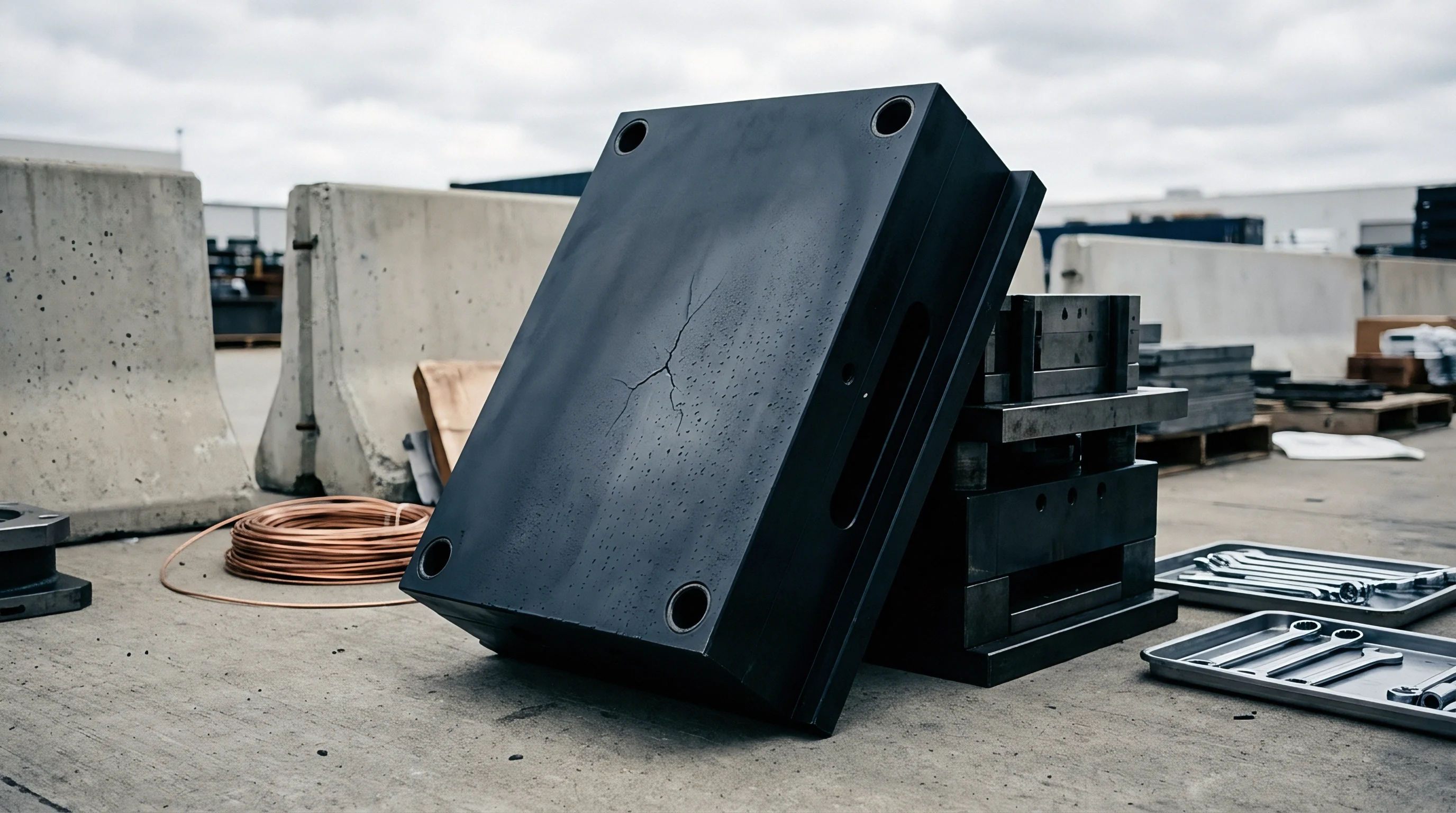
Mould
Physical production equipment in a factory belongs to whoever holds title under local property registries and bailment contracts. Subcontractors routinely assert possessory liens over injection moulds, stamping dies, and custom test fixtures when payment disputes flare up or when foreign brand owners try to shift production to competing facilities. Article 447 of the PRC Civil Code allows a contractor to retain physical custody of an asset until the owner settles debts directly tied to it.
Factories create leverage by asserting claims for unpaid engineering fees, storage charges, or unamortized tooling modifications, effectively freezing the brand’s production line.
Defeating a factory lien requires clear evidence of third-party ownership established before any dispute starts. Courts look at whether the tooling was built under a clear bailment agreement or purchased as an explicit, paid-in-full line item. When contracts roll tooling expenses into unit manufacturing costs without itemized invoices and official Value Added Tax receipts, Chinese courts consider the subcontractor the legal owner of the equipment.
In those cases, the factory has clear authority to retain, use, or alter the equipment.

Where Does Local Property Law Override Foreign Injunctive Relief?
Local property rights established under mainland law take precedence over foreign court mandates. When a brand owner gets an overseas injunction directing a subcontractor to return specialized tooling, the factory raises statutory lien defenses under Civil Code Article 448. The local court protects the factory’s physical possession until the underlying debt is adjudicated locally.
This allows subcontractors to tie up critical tooling for eighteen to twenty-four months while foreign brand owners litigate core contract terms across multiple jurisdictions.
Securing physical tooling requires setting up domestic legal protections during initial contract negotiations rather than during exit disputes.
- Customs recordation filings put proprietary equipment designs on public record and guard against unauthorized export by rogue subcontractors.
- Physical serial stamping stamps unique identification numbers directly onto metal die faces, matching the description in the registered bailment deed.
- Bailment registration covenants explicitly sever equipment ownership from unit purchase obligations, blocking statutory factory liens under PRC Civil Code Article 448.
- Pre-signed exit protocols establish clear access rights for third-party logistics agents to enter workshops, inspect assets, and remove equipment upon contract termination.
The enforceability of tooling recovery agreements hinges entirely on the phrasing of property transfer and bailment provisions in the domestic contract. A clause governing asset return must state: “The subcontractor acknowledges that all tooling, dies, and manufacturing fixtures identified in Schedule A remain the sole property of the buyer under an unencumbered bailment, and the subcontractor explicitly waives all possessory lien rights under Article 447 of the PRC Civil Code upon written notice of contract termination.”

Binary
Firmware protection involves both physical asset retention and trade secret enforcement. Subcontractors’ assembly plants receive compiled binaries, bootloaders, and cryptographic private keys required to flash microcontrollers on the production floor. When disputes arise, factories frequently retain master firmware files, obscure the flashing sequence, or load modified binaries onto unauthorized production runs.
Foreign brand owners who assume intellectual property law automatically prevents binary misuse quickly learn that copyright enforcement requires local registration.
Software copyright registration with the National Copyright Administration of China supplies the necessary evidentiary backing for civil enforcement. Chinese courts require an official NCAC registration certificate before issuing software preservation orders or examining claims of unauthorized firmware installation. Without registration, enforcing trade secret rights under Article 9 of the PRC Anti-Unfair Competition Law requires proving that the binary is a genuine trade secret, that reasonable security measures were kept, and that the subcontractor improperly accessed or misappropriated it.
| Protection Mechanism | PRC Statutory Anchor | Evidentiary Standard | Local Enforcement Speed |
|---|---|---|---|
| NCAC Software Registration | PRC Computer Software Protection Regulations | Official Registration Certificate and Source Code Deposit | Fast: 3 to 10 days for preliminary judicial administrative seizures. |
| AUCL Trade Secret Claim | PRC Anti-Unfair Competition Law Art. 9 | Proof of secrecy, commercial value, and physical security measures | Slow: 6 to 18 months requiring complex forensic tech appraisals. |
| Hardware Root-of-Trust Flashing | PRC Civil Code Contract Rights | Cryptographic log verification and token audit records | Immediate: Automated remote disabling without reliance on local courts. |
Securing firmware requires keeping compilation and key management off the subcontractor’s local servers entirely. Factory lines can be set up as basic assembly nodes that require time-sensitive cryptographic tokens to function.
- Compile binary images outside the factory using locked continuous integration pipelines.
- Program cryptographic keys into hardware root-of-trust chips at tier-two semiconductor packaging plants.
- Supply assembly lines with time-limited cryptographic tokens that expire if network heartbeats drop.
- Complete software copyright registrations with the National Copyright Administration of China before sending files.
Escrow release covenants requiring source code disclosure inside mainland China show an eighty percent loss rate in trade secret litigation when key materials lack local NCAC registration.
Factories resisting firmware retrieval attempts usually offer standardized commercial justifications. The common argument is that firmware files were permanently merged with proprietary automated testing scripts during line integration, making standalone separation impossible without disrupting manufacturing.

Compulsion
Turning an offshore dispute into real domestic enforcement requires filing parallel actions directly within the PRC judicial system. Brands holding foreign injunctions must file fresh, independent claims before competent Intermediate People’s Courts using local causes of action. Chinese procedure offers two primary mechanisms to halt subcontractor misconduct: Behavioral Preservation under Article 103 of the Civil Procedure Law and Property Preservation under Article 104.
A Behavioral Preservation order is the domestic equivalent of a preliminary injunction. The court orders a defendant to perform specific acts or cease specified conduct, such as using custom tooling or flashing proprietary firmware. Getting a Behavioral Preservation order requires showing clear ownership, proving irreparable harm, and posting a cash or guarantee bond.
Bonds typically range between 10% and 30% of the target asset’s monetary value or the anticipated operational losses suffered by the defendant while the injunction is in force.
In a typical scenario, a brand owner seeks a domestic Behavioral Preservation order to seize 12 injection moulds valued at $450,000 from a Ningbo factory. The local court requires a 20% cash security bond amounting to $90,000, deposited into the court’s escrow account within 48 hours. If the applicant proves the subcontractor is using those moulds to produce counterfeit goods, the court issues an order within two business days.
Court marshals then enter the facility, apply official judicial seals to the machinery, and transfer physical custody to a designated third-party custodian.
Foreign plaintiffs often fail in PRC behavioral preservation petitions because of avoidable procedural errors made during initial filings.
- Unregistered foreign ownership claims fail because local courts require domestic asset registrations or NCAC certificates before issuing emergency orders.
- Insufficient security bonds delay enforcement, giving the subcontractor time to move tooling or firmware files to secondary facilities.
- Vague asset identification prevents court marshals from executing seizures if orders omit precise serial numbers and physical dimensions.
- Premature foreign public disclosure alerts the subcontractor, prompting immediate counter-suits and preemptive local preservation filings against the brand.
It remains uncertain in judicial practice whether Chinese courts will grant Behavioral Preservation orders more readily in trade secret disputes where software assets involve cross-border cloud deployment and remote key servers.

Redemption
Litigation over tooling and firmware usually ends in commercial settlements rather than final court judgments. The delays and expenses of parallel litigation push both foreign brands and subcontractors toward structured buyouts. A factory holding $500,000 in custom tooling often demands full payment of disputed invoices, raw material cancellation fees, and employee severance contributions before releasing equipment.
Brands weigh the total cost of litigation against the time needed to build replacement tooling at a secondary facility.
Executing a clean operational exit requires a formal tripartite settlement agreement covering asset surrender, intellectual property assignment, tax clearance, and mutual liability releases. The agreement should set up a neutral escrow structure where funds release only after physical inspection of tooling and cryptographic verification of firmware at a third-party logistics hub.
| Decision Metric | Direct Factory Mould Buyout | Parallel New Tooling Sourcing |
|---|---|---|
| Time to Production Resumption | 2 to 4 weeks following escrow release | 16 to 24 weeks including sample re-qualification |
| Capital Outlay | Negotiated settlement fee plus back storage costs | 100% new tooling fabrication plus engineering validation |
| Legal and Litigation Costs | Escrow agent fees and settlement drafting | High parallel litigation costs plus court security bonds |
| IP and Trade Secret Risk | Immediate physical recovery and file deletion audit | High residual risk of factory using old moulds for clones |
Offsetting unpaid factory invoices against statutory severance liabilities creates strong leverage during exit negotiations. Under PRC Labor Contract Law, closing an assembly line or terminating a manufacturing agreement often triggers mass layoff obligations where the brand shares joint liability if the subcontractor defaults. By paying severance directly into a government-monitored labor escrow account, the brand satisfies statutory requirements while deducting those payments from the factory’s final buyout fee.
Commercial settlements secure tooling surrenders faster than judicial execution orders when back taxes and statutory severance payments are held in neutral escrow.
The final phase of a subcontractor dispute involves resolving local legal exposure and completing asset handover. A brand that recovers physical tooling without settling domestic tax obligations and canceling local assembly authorizations leaves its local representative exposed to administrative penalties and corporate entry bans. Tooling redemption is complete only when physical assets leave the factory gate, firmware flashing tokens expire cleanly, and local tax authorities issue official clearance certificates closing out the relationship.
Physical possession of production tools backed by local intellectual property registrations always trumps offshore court decrees when resolving manufacturing disputes in Chinese industrial centers.