Pre Litigation Asset Preservation and Tooling Repossession Mechanics under PRC Law
Pre-litigation preservation under Article 104 freezes factory tooling within 48 hours using surety bonds, securing physical assets before formal litigation.

Die
Injection moulds, progressive stamping dies, and custom CNC fixtures represent the physical leverage point in cross-border contract manufacturing disputes. When an original equipment manufacturer decides to move production, the sitting factory routinely refuses to release the equipment, locking the gates and citing fabricated retooling balances, maintenance debts, or unpaid capacity reservation fees. Without immediate repossession or a judicial freeze, the factory often continues running unauthorized shifts on the customer-funded equipment, selling identical components into domestic grey channels or modifying the tool cavities to obscure original ownership markings.
Recovery operations in mainland China depend on establishing unambiguous proprietary rights before seeking court intervention. PRC courts distinguish strictly between pure contractual claims for damages and property rights claims for the return of original assets under Book Two of the PRC Civil Code. A contract defining an offshore buyer as the ultimate purchaser does not alone convince an enforcement judge to dispatch court marshals to a workshop floor.
The documentation requires a clear chain of custody: the original fabrication purchase order, verifiable bank transfer slips referencing specific tool identifiers, export tax invoices if imported, stamped commissioning sign-off protocols, and physical photographs showing fixed asset identification plates engraved with the foreign entity’s corporate name and serial number.
Tooling lacking an engraved metal asset tag riveted to the mould base requires seventy days of auxiliary forensic appraisal before a local tribunal accepts custody identification.
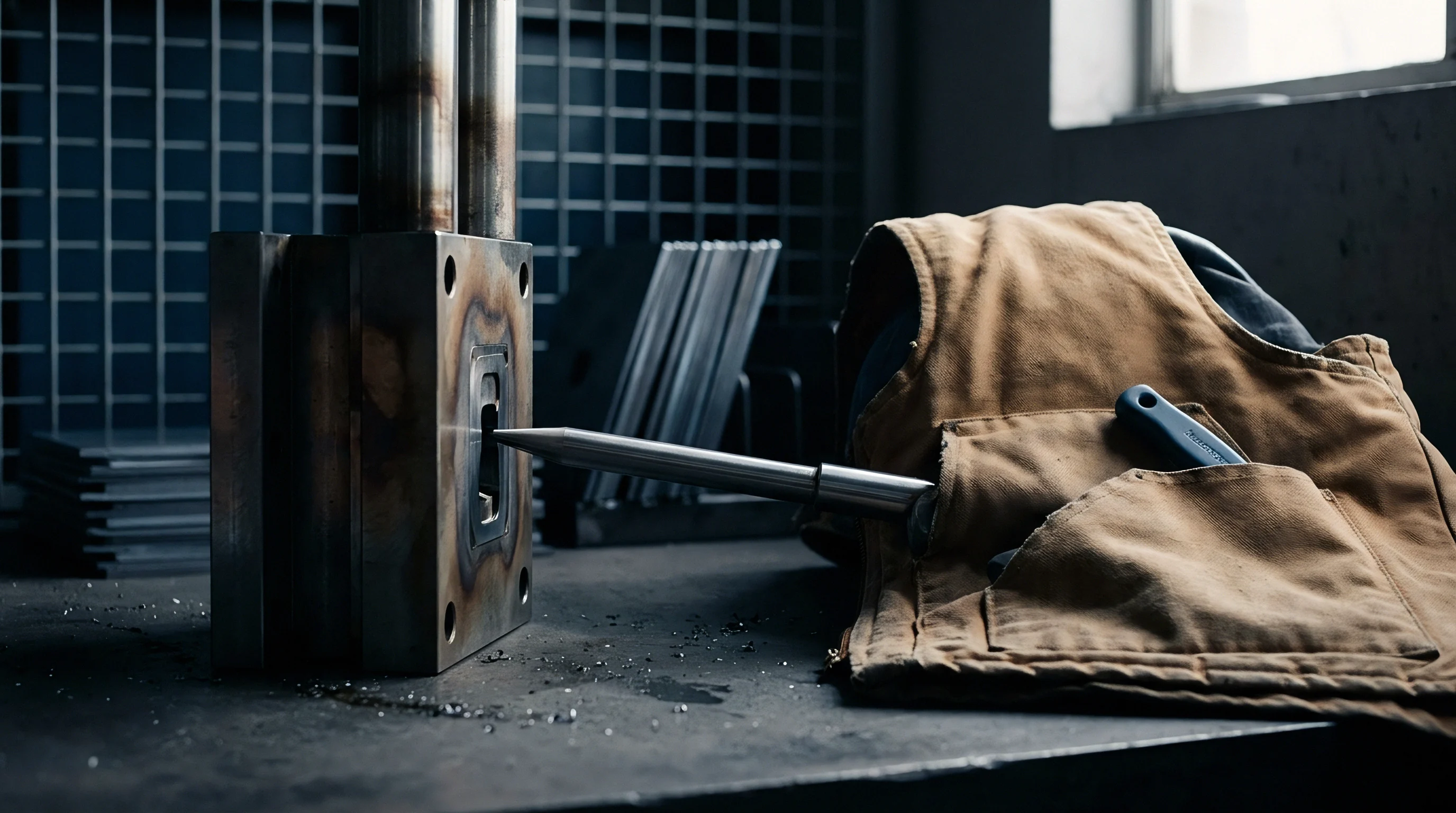
Engraved nameplates fastened directly to the steel die block prevent the factory from claiming that the asset constitutes an integrated fixture of the workshop machinery. Riveted stainless steel tags bearing the buyer’s full Chinese registered corporate name, Latin entity name, and unique equipment serial code create immediate visual evidence for the court during an on-site preservation execution. When equipment carries only removable adhesive stickers or painted serials, rogue suppliers can strip the markings within two hours of receiving a formal demand letter, asserting to visiting bailiffs that the tooling on the production line belongs to an unrelated domestic client.
- Asset Tagging Verification confirms that permanent, riveted metal plates with laser-etched serial numbers match commercial purchase invoices and export customs declarations.
- Bailment Clause Execution establishes that physical possession remains temporary under a standalone tooling custody agreement governed by PRC law rather than a generic master purchase agreement.
- Periodic Site Inspection Records demonstrate continuous exercise of ownership rights through dated sign-off sheets counter-signed by the factory production manager.
- Serialised Component Traceability links specific mould cavity impressions directly to the final parts catalog, preventing the supplier from claiming the die produces generic market stock.
Custom tooling left inside third-party Chinese facilities without standalone bailment documentation falls into legal limbo during operational disputes, where the sitting manufacturer will typically claim that the disputed hardware serves as collateral for unliquidated developmental expenses.

Threshold
Articles 103 and 104 of the PRC Civil Procedure Law govern the judicial mechanism for securing disputed manufacturing assets before formal litigation commences. Pre-litigation preservation allows a property owner to petition a basic people’s court at the location of the property or the domicile of the respondent to seize, impound, or freeze physical assets. The legal standard demands proof that the applicant faces imminent harm to lawful rights and interests, and that subsequent judgment enforcement becomes impossible or severely compromised without an immediate protective freeze.
Judges evaluate the urgency of the petition with extreme scrutiny. The applicant must submit the formal preservation petition alongside documentary proof of asset ownership, concrete evidence demonstrating the respondent’s dissipation or concealment of the tooling, and an unconditional counter-guarantee. Once the court accepts a compliant pre-litigation application, the tribunal renders a written ruling within forty-eight hours, with enforcement officers executing the order immediately upon issuance.
Article 104 filings automatically lapse thirty days after execution unless the petitioner submits formal proof of lawsuit acceptance or arbitral filing to the preserving court.
| Preservation Category | Statutory Basis | Counter-Security Scale | Court Decision Window | Action Window After Execution |
|---|---|---|---|---|
| Pre-Litigation Preservation | PRC Civil Procedure Law Art. 104 | Up to 100% Asset Value | Within 48 Hours | 30 Calendar Days to File Suit |
| Mid-Litigation Preservation | PRC Civil Procedure Law Art. 103 | 10% to 30% Claim Value | Within 5 Business Days | Tied to Final Case Disposition |
| Arbitral Interim Measures | PRC Arbitration Law Art. 28 | Court Discretionary Scale | Variable Court Transfer Window | Maintained During Arbitral Award |
Preservation Strategy
Selecting the correct procedural path determines whether machinery remains intact or vanishes into a tiered sub-supplier network. Filing a pre-litigation petition freezes assets on the factory floor without giving the counterparty advance notice of the primary claim, preventing the supplier from relocating multi-cavity injection dies across provincial lines overnight. Missing the strict thirty-day post-preservation filing deadline lifts the judicial seal automatically, returning physical custody to the hostile vendor and exposing the applicant to statutory damages for wrongful preservation.
- Documentary Proof Completeness requires official value appraisals, signed handover sheets, bank remittance slips, and photographic proof of the asset located inside the respondent factory.
- Jurisdictional Verification confirms whether the basic people’s court having territorial competence over the factory zip code exercises specialized IP division authority.
- Counter-Guarantee Readiness secures an approved judicial surety bond underwritten by a licensed Chinese commercial insurer before the petition lands on the clerk desk.
- Substantive Pleadings Draft guarantees immediate lawsuit submission within seven days of preservation to avoid the statutory expiration cliff.
Filing an incomplete application forces the preservation judge to issue a correction notice, delaying execution by weeks while alerting the factory to impending legal action.
Security
Judicial preservation petitions in Chinese courts demand adequate counter-guarantees to protect the respondent against losses arising from erroneous asset freezes. While Article 104 permits cash deposits placed into the court’s designated escrow account, locking substantial liquid capital throughout a multi-year dispute creates severe cash flow drag. Modern practice relies heavily on property preservation liability insurance policies issued by licensed domestic insurance institutions.
Insurance companies evaluate the documentary strength of the applicant’s ownership claim before underwriting a judicial bond. Underwriters review the underlying manufacturing contracts, proof of payment for the tooling, clear evidence of default by the supplier, and the solvency status of the applicant. Premiums range from zero point one percent to zero point six percent of the preserved asset value.
The policy acts as an unconditional financial guarantee issued directly to the people’s court, indemnifying the respondent if the petitioner loses the substantive dispute and faces counterclaims for business interruption.
Domestic surety bonds replace hundred-percent cash deposits with a non-refundable underwriter fee averaging zero point three percent of insured equipment value.
| Insured Asset Valuation Range | Standard Premium Rate | Underwriting Review Window | Required Corporate Documents |
|---|---|---|---|
| Below 1 Million RMB | 0.30% to 0.60% | 1 to 2 Business Days | Business License, Contract, Proof of Title |
| 1 Million to 10 Million RMB | 0.15% to 0.35% | 2 to 4 Business Days | Financial Audits, Legal Risk Opinion Letter |
| Above 10 Million RMB | 0.08% to 0.20% | 3 to 7 Business Days | Corporate Resolution, Bank Confirmation Letter |

Valuation Disputes
Calculating the preservation sum requires matching the declared equipment worth to verifiable fiscal records. PRC courts reject inflated replacement valuations generated by offshore parent companies when those numbers conflict with declared customs import figures or domestic value-added tax invoices. Under-declaring value reduces the premium cost but restricts the scope of the judicial seizure, leaving critical auxiliary fixtures, stamping plates, and robotic arms unprotected on the production floor.
Hostile suppliers routinely challenge the applicant’s counter-security by claiming that a court seal on custom moulds halts their entire manufacturing operation, multiplying potential business interruption damages. A properly drafted tooling bailment contract with a clear liquidated damages clause and explicit disclaimers regarding third-party production liabilities neutralizes these supplier defense claims in pre-litigation hearings.
The contract explicitly establishes that the supplier waives commercial retention rights and acknowledges that all manufacturing hardware remains the exclusive, unencumbered property of the buyer at all times.

Seizure
Execution of a preservation order on factory premises involves court bailiffs, local public security officers when necessary, and legal counsel representing the applicant. The enforcement team from the people’s court serves the formal civil ruling upon the legal representative or factory manager on-site. Court officers enter the workshop, locate the specific tooling identified in the petition schedule, affix red judicial paper seals across the mould split lines or electrical connections, and draft an official inventory execution record.
Article 1177 of the PRC Civil Code severely restricts private self-help remedies. Foreign buyers attempting to enter a factory with private logistics teams to reclaim tooling without a court order commit civil trespass and risk administrative detention under public security management regulations. Self-help remains lawful only where state protection is unobtainable in time and the rights holder acts within strict limits to prevent irreparable harm, followed immediately by an application to state authorities.
Court-supervised judicial impoundment remains the only safe mechanism for physical asset extraction.
Judicial seals affixed directly across the mould parting line trigger criminal liability under Article 314 of the PRC Criminal Law if broken by factory personnel.
Whose Title Prevails against Factory Landlord Claims?
Competing claims arise when the factory landlord has locked the entire industrial compound due to the manufacturing tenant’s unpaid commercial rent. The landlord asserts a statutory lien over all physical property inside the facility. Under the PRC Civil Code, a landlord’s retention right attaches only to assets owned by the defaulting tenant, not to customer-owned tooling held on bailment.
Presenting the court bailiff with registered bailment agreements and proof of separate title forces the landlord to grant access to the specific equipment named in the court order.
- Marshals arrive unannounced at the factory gate with certified copies of the preservation ruling and property inventory schedule.
- Enforcement officers demand immediate access to the production workshop from the on-duty security and plant management.
- Technicians identify the targeted machinery, verifying physical serial plates against the court preservation schedule.
- Judicial officers place official numbered paper seals over mould openings and control consoles, photographing each sealed unit.
- The court delivers a formal custody warning notice to the factory manager, establishing criminal penalties for tampering with sealed assets.
- Officers draft the on-site enforcement protocol, collecting signatures from the factory representative, the applicant counsel, and witnessing bailiffs.
Direct physical extraction of the tooling requires an explicit court order for custodial transfer to a third-party warehouse. When the preservation order mandates only on-site sealing, the equipment remains locked inside the hostile factory under court supervision, where judicial seals halt unauthorized production runs immediately.

Title
Securing tooling rights against secondary creditors, sub-contractors, and insolvency administrators requires formal registration beyond bilateral contractual clauses. Under the PRC Civil Code Property Rights section, retention of title arrangements and bailment structures should be registered on the Credit Reference Center of the People’s Bank of China movable property financing registry. Registration establishes public notice, defeating subsequent claims by good-faith third-party purchasers or commercial lenders seeking to enforce blanket floating charges over the factory’s movable assets.
When an insolvent supplier enters statutory bankruptcy restructuring under the PRC Enterprise Bankruptcy Law, unregistered tooling on the factory floor is presumed to form part of the debtor’s bankruptcy estate. The true owner must file a formal application for property recovery with the bankruptcy administrator under Article 38 of the Bankruptcy Law. Liquidators reject recovery claims when the financial paper trail displays co-mingled payments, unsegregated asset storage, or ambiguous tooling development funding agreements.
| Claim Type | Legal Basis | Priority Ranking | Evidentiary Requirement to Overcome |
|---|---|---|---|
| Statutory Factory Lien | PRC Civil Code Art. 447 | Senior for Specific Debts | Proof of Non-Ownership by Debtor Factory |
| Registered PBOC Title Retention | PRC Civil Code Art. 641 | Senior to Unsecured Creditors | PBOC Movable Property Registration Record |
| Commercial Pledge Charge | PRC Civil Code Art. 425 | Subordinate to Prior Title | Dated Purchase Invoices and Serial Tagging |
| General Bankruptcy Claim | PRC Bankruptcy Law Art. 38 | Junior to Valid Recovery Rights | Complete Accounting Trail and Bailment Deed |

Registry Mechanics
Filing an ownership notice on the People’s Bank of China unified movable property system requires a Chinese corporate identity or an accredited domestic legal representative. The registration identifies the specific equipment by serial number, technical specifications, and location, classifying the transaction as a title-retention equipment lease or bailment arrangement. This electronic recordation defeats factory attempts to mortgage the tooling to local commercial banks for short-term working capital loans.
Sub-contractor possession introduces further operational friction. Primary tier-one suppliers frequently outsource cavity tooling or secondary stamping dies to lower-tier workshops without notifying the foreign customer. If the tier-one entity defaults on component payments to the lower-tier shop, the sub-contractor exercises physical retention over the mould.
Resolving this tri-party dispute requires proving that the tier-one vendor possessed no legal authority to encumber client-owned assets, backed by immediate pre-litigation preservation filings naming both the tier-one entity and the actual possessor as co-respondents.
The unresolved question remains whether people’s courts across different inland provinces will consistently recognize remote electronic registrations on the central movable property platform when local municipal authorities attempt to seize industrial machinery to satisfy unpaid local tax debts.