Melt Flow Rate and Moisture Testing Protocols in Polymer Receiving Operations
Verify incoming resin using coulometric Karl Fischer titration and standardized melt index testing to reject degraded lots before dock release.


Resin
Receiving operations in plastic processing facilities depend on strict raw material verification upon container arrival. Standard receiving docks receive bulk shipments in two hundred kilogram drums, one thousand kilogram octabins, or twenty-tonne sea containers. Environmental moisture intake begins the moment packaging seals break.
Ambient air exposure during receiving sampling alters surface moisture levels on hygroscopic pellets, creating rapid divergence from true batch conditions.
Core Sampling Protocols for Sealed Bags and Octabins
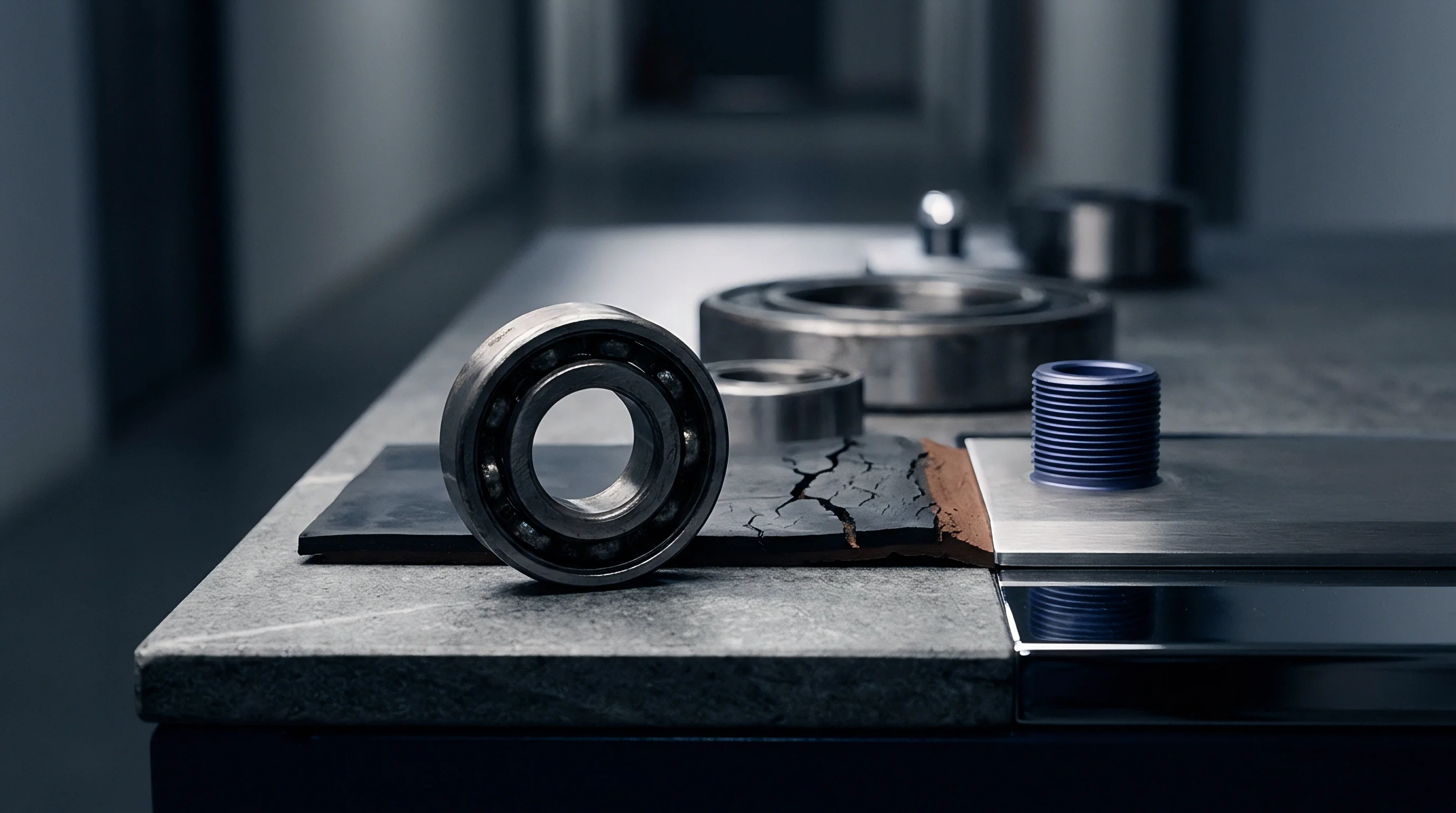
Receiving docks in humid manufacturing zones expose open packaging to immediate environmental moisture within minutes of seal rupture. Sampling technicians collect pellet cores using stainless steel concentric thief samplers driven to the center depth of bulk containers. Upper surface sampling captures localized environmental humidity rather than true material state.
Sampling depth affects moisture readings. Technicians store extracted cores in laminated aluminum foil barrier bags, purging residual volume with dry nitrogen gas before heat sealing. Standard plastic sample bags allow moisture transfer across thin polyethylene walls during transport between dock floor and testing bench.
Polymer container seal damage during ocean transport increases raw material surface humidity before plant entry.
Sampling routines demand distinct geometric patterns across bulk packages. Octabin core extraction follows a five-point pattern, taking material from four outer corners and the central axis. Sea container discharge points require three-depth thief sampling at five horizontal intervals along the bin length.
Mixed pellet sizes inside octabins separate during transit, moving fine particles downward while larger pellets sit at upper levels. Sampling instruments penetrate the entire material bed to avoid bulk density bias in subsequent test charges.

Physical Integrity Checks at Container Discharge
Bulk Gaylord containers and vacuum-lined twenty-kilogram aluminum packaging require distinct documentation routines before dock clearance. Inspectors check external vacuum indicators on barrier bags prior to blade extraction. Damaged vacuum seals signal moisture penetration, requiring immediate isolation of affected pallets.
Time destroys dock sample purity. Incoming freight documents must record warehouse humidity, ambient temperature, container seal numbers, and bag batch markers before laboratory intake logging.
Suppliers routinely attribute elevated raw material variance to dock exposure times during unloading rather than plant drying deficiencies.


Oven
Moisture measurement accuracy directly determines whether hydrolytic cleavage occurs during melt processing. Hygroscopic materials like polyamide 66, polycarbonate, polybutylene terephthalate, and polyethylene terephthalate absorb ambient water molecules into their molecular matrix. Water breaks the polymer backbone.
Moisture testing protocols dictate whether material lots move directly to production hoppers or require extended drying cycles.

Karl Fischer Titration Standards for Hygroscopic Polymers
Water content inside polyamides and polycarbonate materials requires indirect vaporization coupled with Coulometric analysis. Direct heating of hygroscopic pellets inside the titration cell releases volatile additives that interfere with iodine generation reactions. Reagent consumption errors skew water concentration readings.
Test protocols run under ISO 15512 Method 2 specify heating sample pellets inside an external nitrogen-purged tube furnace at temperatures suited to the polymer grade. Polyamide 66 releases bound water at two hundred and twenty degrees Celsius without initiating polymer degradation.
ISO 15512 Method 2 specifies coulometric Karl Fischer titration with indirect vaporization to prevent heat-induced additive volatilization during water content determination.
Coulometric Karl Fischer titration detects moisture levels down to ten parts per million with repeatability within five percent. Dry carrier gas transfers evolved water vapor directly into the reaction vessel containing iodide ions and sulfur dioxide. Precision balance measurement records sample weight to zero point one milligram accuracy.
Test duration lasts six to ten minutes until water evolution drops below two micrograms per minute. Hygroscopic resins carrying moisture above zero point zero two percent by weight suffer molecular weight loss when entering processing equipment.

Loss on Drying Limitations across Engineering Thermoplastics
Halogen balances measure total weight loss rather than target water molecules specifically. Loss on drying balances heat pellets on internal balances while tracking weight reduction. Flame retardants, plasticizers, residual monomers, and mineral oils volatilize alongside moisture, registering as false water weight.
Non-hygroscopic polymers like polypropylene and high-density polyethylene tolerate halogen moisture balances because water sits entirely on pellet surfaces. Engineering thermoplastics require secondary chemical validation when halogen balances yield borderline acceptability results.
| Polymer Code | Hygroscopic Class | Maximum Process Moisture (%) | Primary Test Standard | Recommended Method |
|---|---|---|---|---|
| PA66 | High | 0.020 | ISO 15512 Method 2 | Coulometric Karl Fischer |
| PC | Moderate | 0.015 | ISO 15512 Method 2 | Coulometric Karl Fischer |
| PBT | High | 0.010 | ASTM D6869 | Indirect Thermal Titration |
| PP | Non-hygroscopic | 0.100 | ASTM D6980 | Halogen Loss on Drying |
| HDPE | Non-hygroscopic | 0.050 | ASTM D6980 | Halogen Loss on Drying |
Contractual compliance under ISO 15512 Annex B mandates rejection of any lot where moisture levels exceed 0.02 percent for structural nylon grades prior to processing.


Heat
Thermal and shear dynamics inside the extrusion plastometer barrel mirror early plasticating conditions in injection molding barrels. Melt flow rate testing measures the mass of polymer extruded through a standardized die over ten minutes under controlled thermal and load conditions. Melt volume-flow rate calculates volumetric displacement directly using digital encoders.
Both parameters indicate relative molecular weight distributions, viscosity shifts, and thermal degradation profiles across raw lot shipments.

How Does Residual Moisture Alter Melt Flow Results?
Melt index determinations conducted on un-dried hygroscopic materials yield elevated flow values through chain scission during the barrel dwell. Moisture skews flow index results. Water molecules inside the heated test cylinder react with polymer linkages, breaking long chains into short segments under high temperature.
Reduced chain length lowers melt viscosity, driving rapid extrusion speeds through the die orifice. Un-dried pellets foam inside barrels. A polyamide sample containing zero point two percent moisture exhibits melt flow rates double the value measured on a sample conditioned below zero point zero two percent.
Unconditioned resin charges introduce volatile gas pockets that distort volumetric piston tracking.
Laboratory technicians dry hygroscopic resins in vacuum ovens at eighty degrees Celsius for four hours before packing test barrels. Sealing pre-dried pellets inside barrel loaders prevents moisture pickup during manual transfer steps. Extrusion plastometer testing per ISO 1133-1 sets standard preheat cycles to six minutes.
Extended dwell times inside heated barrels degrade thermally sensitive materials, artificially inflating flow measurements.

Rheological Standards for Piston Displacement and Weight Loads
Extrusion plastometer testing relies on precise mechanical alignment between the tungsten carbide die and the weighted cylinder shaft. Standard dead-weight loads range from zero point three two five kilograms to twenty-one point six kilograms depending on polymer viscosity classes. Piston displacement encoders track physical movement with resolution exceeding zero point zero one millimeters.
Manual extrudate cutting introduces operator timing errors, driving plant quality teams toward automatic optical or motorized cutter assemblies.
- Barrel Temperature Inaccuracy creates non-uniform melt density along the cylinder axis, shifting velocity profiles across the die exit.
- Inadequate Preheat Dwell prevents complete pellet melting, causing solid core passage that clogs die passages and spikes mechanical resistance.
- Die Deposit Accumulation restricts orifice exit dimensions, reducing measured volumetric output during automated timing runs.
- Air Bubble Entrapment introduces compressible gas voids into the liquid polymer column, causing false rapid piston movement.
Inaccurate melt index readings pass degraded resin lots into production lines, causing wall thickness variation, structural sink marks, and unexpected mold flash during automatic cycle runs.


Gauge
Measurement instrument tolerances dictate whether receiving inspection results match vendor certification sheets. Extrusion plastometer calibration relies on strict mechanical tolerances across dies, cylinders, pistons, and thermal controllers. Small dimensional deviations produce significant shifts in recorded melt flow rates.
Extrusion Die Wear and Bore Verification
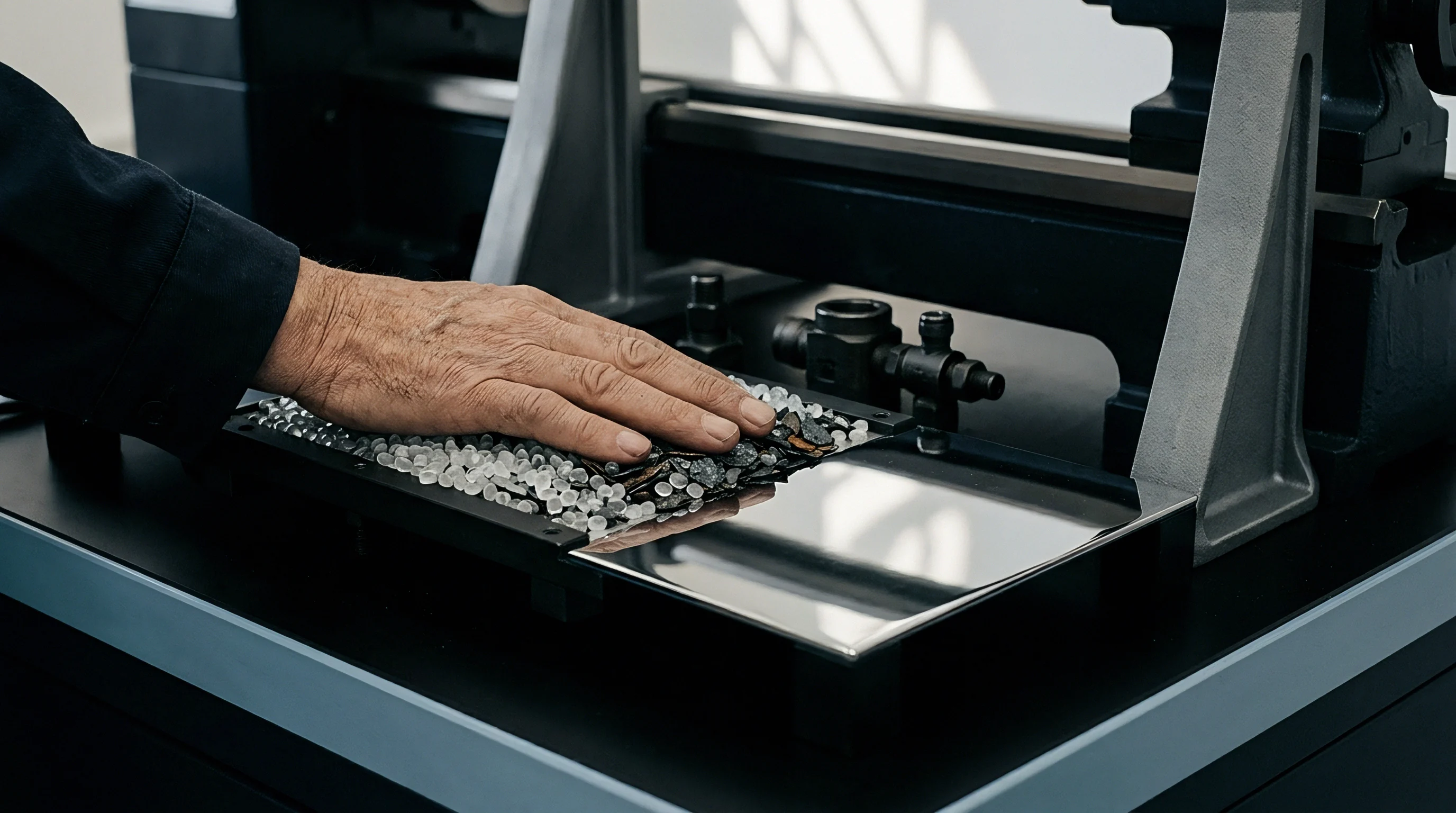
Tungsten carbide dies sustain gradual abrasion from glass-filled compound testing, expanding the exit orifice beyond standard dimensional limits. Die wear alters exit geometry. Standard dies feature a bore diameter of two point zero nine five millimeters with a length of eight point zero zero zero millimeters.
Diameter expansion of five micrometers alters volumetric throughput by over four percent. Laboratories verify die dimensions monthly using calibrated optical comparators or plug gauges.
Die bore diameter growth of 0.01 millimeters increases measured melt flow index values by approximately five percent under standard standard testing pressure.
Dirty dies yield false readings. Carbonized resin deposits on die bore walls narrow exit gaps, underreporting true material flow capacity. Technicians clean dies using soft brass tools and cotton patches at operating temperature immediately following test completion.
Chemical solvent baths remove stubborn crosslinked residue without scratching polished internal tungsten carbide surfaces.

Temperature Gradient Calibration across Barrel Zones
Thermal stability along the test cylinder requires verification at three vertical height increments using a calibrated platinum resistance probe. Inaccurate temperatures invalidate test runs. Standard specifications allow vertical temperature variations no greater than zero point five degrees Celsius from the target setting across the lower seventy-five millimeters of the barrel.
Temperature drift of one degree Celsius alters melt viscosity readings for polycarbonate compounds by nearly three percent.
| Material Grade | Standard Method | Barrel Temp (°C) | Test Load (kg) | Nominal Melt Flow Range (g/10min) |
|---|---|---|---|---|
| Polypropylene (PP) | ISO 1133 Condition M | 230.0 ± 0.5 | 2.160 | 2.0 to 25.0 |
| Polyethylene (HDPE) | ISO 1133 Condition T | 190.0 ± 0.5 | 21.600 | 0.1 to 2.0 |
| Polycarbonate (PC) | ASTM D1238 Condition W | 300.0 ± 0.8 | 1.200 | 6.0 to 18.0 |
| Polyamide 66 (PA66) | ISO 1133 Condition V | 275.0 ± 0.8 | 0.325 | 15.0 to 60.0 |
Audit verification routines ensure receiving instruments produce identical results across geographically distant plant locations.
- Die Bore Gauging requires go/no-go pin gauge insertion at weekly operating intervals to catch abrasive wear early.
- Piston Foot Inspection verifies land length measures six point three five millimeters with zero edge rounding or mechanical burrs.
- Encoder Displacement Checks compare physical piston travel against laser interferometer standard measurements.
- Thermal Probe Cross-Verification places independent reference thermometers directly into molten resin charges during calibration runs.
Regular die orifice gauging prevents false material acceptances caused by mechanical tool wear.


Arbiter
Commercial disposition of out-of-spec material shipments demands clear contractual definitions for lot rejection. Receiving quality records establish legal basis for commercial debit notes, material returns, or supplier rework concessions. Distance increases quality risk.
Clear receiving protocols prevent processing facilities from absorbing costs generated by raw material supplier defects.

Commercial Offsets and Material Concession Agreements
Receiving laboratories that log off-spec melt values face immediate financial decisions regarding inventory quarantine. Off-spec resin stops molding lines. Plant managers evaluate whether out-of-spec material works under adjusted molding parameters or demands immediate vendor return.
Re-drying high-moisture resin lots inside production facility ovens adds electrical utility costs, labor hours, and hopper allocation delays. Lab error triggers vendor disputes.
Off-spec lots freeze production. Standard supply contracts establish tolerance bands around certified Certificate of Analysis figures. Melt flow variations exceeding plus or minus ten percent from baseline target values trigger automatic quarantine routines.
Suppliers pay freight charges for returned lots when receiving laboratory test protocols match ISO 17025 accredited procedures.

Worked Case Calculation for Resin Lot Rejection
Consider a forty-tonne shipment of glass-filled polybutylene terephthalate arriving with certified melt index values below specification. Assume a landed cost of two thousand eight hundred US dollars per tonne, representing a total lot value of one hundred twelve thousand US dollars. Off-spec melt index testing shows an average value of eight grams per ten minutes against a contractual target of fifteen grams per ten minutes.
Processing this high-viscosity material increases cavity fill pressures by twenty-four percent, risking tool damage and cycle time extensions of three seconds per shot. On a molding contract running fifty thousand parts daily, a three-second cycle extension adds twelve machine operating hours per day. At an operating rate of sixty-five US dollars per hour, daily labor and press overhead costs increase by seven hundred eighty US dollars.
Over a ten-day production run, total operating penalty reaches seven thousand eight hundred US dollars.
- Extract triplicate core samples from affected octabins following five-point geometric dock protocols.
- Conduct simultaneous Karl Fischer moisture determination and dried melt volume-flow rate testing.
- Issue formal notice of variance to raw material vendor within seventy-two hours of shipment arrival.
- Lock the lot in quarantined inventory status, applying physical red tags and software warehouse locks.
Industry stakeholders continue to debate whether raw material vendors should cover secondary drying energy costs when incoming moisture levels land between supplier certificate limits and practical molding thresholds.