Resolving Municipal Judicial Execution Impediments during Cross-Border Subcontracting Tooling Asset Recovery Operations
Resolving municipal execution barriers requires public CCCRC title registration, counter-guarantee deposits against liens, and provincial court escalation.
Gate
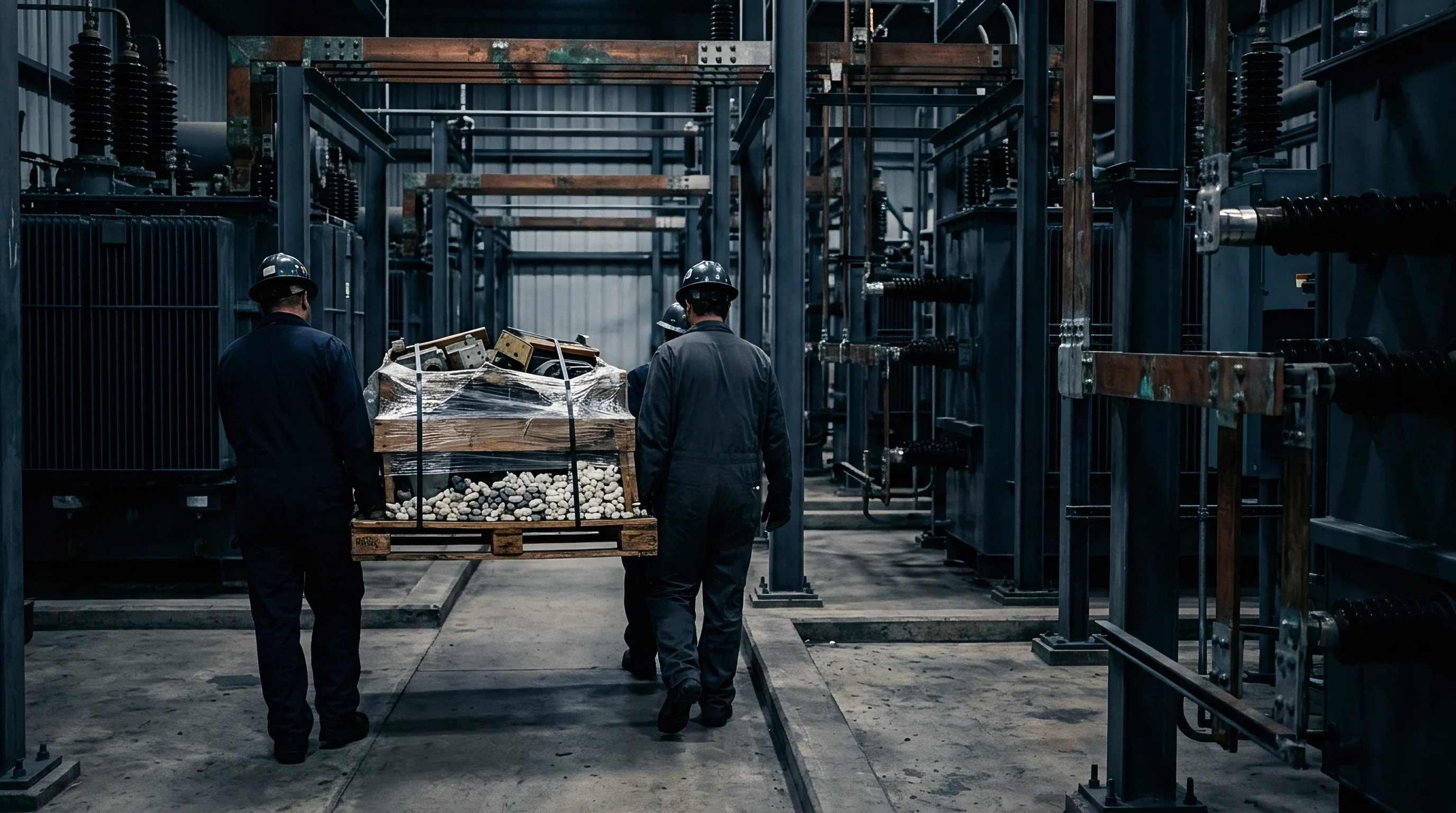
Tooling extraction stalls at the factory perimeter when municipal enforcement officers encounter physical obstruction from plant security, unpaid sub-tier suppliers, or local workforce contingents. A valid civil ruling (民事裁定书) paired with a notice of assistance in execution (协助执行通知书) grants legal authority, yet field execution officers frequently pause operations when physical resistance threatens public order. Subcontractors routinely park heavy forklift trucks across loading bays or disconnect overhead bridge crane power feeds to halt riggers from hoisting multi-cavity injection moulds or progressive stamping dies off the platen beds.
Execution bailiffs dispatched from basic-level people’s courts (基层人民法院) operate under strict administrative mandates to avoid mass public security incidents. When twenty factory workers assemble at the main vehicle barrier claiming unpaid wage arrears under Article 48 of the PRC Enterprise Bankruptcy Law, the presiding judge often suspends the seizure timetable. Local police stations (公安派出所) summoned to the premises maintain civil peace rather than actively assist in the mechanical extraction of foreign-owned assets, unless property destruction occurs.
A three-cavity die cast tool weighing twelve tonnes requires four hours of continuous rigging under live plant supervision to prevent core-pin shearing during extraction.
Recovery teams prevent tactical shutdowns by dispatching independent industrial riggers alongside local notary public personnel (公证处) before the enforcement vehicle arrives. The notary creates an unassailable photographic and video inventory of the tooling serial plates, cooling manifolds, and hot runner controllers before factory personnel can strip ancillary sub-assemblies. The team brings self-contained mobile diesel generator sets, heavy-duty hydraulic skates, and external mobile gantry frames to bypass disconnected factory infrastructure.
- Perimeter barricades materialize through deliberately positioned flatbed trailers, scrap bins, or raw material bulk bags blocking crane access to loading docks.
- Utility sabotage occurs when facility technicians purge hydraulic fluid lines, cut cooling hose fittings, or isolate overhead electrical distribution boards feeding extraction cranes.
- Workforce mobilization involves staging off-duty assembly staff inside the die-storage bay under the direction of factory management to claim personal liens on foreign-owned assets.
- Component stripping removes critical hot runner temperature control units, core-pull hydraulic cylinders, and customized ejector pins to render the extracted mould base inoperable.
Subcontractors frequently tell the bailiff that the moulds belong to a sister manufacturing entity that is not named in the execution writ, claiming the true customer owes separate fabrication deposits that nullify the court order.

Lien
Subcontractors facing commercial default routinely manufacture competing commercial claims to justify retaining production assets. Article 447 of the PRC Civil Code establishes a statutory commercial lien (留置权) over movable property lawfully possessed by an enterprise, provided the debt arises from the direct processing or manufacturing relationship involving that specific piece of property. Subcontractors exploit this legal mechanism by fabricating invoices for unapproved engineering change orders, raw material overages, or long-term warehouse storage fees.
The legal boundary between a lawful commercial lien and unlawful asset retention depends entirely on contract structure and accounting records. When the manufacturing agreement explicitly prohibits statutory liens, or when the subcontractor holds tooling under a distinct bailment contract separate from recurring parts purchase orders, the lien fails as a matter of law. Municipal judges nevertheless delay execution hearings to review complex ledger accounts, giving the debtor factory weeks to dismantle or conceal critical inserts.
| Claimant Type | Legal Basis under PRC Law | Execution Priority Rank | Operational Resolution Route |
|---|---|---|---|
| Direct Tooling Owner | Article 240, PRC Civil Code (Ownership Right) | First Priority (When Registered) | Provide authenticated purchase invoice and CCCRC registration certificate |
| Unpaid Processing Subcontractor | Article 447, PRC Civil Code (Commercial Lien) | Second Priority (Conditional) | Deposit judicial security bond with the court to dissolve the retention |
| Factory Landlord | Article 568, PRC Civil Code (Contractual Debt) | Subordinate to Property Ownership | Obtain court order establishing that landlord holds no security interest over third-party assets |
| Factory Workforce | Article 48, Enterprise Bankruptcy Law | Priority over Factory Assets Only | Demonstrate tooling never constituted asset pool of debtor enterprise |
Landlords of defaulted manufacturing premises present a secondary commercial barrier. When the tier-two supplier abandons lease payments, industrial park landlords lock workshop roller gates and assert general possessory claims over every physical object inside the premises. The landlord possesses zero legal security interest over equipment owned by foreign third parties, yet the physical lockout requires a separate preservation motion (财产保全) or an independent third-party eviction intervention before the execution court will cut physical padlocks.
A contractual clause explicitly waiving statutory retention rights under Civil Code Article 447 eliminates commercial lien defences during expedited court hearings.
Buyers neutralize legitimate or manufactured liens by depositing a cash security counter-guarantee (提供担保) directly into the municipal court escrow account under Article 456 of the Civil Code. The court accepts the liquid funds as security for the contested processing debt, which mandates the immediate judicial release and physical discharge of the locked tooling. The dispute over fabricated engineering charges transfers entirely to an ordinary civil debt litigation, freeing the physical assets for transport.
The manufacturing agreement specifies that the subcontractor holds all production tooling purely as a bailee with zero possessory lien rights, and any unapproved ledger balance defaults to unsecured general debt.
Registry
Movable property ownership disputes in municipal execution proceedings collapse when the recovery team lacks centralized public registration. The unified registration system for movable property and rights financing operated by the Credit Reference Center of the People’s Bank of China (中国人民银行征信中心动产融资统一登记公示系统, CCCRC) provides the statutory mechanism to establish third-party opposability (对抗效力). Foreign principals who fail to register their ownership interest on the CCCRC platform before shipping tooling to a mainland subcontractor find their assets treated as the subcontractor’s general property during sudden court freezes initiated by domestic creditors.
Cross-border asset validation requires a clean documentary chain that satisfies Chinese evidentiary rules under judicial notarization protocols. Purchase agreements, wire transfer receipts, customs import declarations, and serial plate stamping manifests must clear consular legalization or apostille certification under the Hague Apostille Convention. Submitting un-notarized overseas invoices gives municipal execution judges immediate grounds to reject third-party property exclusion objections (案外人执行异议) filed under Article 234 of the PRC Civil Procedure Law.
- Consular legalisation manifests verify the original offshore purchase contract, proof of capital transfer, and commercial invoices establishing initial title acquisition.
- Customs import declarations prove the exact customs tariff code, serial identification, and duty payment status for assets cleared through cross-border entry ports.
- CCCRC registration records provide timestamped public notice of bailment, leasing, or retention-of-title rights visible to all domestic search inquiries.
- Physical handover certificates document the serial-numbered tooling transfer to the subcontractor floor with matching sign-off signatures and company chops.
- On-site inspection audits track quarterly physical location logs, maintenance records, and shot-counter data signed by the plant quality director.
Municipal judges examine the physical steel markings against the paper documents. High-tonnage stamping dies and automotive injection moulds without deeply stamped, permanent asset tags showing the buyer company name and internal tracking numbers invite immediate ownership challenges. Chemical etching or adhesive barcodes degrade inside humid moulding shops, allowing the subcontractor to grind off identification marks and claim the steel block was acquired from domestic suppliers.
| Document Type | Issuing Authority | Evidentiary Value | Execution Impact |
|---|---|---|---|
| CCCRC Registration Certificate | PBOC Credit Reference Center | Statutory public notice | Defeats competing domestic judicial freezing orders |
| Apostilled Bailment Agreement | Foreign Notary and Apostille Authority | Proof of contractual bailment | Eliminates claims of asset transfer or sale |
| Customs Declaration (Form EDI) | General Administration of Customs | Border entry confirmation | Validates machinery origin and technical specifications |
| Factory Tooling Logbook | Subcontractor Engineering Department | Possessory verification | Proves actual operational custody and machine compatibility |
Direct physical tagging prevents commingling. Recovery teams stamp hardened tool steel with thirty-millimeter characters directly into the mould base footer plates, specifying corporate name, tax identification, and international registry numbers. When third-party creditors attempt to include the mould in general factory liquidation auctions, the execution panel cross-references the physical steel stamp against the online CCCRC filing and releases the asset from the seizure schedule.
Failing to record the initial bailment on the central registry allows domestic trade creditors to freeze the moulds under standard pre-judgment asset preservation orders.

Logistics
Extracting twenty tonnes of precision tooling requires rapid mechanical execution once the municipal court issues the physical retrieval window. Factory managers intentionally disable overhead travelling cranes, remove wire rope slings, and stack raw material pallets around the target injection moulding machine. The recovery contractor must arrive with specialized rigging equipment, including low-profile hydraulic toe jacks, heavy machinery load skates, and self-propelled mobile lifting gantries capable of operating under low ceiling clearances.
Tooling extraction presents substantial equipment damage risks when rushed. Hot runner injection moulds contain fragile external manifold heaters, internal thermocouples, and precision slide mechanisms that distort if lifted off-balance. Riggers must secure all safety transport locks (模具锁扣), install bridge clamping plates, and drain internal conformal cooling channels before moving the steel structure across the shop floor.
Precision mould alignment pins crack under uneven load distribution during crane lifts.
Municipal highway transit rules impose strict vehicle weight limits. Transporting multiple large mould bases requires segmented flatbed logistics and verified municipal transit permits for heavy oversized cargo. Overloaded transport trucks risk impoundment at local highway toll plazas by municipal traffic bureaus (交通运输局), returning the disputed tooling into municipal custody and halting cross-province transfers.
| Tooling Category | Average Mass Range | Primary Mechanical Hazard | Mandatory Field Containment Protocol |
|---|---|---|---|
| Multi-Cavity Automotive Injection Mould | 8,000 to 25,000 kg | Core plate slide dislocation and pin warping | Install high-tensile safety transport locking bars |
| Progressive Metal Stamping Die | 3,000 to 12,000 kg | Punch insert cracking and spring pack ejection | Fit mechanical travel stop blocks and tie rods |
| High-Pressure Aluminium Die Cast Tool | 10,000 to 30,000 kg | Thermal stress fracture on worn insert blocks | Drain internal cooling channels and grease cavity faces |
| Precision Liquid Silicone Rubber Mould | 500 to 3,000 kg | Vacuum seal tear and cartridge heater shear | Remove delicate sensor suites and crate in wooden vaults |
Once loaded onto flatbed vehicles, recovery teams route the tooling directly to a bonded warehouse or a secure third-party toolroom under direct control. Transporting recovered moulds back to an untested tier-one replacement facility without intermediate inspection invites technical disaster. Contaminants, missing lifters, and warped core inserts must be catalogued through a comprehensive metallurgical and dimensional coordinate measuring machine (CMM) audit within forty-eight hours of extraction.
Heavy machinery skates operate reliably only across level, crack-free epoxy workshop floors.

Recourse
When municipal execution courts refuse to enforce clear property rulings due to local protectionism, foreign asset owners utilize institutional escalation pathways under PRC procedural law. Article 233 of the PRC Civil Procedure Law provides that if a basic-level people’s court fails to execute an enforcement order within six months of receiving the application, the applicant can petition the intermediate people’s court (中级人民法院) at the municipal or provincial level to assume direct jurisdiction or order a designated execution (指令执行) by an alternative district court.
Supervisory execution applications (提级执行) remove the recovery action from the geographic influence of local town governments and tax-dependent district administrators. Provincial High People’s Courts (高级人民法院) maintain specialized execution supervision divisions that audit delinquent enforcement dockets and issue binding performance directives to delinquent lower courts. The application must show clear procedural inaction, documented evasion by the debtor enterprise, and repeated rejected execution appointments.
- Evidentiary audit assembly consolidates all court receipts, execution appointment logs, bailiff contact records, and written obstruction reports.
- Supervisory petition filing submits a formal motion under Civil Procedure Law Article 233 to the relevant Intermediate People’s Court.
- Disciplinary inspection submission routes administrative complaints to the court’s internal inspection bureau (法院纪检监察部门) citing judicial nonfeasance.
- Alternative venue designation secures a provincial ruling reassigning enforcement duties to an outside cross-district judicial police squad.
- Joint physical enforcement executes the site seizure using provincial marshals backed by municipal public security bureau task forces.
Procedural sanctions against obstructionist factory directors provide additional leverage. The execution applicant files for a formal consumption restriction order (限制高消费令) and judicial blacklisting (失信被执行人名单) against the legal representative and actual controller of the subcontractor enterprise under Article 262 of the Civil Procedure Law. These sanctions block the factory owner from domestic high-speed rail travel, civil aviation, luxury hotels, and commercial bank loan issuance.
Judicial detention (司法拘留) under Article 114 of the Civil Procedure Law empowers the enforcement panel to place recalcitrant corporate officers under fifteen-day administrative detention for concealing court-ordered property or inciting worker resistance. The credible threat of personal detention frequently dissolves manufactured factory-gate blockades within twenty-four hours, as legal representatives instruct workshop managers to release the equipment rather than face immediate physical custody.
Whether provincial high courts will maintain rapid supervisory intervention timelines as manufacturing defaults increase across regional industrial clusters remains unmeasured.