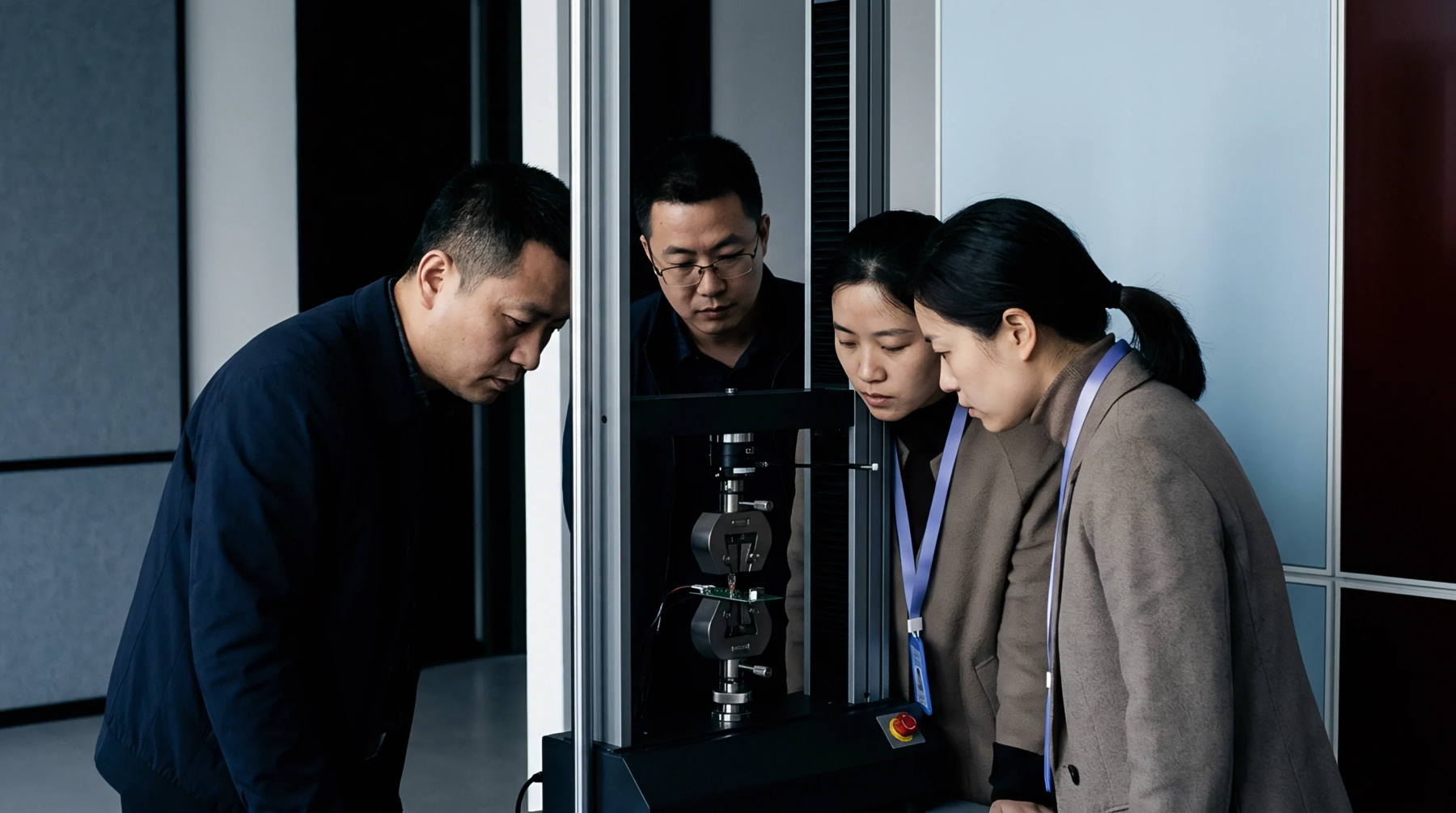
Interconnect Voiding Mechanisms under Thermal Gradient Stress Accumulation
Thermal gradients across microbumps drive atomic migration and voiding; mitigation demands controlling crystal grain orientation and operating flux densities.
Large scale computational systems designed to perform complex calculations at high speeds enable advanced simulation and data processing for scientific and industrial applications. Utilizing high performance computing allows organizations to solve problems that are too large for standard server clusters or individual workstations. These systems consist of thousands of processors working in parallel to execute trillions of operations per second.
The domain governs the infrastructure of national laboratories, weather forecasting centers and high-tech manufacturing hubs. It stops being defined as such when the hardware does not exceed the performance thresholds set by international benchmarks like the TOP500 list. This capability is essential for modern drug discovery, climate modeling and the design of advanced materials.
It provides the foundation for artificial intelligence training and large-scale data analytics in the digital economy.
Architecture of these systems relies on the tight integration of compute nodes, high-speed interconnects and specialized storage arrays. Each node in a high performance computing environment contains multiple central processing units or graphics accelerators that share memory and tasks. The interconnect network must have extremely low latency to allow the nodes to communicate without creating bottlenecks.
Specialized software manages the distribution of tasks and monitors the health of the entire system. Cooling is a major challenge, as the density of the hardware generates a massive amount of heat that must be removed through liquid or advanced air systems. Storage systems must handle concurrent read and write operations from thousands of sources simultaneously.
This complexity requires a dedicated team of engineers to maintain the hardware and optimize the software environment.
Access to high performance computing hardware and software is strictly regulated by international treaties and national security laws. The Chinese government has invested heavily in domestic supercomputing initiatives to reduce dependence on foreign technology. However, the United States and other nations have placed several Chinese supercomputing centers and companies on entity lists, restricting their ability to purchase high-end chips and interconnect components.
The Ministry of Science and Technology in China coordinates the development of national supercomputing centers in cities like Wuxi and Guangzhou. Under the current administrative practice, these centers are subject to strict operational limits regarding the types of projects they can host for foreign parties. Statutory requirements for data security and national sovereignty mean that all projects involving sensitive information must be handled on domestic hardware.
While a foreign researcher might have a paper right to access these systems through a partnership, the execution of that right is subject to a rigorous security review. Chinese law also mandates that all high-tech investments in the computing sector undergo a national security assessment if they involve foreign capital. These regulations define the boundary between international collaboration and national technological protection.
Management of a supercomputing facility involves a complex scheduling process to ensure that the hardware is used efficiently. Users submit their jobs to a queue where a resource manager assigns them to specific nodes based on priority and availability. Large simulations may require thousands of nodes for several days, while smaller tasks are packed into the remaining capacity.
The efficiency of the system is measured by its utilization rate and the speed with which it completes the queue. Power consumption is also a critical factor, as the cost of electricity for a large-scale system can exceed the cost of the hardware over its lifetime. Facility managers must balance the needs of different research groups and industrial partners to maximize the scientific and economic impact of the system.
Regular maintenance is scheduled to replace failing components and update the system software without disrupting the ongoing projects.
Thermal gradients across microbumps drive atomic migration and voiding; mitigation demands controlling crystal grain orientation and operating flux densities.
Expertise is a utility, not a secret. sentiention™ publishes its working knowledge as open reference: intelligence layer covering the materials it sources, the markets it enters, and the reference that serves both.