Utility Model Patents Filed on Your Own Design
Filing Chinese utility models on proprietary designs before releasing drawings to suppliers prevents bad-faith patent grabs and export blocking.

Ambush
The Mechanism of Original Design Appropriation
Foreign hardware brands often find out the hard way that their Chinese contract manufacturers have quietly registered utility model patents on client-supplied designs. The National Intellectual Property Administration (CNIPA) makes this remarkably easy because utility model applications skip substantive examination. Under Article 40 of the PRC Patent Law, examiners check only preliminary formal compliance ~ formatting, fee payments, and basic statutory exclusions ~ leaving technical novelty and inventive step unexamined.
Grants issue almost automatically within six to ten months. A supplier with CAD files for a custom enclosure, a thermal fin assembly, or a PCB mounting latch can file on Monday and hold an enforceable patent by Thursday of the following quarter.
This speed hands the factory asymmetric leverage well before mass production starts. When a foreign buyer sends CAD files over under an NDA governed by foreign law, the factory gets immediate access to design specifications. The plant then files a Chinese utility model in its own name or under a local employee nominee.
Unless early publication is requested, the application stays hidden on the CNIPA database until grant, though standard utility models publish as soon as registered. By the time the buyer finishes field validation and places its first purchase order, the supplier already holds a published patent registration covering the product’s precise tolerances and structural features.
The supplier’s leverage does not depend on proving real inventiveness. PRC Patent Law gives utility models a ten-year protection term from the filing date, with a much lower threshold for inventive step than full invention patents under Article 22. Where an invention patent demands prominent substantive features and notable progress over prior art, a utility model needs only practical features and progress.
When the buyer tries to move production to another vendor, the original factory asserts the patent through the local Intellectual Property Office or records it under the PRC Regulation on Customs Protection of Intellectual Property Rights. Customs officers act directly on registered titles, impounding outbound shipments that match recorded claims. The foreign company gets hit with an immediate supply halt, holding no domestic patent rights of its own to defend itself or counter-claim.
A utility model grant issued by CNIPA carries immediate administrative enforcement rights regardless of whether the applicant created the underlying design.
The legal breakdown comes from confusing technical creation with legal ownership in a first-to-file system. Article 9 of the PRC Patent Law strictly enforces first-to-file: if two parties apply for the same utility model or invention, the right goes to whoever filed first. Prior public disclosure outside China before the domestic filing date destroys novelty under Article 22, but sending confidential trade secrets to a supplier is not considered public disclosure unless genuinely accessible to the public.
A company in Munich or Chicago that designs a mechanical assembly, but fails to file a Chinese utility model before sharing drawings with a factory in Shenzhen, effectively gives that factory the statutory right to lock up the design.
Hardware ventures attempting to reclaim mechanical designs taken by initial assembly vendors in Guangdong routinely end up paying buyouts or licensing fees exceeding four times the original tooling cost just to clear export blocks. Local enforcement leaves almost no room for equitable remedies. Article 11 of the PRC Patent Law prohibits anyone from exploiting a patent without authorization, granting the owner the right under Article 65 to seek injunctions and statutory damages up to five million yuan when actual losses are hard to calculate.
Factories use this mechanism to freeze export logistics, force price hikes, or demand long-term manufacturing exclusivity.
Customs Interdiction and Administrative Seizure
An IP ambush usually moves straight from administrative registration to logistics disruption. Once the supplier gets its utility model, it records the title with the General Administration of Customs through an online portal. Recordation carries no government filing fee and takes about five working days for approval.
Once active, the patent enters the automated Customs surveillance system across major ports like Yantian, Ningbo, and Shanghai. As soon as the foreign buyer cuts ties and shifts tooling to another factory, the original supplier requests customs detention under Article 16 of the Customs IP Regulations.
Customs officers inspecting export freight check physical cargo against recorded patent claims. If an export declaration matches protected structural features, Customs issues a detention notice to both parties. The patent holder then has three working days to post a bond matching the value of the seized goods.
On a shipment of twenty thousand high-grade electronic enclosures valued at fifty dollars a unit, the supplier puts up a one million dollar cash bond or bank guarantee. Unless the buyer can post a counter-bond or secure administrative release, the cargo sits impounded while the supplier files an infringement suit in the local Intellectual Property Court.
The administrative detention timeline works heavily against foreign brands. Customs holds cargo for twenty working days waiting for court action. If the court grants a pre-litigation asset freeze or injunction under Article 66 of the PRC Patent Law, the shipment stays locked in port storage indefinitely at the shipper’s expense.
Demurrage and port storage at Yantian can quickly top sixty thousand yuan per container per month. That financial bleeding usually forces buyers to give up tooling rights or pay royalties on designs born in their own overseas R&D labs.
Utility model filings on client drawings are often framed as protection for local employment against sudden supply chain moves, though in practice they function primarily as operational and legal leverage during commercial disputes.

Mould

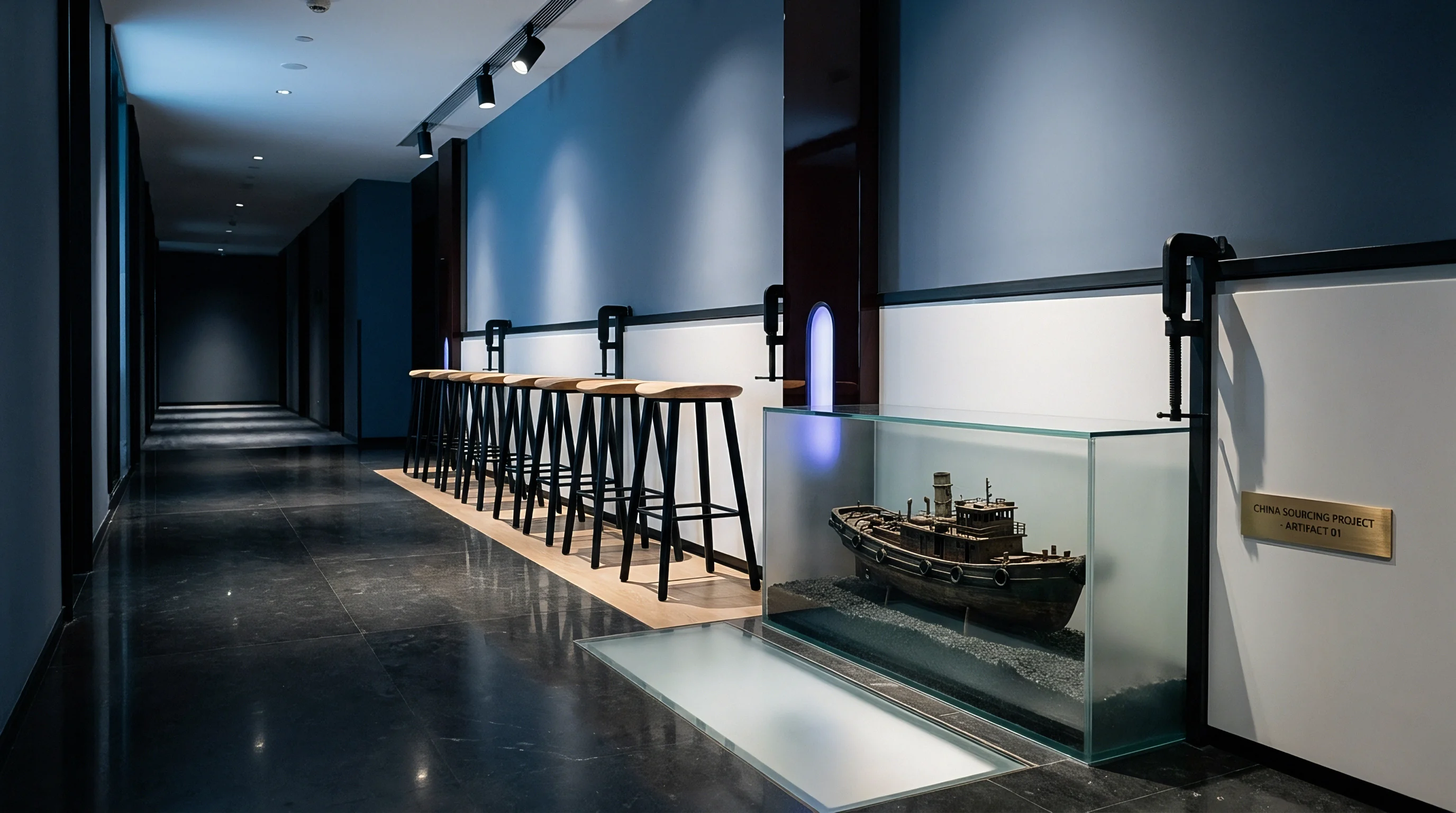
Physical Asset Retention and Tooling Hostage Dynamics
Tool ownership becomes particularly treacherous when paired with utility model filings. Mechanical hardware depends on custom injection moulds, progressive stamping dies, and casting fixtures built during initial NPI. Buyers typically cover these costs through non-recurring engineering (NRE) fees, but the physical steel stays on the factory floor in China.
Contract clauses asserting that tooling remains the exclusive property of the buyer fall flat when the factory claims legal title to the underlying geometry through a registered utility model.
When a dispute erupts, the factory exerts control on two fronts. First, it holds physical custody of the steel dies, refusing entry to logistics teams sent to retrieve them. Second, it asserts patent claims over the features those dies produce.
Trying to recover the physical tools through a property return action under Article 235 of the PRC Civil Code ends up being commercially useless if another vendor cannot operate the moulds without infringing the original supplier’s utility model. The tool becomes legally unusable inside the country.
| Recovery Pathway | Average Timeline | Direct Legal and Logistics Costs | Enforcement Success Rate | Operational Risk Factor |
|---|---|---|---|---|
| Civil Property Return Action | 8 to 14 Months | 120,000 to 250,000 RMB | 35 Percent | High risk of physical tool sabotage prior to court seizure |
| Administrative IP Bureau Mediation | 2 to 4 Months | 40,000 to 90,000 RMB | 50 Percent | Requires royalty settlement or tooling buyback agreement |
| Invalidation plus Civil Replevin | 14 to 22 Months | 200,000 to 450,000 RMB | 65 Percent | Extended supply disruption requiring temporary re-tooling outside China |
| Parallel Tooling Re-fabrication | 3 to 6 Months | Full NRE Replacement Value | 100 Percent | Subject to ongoing domestic patent export detention risks |
The economics of re-tooling clearly show why the incumbent factory holds the upper hand. Cutting a duplicate multi-cavity injection mould for an automotive structural housing takes sixteen weeks and eighty thousand dollars in steel, CNC, and EDM work. Even if the buyer re-tools outside China to sidestep physical custody disputes, any export shipments passing through Chinese packaging or secondary assembly sub-contractors remain exposed to infringement claims.
The original factory can use its utility model to block finished assemblies entering Chinese ports or stop semi-finished parts heading out for final overseas assembly.
Control over manufacturing files makes this dynamic worse. Factories routinely hold modified STEP files, tool path code, and mold flow analysis reports. Contracts drafted by Western counsel frequently fail to require the immediate return of production-ready CAD files reflecting shop-floor tweaks.
When relations break down, the supplier keeps both the revised geometry files and the utility model rights covering those modifications, leaving the buyer with outdated original models that require another round of engineering to reach production tolerances.
A contract clause asserting physical ownership of tooling provides no defense against a domestic patent claim filed against the geometry those tools produce.
In one documented case, a Scandinavian medical device firm paid three hundred thousand euros for precision liquid silicone rubber moulds under a contract stating the buyer owned the tooling outright. During setup, the factory made minor adjustments to the internal rib sealing geometry and filed three domestic utility model patents covering those changes. When the firm tried to transfer the moulds to a certified cleanroom facility in Suzhou, the supplier obtained an administrative order freezing the tooling on infringement grounds.
The buyer spent eighteen months in court while product launch windows slammed shut.
Contractual Allocation of Industrial Property Rights
Securing tooling rights requires tightly linking contract language with Chinese IP filing mechanics. Standard Western supply contracts rely on broad definitions of background and foreground IP, claiming all foreground work for the buyer. But Chinese courts enforcing contracts under the PRC Civil Code demand explicit definitions of subject matter and precise statutory assignment tools.
Blanket assignments of future IP without specific patent application numbers or detailed technical schedules rarely survive judicial scrutiny.
Effective protection requires an explicit covenant governing utility model applications right in the main manufacturing agreement. The contract should stipulate that all structural modifications, functional additions, and geometric tweaks made during setup are work-for-hire owned exclusively by the buyer. It must also include a mandatory power of attorney clause authorizing the buyer to execute assignment documents directly with CNIPA if the factory files an unauthorized application.
Finally, it should set liquidated damages for unauthorized filings at a fixed sum large enough to cover complete invalidation proceedings and lost commercial margins.
Every purchase order should include a mandatory tooling release schedule tied to technical sign-offs, specifying that moving the tools does not require supplier consent once payment terms are met. The contract needs explicit language: The Manufacturer covenants that it shall not file, register, or maintain, directly or through any affiliate or nominee, any utility model, design patent, or invention patent in any jurisdiction based on drawings, specifications, or modified tooling geometry supplied by the Buyer, and any such application filed in breach of this provision shall be assigned immediately to the Buyer at the sole expense of the Manufacturer.
That single clause shifts the legal posture from a defensive invalidation battle to a direct breach of contract, making it possible to freeze the supplier’s domestic bank accounts almost immediately.

Priority
Defensive Utility Model Filing Strategies
Stopping suppliers from stealing utility model rights requires foreign design owners to use the exact same administrative tools local factories use. The single best defense against a bad-faith filing is a prior utility model application filed by the design owner. Foreign firms often rely solely on invention patent applications or Paris Convention priority claims from home filings, creating a lag that local suppliers readily exploit.
A dual-filing strategy under Article 9 of the PRC Patent Law provides immediate cover. Article 9 lets an applicant file both an invention patent and a utility model for the exact same technical solution on the same day. The utility model passes preliminary examination quickly, giving enforceable protection within six to twelve months.
Meanwhile, the invention patent undergoes substantive examination over two to four years. Once the invention patent is granted, the owner surrenders the utility model, keeping an uninterrupted monopoly from the original filing date.
- Prerequisite File Audit ~ Audit all mechanical drawings, CAD files, and exploded views to isolate novel structural features, mounting details, and material interfaces before sending anything to overseas factories.
- Dual Application Execution ~ Draft specifications meeting CNIPA guidelines and submit parallel applications for an invention patent and a utility model naming the foreign entity as sole applicant.
- Bilingual Technical Translation ~ Prepare accurate Chinese translations of the claim sets, aligning mechanical terminology in drawings with statutory drafting conventions under PRC practice.
- CNIPA Portal Deposit ~ File directly with CNIPA through a registered Chinese patent agency before handing over technical documentation, STEP files, or prototypes to manufacturing partners.
- Customs Registration Recordal ~ Record the granted utility model certificate with the General Administration of Customs IP system within ten days of issuance to enable port surveillance.
Filing directly secures an early priority date that blocks later attempts by vendors or third parties. Under the Paris Convention for the Protection of Industrial Property, applicants have twelve months from their home filing to submit corresponding applications in China and claim priority. Relying on that full twelve-month window without a local Chinese filing creates risk if drawings reach factories in the interim.
The best practice is to file the Chinese utility model concurrently with or right after the home-country filing.
The cost of filing directly is negligible compared to litigation. Official filing fees for a Chinese utility model are five hundred RMB, with local agency drafting and translation usually running fifteen thousand to thirty thousand RMB per application. Annual maintenance fees start at six hundred RMB for the first three years.
That modest spend establishes clear legal standing and keeps the supplier from claiming the design.
As a rule of thumb, any custom-tooled component should have its utility model application lodged with CNIPA before technical drawings cross the border.

Substantive Requirements and Protection Boundaries
Utility models cover physical forms and spatial structures. Article 2 of the PRC Patent Law defines them as new technical solutions relating to the shape, structure, or combination thereof of a product, fit for practical use. That definition sets clear boundaries around what qualifies.
Processes, chemical compositions, software algorithms, and raw materials are explicitly excluded. You cannot register a heat-treatment process for an aluminum heatsink as a utility model, but the physical fin layout, mounting channels, and clips of that heatsink qualify easily. When drafting claim sets, attorneys must anchor every claim in tangible physical features and structural relationships.
Claims relying purely on process steps or material properties will be rejected during preliminary examination.
| Technical Subject Matter | Utility Model Eligible | Invention Patent Eligible | Primary Drafting Focus Required |
|---|---|---|---|
| Mechanical Snap-Fit Enclosure | Yes | Yes | Physical geometric interference and structural deflection arms |
| Thermal Interface Material Composition | No | Yes | Chemical ratios, filler particle sizes, and compound weight percentages |
| Surface Coating Application Method | No | Yes | Temperature profiles, spray velocity, and curing time steps |
| Internal Structural Rib Configuration | Yes | Yes | Spatial orientation, rib thickness ratios, and load distribution angles |
| Embedded Microcontroller Firmware | No | Yes | Logical flowcharts, memory management routines, and signal processing |
The inventive step standard for utility models differs sharply from invention patents, giving rights holders a distinct enforcement edge. Article 22 of the PRC Patent Law states that an invention patent must show prominent substantive features and notable progress over prior art, whereas a utility model needs only substantive features and progress. Supreme People’s Court interpretations clarify that prior art assessments for utility models cover a narrower technical scope.
Combining references across unrelated fields to invalidate a utility model is significantly harder than in invention patent disputes.
This lower hurdle means a granted utility model enjoys a strong presumption of validity in local enforcement. Alleged infringers face a steep evidentiary hill when trying to show a utility model lacks inventive step in administrative or court proceedings. Rights holders can take utility models to municipal Intellectual Property Offices to obtain quick administrative injunctions, stopping unauthorized production within months of filing a complaint.
Utility model protection extends strictly to physical shape and structural combination, leaving process and chemical innovations to the longer invention patent track.
This played out in a dispute over an automated fluid valve assembly made in Zhejiang. The foreign design owner had only a pending invention application in China, while the factory held a granted utility model covering the valve’s internal body geometry. The factory launched administrative enforcement through the Ningbo Intellectual Property Office, successfully halting the foreign company’s export shipments.
Because the foreign brand’s invention patent was still pending, it couldn’t assert it as a defense, and ultimately had to pay a royalty settlement to clear shipments while waiting for its own patent to issue.

Invalidation
Administrative Patent Evaluation and Nullity Proceedings
When a factory registers a utility model on your design, you need a systematic invalidation strategy. The first step is asking CNIPA for a Patent Evaluation Report under Article 61 of the PRC Patent Law. Either the patent holder or an interested third party can request this once the grant is published.
CNIPA examiners review prior art and issue an assessment within two months. A negative report finding a lack of novelty or inventive step severely undermines the factory’s ability to get court injunctions or enforce customs seizures.
Knocking out the utility model entirely requires a formal Petition for Invalidation with the CNIPA Patent Reexamination Board under Article 45 of the PRC Patent Law. You can file at any time after the grant announcement, but you must present clear evidence that the claim fails under Articles 2, 22, 26, or 33. The main ground is lack of novelty under Article 22, established by proving prior public disclosure or showing that confidential disclosure violated NDA obligations.
Proving prior disclosure requires strict evidentiary documentation. Evidence generated outside China must be notarized and legalized to be admissible in CNIPA proceedings. Under Article 16 of the Supreme People’s Court Provisions on Evidence in Civil Procedures, foreign documents must be notarized in the country of origin and authenticated by the local Chinese embassy or consulate, or certified under the Hague Apostille Convention where applicable.
Unnotarized CAD files, informal emails, and internal design notes carry almost no weight against a granted patent title.
Public sales or trade show displays outside China count as prior art under Article 22. If you exhibited the product at a trade fair in Hannover or Las Vegas before the Chinese filing date, product catalogs, notarized web archives, and dated customs entry documents can establish prior art. The core challenge is assembling an unbroken timeline showing that the exact structural features were publicly disclosed before the factory filed its application.
What threshold of prior art evidence must a petitioner assemble to ensure the Patent Reexamination Board issues a complete invalidation decision within twelve months of filing?

Unfair Competition and Bad-Faith Registration Claims
Administrative invalidation cancels the patent title, but it won’t yield monetary damages or fix commercial losses from supply delays. To recover damages, design owners can bring parallel claims under the PRC Anti-Unfair Competition Law. Article 2 establishes baseline standards of good faith and business ethics, while Article 9 prohibits trade secret misappropriation.
When a factory takes confidential technical drawings and files a patent in its own name, that action constitutes both trade secret theft and unfair competition.
- Pre-Litigation Evidence Preservation ~ Notarize all technical communications, email threads, transfer logs, and signed NDAs before notifying the vendor of legal action.
- Administrative Invalidation Filing ~ File an invalidation petition at CNIPA alongside civil court prep to put immediate administrative pressure on the patent holder.
- Civil Suit Initiation ~ Sue in the competent Intermediate People’s Court or specialized IP Court alleging trade secret theft and bad-faith filing under the Anti-Unfair Competition Law.
- Interim Injunction Application ~ Ask the court under Article 100 of the PRC Civil Procedure Law to enjoin the supplier from enforcing the patent at Customs while litigation is ongoing.
- CNIPA Title Transfer Petition ~ Request judicial confirmation under Article 6 of the Patent Law that application rights belong to the true owner, forcing compulsory assignment of the registration.
Supreme People’s Court judicial interpretations clarify that technical drawings detailing specific tolerances, structural combinations, and material choices count as trade secrets if the owner took reasonable security steps. Marking drawings confidential, password-protecting digital files, and signing formal NNN agreements satisfy the reasonable security requirement under Article 9. Showing that the factory derived its utility model directly from these drawings establishes trade secret infringement.
Courts in trade secret cases can order the supplier to assign the patent to the true owner, pay damages, and issue public corrective statements. Under Article 17 of the Anti-Unfair Competition Law, compensatory damages cover actual losses or the infringer’s illegal profits, plus investigation and legal expenses. For intentional, egregious bad-faith filings, courts can award punitive damages up to five times the base amount.
Demonstrating bad-faith filing under the Anti-Unfair Competition Law enables judicial patent transfers and punitive damages that administrative invalidation alone cannot provide.
Litigation under the Anti-Unfair Competition Law takes serious time and capital. Civil cases in the Intermediate People’s Court ~ and subsequent appeals to the High People’s Court or Supreme People’s Court IP Court ~ typically drag on for twelve to twenty-four months. Foreign litigants have to weigh litigation expenses against the urgent need to keep shipments moving, which is why many run parallel invalidation and trade secret claims while setting up alternative production elsewhere.


Severance

Supply Chain Unwinding and Exit Mechanics
Cutting ties with a supplier that holds an adverse utility model requires a carefully phased exit strategy. Abruptly terminating contracts without legal and operational preparation opens you up to cargo seizures, lost tooling, and retaliatory lawsuits. A clean exit requires coordinating legal invalidation, second-source qualification, tool replacement, and buffer inventory builds before handing the factory a termination notice.
The sequence starts with quiet second-source qualification. You select and audit a new manufacturer, transfer CAD files under fresh NDAs, and fund replacement tooling outside China or with an unrelated vendor in another province. Production line yields at the new facility must hit commercial targets before giving any hint of volume reductions to the incumbent factory.
Maintaining dual-sourcing capability during the shift protects product availability if the original vendor moves to block exports.
- Inventory Extraction and Buffer Building ~ Ramp up order volumes under routine commercial terms to build four to six months of buffer stock stored in bonded warehouses outside mainland China.
- Offshore Tooling Qualification ~ Complete tooling fabrication and production sampling at a secondary facility, establishing independent capacity before raising legal claims.
- CNIPA Invalidation Filing ~ Submit the administrative invalidation petition at CNIPA with certified prior art evidence to weaken the supplier’s patent position.
- Customs Non-Infringement Declarations ~ Draft non-infringement legal dossiers signed by PRC patent counsel, ready for immediate submission to Customs if shipments are detained.
- Formal Termination Notice Execution ~ Serve formal termination strictly per contract terms, demanding asset returns and setting off open accounts against documented damages.
Managing inventory during the exit dictates commercial survival. Moving product out of China while a supplier holds an active utility model carries constant detention risk. You need to ramp up order volumes quietly and clear finished inventory through port customs before filing invalidation or trade secret claims.
Once buffer inventory is safely stored in overseas distribution hubs, you can withstand a long legal fight without starving sales channels.
Accounting set-offs serve as a crucial shield against retaliatory factory claims. Manufacturing contracts should explicitly allow buyers to offset legal fees, invalidation expenses, and losses from bad-faith patent filings against unpaid invoices. If you owe five hundred thousand dollars on final inventory shipments, those funds can be held in escrow or set off under Article 568 of the PRC Civil Code against losses caused by unauthorized patent filings.
In one thermal imaging project, a foreign buyer suffered a forty-two thousand dollar loss when a supplier executed a preemptive customs seizure during contract negotiations. The vendor used a bad-faith utility model to detain two export containers at Yantian Port, demanding full payment for disputed engineering charges before releasing the freight. The buyer had to pay port storage fees and post settlement bonds to prevent inventory destruction ~ a stark reminder of what an uncoordinated exit costs.
Long-Term Structural Risk Mitigation
Preventing utility model hijackings requires fixing operational workflows across engineering, procurement, and legal. IP protection must be treated as a core element of supply chain setup rather than an afterthought. No drawing, CAD file, or specification should cross corporate firewalls until IP clearance is verified in the manufacturing destination.
Setting up local holding structures or Wholly Foreign-Owned Enterprises (WFOEs) gives you a domestic platform to manage IP directly. A Chinese corporate entity can file utility models and invention patents, deal with CNIPA without international powers of attorney, and record rights at Customs directly. Local entities make enforcing rights against rogue suppliers simpler, putting you in court as a domestic entity rather than an offshore business navigating unfamiliar foreign procedures.
| Operational Phase | Primary Risk Vector | Mandatory Protective Action | Governance Document Instrument |
|---|---|---|---|
| Vendor Selection & RFQ | Drawing Leakage and Pre-contract Filings | Execute PRC-law NNN Agreement with liquidated damages before sending CAD | Bilingual Tripartite NNN Agreement |
| Tooling & NRE Setup | Unauthorized Utility Model Filings by Plant | File dual Invention/Utility Model applications with CNIPA prior to tool build | CNIPA Patent Application Filing Receipts |
| Volume Manufacturing | Creeping IP Modification and Tooling Hostage | Conduct quarterly IP audits of supplier patent filings; record rights at Customs | General Administration of Customs Recordation Title |
| Supply Chain Exit | Customs Cargo Interdiction and Asset Seizure | Qualify second source, build offshore inventory buffer, file invalidation before notice | Escrow Agreement and Contract Termination Deed |
Contracts must include explicit NNN (Non-disclosure, Non-use, Non-circumvention) terms. Standard Western NDAs fail in Chinese courts due to jurisdictional mismatches, foreign governing law choices, and missing liquidated damages provisions. An enforceable NNN operates under PRC law, submits to the local court with jurisdiction over the factory, and sets specific financial penalties for unauthorized filings or trade secret leaks.
Clear liquidated damages give immediate leverage, allowing buyers to obtain pre-litigation freezes on factory bank accounts if unauthorized applications pop up on the CNIPA database.
Regular monitoring of public patent registries is critical for early threat detection. Procurement teams should run monthly automated searches on CNIPA using corporate names of suppliers, key factory managers, and sub-contractors. Spotting an unauthorized filing during prosecution allows for immediate intervention, contractual offsets, and pre-emptive invalidation before the grant publishes and reaches Customs.
Catching it early turns a potential logistics disaster into a manageable settlement.
The total financial exposure of ignoring local utility model protection vastly outweighs the cost of running dual-filing routines, establishing local legal standing, and maintaining strict contractual discipline across contract manufacturing relationships.