Prior Art Evidence Requirements for Chinese Patent Invalidation
Invalidating a Chinese patent requires foreign prior art to meet strict authentication, certified Chinese translation, and strict timing rules under CNIPA standards.

Threshold

Statutory Definitions of Disclosure Prior to Filing
Article 22 of the Patent Law of the People’s Republic of China governs the legal standard for prior art in patent invalidation proceedings. Technical knowledge made available to the public anywhere in the world before the filing date or valid priority date constitutes prior art. Public availability functions as the core legal benchmark.
Physical accessibility by an unrestricted circle of persons satisfies this standard, regardless of whether any member of the public actually examined the material.
Patent disclosures, published books, academic journals, trade catalogues, and publicly accessible online databases fall under written public disclosures. Oral disclosures, public uses, and commercial transactions also establish prior art status when supported by verifiable corroboration. The third revision of the PRC Patent Law eliminated geographical limitations on prior public use, establishing an absolute global novelty requirement for all patent applications filed after October 1, 2009.
The effective filing date fixes the boundary. Evidence bearing a creation date identical to or later than the filing date fails to qualify as prior art under all circumstances.
A publication date verified only to the month defaults to the final calendar day of that month under CNIPA examination rules.
Public Availability and Unrestricted Access
Information remains confidential when bound by express non-disclosure agreements or implicit duties of commercial secrecy. A petitioner asserting invalidation bears the burden of proving that no confidentiality obligations restricted the recipient of the information. Distribution of technical documentation to a restricted group of industrial partners under research protocols does not constitute public disclosure.
Releasing the same documentation at a open trade exposition destroys novelty instantly.
Public availability requires no proof of widespread distribution. Delivering a single copy of a printed technical bulletin to a university library creates prior art on the day the document enters the indexed collection. Printed disclosures must exhibit a clear publication stamp or verifiable library acquisition log to establish the precise date of public access.
Temporal Bounds and Priority Verification
Determining the effective date of disclosure demands rigorous chronological cross-examination. Foreign patent disclosures published on the exact priority date of a challenged Chinese patent cannot serve as novelty-destroying references. The disclosure must precede the priority date by at least twenty-four hours under regional time-zone conversion standards enforced by administrative panels.
Disputes frequently arise when evaluating online disclosures where server timestamps reflect foreign time zones. Evidence submitted from foreign websites requires explicit reconciliation with UTC coordinates to demonstrate publication before the Chinese patent priority date. The petitioner must establish the exact minute of electronic publication when contesting patents with same-day priority filings.
The panel evaluates whether a technical document uploaded to a private cloud server with unrestricted file permissions constitutes public disclosure when no index engine cataloged the destination file path before the critical date.


Authenticity

Foreign Document Formalities and Legalization Pathways
Documentary evidence generated outside the territory of China faces strict formal validation rules. Under Article 16 of the CNIPA Patent Examination Guidelines, administrative panels reject unauthenticated foreign documents when challenged by the patentee. Formal authentication verifies the origin, signature, and corporate authority behind documentary submissions.
China joined the Hague Apostille Convention in November 2023, replacing the traditional multi-tiered consular legalization process with apostille certification for member states. Documents originated in contracting states require a single apostille certificate issued by the competent authority of the originating country. Foreign documents originating from non-member jurisdictions continue to demand full notarization by a local notary public followed by consular legalization through the Chinese embassy or consulate.
| Evidence Origin Type | Apostille or Legalization Requirement | Translation Mandatory | Admissibility Risk Factor |
|---|---|---|---|
| Hague Member State Document | Single Apostille Certification | Yes, Full Certified Chinese | High if apostille date post-dates petition deadline |
| Non-Hague State Document | Notarization plus Consular Legalization | Yes, Full Certified Chinese | Severe if consular seals are incomplete |
| Foreign Website Capture | Notarized Live Access Session | Yes, Search Terms and Content | High if server IP ownership remains unproven |
| Domestic Physical Sample | Notarized Purchase or Custody Protocol | No | Low when transaction receipt exists |
Electronic Prior Art and Web Archive Notarization
Digital evidence retrieved from online databases, social media platforms, or archived web pages presents distinct authenticity challenges. Capturing a static screenshot without verified procedural controls results in summary exclusion. CNIPA panels treat unverified electronic files as self-serving fabrications.
Establishing admissibility for electronic prior art requires live, notarized screen recording sessions conducted within a notary office or executed via official administrative electronic evidence repositories. The notary officer must verify the clean state of the terminal, clear the internet cache, verify IP routing via independent network checks, and document the complete path to the targeted digital asset.
- Unauthenticated screenshots submitted as static image files without underlying notary video logs face immediate procedural rejection.
- Wayback Machine records submitted without independent server verification or notarized access logs fail to establish publication dates.
- Source code repositories displaying unverified commit dates where repository administrators retain retrospective timestamp modification privileges are ignored.
- E-commerce product listings lacking immutable seller order logs or verified transaction histories do not qualify as prior public use evidence.
Language Translation Standards and Certified Certificates
Chinese is the sole official working language of CNIPA invalidation proceedings. All foreign-language prior art documents must be accompanied by complete, accurate Chinese translations. Partial translations are permitted only for voluminous books, provided the omitted sections contain no structural context relevant to the challenged claims.
Translation errors create severe legal exposure. Where a translation ambiguity alters the technical teaching of a prior art reference, the patentee can invalidate the translation, forcing the panel to rely on the foreign original or discard the exhibit. Translation certificates issued by recognized, licensed Chinese translation agencies carrying official registration seals are required for all submitted foreign text.
A foreign contract specifying jurisdiction clauses carries zero evidentiary weight before CNIPA unless backed by a seal-stamped Chinese translation.
Securing authenticated prior art across international jurisdictions takes weeks. Early coordination prevents fatal formal defects before filing deadlines expire.
Receipt

Proving Prior Public Use through Commercial Transactions
Prior public use invalidates patent claims under Article 22 and Article 23 when physical products embodying the technical solution were sold, offered for sale, or publicly operated within China or internationally prior to the filing date. Commercial sales evidence provides undeniable proof of prior art because physical hardware cannot be modified retroactively after entering commercial distribution channels.
Demonstrating commercial sale demands a continuous, unbroken chain of documentary evidence. A single invoice rarely satisfies the administrative panel. The petitioner must reconstruct the full commercial path connecting product design, manufacturing output, transaction agreement, payment settlement, customs export, and end-customer delivery.
| Primary Evidence Record | Mandatory Corroborating Document | Verification Requirement | Common Patentee Rebuttal |
|---|---|---|---|
| Specialized VAT Fapiao | Bank Transfer Confirmation & Sales Contract | State Taxation Administration Tax Code Match | Fapiao text lacks specific product serial model number |
| Customs Export Declaration | Bill of Lading & Packing List | Customs Registration Code Match | Declaration lists generic category without technical details |
| Product User Manual | Dated Purchase Invoice or Notarized Shipment | Printed Serial Number Matching Sample Unit | Manual was printed later for maintenance reference |
| Notarized Test Purchase | Unopened Shipping Parcel & Waybill | Notary Open-Box Inspection Protocol | Sample was tampered with prior to notary examination |
Notarized Sample Purchasing and Teardown Protocols
Physical product samples obtained on the open market serve as highly effective prior art evidence when accompanied by flawless chain-of-custody documentation. Purchasing historic physical inventory requires strict notary supervision from initial order placement through warehouse unboxing and teardown analysis.
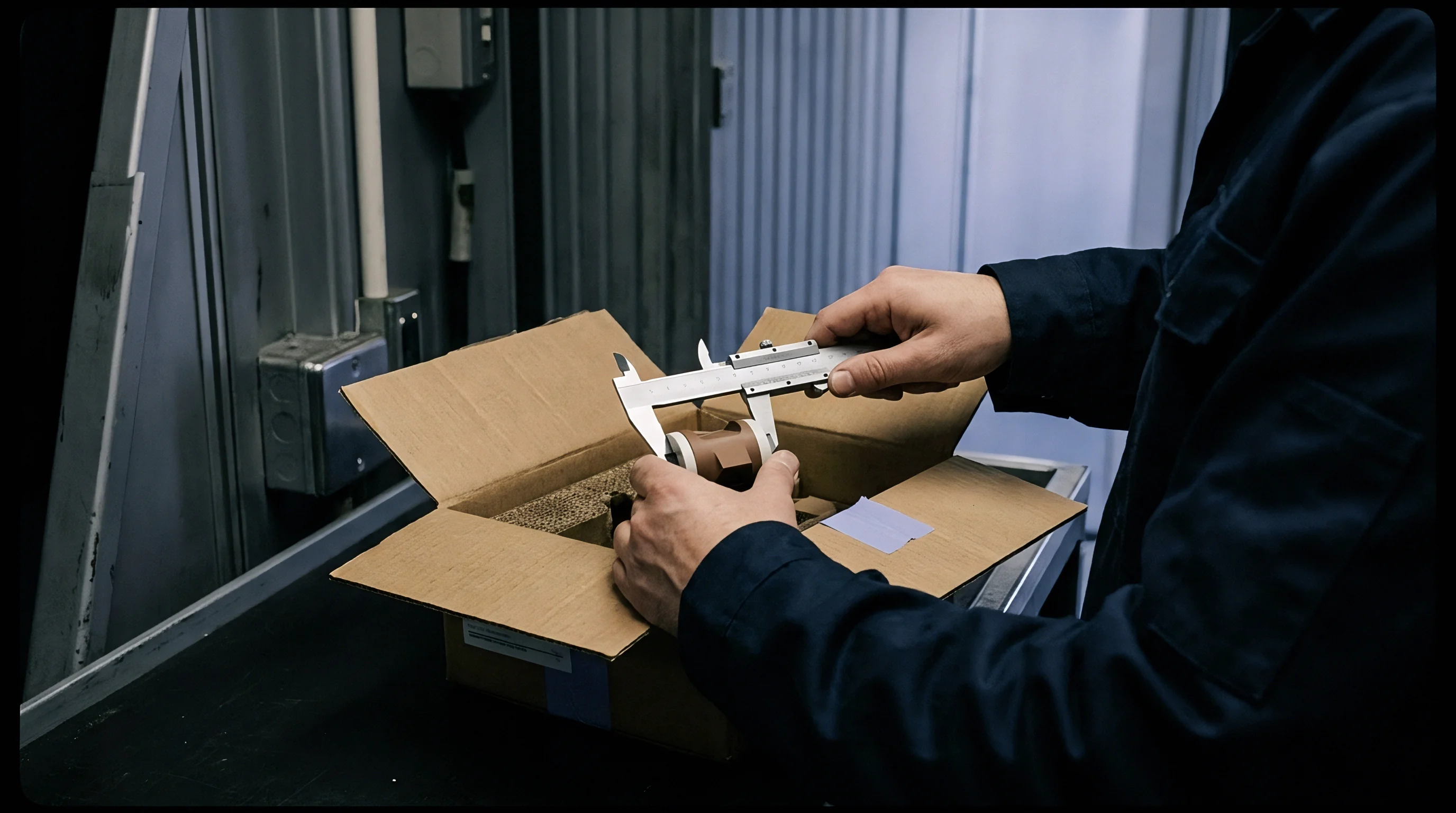
The notary public must personally oversee the transaction, record the shipping carrier details, inspect the unbroken tamper-evident seals on the delivery container, and record every step of the physical disassembly process. The technical expert performing the teardown must measure, photograph, and catalog every structural dimension on camera. If the notary leaves the room while the physical product is unsealed, the evidence chain breaks instantly.
- Identify historical commercial product inventory manufactured and distributed prior to the target patent filing date.
- Engage a notary public to oversee the acquisition, transaction confirmation, and physical receipt of the packaged product.
- Record the unboxing process under uninterrupted video surveillance within the notary office environment.
- Extract structural internal components and verify manufacturing date codes molded onto plastic or stamped onto metal circuit assemblies.
- Draft a detailed technical teardown protocol mapping exposed component features directly to the target patent claim elements.

Chain of Custody and Manufacturing Timestamp Evidence
Molded plastic housings, integrated circuit packaging, and cast alloy frames frequently carry permanent manufacturing date wheels or laser-etched batch identifiers. These physical marks provide strong circumstantial proof of production timing, but require documentary link to public availability.
A molded date indicator proving a component was cast in May 2018 demonstrates manufacture, not public disclosure. To establish prior art status, the petitioner must pair the physical date code with shipping manifests, distributor receipts, or retail sales logs showing that products built in that batch left the factory floor before the priority date. Manufacturing alone inside a confidential facility leaves the patent valid.
Commercial invoices missing explicit model numbers fail to establish prior art even when backed by bank transfer receipts.
Failing to secure unbroken chain-of-custody records for physical commercial samples allows the patentee to assert product substitution, rendering expensive teardown evidence completely inadmissible.
Schedule

The One-Month Evidence Supplementation Window
Filing a patent invalidation petition before CNIPA initiates a tight statutory timeline. Under Article 67 of the Detailed Rules for the Implementation of the Patent Law, the petitioner must present all initial grounds, technical arguments, and underlying documentary evidence at the moment of initial submission.
The petitioner enjoys a strict supplementary window of exactly one month from the initial filing date to submit additional prior art evidence, technical translation certificates, or missing authentication documents. Evidence submitted after this thirty-day deadline is routinely dismissed by the administrative panel, except under extremely narrow procedural exceptions.
Which Evidence Documents Permit Late Filing beyond the Statutory Window?
Panel examiners enforce rigid exclusions against late-filed primary prior art documents. The administrative framework permits supplementary evidence after the one-month window under only three specific conditions: rebutting new claim amendments introduced by the patentee, responding to counter-arguments raised by the panel during the oral hearing, or providing comparative technical test data to clarify previously submitted references.
Submitting an entirely new prior art patent document after the one-month mark forces the panel to exclude the reference or demand that the petitioner file a fresh invalidation petition. Filing a second petition triggers a distinct administrative docket, incurring additional official fees and risking consolidation delays that favor the patentee.
Amending Grounds for Invalidation
Petitioners frequently attempt to switch legal grounds from Article 22.2 novelty to Article 22.3 inventive step late in the administrative proceeding. CNIPA examination guidelines permit modifying the legal grounding within the one-month supplementation window. After that deadline, shifting legal arguments requires explicit panel approval and must rely strictly on evidence already entered into the official record.
The panel rejects new combinations of prior art references introduced for the first time during oral proceedings when those specific combinations were omitted from the written petition and thirty-day supplement. The written petition sets the firm boundary for all subsequent oral arguments.
We need more time because foreign notarization seals take sixty days in our home jurisdiction.
Administrative panels reject requests for procedural extensions based on foreign legal authentication delays, forcing petitioners to file incomplete petitions and risk forfeiture.
Mapping
Novelty versus Inventive Step Feature Comparison
Technical feature mapping converts documentary evidence into legal arguments before the CNIPA Reexamination and Invalidation Department. Article 22.2 novelty challenges require a single prior art document to explicitly teach every structural and functional limitation of a challenged claim. A single missing element defeats a novelty attack completely.
Article 22.3 inventive step challenges evaluate whether the claimed invention, compared with the prior art, possesses prominent substantive features and represents notable progress. Inventive step analysis allows combining multiple prior art references or combining a primary reference with common general knowledge in the relevant technical field.
| Analytical Parameter | Article 22.2 Novelty Analysis | Article 22.3 Inventive Step Analysis |
|---|---|---|
| Permissible Prior Art References | Strictly single prior art document | Primary reference plus secondary references or general knowledge |
| Technical Feature Identity | Direct identity or implicit structural equivalence | Differences evaluated for technical obviousness |
| Technical Problem Alignment | Must share identical technical problem and effect | Problem derived from actual technical differences |
| Role of Expert Witness Testimony | Minimal; focused on technical disclosure meaning | Extensive; establishing knowledge level of ordinary skilled person |
| Secondary Considerations Impact | Irrelevant to novelty evaluation | Commercial success and unexpected technical effects considered |
Combining Multiple Prior Art References
Combining prior art references requires establishing a clear technical motivation that would lead a person having ordinary skill in the art to merge the disclosures. CNIPA applies the three-step approach: determining the closest prior art, identifying the distinguishing technical features and the technical problem solved, and evaluating whether the combined prior art or common general knowledge suggests the claimed technical solution.
The patentee successfully defends claims by proving a technical prejudice against combining the cited references. If combining Document A and Document B disrupts the fundamental working principle of the primary apparatus, the proposed combination fails for lack of technical motivation.
- Documentary technical feature matrices must map every claim element against specific column, line, and figure references in the prior art.
- Common general knowledge claims require corroboration through technical textbooks, standard handbooks, or industrial engineering manuals.
- Unexpected technical effects evidence submitted by the patentee must be countered with comparative test data demonstrating identical performance in prior art structures.
- Technical expert affidavits must demonstrate the precise reasoning that would lead an engineer to select and combine disparate teachings.

The Role of the Person Having Ordinary Skill in the Art
The Person Having Ordinary Skill in the Art (PHOSITA) serves as the objective legal standard for evaluating obviousness. This hypothetical entity possesses common technical knowledge, holds ordinary engineering capabilities, and has access to all public disclosures in the relevant field before the filing date.
Petitioners cannot attribute creative invention capabilities to the PHOSITA. The technical expert presenting oral arguments must avoid using hindsight bias when mapping claimed features against prior disclosures. Reconstructing a complex patented combination by picking isolated elements from unrelated technical fields without demonstrating systemic motivation results in rejection of the invalidation petition.
Licensee shall not assist, directly or indirectly, in challenging the validity of the registered patent rights within the territory of the People’s Republic of China.
While valid under general corporate contract principles, non-challenge clauses contained in technology transfer agreements cannot prevent third-party strawmen from initiating administrative invalidation proceedings before CNIPA.
Loss
Appellate Review Paths at the Beijing IP Court
A party dissatisfied with a CNIPA invalidation decision holds the right to institute administrative litigation before the Beijing Intellectual Property Court. The statutory deadline for filing an administrative appeal is three months from receipt of the decision for domestic parties, extended to three months for foreign parties under amended procedural rules. The litigation names CNIPA as the administrative defendant, while the opposing party joins as a third party.
The Beijing IP Court reviews the administrative decision for procedural violations, erroneous legal interpretation, and improper factual findings. Appeal from the Beijing IP Court leads directly to the Intellectual Property Court of the Supreme People’s Court (SPC), which unifies national judicial standards for complex technical cases.
Interplay between Invalidation and Infringement Stays
Invalidation proceedings before CNIPA operate in parallel with judicial infringement litigation before regional IP courts or specialized intermediate courts. Defendants facing patent infringement suits routinely respond by filing invalidation petitions before CNIPA to seek a formal stay of the infringement trial.
Courts maintain discretion over whether to grant a stay. Utility model and design patents, which undergo no substantive examination prior to grant, face a high probability of trial suspension upon presentation of a prima facie valid prior art petition backed by an official CNIPA patentability evaluation report. Invention patents, having survived substantive examination, rarely result in stayed infringement litigation unless the prior art evidence presents an overwhelming likelihood of complete claim destruction.

Financial and Tactical Consequences of Invalidation Failure
Failing to secure invalidation before CNIPA carries severe commercial costs. A decision upholding the validity of a patent strengthens the patentee’s position in parallel infringement litigation, dramatically increasing damages exposure and injunctive leverage. Judicial courts view a patent that survived a formal administrative challenge as highly resilient, accelerating liability rulings against the alleged infringer.
Direct costs include administrative petition fees, legal representation expenses, translation fees, and extensive foreign notarization expenditures. Re-litigating rejected prior art arguments before the Beijing IP Court without fresh evidentiary grounds produces extremely low reversal rates. Preparing a comprehensive, authenticated, and perfectly translated prior art dossier prior to filing the initial administrative petition remains the sole reliable method for eliminating invalid patent claims in China.