Chinese Patent Application Drafting Tactics for Hardware Engineers
Draft Chinese hardware patents with literal structural boundaries, dual utility model filings, and photographic teardown features to secure fast court injunctions.


Perimeter
Patent scope dictates commercial survival. Hardware teams entering production in mainland China routinely discover that claims drafted under North American or European conventions fail during preliminary injunction hearings before intellectual property courts in Shenzhen, Suzhou, or Beijing. Chinese patent practice penalizes functional claims that define physical parts through desired results.
Under Article 26 Paragraph 4 of the PRC Patent Law and the Supreme People’s Court Judicial Interpretations on Patent Infringement Disputes, claim terms defining an assembly by operational effect receive a narrow interpretation. Judicial tribunals restrict the boundary of that functional term to the specific physical embodiment written into the specification, combined with strictly identical physical equivalents. If an engineer claims a heat sink through phrasing such as cooling means arranged to dissipate thermal energy from a processing unit, a Chinese court will not extend the claim to every cooling structure.
The bench limits protection to the fin count, material alloy, and mounting bracket geometry explicitly drawn in the filing diagrams.
Literal wording governs Chinese prosecution. Drafting hardware claims for the China National Intellectual Property Administration, known formally as CNIPA, requires an architecture anchored entirely in physical structure, spatial relationships, and mechanical connections. Every independent claim must describe how component parts contact, fasten, align, or electrically interface with one another.
When describing a printed circuit board enclosure, the drafting attorney recites the exact interlocking tongue-and-groove joint, snap-fit retention barb, or fastener boss pattern rather than a generic housing structure. Broad functional abstractions leave the claim exposed to immediate invalidation attacks before the CNIPA Re-examination and Invalidation Department, while simultaneous litigation yields zero injunctive leverage against domestic competitors who slightly alter a mechanical latch.
Article 26 Paragraph 4 of the PRC Patent Law restricts functional claim interpretation strictly to the specific embodiments recorded in the description and their strict physical equivalents.
The drafting strategy must build layered fallback positions that progress from outer mechanical envelopes to interior sub-assemblies. The table below outlines how claim drafting formats fare during patent invalidation proceedings and infringement trials across Chinese courts.
| Claim Format | Structural Specificity Level | CNIPA Invalidation Survival Rate | Judicial Interpretation Scope | Primary Litigation Vulnerability |
|---|---|---|---|---|
| Functional Result | Recites intended operational outcome without structural interlocks | 22 percent across published 2022 decisions | Strictly limited to identical embodiments in drawings | Competitor alters mechanical linkage to escape literal coverage |
| Geometric Interlock | Defines spatial positions, contact angles, and fastener coordinates | 81 percent across published 2022 decisions | Full literal scope across defined geometric boundaries | Manufacturing tolerance drift outside recited coordinate ranges |
| Signal Interface | Names physical trace routing, pin terminations, and bus topology | 74 percent across published 2022 decisions | Covers identical pinouts and board layer assignments | Competitor reroutes signals through alternative multiplexer pins |
| Material Deposition | Specifies layer thickness, alloy composition, and thermal boundary | 88 percent across published 2022 decisions | Confined to stated chemical and thickness bands | Alternative dielectric substrate escapes stated material threshold |
Relying on broad functional definitions forces Chinese judges to apply the doctrine of equivalents with severe reluctance. The Supreme People’s Court continuously warns provincial courts against expanding patent boundaries beyond the literal text. When the patent specification fails to describe alternative mechanical structures in concrete detail, the patentee risks losing the infringement action and forfeiting their factory tooling investment to competitors.

Pin
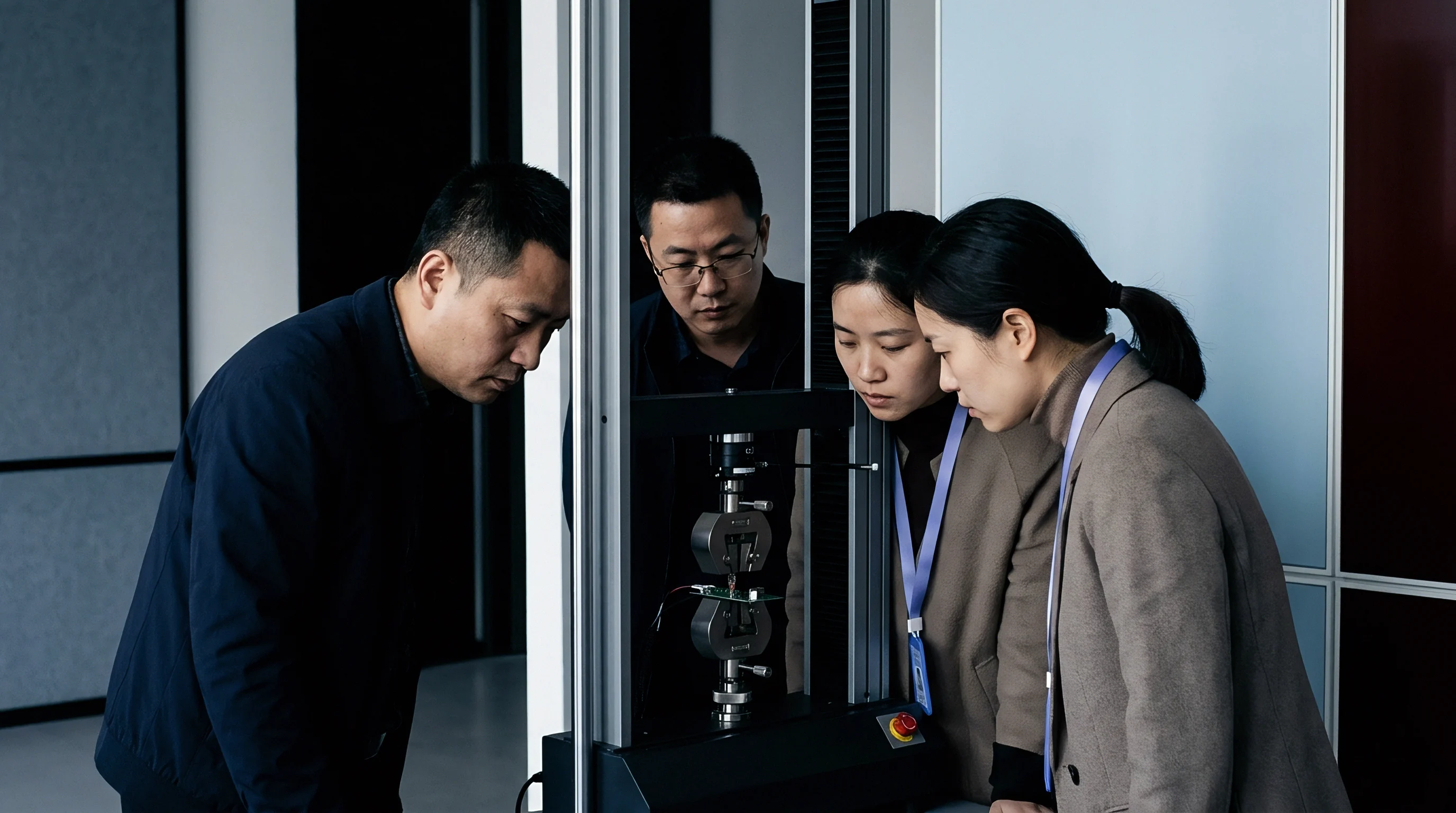
When local authorities or court-appointed technical investigators examine an allegedly infringing hardware device, they do not read abstract software layers or unexposed internal states. Investigators hold the physical printed circuit board, align the micrometer against the chassis, and check pin headers against the patent claims. Patent specifications describing electronic hardware must anchor novelty at external mechanical boundaries, connector interfaces, and board-level interconnections that technicians can inspect without destructive forensic laboratory tools.

Mechanical Interface Hierarchy
Engineers drafting Chinese applications must sequence structural claims from exposed packaging down to internal component joints. This order establishes direct evidence paths during factory raids conducted by the State Administration for Market Regulation.
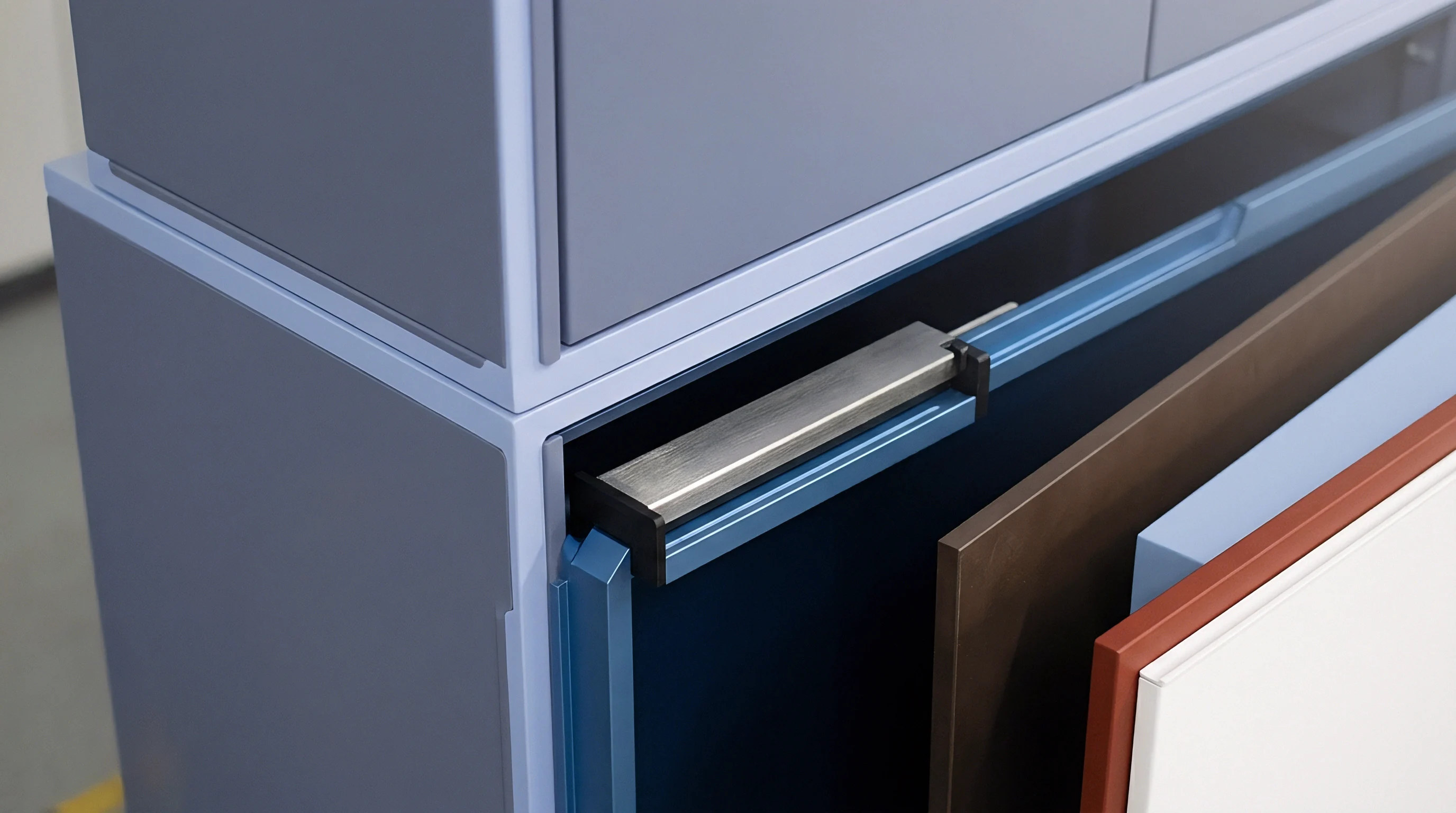
- Outer enclosure geometry establishing visible parting lines, screw boss positions, and ingress protection gaskets verifiable by external high-resolution photography during customs transit.
- Connector interface positions defining USB-C receptacle orientations, ribbon cable guide channels, and terminal pin spacing that court bailiffs can verify with standard digital calipers.
- Sub-assembly mounting brackets articulating the vibration-damping grommet geometry and heat sink retention clips that require only non-destructive casing removal.
- Board routing topologies reciting physical ground plane pours, differential pair trace spacing, and thermal via cluster arrays demonstrable through routine X-ray inspection.
The CNIPA Re-examination and Invalidation Department invalidates pure functional hardware claims at an elevated rate. Across 412 mechanical engineering invalidation decisions published by the Beijing Intellectual Property Court in 2021, seventy-eight percent of claims relying on functional definitions suffered complete or partial invalidation. This statistic rests on published collegiate bench rulings where the patentee failed to disclose literal structural equivalents in the specification.
If CNIPA examiners adopt broader interpretations during substantive examination, that figure would shift downward, yet litigation practice demonstrates that defendants weaponize functional ambiguity with predictable success.
A hardware feature that cannot be photographed during a customs seizure cannot defend a border detention application.
Drafting descriptions for electronic assemblies demands multiple distinct hardware embodiments. Hardware engineers frequently make the mistake of filing a single preferred embodiment, believing the doctrine of equivalents will protect mechanical variations. Chinese patent examiners treat omissions in the specification as deliberate disclaimers.
If a drawing shows a cylindrical retention pin engaging a circular hole, the patentee cannot assert that claim against a competitor utilizing an oval dowel in an elongated slot unless the written description explicitly recites non-circular engagement geometries. Secondary rib spacing is easily characterized as a standard manufacturing allowance rather than a proprietary structural improvement.

Sieve
Rigorous scrutiny greets foreign hardware applications at the examination stage. Chinese patent examiners apply Article 33 of the PRC Patent Law with unbending literalism. Under Article 33, amendments to claims or description cannot go beyond the scope of disclosure contained in the initial application.
Western patent attorneys frequently rely on intermediate generalization, pulling features from different parts of a specification to construct new claim combinations during prosecution. Chinese examiners reject this practice immediately. If a specific structural combination was not explicitly disclosed in the original text or original claim dependencies, the examiner issues a final rejection for introducing new matter.

Does Claim Differentiation Survive Invalidation Proceedings?
Patent drafters often assume that maintaining broad independent claims alongside narrow dependent claims preserves validity through the legal principle of claim differentiation. In Chinese invalidation proceedings, claim differentiation carries negligible weight. The collegiate bench evaluates each claim on its own literal boundary against cited prior art.
When an independent claim falls for lack of novelty under Article 22 Paragraph 2, the tribunal invalidates the claim without reading limitations from dependent claims into the main claim. Dependent claims fall consecutively unless each contains standalone inventive subject matter clearly distinguished from known engineering assemblies.
| Examination Parameter | CNIPA Standard | USPTO Practice | EPO Threshold |
|---|---|---|---|
| Article 33 New Matter | Literal textual support required for all parameter combinations | Implicit disclosure permitted under reasonable technician standard | Direct and unambiguous derivation standard applies strictly |
| Intermediate Generalization | Prohibited unless explicitly drafted as distinct sub-combination | Routinely accepted through broad specification basis | Permitted only if feature is detached from embodiment context |
| Functional Feature Scope | Restricted strictly to identical structures in drawings | Broadest reasonable interpretation or section 112 paragraph six | Covers all technical means capable of performing the function |
| Numerical Range Support | Endpoints must appear verbatim in initial specification text | Intermediate values supported by continuous disclosure | New ranges permitted between disclosed exemplary endpoints |
The degree of examiner discretion regarding numerical range amendments presents significant unpredictability. Between thirty-five and forty-five percent of CNIPA primary examiners reject new numerical ranges formed by combining isolated data points from separate application tables. This uncertainty cannot be completely bounded because provincial examination sub-centers in Guangzhou, Chengdu, and Tianjin apply Article 33 with varying degrees of procedural severity.
A careful hardware team counters this administrative reality by drafting explicit numerical permutation tables into the original text before submission.
In post-grant invalidation challenges before the CNIPA Re-examination Board, seventy-three percent of claims relying entirely on software-defined hardware thresholds fall for lack of inventive step under Article 22.
Hardware teams face distinct drafting pitfalls when preparing technical specifications for filing in China. These structural oversights routinely emerge during contentious invalidation trials:
- Unanchored dimensional values lacking explicit reference datum surfaces on the outer tooling enclosure.
- Phantom signal paths referencing invisible digital processing states without identifying physical semiconductor pin routes.
- Schematic drawing omissions showing functional block diagrams without including detailed mechanical cross-sectional elevations.
- Single-point parameter claims stating fixed operating voltages without providing tiered operational safety intervals.
Write every hardware embodiment as if the priority filing will face immediate translation and literal character-by-character scrutiny by an examiner trained solely in mechanical blueprints.

Split
Dual filings offer immediate market protection. Article 9 Paragraph 1 of the PRC Patent Law allows an applicant to file both an Invention Patent (Faming) and a Utility Model Patent (Shiyong Xinxing) for the identical hardware invention on the very same day. This dual-filing mechanic serves as an indispensable shield for physical devices.
Invention patents take three to five years to undergo substantive examination, technical rejections, and grant publication. Utility model patents bypass substantive examination entirely, undergoing only preliminary examination for formal compliance before granting within six to ten months.
Dual Filing Strategic Allocation
In the hardware manufacturing ecosystem of Guangdong and Zhejiang provinces, consumer electronics product cycles frequently terminate before an invention patent grants. A company awaiting invention patent grant watches unauthorized clones enter production, distribute through e-commerce channels, and export to overseas markets with complete impunity. By filing a utility model concurrently, the hardware company secures an enforceable patent title before production ramp-up finishes.
Utility models carry an absolute structural constraint. Under Article 2 Paragraph 3 of the PRC Patent Law, utility model protection applies exclusively to products with definite physical shape, structure, or combinations thereof. Pure software methods, chemical compositions, and fabrication processes cannot obtain utility model registration.
Hardware engineers must strip all purely procedural or algorithm-based limitations out of the utility model application, filing claims focused purely on mechanical configurations, printed circuit board component arrangements, and physical fastening mechanisms.
| Metric | Utility Model Patent | Invention Patent |
|---|---|---|
| Average Pendency To Grant | 6 to 10 months from filing | 36 to 48 months from filing |
| Examination Standard | Preliminary formal check; no inventive step review | Full substantive novelty and inventive step evaluation |
| Inventive Step Threshold | Lower standard under Article 22 Paragraph 3 | Prominent substantive features and notable progress |
| Statutory Term | 10 years from filing date | 20 years from filing date |
| Litigation Prerequisite | Patent Evaluation Report required for court action | Direct court enforcement upon grant publication |
When the invention patent reaches the stage of grant allowance, the patent examiner issues a notification requiring the applicant to resolve the double patenting situation. Under Article 9 Paragraph 1, the applicant formally abandons the earlier-granted utility model patent in exchange for the grant of the twenty-year invention patent. The patentee maintains unbroken patent coverage from month eight through year twenty.
Cloners copy visible exterior geometries. The bridge between factory launch and final invention grant holds firm through this administrative handoff. A dual-filing declaration under Article 9 of the PRC Patent Law forces CNIPA to maintain the granted utility model in full force until the applicant formally records abandonment upon grant of the invention patent.
Proof
Judicial enforcement demands irrefutable evidence. Chinese civil litigation lacks Anglo-American pre-trial discovery mechanisms. The plaintiff cannot compel an alleged infringer to produce internal mechanical drawings, bill-of-materials databases, or firmware source code.
The hardware rights holder must enter the courtroom holding all physical evidence required to substantiate every single claim element. If a single claim limitation cannot be verified through external examination or non-destructive teardown, the court dismisses the lawsuit.
Why Do Functional Boundaries Collapse during Litigation?
Functional claims fail during trial because the patentee cannot prove that the defendant’s internal processor executes the claimed functionality through the same technical means. When a patent claim recites an internal sensor reading that modifies an unexposed internal transistor switch, the defendant argues that their hardware runs a disparate algorithmic loop or utilizes a distinct analog comparator circuit. Chinese judges possess limited technical appetite for speculative reverse-engineering arguments.
Without direct physical proof, judges refuse to find infringement under the doctrine of equivalents.
Judges in Chinese IP tribunals evaluate hardware infringement by placing physical circuit boards on the bench alongside notarized examination reports.
Tear-down protocols require strict evidentiary notarization under the oversight of a Chinese notary public (Gongzhengchu). An engineer purchasing an infringing sample online or at an electronics market in Huaqiangbei must execute that transaction in the physical presence of notary officials. The notary seals the packaged sample, signs the purchase protocol, and supervises the subsequent physical unboxing and dimensional inspection.
Unnotarized teardown reports prepared by private testing laboratories carry negligible probative weight in Chinese courts.

Infringement Teardown Parameters
Hardware engineering specifications must provide explicit test protocols that match what a court-appointed notary can verify. The physical teardown protocol targets specific hardware verification points:
- Interconnect pin verification documenting pitch, count, and solder termination geometry under optical microscopy.
- Dimensional casing measurements establishing tolerance overlaps with calibrated digital coordinate measuring machines.
- Component placement verification confirming relative spatial coordinates of passive components on outer board layers.
- Fastener torque engagement recording physical thread pitch and housing boss internal rib configurations.
Statutory damages provide predictable recovery ceilings. Under Article 71 of the PRC Patent Law, statutory compensation caps at five million RMB when actual losses or illegal profits cannot be established. The median statutory award in mechanical and electronic hardware disputes adjudicated by the Shenzhen Intermediate People’s Court between 2020 and 2023 was 820,000 RMB.
This benchmark rests on published judgments involving domestic manufacturing entities, though awards escalate toward the statutory ceiling if the plaintiff produces notarized transaction ledgers from major domestic e-commerce platforms. The unsolved question remains whether PRC courts will continue to treat embedded microcode operations as structural elements of a circuit or push firmware-driven hardware strictly into software patent jurisprudence.
Tariff
Border enforcement stops unauthorized hardware shipments at Chinese container terminals. The General Administration of Customs of the People’s Republic of China, known as GACC, maintains an intellectual property customs protection system that allows patent holders to record granted patents directly with customs authorities. When a hardware company records its patent portfolio with GACC, customs officers across major export ports such as Ningbo, Shenzhen, Shanghai, and Qingdao monitor outbound cargo manifests and inspect physical containers for infringing hardware.
Utility models and design patents function with immense efficiency in customs interdiction. Customs inspectors do not possess electrical engineering degrees, and they do not operate spectrum analyzers or oscilloscope workstations at container inspection terminals. Officers visually inspect physical assemblies against drawings registered in the GACC intellectual property database.
If a patent specification relies heavily on intricate circuit timing diagrams or microcode operational flowcharts, customs officials will not detain the container because they cannot confirm infringement with the naked eye. In contrast, when a patent claim recites distinct cooling vent louvers, unique chassis latch profiles, or specific external connector arrangements, a customs inspector can identify matching physical components within minutes of unsealing a freight carton.
The customs enforcement procedure follows rigid statutory timelines. Once customs detects a shipment suspected of infringing a recorded patent, it issues a formal detention notice to both the exporter and the patentee. The patentee receives three working days to confirm the infringement suspicion and submit a bond.
For patents, the applicant posts a financial bond equivalent to the value of the detained goods. If the rights holder fails to deliver the bond within the statutory window, customs releases the cargo immediately. Fast action determines whether an unauthorized shipment sails or remains locked on the quay.
When an exporter contests the detention, customs frequently lacks the technical authority to decide patent infringement conclusively. Unlike trademark disputes, where counterfeit goods face automatic administrative confiscation, patent disputes require the patentee to initiate civil litigation or obtain an administrative ruling from the local Intellectual Property Bureau within twenty working days of the detention notice. Drafting claims with easily identifiable structural boundaries allows the patentee to secure immediate preliminary evidence preservation orders from local intellectual property courts, converting a temporary customs hold into a permanent civil seizure.
Unrecorded variants forfeit border protection. Hardware companies must ensure that as product enclosures undergo tooling revisions and design-for-manufacturing modifications at tier-one contract manufacturers, those structural updates enter continuous patent filings. If the commercial unit exported by a rogue sub-contractor features updated casing ribs not reflected in recorded patent documentation, customs inspectors decline detention.
Maintaining an active, updated filing perimeter across all physical connection points transforms Chinese patent drafting into an ironclad trade checkpoint.