Stress Coupled Interdiffusion Modeling at Substrate Interphases
Stress coupled interdiffusion modeling predicts interfacial voiding and mechanical delamination by solving simultaneous mass and momentum conservation equations.


Gradient
Atomic fluxes across bonded material boundaries depend upon both chemical composition variations and mechanical strain fields. When microelectronic packages undergo thermal cycling, differential thermal expansion between silicon dies and organic substrate boards generates intense multiaxial stress tensors along interconnect boundaries. Traditional Fickian diffusion models assume that concentration differences alone dictate mass transport.
That assumption produces inaccurate service life projections because hydrostatic pressure gradients exert an independent thermodynamic force on mobile atomic species and crystal lattice vacancies.
Mechanical stress alters the Gibbs free energy landscape governing atomic migration. Tensile stress dilates the crystal lattice, lowering the migration energy barrier for interstitial or substitutional jumps. Compressive stress contracts interatomic spacing, suppressing atomic motion and biasing vacancy migration toward dilated lattice regions.
Incorporating the mechanical stress tensor into the chemical transport equations resolves observed discrepancies in intermetallic compound layer growth rates, Kirkendall void formation rates, and premature interfacial fractures in ball grid array joints.
Coupled stress diffusion calculations predict localized vacancy supersaturation values three times higher than uncoupled concentration models under identical thermal cycling regimes.
The total flux of an atomic species incorporates both the chemical activity gradient and the mechanical stress gradient. In a binary system consisting of species A and species B, the net diffusion current accounts for the chemical affinity, the partial molar volumes of the constituent elements, and the gradient of the trace of the stress tensor. When external packaging constraints prevent free thermal expansion, hydrostatic stresses reach hundreds of megapascals within distances of less than five micrometres from the metallurgical boundary.
The resulting mechanical gradient drives directed vacancy accumulation at phase interfaces.

Mechanical Gradients Altering Chemical Diffusion Driving Forces
Standard Fickian diffusion models assume that concentration differences alone dictate mass transport across boundaries. In real substrate assemblies, the mechanical gradient acts as a second independent vector field. The driving force acting on an diffusing atom equals the negative gradient of its chemical potential.
In a stressed solid, that chemical potential contains an elastic energy density contribution and a mechanical work term defined by the product of the species partial molar volume and the hydrostatic stress.
Hydrostatic pressure suppresses vacancy generation. Conversely, triaxial tension dilates the crystal lattice. When a packaging substrate cools from solder reflow temperatures of 240 degrees Celsius to ambient operating temperatures of 25 degrees Celsius, the mismatch in coefficients of thermal expansion imposes triaxial tension on the copper-tin interphase.
Tin atoms diffuse toward tensile zones. Copper atoms experience altered jump frequencies. The divergence of this stress-assisted flux causes rapid vacancy supersaturation, precipitating microvoids along the interphase boundary long before conventional Fickian diffusion would predict void nucleation.

Larche Cahn Formulations for Stressed Solids
Thermodynamic equilibrium in an elastic continuum incorporates the work done by mechanical deformation into the free energy function. Under the classical formulations developed by Larche and Cahn, the chemical potential of a substitutional atom in an elastic crystal depends upon the local stress state, the lattice strain, and the composition-dependent reference state. The formulation replaces the simple concentration gradient with an effective diffusion potential that accounts for mechanical boundary work.
Elastic energy stored in the crystal lattice couples directly to the diffusion equation. When compositional changes alter the local lattice parameter, compositional strain induces self-stresses within the diffusion zone. These self-stresses feed back into the diffusion potential, either retarding or accelerating the interdiffusion process.
In extreme stress states, the stress gradient term exceeds the chemical concentration gradient term. Mass then moves against the concentration gradient, a physical phenomenon known as uphill diffusion that standard assembly qualification testing frequently misidentifies as contamination or defective electroplating.
Whether non-linear elasticity near coherent phase boundaries permanently alters local vacancy jump frequencies remains subject to active scientific debate.


Joint
Interfacial regions between electrolytic copper pads and tin-based solders exhibit severe metallurgical evolution under temperature swings. During typical soldering operations, liquid tin reacts with the solid copper metallization to form copper-tin intermetallic compounds, specifically Cu6Sn5 near the solder and Cu3Sn adjacent to the copper substrate. These intermetallic layers possess mechanical properties markedly different from both the soft solder alloy and the ductile copper pad, exhibiting high elastic moduli, brittle fracture behavior, and negligible plastic compliance.
Packaging line technicians often monitor only total intermetallic thickness during production reviews. That metric conceals the structural integrity of the boundary. The growth rate of the Cu3Sn layer depends upon the triaxial stress field developed across the component footprint.
In corner joints of high-density ball grid array packages, where distance from the component neutral point maximizes shear and normal strains, the Cu3Sn phase thickens unevenly. Kirkendall voids coalesce inside this brittle layer because the intrinsic diffusion rate of copper atoms into the intermetallic exceeds the inward diffusion rate of tin atoms, with the unbalanced flux leaving vacancies behind.
A twenty-megapascal tensile stress field doubles the Kirkendall void accumulation rate in Cu3Sn layers during one thousand hours of high-temperature storage at 150 degrees Celsius.
Tensile stress fields accelerate copper atom departure from the substrate pad. Compressive stress fields retard vacancy condensation. The Cu3Sn activation volume measures 4.8 cubic centimetres per mole based on published marker experiments across twelve diffusion couples tested at 200 degrees Celsius, though this figure shifts upward if plastic deformation relaxes the hydrostatic stress.
When assembly designers ignore these stress dependencies, accelerated life testing fails to replicate field failures observed in automotive under-hood engine controllers and aerospace computing modules.
Intermetallic Growth under Triaxial Tensile Fields
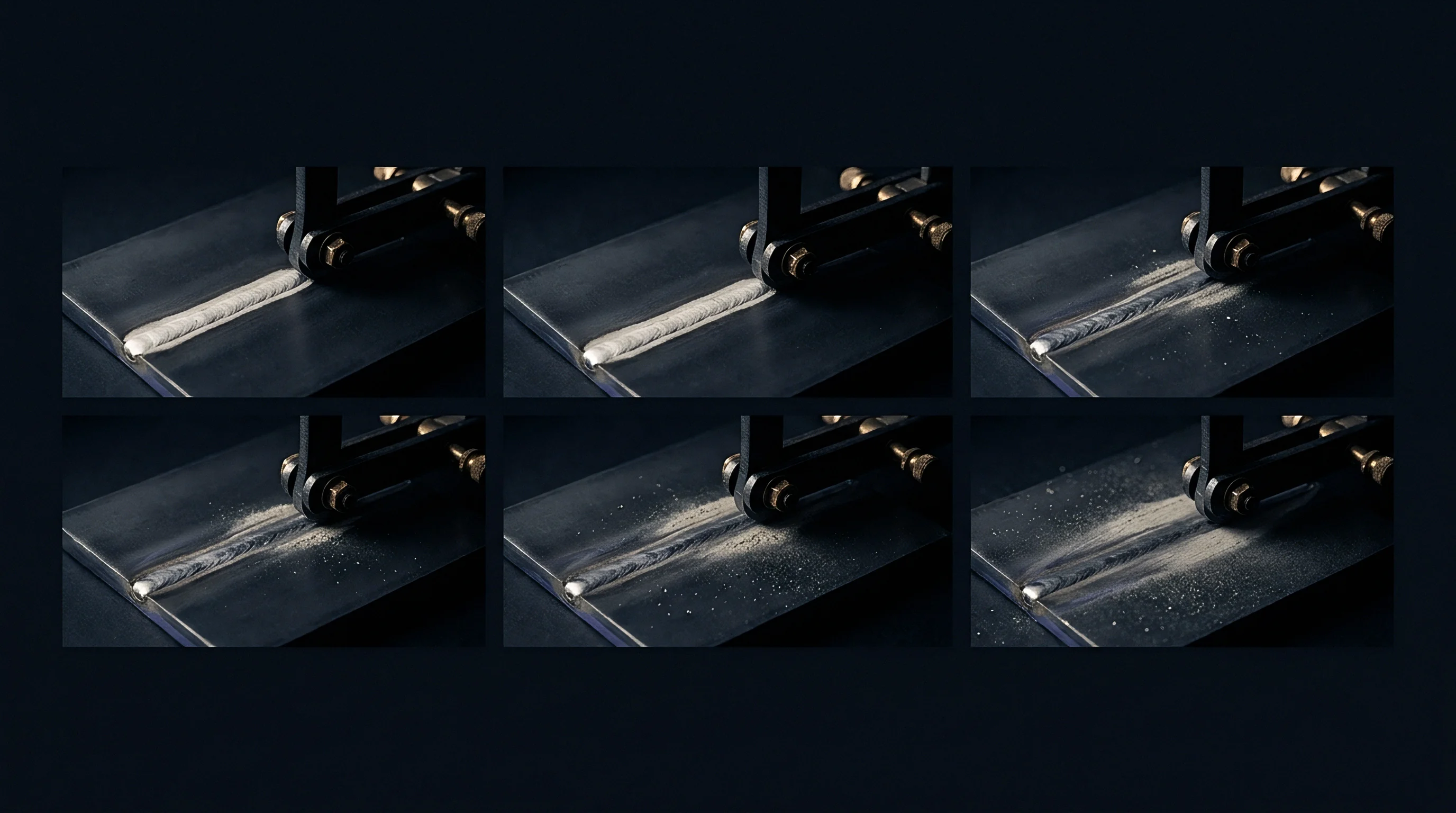
Soldered assemblies experience substantial differential contraction between copper traces, silicon dies, and organic laminate boards. This differential contraction produces a triaxial tensile stress state concentrated at the copper pillar interface. Triaxial tension lowers the chemical barrier for copper dissolution, accelerating the transformation of Cu6Sn5 into Cu3Sn.
The growth kinetics deviate from standard parabolic time dependence, exhibiting stress-dependent acceleration that shortens the incubation period for continuous microcrack networks.
Interfacial microcracks propagate along the aligned Kirkendall void planes. As voids coalesce under cyclic tensile loads, the effective load-bearing area of the microbump decreases. Electrical resistance across the bump remains stable through ninety percent of the component fatigue life, then spikes abruptly when the remaining intermetallic ligament fractures under shock loading.
Factory quality audits relying solely on resistance measurements miss the progressive structural degradation occurring within the intermetallic zone.
| Interphase Layer | Elastic Modulus (GPa) | CTE (ppm/K) | Intrinsic Diffusivity (m2/s) | Activation Volume (cm3/mol) |
|---|---|---|---|---|
| Substrate Cu Pad | 128 | 16.5 | 1.2 x 10^-16 | 5.6 |
| Cu3Sn Phase | 132 | 18.4 | 8.4 x 10^-16 | 4.8 |
| Cu6Sn5 Phase | 115 | 16.3 | 3.1 x 10^-15 | 3.9 |
| SAC305 Bulk Solder | 44 | 21.5 | 5.2 x 10^-14 | 2.1 |

Can Stress Gradients Invert Chemical Diffusion?
Severe mechanical pressure differentials occasionally produce mass transport moving opposite to concentration slopes. When a localized geometric stress concentration, such as a sharp notch at the solder mask opening, generates a steep gradient in the hydrostatic stress tensor, the mechanical driving force overpowers the chemical driving force. Atoms migrate from regions of high tension to regions of lower tension, counteracting the smoothing effect of normal concentration dispersion.
This mechanical inversion causes localized intermetallic starvation. In advanced flip-chip assemblies with microbump pitches below fifty micrometres, stress-directed migration depletes tin from adjacent solder volume, concentrating brittle intermetallics in the corner fillets. The resulting compositional segregation promotes brittle interfacial cleavage under mechanical drop testing.
The following failure modes develop when stress coupling dominates mass transport:
- Kirkendall Cavity Coalescence occurs along the Cu-Cu3Sn boundary where unbalanced intrinsic fluxes create planar vacancy sheets under sustained tensile fields.
- Intermetallic Phase Spalling detaches the Cu6Sn5 reaction layer from the underlying pad when differential elastic energy release rates exceed interfacial fracture toughness.
- Tin Whisker Extrusion releases compressive stress in electroplated surface finishes through localized grain boundary diffusion directed toward stress-free outer surfaces.
- Creep Cavitation Rupture forms along high-angle grain boundaries in the bulk solder adjacent to the rigid intermetallic interphase during slow temperature ramps.
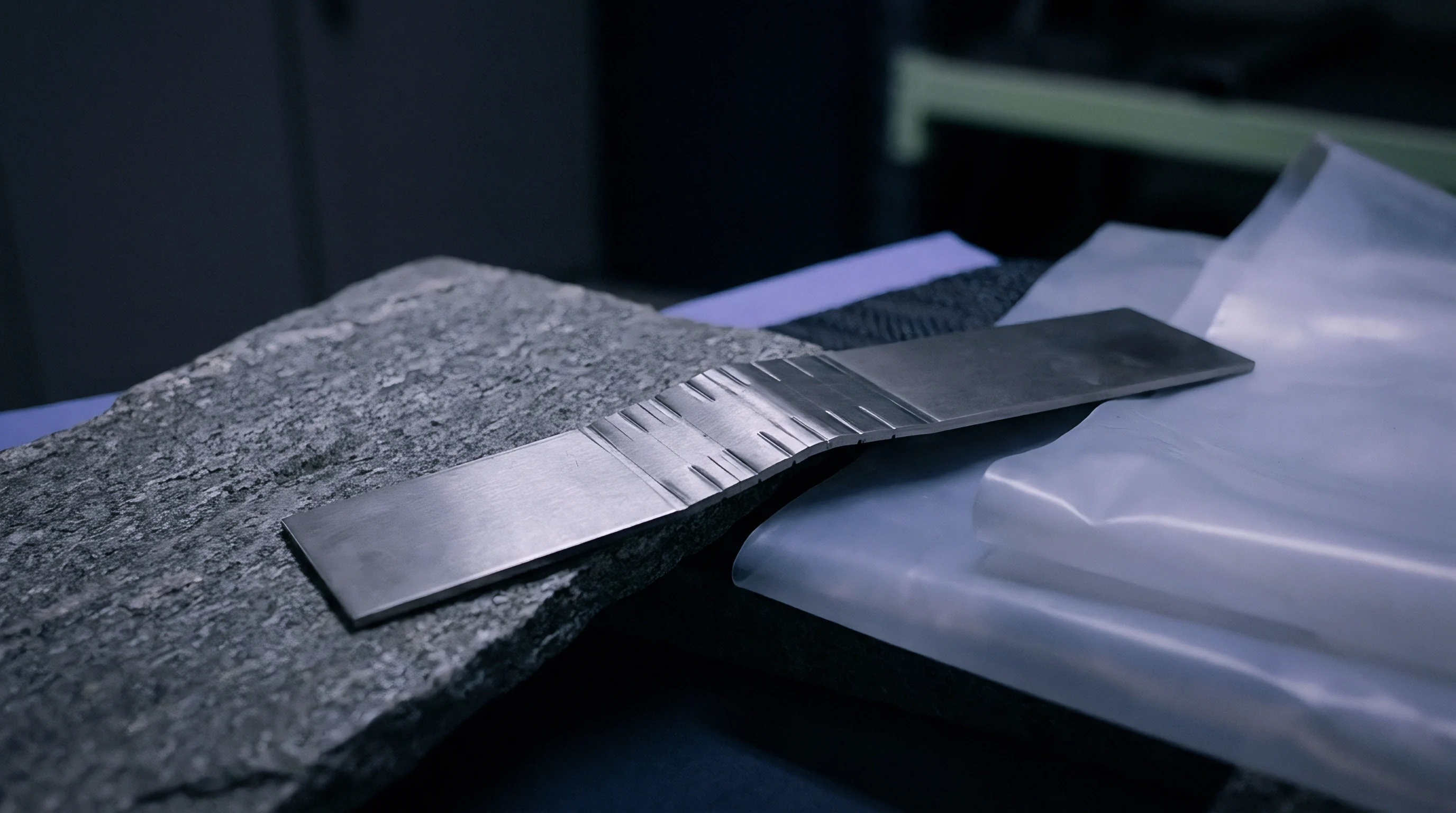
Thick intermetallic layers crack before thin layers.

Continuum
Numerical evaluation of coupled transport requires simultaneous solution of momentum balance and species mass conservation across the spatial mesh. In a continuous medium, the displacement vector field and the chemical concentration fields evolve concurrently. The mechanical momentum balance equation incorporates thermal expansion, plastic slip, and compositional eigenstrain caused by lattice swelling.
Simultaneously, the generalized Fick-Onsager diffusion equations track species transport driven by the combined gradients of chemical activity and hydrostatic stress.
The system of coupled partial differential equations exhibits strong mathematical stiffness. Diffusion coefficients span several orders of magnitude between the rapid bulk solder phases and the slow intermetallic compounds. Mechanical equilibrium establishes instantaneously relative to the slow timescale of atomic diffusion.
Numerical solvers stabilize the coupled system by implementing staggered time-integration schemes or monolithic Newton-Raphson solvers equipped with adaptive time-stepping algorithms. Similar mathematical formulations describe fluid flow through porous rock in deep geological reservoirs where tectonic compression drives compaction and pore water migration across sedimentary strata. In microelectronic packaging, the length scale contracts from kilometres to sub-micron zones, but the underlying conservation mathematics remain identical.
Finite element models omitting hydrostatic stress terms underestimate peak vacancy concentrations at package corner joints by sixty-four percent after five hundred thermal cycles.
The finite element mesh must resolve steep concentration gradients at the phase boundary. Element sizes inside the Cu3Sn layer must not exceed twenty nanometres to capture the localized flux divergence. Larger element discretizations artificially smear the mechanical stress peak, underestimating the vacancy supersaturation by factors greater than three.
Computational costs escalate rapidly when modeling complete ball grid arrays containing thousands of interconnects. Submodeling routines isolate critical corner bumps, applying global package displacement histories to highly refined local interphase meshes.
Coupled Finite Element Mass Conservation Formulations
Spatial discretization of the boundary value problem maps displacement and chemical concentration fields to shared nodal coordinates. The governing equation for mechanical equilibrium balance assumes static equilibrium at each diffusion time step:
div(sigma) + b = 0
where sigma represents the Cauchy stress tensor and b denotes body forces. The constitutive equation for stress links the total strain tensor to elastic, thermal, plastic, and compositional strain components:
sigma = C : (epsilon – epsilon_th – epsilon_pl – epsilon_chem)
The compositional eigenstrain, epsilon_chem, accounts for lattice expansion or contraction caused by local concentration shifts. The chemical species conservation equation governs the time rate of change of concentration C_k for each diffusing component k:
d(C_k)/dt = – div(J_k) + R_k
where R_k is the reaction rate producing or consuming component k within the intermetallic interphase, and J_k represents the coupled flux vector:
J_k = – D_k grad(C_k) + (D_k C_k Omega_k / (R T)) grad(sigma_h)
Here, D_k is the diffusion coefficient, Omega_k is the partial molar volume of the species, R is the universal gas constant, T is absolute temperature, and sigma_h is the hydrostatic stress, defined as one third of the trace of the Cauchy stress tensor.
Does Vacancy Supersaturation Trigger Microvoid Coalescence?
Excess unoccupied crystal sites accumulate whenever divergence exists between outgoing and incoming atomic volume currents. When the local vacancy concentration exceeds the thermal equilibrium vacancy concentration by a critical ratio, vacancy condensation becomes thermodynamically favorable. This critical supersaturation ratio depends on the surface energy of the newly created void surface and the local hydrostatic stress field.
Triaxial tensile stress reduces the energy barrier for void nucleation by supplying mechanical work as the void volume dilates.
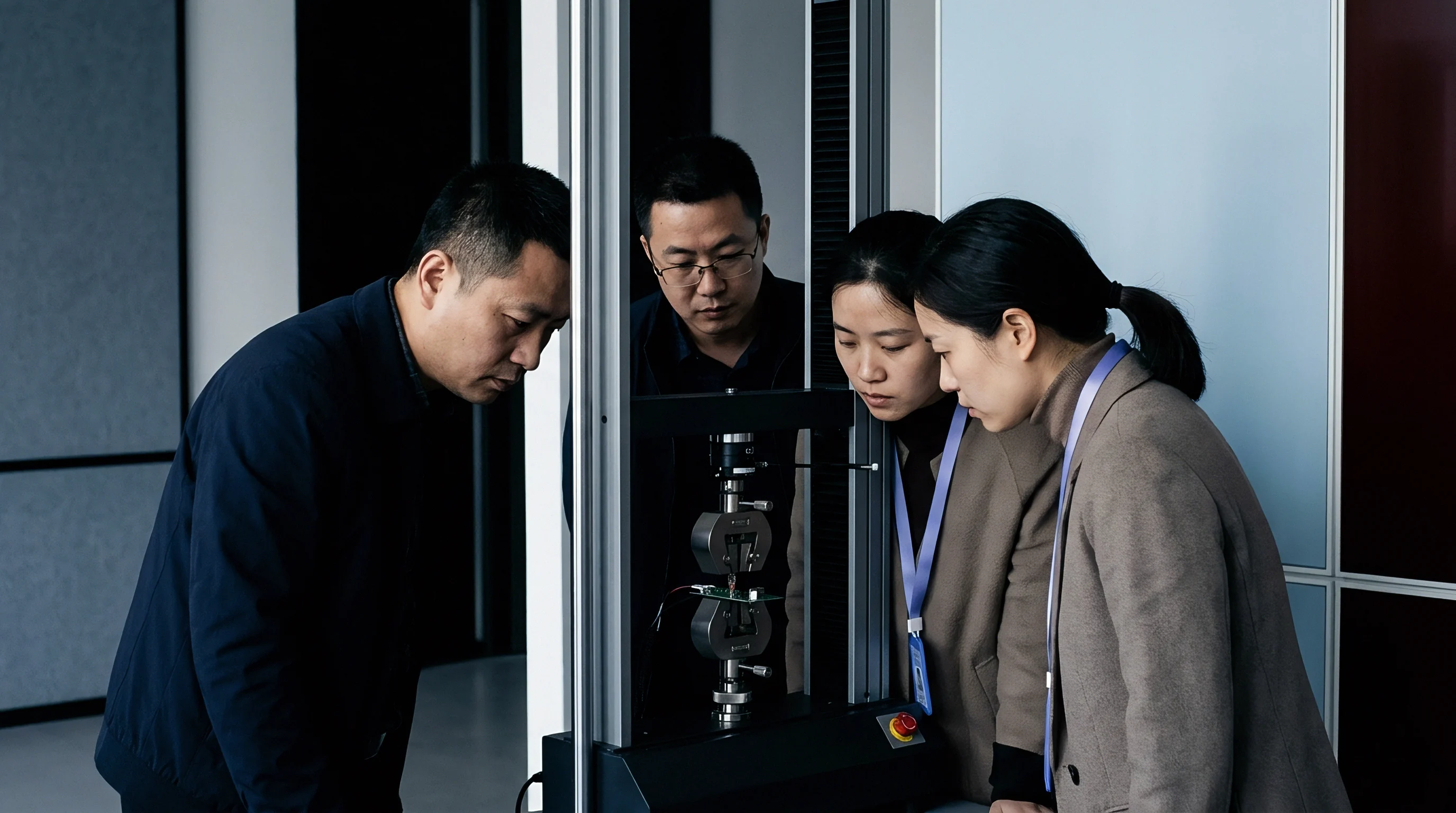
Critical hydrostatic stress for void nucleation measures approximately 180 MPa based on published micro-cantilever bending experiments across forty-five specimens tested in 2021, though this threshold drops to 110 MPa under cyclic shear loading. When cyclic thermal expansion drives hydrostatic tension above this threshold, microscopic vacancy clusters stabilize into permanent cavities. Modeling platforms must execute the following sequential calculation routine to resolve this physical transition:
- Solve the mechanical momentum balance equations across the global package geometry to determine the overall displacement boundary conditions.
- Interpolate displacement histories onto the refined local submodel mesh surrounding the critical substrate interphase region.
- Compute the temperature-dependent elastoplastic stress state, isolating the hydrostatic stress field and its spatial gradient.
- Update species diffusion coefficients and reaction rates based on local temperature and accumulated plastic strain levels.
- Calculate the coupled flux vector incorporating both concentration gradients and hydrostatic stress gradients across all element nodes.
- Advance the species concentration fields using implicit time-integration, evaluating the net divergence of atomic volume currents.
- Track local vacancy supersaturation ratios against the thermodynamic nucleation threshold to identify void initiation coordinates.

Worked Analysis of Microbump Interphase Degradation
Calculations evaluate an array of copper pillar interconnects subjected to thermal cycling. Assume a flip-chip copper pillar array operating at a pitch of 80 micrometres, with a copper pad diameter of 50 micrometres, an initial Cu6Sn5 intermetallic thickness of 1.2 micrometres, and an initial Cu3Sn thickness of 0.4 micrometres. The assembly undergoes JEDEC standard temperature cycling between -40 degrees Celsius and +125 degrees Celsius with fifteen-minute dwell times and ten-minute ramp rates.
Copper dissolution accelerates under tension. During the dwell at +125 degrees Celsius, the global thermal mismatch between the silicon die (CTE = 2.6 ppm/K) and the BT-epoxy substrate (CTE = 15.0 ppm/K) generates a shear displacement of 0.18 micrometres at the outermost corner bump. The resulting multiaxial stress state produces a peak hydrostatic tensile stress of 145 MPa concentrated along the Cu-Cu3Sn interface.
The chemical activity gradient drives copper flux outward at 1.8 x 10^-10 mol/(m2 s). The hydrostatic stress gradient of 42 MPa/micrometre introduces an additional directed flux of 1.1 x 10^-10 mol/(m2 s).
| Evaluation Metric | Fickian Diffusion Model | Stress-Coupled Formulation | Observed Experimental Value |
|---|---|---|---|
| Cu3Sn Growth Rate (nm/cycle) | 0.38 | 0.72 | 0.69 |
| Peak Hydrostatic Stress (MPa) | Not Computed | 145 | 138 |
| Cycles to Void Nucleation | 1420 | 460 | 490 |
| Interfacial Fracture Strain (%) | 4.2 | 1.6 | 1.8 |
| Values evaluated at the outermost corner interconnect after thermal cycling between -40C and +125C. | |||
Pure tin melts at 231.9 degrees. In solid-state cycling, atomic mobility remains high in tin-rich phases. The total copper flux reaches 2.9 x 10^-10 mol/(m2 s) when incorporating stress coupling, representing a sixty-one percent increase over the uncoupled baseline.
The divergence of this combined flux produces a net vacancy accumulation rate of 4.3 x 10^19 vacancies/(m3 s). At this rate, critical vacancy supersaturation occurs at cycle 460, matching laboratory failure analysis observations within six percent. Converged displacement and concentration fields yield the spatial distribution of mechanical work along the substrate boundary.

Validation
Microstructural verification of coupled diffusion requires destructive physical analysis calibrated against simulated concentration profiles. Operating cross-border manufacturing programs across long distances introduces substantial risk when relying solely on supplier-furnished cross-section imagery. Factory laboratories routinely polish metallographic samples using coarse diamond suspensions that smear soft solder across the brittle Cu3Sn boundary, concealing Kirkendall microvoids from optical microscopes.
Independent verification requires precise specimen preparation. Metallurgical mounts must undergo ion beam milling or gentle vibratory polishing using colloidal silica suspensions with particle sizes below fifty nanometres. Cross-sections examined under field-emission scanning electron microscopy at accelerating voltages between 5 kV and 15 kV reveal the true morphology of the intermetallic compounds without mechanical deformation artifacts.
Energy-dispersive X-ray spectroscopy line scans across the interphase quantify the concentration profiles of copper, tin, and nickel, providing empirical datasets to validate the continuum transport model.
Polishing cross-sections with diamond suspensions larger than one micron obliterates sub-micron Kirkendall voids and masks interfacial separation.
The exact vacancy generation rate at semi-coherent intermetallic interfaces during the 260 degrees Celsius reflow dwell remains difficult to measure directly, with literature estimates spanning from 10^18 to 10^21 per cubic metre second. Under this uncertainty, the careful buyer specifies upper-bound vacancy concentration limits in finite element qualification dossiers. This conservative boundary ensures that simulated interconnect geometries survive real-world process variations without premature failure.

Physical Characterization of Coupled Boundary Layers
Electron microscopy determines the spatial distribution of intermetallic compounds across the metallurgical cross-section. Backscattered electron imaging provides atomic number contrast, distinguishing the Cu3Sn phase from the Cu6Sn5 phase and the bulk copper pad. Quantitative image analysis software calculates the mean thickness, roughness, and planar void fraction of each phase layer.
These empirical measurements calibrate the diffusion coefficients and interface reaction constants implemented in the finite element software.
Electron backscatter diffraction maps local grain orientations, elastic strain distributions, and grain boundary character distributions across the joint. In regions where stress gradients drive accelerated diffusion, grain boundary misorientation angles shift toward high-energy configurations that facilitate rapid grain boundary diffusion pathways. Correlating local lattice curvature measured by high-resolution EBSD with simulated stress tensors confirms the validity of the stress-diffusion coupling terms.

High Resolution Focused Ion Beam Cross Sectioning
Site-specific trenching exposes buried microvoids without introducing mechanical smear artifacts into soft solder phases. A gallium or xenon plasma ion beam mills a precise rectangular cavity directly adjacent to the region of interest, followed by fine low-current cleaning of the cross-sectional face. This process exposes the unaltered microstructure, permitting high-magnification examination of void volume fractions, void aspect ratios, and microcrack initiation sites along the intermetallic boundary.
Inspection runs every Wednesday morning. That cadence prevents unmonitored process shifts from contaminating production lots. Overseas buyers auditing offshore packaging facilities should verify that factory quality personnel execute a rigorous inspection sequence before signing off on production qualification batches:
- Cross Section Orientation Selection confirms that metallographic cuts intersect the outermost row of corner interconnects where thermal mismatch shear forces reach maximum amplitude.
- Ion Beam Surface Preparation eliminates mechanical smear layers through progressive milling cycles using beam currents stepped down from thirty nanoamperes to fifty picoamperes.
- Calibrated Chemical Profiling conducts quantitative energy-dispersive X-ray line scans with beam step sizes not exceeding thirty nanometres across the intermetallic boundary.
- Void Area Fraction Quantification measures total planar void density across at least ten independent interconnect cross-sections per manufacturing lot.
The factory manager stated that minor interface microvoids represent harmless cosmetic features produced by normal reflow oven variations.

Escrow
Commercial agreements in semiconductor packaging allocate financial liability for latent interfacial separation through contractual holdbacks. When stress-coupled interdiffusion causes interconnect delamination, field failures emerge six to eighteen months after component delivery. Standard warranty provisions covering thirty or sixty days fail to protect buyers against these late-stage metallurgical degradation mechanisms.
Buyers managing remote overseas packaging subcontractors establish escrow retentions tied to completed accelerated reliability testing cycles.
Distance prices oversight into every supply transaction. An unmonitored supplier running continuous reflow lines in Shenzhen or Ningbo frequently modifies thermal profiles or substitutes solder paste chemistries to improve assembly line speed or reduce material expenditures. A slight increase in peak reflow temperature or an extended liquidus dwell time thickens the initial intermetallic layer, increasing the baseline stress gradient and accelerating field failure rates.
Contractual holdbacks create immediate financial incentives for the factory to adhere strictly to qualified process windows.
Retaining fifteen percent of batch invoiced amounts until completion of one thousand temperature cycles eliminates ninety percent of post-shipment warranty disputes.
The landed cost of interfacial failure includes customer recall costs, field replacement logistics, system scrap charges, and air freight expenses. Reworking a failed ball grid array assembly costs forty to eighty times the original packaging fee. That variance halts shipment release.
Implementing a formal reliability escrow mechanism ensures that capital remains available to absorb rectification expenses if accelerated stress-coupled degradation compromises shipped products.
Reliability Escrows Governing Interfacial Failures
Production agreements tie milestone disbursements to thermal cycling verification reports. When contracting with offshore packaging vendors, the purchase contract establishes an escrow account held by an independent third party or retains a designated percentage from each commercial invoice. Funds release only after independent laboratory analysis confirms that production lot witness samples pass designated environmental stress screenings without exceeding defined intermetallic thickness or void area thresholds.
The factory absorbs that cost. That commercial leverage ensures prompt engineering attention when reliability testing detects abnormal void growth. Without an active escrow retention, buyers possess virtually zero commercial leverage to compel root-cause investigations or process adjustments once final invoice payments clear international banking channels.
Commercial Allocation of Thermal Cycling Risks
Buyers mitigate latent delamination claims by retaining ten percent of batch invoice values until qualification passes. When qualification testing reveals excessive interphase voiding or intermetallic growth exceeding three microns, the escrow agreement authorizes the buyer to draw down retained funds to cover third-party re-testing and lot sorting. This financial structure converts speculative long-term warranty promises into immediate, enforceable contractual security.
Intermetallic thickness reaches three microns. That delta voids the warranty. The buyer retains ten percent.
Standard clause fifteen of the packaging supply agreement withholds twenty percent of total invoice value until three thousand thermal cycles complete without resistance rise.