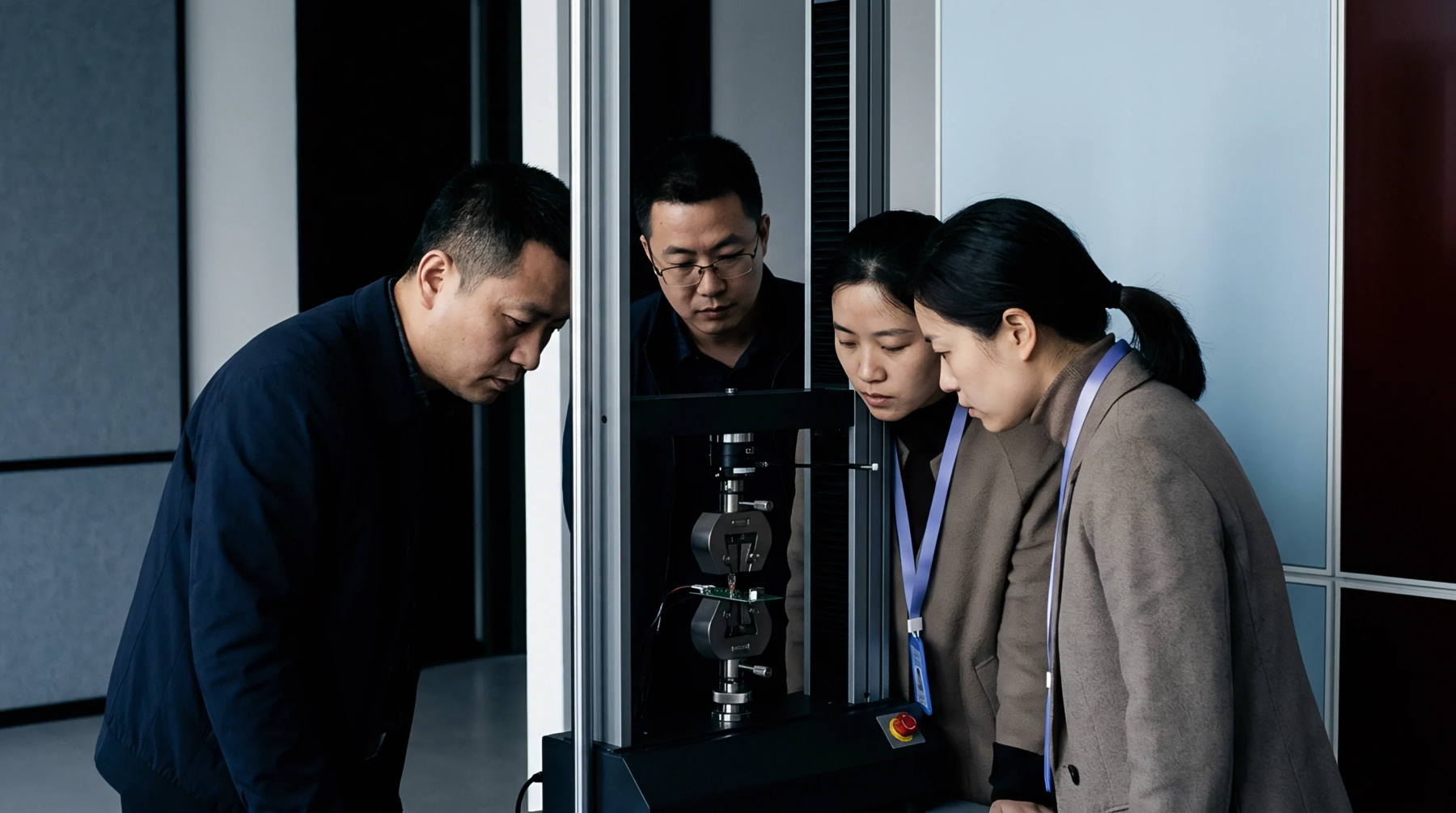
Interconnect Voiding Mechanisms under Thermal Gradient Stress Accumulation
Thermal gradients across microbumps drive atomic migration and voiding; mitigation demands controlling crystal grain orientation and operating flux densities.
Spatial variations in internal force distribution within a solid material identify regions where mechanical tension or compression changes rapidly over a short distance. Analysis of the stress gradient allows structural engineers to predict where cracks are likely to initiate in a component subjected to external loads or thermal expansion. This variation governs the fatigue life and the ultimate strength of parts in automotive, aerospace and consumer electronics.
The boundary of the concept is defined by the physical dimensions of the part and the resolution of the measurement technique. It stops being applicable in fluids or in materials that are undergoing plastic flow where the internal forces are redistributed. This measurement is essential for identifying stress concentrations around holes, notches and interfaces.
It provides a detailed view of the internal mechanical state of a manufactured object.
Distribution of forces within a mechanical assembly is rarely uniform, especially when the geometry is complex. When a stress gradient is present, the material at the high-stress end of the gradient is more likely to fail than the material in the low-stress region. This is a significant factor in the design of fasteners, joints and load-bearing structures.
High gradients are often found near sharp corners or at the bond line between two materials with different stiffness. Engineers use finite element analysis to model these gradients and to design fillets or transitions that smooth out the force distribution. Reducing the gradient is a primary goal in improving the reliability of a part.
In semiconductor packaging, these gradients are caused by the mismatch in thermal expansion between the silicon die and the plastic molding compound. If the gradient is too steep, it can cause the die to crack or the layers to delaminate.
Regulatory bodies in China mandate that critical mechanical components undergo rigorous stress testing and certification before they can be used in public projects. The State Administration for Market Regulation and the Ministry of Transport oversee the enforcement of GB standards for materials used in bridges, high-speed rail and aircraft. When a new part is submitted for approval, the manufacturer must provide a detailed report on the stress gradient analysis to ensure that it meets safety requirements.
Failure to demonstrate a controlled force distribution can lead to the rejection of the design. Under the statutory position, the manufacturer is legally responsible for any failure caused by a foreseeable stress concentration. Administrative practice includes the use of third-party testing laboratories to verify the stress profiles through methods like photoelasticity or x-ray diffraction.
A foreign party seeking to supply components to the Chinese infrastructure market must navigate these certification hurdles and ensure their designs are compliant with local standards. While the law grants a right to participate in the market, the administrative remedy for a non-compliant part is a total ban on its use. Enforcement is handled by regional quality bureaus, and the results are recorded in the national enterprise credit system.
Calculation of the force variation involves measuring the internal stress at multiple points and determining the rate of change between them. Modern sensors and imaging techniques allow for the visualization of these gradients in real time as a part is being loaded. This data is used to validate the mathematical models and to ensure that the actual part behaves as predicted.
The gradient is a vector quantity that describes the direction and magnitude of the change in the stress tensor. In a multi-axial stress state, the gradient can be complex, with different components of the stress changing at different rates. Understanding this complexity is essential for the development of advanced materials like composites or high-strength alloys.
Continuous monitoring of these gradients during the life of a structure can provide early warning of impending failure.
Thermal gradients across microbumps drive atomic migration and voiding; mitigation demands controlling crystal grain orientation and operating flux densities.
Expertise is a utility, not a secret. sentiention™ publishes its working knowledge as open reference: intelligence layer covering the materials it sources, the markets it enters, and the reference that serves both.