Drafting Sub Tier Defect Clauses under Chinese Law
Drafting enforceable sub-tier defect clauses under Chinese law requires tripartite contracts, explicit pass-through liability, and GB-aligned inspection rules.

Privity
Article 593 of the PRC Civil Code establishes that a main contractor remains fully liable for non-performance caused by a sub-tier vendor. Foreign buyers frequently assume that inserting sub-tier quality specifications into a primary manufacturing agreement automatically binds secondary component suppliers. Chinese civil law enforces direct contractual relationships strictly.
When a tier-two casting foundry delivers porous aluminum housings to a tier-one assembly plant, the legal obligation to correct that defect rests solely on the tier-one entity under standard purchase agreements.
Privity limits direct claims. Without explicit tripartite documentation or formal contract assignments, a buyer possesses no direct legal standing to litigate against or arbitrate with a sub-tier facility inside China. Chinese courts dismiss direct non-contractual defect actions brought against sub-tier suppliers when brought under general tort theories, treating component defects as pure contractual breaches between the tier-one factory and its sub-tier vendor.
Article 593 of the PRC Civil Code holds primary vendors liable for sub-tier defaults unless contractual assignment clauses explicitly create direct recourse.

Contractual Isolation in Multi-Tier Supply Chains
Chinese contract doctrine separates manufacturing agreements into distinct bilateral relationships unless explicit assignment clauses bridge the legal boundary. A tier-one supplier signs a supply contract with an overseas buyer. That same tier-one supplier executes a secondary purchase order with a local sub-tier processor.
Under Article 593, if the sub-tier vendor uses low-grade steel scrap that leads to field corrosion, the overseas buyer must pursue remedies exclusively against the tier-one supplier.
This legal boundary creates severe operational friction when the tier-one supplier lacks the capital to cover systemic warranty claims. If the tier-one assembly plant operates on margins under five percent, a major sub-tier component recall easily exceeds the tier-one entity’s net assets. Foreign buyers attempting to bypass the tier-one vendor to freeze assets at the sub-tier foundry find their applications rejected by Chinese courts due to lack of direct privity.

Statutory Assignment and Subrogation Mechanics
Article 535 of the PRC Civil Code grants buyers limited authority to pursue sub-tier debts when a primary vendor defaults on monetary claims. Subrogation requires proven primary insolvency. This statutory creditor subrogation right (债权人代位权) allows a creditor to step into the debtor’s shoes to collect debts owed by a third party, but it applies almost exclusively to liquidated monetary debts rather than unliquidated quality warranty claims.
Converting an unliquidated sub-tier defect claim into an actionable subrogation lawsuit requires first securing a final court judgment or arbitral award against the tier-one supplier.
Defects compound down the chain. While the primary breach litigation runs its eighteen-month course through a Chinese court, the sub-tier vendor often liquidates corporate entities, shifts machinery to adjacent industrial parks, or alters registered business names. Relying on default PRC civil subrogation mechanics after a component failure occurs leaves buyers holding unenforceable judgments against empty tier-one corporate shells.
Failing to establish direct contractual mechanisms across supply chain tiers leaves overseas buyers bearing the financial burden of secondary vendor insolvency.


Substrate
Physical component integrity relies on strict raw material definitions tied to Chinese national standards standardizing metal purity, polymer resin grades, and electronic tolerances. Primary factories in Guangdong and Zhejiang routinely outsource specialized steps like heat treatment, surface plating, injection molding, and die-casting to sub-tier workshops. Contractual defect clauses must incorporate precise sub-tier material baseline specifications rather than generic international trade descriptions.
Traceability breaks down without markings. When sub-tier vendors mix scrap metal with virgin alloy to reduce input costs, standard finished-goods inspections fail to catch structural weakness prior to stress testing. Defect clauses demand that sub-tier material certifications link directly to specific heat numbers, batch codes, and raw material mill certificates.
| Component Category | International Reference Standard | PRC Mandated Standard (GB/T) | Sub-Tier Defect Trigger Threshold | Contractual Pass-Through Remedy |
|---|---|---|---|---|
| ASTM B85 A380 | GB/T 15114 YL104 | Porosity exceeding 0.5mm depth; gas volume > 1.2 cm³/100g | Tier-two batch scrap allocation; full tooling re-alignment charge | |
| UL 94 V-0 Resin | GB/T 2408 V-0 | Flame retardant regrind ratio > 15%; tensile drop > 8% | Immediate lot rejection; sub-tier material quarantine cost | |
| ISO 898-1 Class 10.9 | GB/T 3098.1 Class 10.9 | Decarburization depth > 0.015mm; hardness failure | Pass-through sorting fees; mandatory third-party lab testing | |
| IPC-6012 Class 2 | GB/T 4677 Level 2 | Copper foil delamination; micro-crack line void > 0.02mm | Complete component recall compensation; secondary plating audit |

Pass-Through Quality Standards and GB Harmonization
Foreign buyers often reference international material codes like ASTM or ISO without converting values into domestic PRC manufacturing equivalents. Chinese courts and domestic arbitration panels evaluate technical non-conformity against PRC National Standards (GB standards) or Industry Standards (YY, HG, QB codes) unless the contract explicitly defines international protocols with mandatory technical testing parameters in Mandarin text. If a sub-tier spring supplier uses local carbon steel compliant with GB/T 1222, domestic arbitrators will reject default claims based on US SAE 1074 specs unless the contract explicitly subordinated domestic standards to the foreign specification.
Drafting precise sub-tier quality clauses requires appending bilateral technical agreements (技术协议) signed by the tier-one manufacturer, the sub-tier vendor, and the buyer. These documents specify acceptable quality limits (AQL) using GB/T 2828.1 sampling tables. Specifying zero-acceptance sampling for critical safety dimensions binds sub-tier vendors to precise quality thresholds.

Raw Material Inspection Protocols at Tier Two
Incoming component testing at secondary processing facilities requires strict sample sizes under GB/T 2828 sampling procedures. Tier-one factories frequently skip incoming raw material inspections from sub-tier vendors to maintain production speed, trusting sub-tier mill certs without verification. Defect clauses must mandate incoming quality control (IQC) log retention by the tier-one factory for every sub-tier delivery lot.
Oversight shifts operational balance. Contracts must specify that failure by the tier-one vendor to execute mandatory IQC checks on sub-tier deliveries constitutes a material breach, shifting full financial liability to the tier-one entity regardless of sub-tier fault. Requiring micro-sectioning, spectrometer alloy checks, or melt-flow index logs creates a verifiable paper trail before assembly begins.
- Material Certification Fraud sub-tier suppliers presenting recycled resin or scrap alloy certificates altered to match virgin material specifications under primary contract requirements.
- Sub-Tier Substitution secondary processors swapping approved component suppliers for unvetted local workshops after sample qualification without notifying primary contractors or buyers.
- Inadequate IQC Records tier-one facilities accepting uninspected sub-tier parts without logging batch serial numbers, destroying traceability during subsequent warranty claims.
- Testing Standard Discrepancies measuring material hardness using domestic GB methods while contract criteria rely on foreign ASTM parameters without explicit conversion tables.
Sub-tier suppliers routinely defend non-conforming component deliveries by claiming the primary factory accepted the raw materials without written objection during initial incoming storage.


Audit
Gaining physical entry to a tier-two manufacturing site demands pre-negotiated access covenants incorporated directly into the primary purchase agreement. Main contractors in China frequently resist oversight at secondary production facilities, citing intellectual property risks or vendor confidentiality. Effective contract drafting overrides these objections by making tier-one purchase orders conditional on secondary facility inspection rights.
Inspection rights require clear bounds. Access covenants must specify the exact scope of site reviews, including machinery calibration logs, sub-tier raw material stores, environmental compliance records, and shift yield reports. The contract must obligate the tier-one supplier to insert matching access clauses into all sub-tier purchase contracts.
Unannounced factory entry covenants remain unenforceable without explicit tier-one access authorizations signed in Mandarin.
Is Direct Access to Sub-Tier Suppliers Legally Enforceable?
Primary factory management frequently blocks foreign buyers from entering secondary processing facilities by claiming proprietary trade secrecy under Chinese commercial law. Direct access rights become fully enforceable under PRC law when structured as a condition precedent to purchase order issuance. The agreement must state that withholding sub-tier plant access authorizes the buyer to suspend payment milestones or reject delivered lots without penalty.
Chinese courts uphold contractual access rights provided they do not infringe on legitimate trade secrets of third parties who are non-signatories. Including the sub-tier vendor as an explicit signatory to a tripartite access annex eliminates trade secrecy defenses during quality disputes.
- Deliver formal written notice of inspection to both primary and sub-tier management forty-eight hours before arrival, identifying designated technical auditors and scope.
- Present signed Mandarin language access authorizations containing verified corporate seals (公章) from both primary contractor and secondary processing plant managers at the facility gate.
- Execute joint sampling protocol under GB/T 2828 standards, placing duplicate sealed samples in tamper-evident packaging signed by all participating quality managers.
- Issue immediate on-site non-conformity report specifying observed process deviations, demanding written corrective action plan within five business days.
Defect notices demand explicit timelines. Under PRC Civil Code Article 621, a buyer must notify the seller of component defects within the agreed inspection period (检验期限). If no inspection period is specified in the agreement, the default statutory limit is two years from receipt of goods.
Contract drafting must shorten this window for visible sub-tier defects while extending the latent defect notification window for complex mechanical or chemical failures.
Written notice halts procedural waiver. Failing to submit formal, stamp-sealed defect notifications within contractually specified inspection windows waives the right to claim damages under Chinese court practice.
Sub-tier facility access protocols function reliably only when backed by immediate payment suspension rights executed against the primary contractor.


Exposure
Direct damages under Chinese law encompass replacement costs and documented freight, while indirect losses demand explicit contractual foreseeability under Article 584 of the PRC Civil Code. Drafting sub-tier defect clauses requires quantifying operational exposure across all tiers of the manufacturing chain. Chinese tribunals frequently strike down broad, unquantified indemnification clauses that attempt to hold vendors liable for unmapped consequential damages.
Damages accrue from verified downtime. When a sub-tier capacitor failure causes complete module burn-out during final assembly, the buyer incurs direct component replacement costs, line stoppage fees, labor teardown expense, and premium international air freight. Article 584 mandates that total recoverable damages cannot exceed the loss foreseeable at the time of contract execution.
Liquidated damages exceeding thirty percent of actual verified losses face reduction by Chinese tribunals under Article 585 of the Civil Code.
Quantifying Sub-Tier Defect Penalties and Scrap Allocations
Calculating financial remedies for sub-tier component failures requires isolating yield loss from secondary processing errors. Article 585 of the PRC Civil Code governs liquidated damages (违约金), empowering courts and arbitral tribunals to reduce agreed penalties if they exceed actual losses by more than thirty percent. Buyers must structure sub-tier defect remedies around realistic, cost-accounted line metrics rather than punitive lump sums that risk judicial adjustment.
Tribunals evaluate foreseeable commercial risk. To defend liquidated damage provisions, contracts must append explicit calculation formulas breaking down line downtime hourly rates, scrap processing charges, and replacement freight costs.
| Defect Severity Level | Operational Trigger Condition | PRC Legal Basis (Civil Code) | Contractual Damages Formula | Judicial Enforceability Rating |
|---|---|---|---|---|
| Sub-tier defect rate below AQL threshold (e.g. 1.5% – 3.5%) | Article 610 (Quality Failure) | Direct unit replacement + standard ground freight cost | High; enforced as direct actual loss | |
| Sub-tier defect rate exceeds AQL; assembly line halted | Article 585 (Liquidated Damages) | Component scrap value + line downtime ($2,500/hr cap) | High; defensible with baseline downtime records | |
| Structural failure found in finished goods; full batch quarantine | Article 584 (Foreseeable Losses) | Total recall cost + sorting labor + air freight compensation | Moderate; requires pre-agreed loss schedule | |
| Sub-tier supplier deliberately substitutes unapproved material | Article 563 (Fundamental Breach) | 100% batch refund + 30% liquidated damages + tooling forfeiture | High; intentional breach justifies full penalty |
Consider a baseline production run involving 100,000 electronic control modules manufactured by a Guangdong tier-one contractor. The assembly incorporates a sub-tier micro-switch sourced from a Zhejiang sub-tier plant at a unit price of $0.40. During incoming testing at the final assembly facility, the micro-switch failure rate hits 4.5%, breaching the agreed AQL limit of 0.5%.
The tier-one factory halts production for 36 hours while sorting the batch, incurring direct line disruption, scrap costs, and express freight charges to meet shipping deadlines.
Assume total costs assemble as follows: 4,500 defective micro-switches scrapped ($1,800); 95,500 units requiring manual teardown and re-testing at $0.75 per module ($71,625); 36 hours assembly line downtime billed at the contractual rate of $2,000 per hour ($72,000); and express air freight for replacement switches ($14,500). Total verifiable actual loss equals $159,925.
If the contract specifies a flat liquidated damage penalty of $500,000 for sub-tier failure without supporting cost schedules, a Chinese arbitration tribunal applying Article 585 will reduce the award to approximately 130% of actual proven losses, capping recovery around $207,902. If the contract uses an explicit, itemized liability schedule defining hourly downtime rates and labor tear-down formulas, the tribunal enforces the full calculated total of $159,925 plus administrative legal costs without downward adjustment.
Drafting standard sub-tier defect provisions requires inserting explicit terms: “The seller agrees that component defects originating from sub-tier suppliers constitute direct operational losses, incurring liquidated damages calculated under Schedule B, capped strictly at 130 percent of verified line recovery expenses.”

Recourse
Structuring enforceable tripartite agreements binds sub-tier manufacturers directly to quality warranties without violating PRC contractual doctrines. A primary challenge under Chinese law involves creating enforceable rights against secondary vendors while preserving operational control over the primary manufacturer. Contractual mechanisms must bridge this gap through structured assignment, joint liability, or direct step-in provisions.
Warranties pass through by contract. Incorporating express warranty assignment language ensures that sub-tier guarantees transfer to the buyer automatically upon primary contractor default or insolvency.

Tripartite Structure and Direct Warranty Assignments
Direct contractual links between buyers and secondary component makers emerge when tier-one vendors step aside during agreement execution. Executing a tripartite agreement signed by the overseas buyer, the main contractor, and the sub-tier component manufacturer establishes joint and several liability (连带责任) under PRC Civil Code Article 178. This joint liability structure allows the buyer to name both the tier-one assembler and the sub-tier component maker as co-defendants in a single lawsuit or CIETAC arbitration proceeding.
- Draft primary supply agreement containing explicit mandatory sub-tier passthrough warranty terms and standardized tripartite addendums.
- Execute tripartite quality agreement signed by corporate legal representatives and stamped with official company chops (公章) of all three corporate entities.
- Include explicit irrevocable assignment of sub-tier breach claims authorizing buyer to enforce remedies directly against secondary vendors upon primary default.
- Establish dedicated sub-tier escrow accounts holding five percent of component payments, released only after successful completion of warranty inspection periods.
Subrogation requires proven primary insolvency. While joint liability provisions offer powerful protection, sub-tier vendors frequently resist signing tripartite instruments that expose them to overseas buyer claims. When sub-tier vendors refuse direct signature, buyers must mandate that the tier-one contractor execute a formal assignment of sub-tier claims (债权转让通知) and serve written notice of that assignment onto the sub-tier facility under Article 546 of the PRC Civil Code.
How does a buyer effectively bind a reluctant tier-two supplier to strict direct liability when the tier-one assembler wields minimal purchasing leverage in local industrial hubs?


Arbitration
Enforcing quality claims originating from secondary component suppliers requires local court filing preparation or submission to recognized institutions like CIETAC. Dispute resolution clauses governing multi-tier China manufacturing operations must address forum selection, language, witness examination rules, and evidence preservation. Foreign court judgments remain functionally unenforceable inside Mainland China due to the absence of reciprocal judgment recognition treaties with major Western commercial jurisdictions.
Court filings require formal notarization. Evidence gathered outside China, including emails, overseas lab test reports, and third-party inspection certificates, is inadmissible in Chinese legal proceedings without formal notarization and consular authentication protocols.
Offshore inspection reports lack legal weight in Chinese courts without formal notarization by a designated PRC consular officer.
Evidence Notarization and Cross-Border Qualification
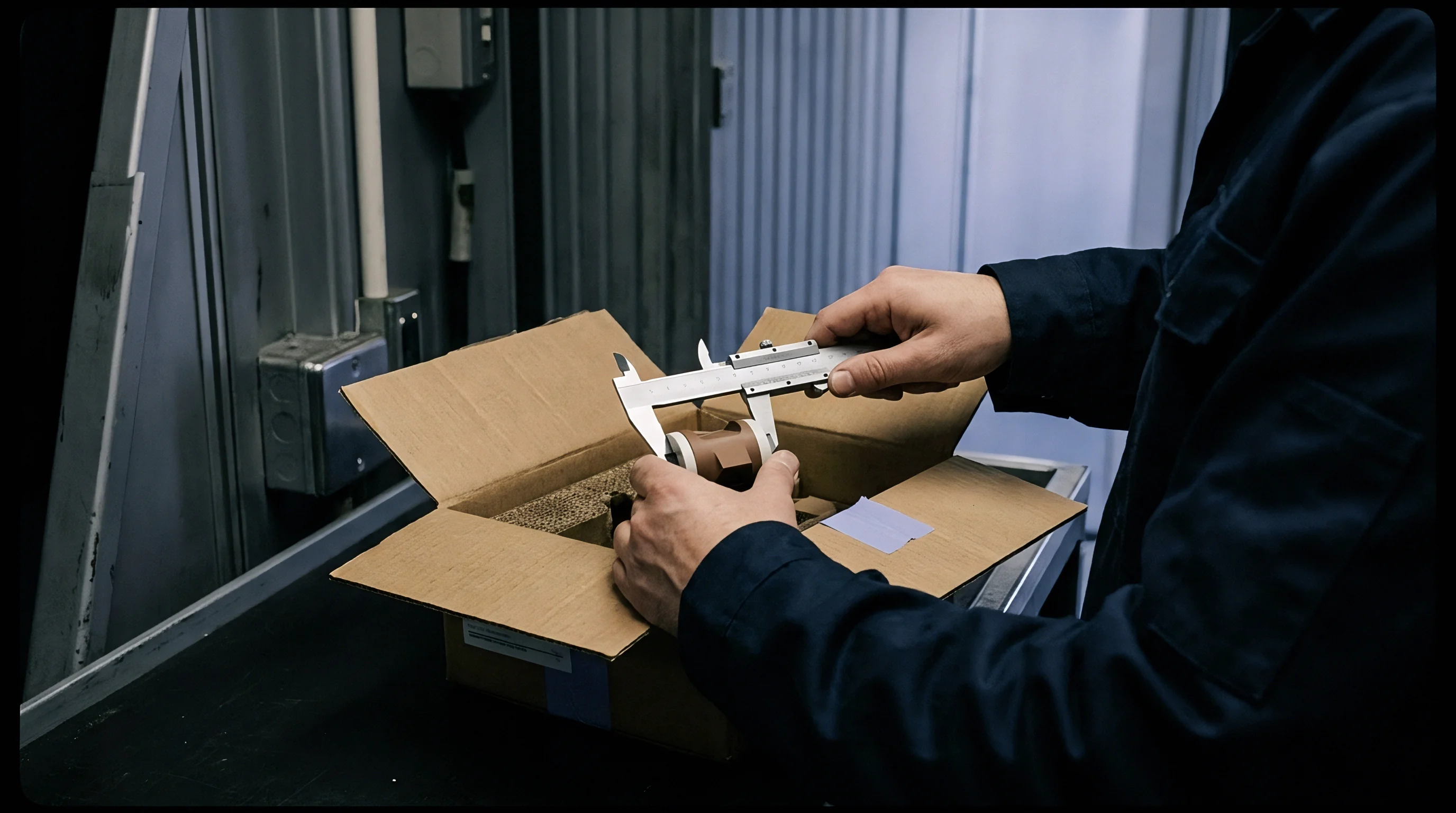
Chinese civil courts enforce strict procedural rules governing document authentication collected outside Mainland China. Under Article 16 of the PRC Supreme People’s Court Evidence Rules, commercial records generated abroad must undergo local notarization in the jurisdiction of origin, followed by authentication by the relevant Chinese embassy or consulate, or verification under Hague Apostille procedures where applicable. Collecting component failure evidence directly inside China avoids these costly, time-consuming authentication steps.
Preservation orders secure raw evidence. Securing an immediate court evidence preservation order (证据保全) through a Chinese court ensures that physical defective sub-tier parts stored at primary assembly plants are legally locked and documented by court officials before suppliers alter or dispose of batch inventories.
Forum Selection and Governing Law Rules
Selecting Chinese arbitral commissions provides faster enforcement against sub-tier physical assets compared to foreign judicial judgments. CIETAC (China International Economic and Trade Arbitration Commission), SHIAC (Shanghai International Arbitration Center), and SCIA (Shenzhen Court of International Arbitration) possess extensive experience handling complex manufacturing non-conformity disputes. Arbitral awards rendered by these domestic institutions execute directly against sub-tier bank accounts and manufacturing property through local Intermediate People’s Courts under the PRC Arbitration Law.
Notarization takes three calendar weeks. Contracts must select Chinese law as the governing law and specify CIETAC or SCIA arbitration in Beijing, Shanghai, or Shenzhen in Chinese language text. Choosing foreign governing law or offshore judicial venues creates insurmountable enforcement hurdles when seeking asset attachment against sub-tier component plants operating inside domestic industrial zones.
Drafting effective sub-tier defect clauses requires aligning physical component testing, operational inspection access, realistic liquidated damages, and local arbitral enforcement into a single, cohesive legal framework under the PRC Civil Code.