Assembly Line Inspection Rhythms during Early Spring Festival Restart Schedules
Post-holiday assembly restart requires line speed derating, 100% sub-assembly screening, component baking verification, and 15% payment retention.


Ramp
Factory doors across southern and eastern manufacturing hubs reopen after the Lunar New Year holiday to empty workstations, short-staffed assembly crews, and uncalibrated machinery. Early production runs after the annual shutdown are notoriously unstable ~ workers have turned over, equipment is cold, and raw materials have spent weeks in unheated warehouses. Plant managers often try to clear pre-holiday backlogs by running lines at full speed before line balance, operator dexterity, and automated inspection systems return to baseline.
That mismatch creates a narrow window where assembly defects slip past standard inline gates unnoticed.
Worker return rates over the first ten days after the holiday average between 65% and 80% on electronics, automotive component, and consumer goods assembly lines across Guangdong and Zhejiang provinces. Temporary operators and transfers from slower lines step into complex sub-assembly stations without completing product-specific standard training. Manual tasks like wire harness routing, screw torqueing, adhesive application, and connector seating see error rates three to five times higher than pre-holiday baselines.
Line balance breaks down as bottleneck stations stall, leading supervisors to bypass manual inspection points just to keep work-in-progress inventory moving.

Post-Festival Workforce Shifts and Station Manning
Line staffing during the first two weeks post-restart dictates output stability. Senior operators frequently delay their return by several days, leaving critical stations to temporary staff who lack the muscle memory for precise tactile fits. On SMT lines and mechanical build tracks, that missing experience translates into subtle placement errors: connectors sit slightly crooked, thermal pads drift out of alignment, and internal grounding clips bend during housing insertion.
Under heavy pressure from factory leadership to meet daily quotas, station managers have every incentive to mark lines as fully staffed even when replacement operators have never worked that specific assembly variant.
Yield drops correlate directly with the proportion of new operators on manual insertion stations, not line speed adjustments. Factories that keep pre-holiday conveyor speeds while running more than 20% temporary labor see batch failure rates exceed 14% at final functional test. By contrast, plants that derate line speeds keep scrap below 2.5% over the same period.
Managing this initial ramp requires deliberate adjustments to both line velocity and inspection frequency.
A line operating with unvetted post-holiday operators requires a structured reduction in conveyor velocity to maintain acceptable baseline yield.
Establishing clear station-manning thresholds keeps the main conveyor from being sped up too soon. Buyers need clear visibility into daily attendance logs at critical quality stations before authorizing volume builds. When key operators are absent, line layouts should group experienced workers at high-risk assemblies and move temporary staff to simpler packing or basic housing assembly roles.
Without this filter, early production runs quickly turn into unmonitored scrap generators.

Line Speed Suppression in Opening Days
Slowing the conveyor serves as the primary mechanical shock absorber during the early restart. Lower belt speeds give operators time to run visual self-checks and physical alignments without falling behind the line’s rhythm. The following sequence structures speed adjustments based on daily attendance and verified yields over the first fourteen operating days:
- Initiate production at 50% designed line speed on Day 1 through Day 3 with 100% offline inspection on all sub-assemblies.
- Increase line velocity to 75% on Day 4 through Day 7 only after sub-assembly first-pass yield clears 98.5% over two consecutive shifts.
- Conduct hourly first-piece teardowns at every manual assembly station to catch recurring assembly errors before work-in-progress inventory builds up.
- Restore 100% standard line speed from Day 8 forward once overall attendance stabilizes above 90% and operator defect rates drop below pre-holiday thresholds.
Derating the conveyor protects product quality while manual dexterity recovers. Operating at half speed doubles available takt time per operator, cutting down on the rushed work that leads to cold solder joints, missing fasteners, or unseated seals. Plant managers often resist slowing the line because of lost daily throughput calculations, but avoiding downstream rework and sorting costs usually offsets early volume losses within the first week.
Restart oversight requires physical auditing on the shop floor. Inspectors must confirm that line speed overrides are locked in at the main control panel rather than relying on verbal assurances from supervisors. Factory managers frequently cite tight delivery deadlines as reason to run lines at full speed immediately, prioritizing shipment schedules over temporary quality controls during the restart window.

Drift
Machinery left idle over a cold, humid post-holiday shutdown undergoes thermal, mechanical, and pneumatic shifts that compromise accuracy. Solder paste printers, automated optical inspection systems, injection molding units, and automated screw drivers drift out of baseline calibration. When power is restored, heating elements, pressure regulators, and optical sensors show non-linear variance across their initial operating cycles.
Launching production without thorough machine warm-up routines introduces systematic defects across early component lots.
Unheated plant buildings across Northern and Central China drop to near-freezing temperatures during the closure. Lubricants inside high-precision ball screws and linear guides harden, raising mechanical resistance and causing positional stepping errors on pick-and-place machines. As equipment slowly warms from room ambient up to operating temperature over several shifts, thermal expansion differentials take effect.
This drift leads to component placement offsets on printed circuit boards and dimensional variance in molded plastic enclosures.

Thermal Inertia and Machine Calibration Shift
Precision manufacturing equipment requires hours of thermal stabilization before processing production parts. Solder paste printers are among the most sensitive points on the line during start-up. Cold solder paste changes viscosity, causing bad stencil release, solder bridging on fine-pitch components, and thin paste volume on high-current pads.
Automated reflow ovens need several hours of continuous operation to stabilize thermal profiles across all heating zones, yet production lines frequently feed live boards into ovens that have reached surface setpoints but haven’t achieved internal chamber equilibrium.
Plastic injection molding faces similar thermal instability during initial runs. Molds stored in high ambient humidity gather surface moisture, driving micro-corrosion and degrading polished finishes. Cold mold cores cause short shots, sink marks, and uneven wall thicknesses until coolant lines and heating channels reach uniform temperatures.
The table below details physical shifts and yield impacts recorded across key manufacturing steps during the first 72 hours of restart:
| Manufacturing Operation | Idle Period Vulnerability | Physical Mechanism of Drift | First-Pass Defect Manifestation | Stabilization Time Required |
|---|---|---|---|---|
| SMT Solder Paste Printing | Viscosity alterated by cold ambient storage | Incomplete stencil aperture release and shear rate drop | Solder bridging, insufficient solder joints, tombstoning | 4 to 6 hours warm-up |
| Plastic Injection Molding | Mold tool condensation and thermal lag | Uneven mold core temperature and resin melt variance | Sink marks, dimensional warp, flash along part seams | 8 to 12 heating cycles |
| Automated Screw Torqueing | Pneumatic pressure drop and grease hardening | Drive clutch slippage and sensor baseline drift | Under-torqued fasteners, stripped plastic boss threads | 2 hours tool cycling |
| Ultrasonic Plastic Welding | Horn frequency drift due to ambient cold | Transducer impedance shift and amplitude inaccuracy | Incomplete joint fusion, internal component rattle | 1 to 2 hours tuning |
Line machinery and inspection fixtures must be calibrated before launching live runs. Technicians need to re-zero optical alignment systems and verify transducer values against certified standards. Skipping these checks guarantees that early defect runs pass inline test stations undetected, accumulating hidden failures inside packed shipping cartons.

Humidity Effects on Stagnant Component Stock
Raw materials and electronic components left in factory warehouses during the shutdown absorb ambient moisture. Integrated circuits, moisture-sensitive devices, and engineering resins in opened packaging absorb humidity rapidly over two weeks of unmonitored storage. Feeding damp components into high-temperature assembly causes immediate structural damage.
Micro-cracking, internal delamination, and severe outgassing occur as trapped moisture rapidly expands during reflow soldering.
Damp engineering polymers like polyamide and polycarbonate undergo hydrolytic degradation during injection molding. Water molecules split polymer chains under heat and pressure, permanently lowering impact strength and toughness in structural parts. Components molded from undried resin often look fine visually but fail mechanical drop tests and thermal cycling audits down the line.
Warehouse inventory procedures must enforce strict baking and drying cycles for all open component reels and resin bags before releasing them to the floor.
IPC J-STD-033D mandates that moisture-sensitive components exposed to ambient warehouse humidity exceeding 10% RH during extended floor shutdowns undergo mandatory baking cycles before high-temperature assembly.
Verifying dry-pack integrity is a critical gate before issuing materials from the warehouse. SMT operators must check the humidity indicator cards inside moisture barrier bags before loading reels onto feeder banks. If indicator spots show moisture exposure past allowable limits, components must undergo baking cycles at 125 degrees Celsius for up to 48 hours, depending on package thickness.
Warehouse managers frequently try to bypass baking to avoid feeder loading delays on the main line.
Determining whether micro-delamination in unbaked surface-mount ICs comes from pre-existing component flaws or post-holiday warehouse moisture absorption remains a frequent point of dispute between buyers and factory quality departments.


Stagger
Inspection schedules during post-holiday restarts demand a stepped reduction in sample intervals rather than steady-state sampling plans. Standard Acceptable Quality Limit sampling schemes assume stable processes, predictable equipment, and trained operators ~ assumptions that break down completely during the first three weeks after reopening. Implementing a staggered inspection structure concentrates quality resources on early assembly stages, catching transient errors before components reach final box-build.
Initial restart runs require 100% sorting at critical sub-assembly stations. As processes prove stable within statistical control limits, quality teams can step down inspection density, moving from full screening to tight lot-by-lot sampling. This progressive relaxation protects finished goods inventory while setting clear quantitative gates factories must clear before increasing line speeds.

Which Sub-Tier Components Fail First during Restart?
Sub-tier suppliers suffer the same post-holiday disruptions, compounding quality risks for the primary assembly plant. Stagnant inventory from vendors often contains unannounced material substitutions, improper plating thickness, or out-of-spec dimensions caused by their own restart struggles. Incoming quality control must tighten receiving inspections to catch sub-tier defects before materials reach the main assembly line.
The following failure modes account for most defects found in incoming sub-tier component shipments after the holiday:
- Stamping dimensional tolerance drift caused by unmaintained press dies and cold sheet metal feeding into high-speed stamping tools.
- Plating adhesion failures on stamped pin headers resulting from contaminated electroplating baths and poor chemical concentration management during plating line restart.
- Adhesive bond degradation in structural tapes and two-part epoxies that exceeded shelf-life limits or froze in unheated warehouses.
- Wire harness crimp pull-force failures driven by worn applicator dies and uncalibrated stripping tools operated by temporary sub-tier workers.
Inspecting sub-tier lots requires testing focused on micro-structural integrity. Simple visual checks miss latent plating embrittlement and internal wire strand fractures inside crimped terminals. Incoming validation plans should require cross-sectional metallurgical polishing and push-pull force testing on all batches received within thirty days of restart.

Sampling Frequency Escalation Schedules
Stepping down inspection intensity depends strictly on quantitative pass gates. Moving from 100% sorting to MIL-STD-105E or ISO 2859-1 Normal Sampling plans must hinge on consecutive defect-free runs, not calendar days. If a line hits a single critical non-conformity during a reduced sampling phase, inspection must immediately revert to 100% screening until the root cause is isolated and resolved.
A four-phase inspection framework structures electro-mechanical assembly during post-holiday restarts. Phase One mandates 100% inline functional and visual inspection across all stations for the first 2,000 units produced. Phase Two transitions the line to Tightened Level II sampling (AQL 0.25 Critical, 0.65 Major) across the next 5,000 units, provided no critical defects surface.
Phase Three allows a move to Normal Level II sampling (AQL 0.25 Critical, 1.0 Major) once 10,000 continuous units demonstrate Cpk process capability values above 1.33 on critical dimensions.
ISO 2859-1 rules demand immediate transition from Normal to Tightened inspection whenever two out of five consecutive lots are rejected at receiving or inline gates.
Stationing third-party audit teams on the line supplements internal factory quality staff during Phase One and Phase Two. Independent inspectors follow direct buyer instructions, performing unannounced sample teardowns and ensuring factory leads don’t loosen inspection criteria to hit daily volume targets. External oversight brings unbiased verification during the most vulnerable production window.
A simple rule applies: rigorous inspection during initial restart days prevents expensive sorting operations inside container ships later.


Scrap
Defect buildup during early restart weeks creates heavy commercial costs through material scrap, rework labor, and emergency freight. First-pass yields typically drop 10% to 25% below pre-holiday baselines during the first five days. When factories fail to catch defective assemblies early, scrap costs compound quickly as downline stations add value to flawed chassis.
Tracking these cost mechanics provides the financial justification for enforcing line derating and negotiating commercial offsets with suppliers.
Rework stations quickly bottleneck during volume ramps. Defective circuit boards and mechanical assemblies pile up in yellow sorting bins, waiting for skilled technicians to perform manual soldering, component replacements, or housing swaps. Because experienced rework staff are scarce, factories often assign unqualified operators to fix delicate assemblies.
Poor rework creates secondary defects ~ scorched trace pads, stripped screw bosses, and torn flex cables ~ turning repairable units into complete scrap.

Yield Loss Arithmetic in Restart Weeks
Calculating the true landed cost of restart defects requires accounting for material losses, rework labor, third-party sorting fees, and air freight premiums paid to cover lost production time. Standard factory yield reports often hide these expenses by logging defective assemblies as work-in-progress inventory instead of declaring them as scrap losses.
To illustrate the financial impact of early line instability, consider a 50,000-unit electro-mechanical assembly order executed over the first four weeks post-restart. Target unit cost is $45.00 ~ comprising $30.00 in bill of materials, $8.00 in direct labor, and $7.00 in factory overhead and margin. The model below outlines cost dynamics under observed post-holiday yields versus steady-state targets:
| Production Metric / Cost Category | Week 1 (Restart) | Week 2 (Ramp) | Week 3 (Stabilization) | Week 4 (Steady-State) |
|---|---|---|---|---|
| Planned Production Volume | 8,000 units | 12,000 units | 15,000 units | 15,000 units |
| First-Pass Yield (FPY) | 78.5% | 88.0% | 95.5% | 98.2% |
| First-Pass Defective Units | 1,720 units | 1,440 units | 675 units | 270 units |
| Unrepairable Scrap Percentage (of defects) | 25.0% | 18.0% | 10.0% | 5.0% |
| Direct Scrapped Units | 430 units | 259 units | 68 units | 14 units |
| BOM Value Lost to Direct Scrap | $12,900 | $7,770 | $2,040 | $420 |
| Reworkable Units | 1,290 units | 1,181 units | 607 units | 256 units |
| Average Rework Labor Hours per Unit | 0.75 hours | 0.50 hours | 0.35 hours | 0.25 hours |
| Direct Rework Labor Cost ($15/hr rate) | $14,513 | $8,858 | $3,187 | $960 |
| Secondary Scrap from Failed Rework (10%) | 129 units | 118 units | 61 units | 26 units |
| Total Material Scrap Loss Value | $16,770 | $11,310 | $3,870 | $1,200 |
| Cumulative Rework & Scrap Premium / Unit | $3.91 per unit | $1.68 per unit | $0.47 per unit | $0.14 per unit |
Total scrap losses and rework labor across this four-week restart generated $60,248 in direct non-conformance costs above baseline targets. When first-pass yield drops below 80% during Week 1, unit manufacturing costs rise by nearly 9%. Who absorbs that financial delta depends entirely on contract quality agreements and debit note terms set before production release.
Tracking rework costs requires detailed tagging on every non-conforming unit. When a unit fails an inline test, the operator must attach a color-coded routing tag listing the failure code, station number, operator ID, and timestamp. Defective units must move directly into a locked isolation cage rather than sitting on open floor racks where un-repaired assemblies can accidentally get mixed back into production.

Rework Station Bottlenecks and Traceability
Uncontrolled rework stations create massive traceability gaps in finished lots. When hundreds of defective sub-assemblies accumulate at repair benches, component serial numbers lose their alignment with main-line production logs. Technicians frequently swap parts across different lots to assemble functional units, destroying sub-tier component lot traceability along the way.
Managing rework capacity requires strict throughput limits and repair time caps. Assemblies sitting at rework stations longer than forty-eight hours should be scrapped automatically, preventing repeated heating and desoldering that degrades printed circuit board substrates. The following requirements govern post-holiday rework stations:
- Enforce a limit of two rework attempts per individual assembly before mandatory scrapping.
- Require 100% functional re-testing and high-pot dielectric testing on reworked units before returning them to the main line.
- Maintain serialized logging of replaced components, linking replacement reel numbers to the repaired assembly serial number.
- Control rework soldering iron temperatures to prevent trace lifting and thermal PCB damage.
Restricting rework access prevents line supervisors from dressing up systemic assembly defects as minor touch-ups. Floor auditors should reconcile daily scrap logs against reported first-pass yield figures to confirm discarded parts match logged defect codes. Discrepancies between physical scrap weight and reported scrap counts point to unrecorded offline rework.
The consequences played out during a 2019 restart in Shenzhen, where a supplier merged 1,400 untracked, reworked display controllers into a sea-freight shipment without secondary thermal stress screening, forcing a 100% sorting audit at the destination port.


Tolerance
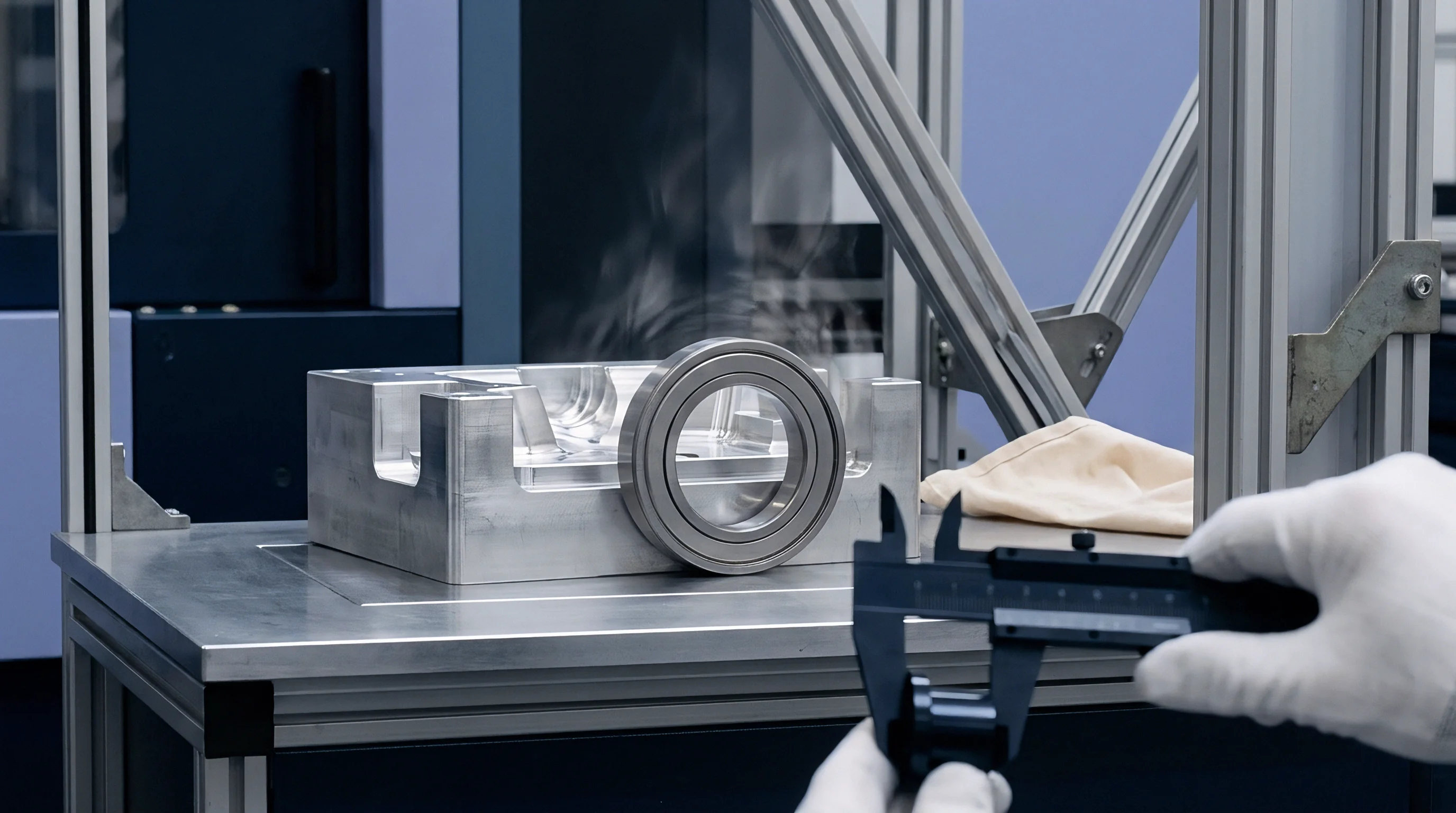
Measurement systems and physical test fixtures take a beating during early restart activities. Test jigs, pin-bed fixtures, optical alignment cameras, and go/no-go gauges frequently suffer mechanical distortion, bent contact pins, or sensor drift from improper storage and rough handling during line re-tooling. Re-verifying Measurement System Analysis (MSA) and Gauge Repeatability and Reproducibility (Gauge R&R) metrics is an essential prerequisite before trusting restart quality data.
Optical inspection machines require recalibration using certified targets after extended shutdowns. Dust on lenses, changes in factory natural light, and vibration from neighboring heavy equipment shift baseline measurement thresholds. An uncalibrated optical system produces high false-reject rates or ~ far worse ~ false accepts that pass out-of-spec parts down the line.

Fixture Wear and Optical Sensor Recalibration
Test fixtures built with spring-loaded pogo pins see contact resistance drift after sitting idle in damp environments. Oxidation builds up on pin tips, introducing artificial resistance during functional testing. Automated stations misinterpret this as component failure, prompting operators to manually override tests or widen software pass/fail limits.
Relaxing software parameters to bypass dirty pins lets marginal defects slip straight into finished inventory.
Validating fixture integrity requires daily gold-unit checks. Standard protocol requires running a certified master unit with known parameters through every test fixture at the start of each shift. If a station fails to measure the master unit within a 1% tolerance, it must be shut down immediately for maintenance and pin replacement.
The checklist below governs lot acceptance criteria during post-holiday restart ramps:
- Master Unit Validation confirmed on 100% of functional test stations before each shift using certified gold and dark control samples.
- Gauge R&R Percent Study values verified below 10% on all critical dimensional measurement equipment after re-tooling.
- First Article Inspection Dossier approved by buyer quality engineering for the first fifty units off the line before releasing mass production.
- Cp and Cpk Metric Capability demonstrated above 1.33 on all critical-to-quality dimensions across three consecutive shifts.
Strict measurement validation prevents ghost-chasing during line troubleshooting. Quality engineers save hundreds of hours when they make sure test equipment is accurate before trying to tweak machinery settings or standard operator procedures.

First Article Inspection Gating Criteria
First Article Inspection (FAI) serves as the primary release gate for volume manufacturing during restart. A post-holiday FAI requires complete mechanical, electrical, cosmetic, and packaging verification on units produced under standard line conditions. Factories often try to submit FAI samples hand-built offline by master technicians, which misrepresents the true capability of the main line and its newly onboarded operators.
Buyers should insist that FAI units come randomly from the middle of the first full production run on the main conveyor. The FAI report must document complete dimensional layouts using coordinate measuring machines (CMM), material teardowns, electrical parametric testing, and environmental stress screening. Finished volume must remain locked in warehouse staging until the full FAI dossier receives signed approval from the buyer’s quality engineering team.
ISO/IEC 17025 accredited dimensional test reports require documented environmental temperature and humidity conditions recorded at the exact time of CMM data collection.
Documenting these parameters removes ambiguity around lot release. Supply contracts should explicitly state that any volume built prior to formal FAI approval stays at the supplier’s financial risk. If FAI teardowns reveal defects, the supplier must scrap or rework the unapproved lot at their own expense.
Standard Quality Agreement Section 8.4 mandates that any production lot manufactured following a line stoppage exceeding ten calendar days requires formal First Article Inspection approval prior to shipment release.


Allowance
Managing the financial fallout of restart defects requires solid commercial frameworks established well before the holiday. Standard purchase order terms rarely address the specific scrap spikes, sorting labor, and expedited freight triggered by early line instability. Writing explicit yield allowances, debit note structures, and payment retention terms into supply contracts gives buyers the leverage needed to keep factories focused on restart controls.
Commercial friction surfaces quickly when early defect spikes threaten delivery schedules. Suppliers routinely request temporary concessions on cosmetic flaws, dimensional tolerances, or packaging specs to clear warehouse inventory and protect cash flow. Buyers who grant unvetted verbal concessions often face compounded quality failures downstream, damaging their brand while carrying full financial liability for field returns.

Debit Note Structures for Restart Non-Conformities
Enforceable debit note procedures establish direct financial accountability for quality failures during restart runs. Contracts should set predefined rates for third-party sorting, lab analysis fees, line stoppage penalties, and air freight conversions. When a shipment fails destination inspection due to restart defects, the buyer issues a debit note offsetting those costs against open supplier invoices.
The table below outlines standard chargeback mechanisms and commercial settlement terms applicable to post-holiday production runs:
| Non-Conformance Event | Trigger Condition | Commercial Penalty Mechanism | Financial Settlement Method |
|---|---|---|---|
| First-Pass Yield Drop below Target | FPY falls below 90% over 24-hour shift block | 100% supplier absorption of rework labor & material scrap | Invoice deduction via direct debit note |
| Unapproved Line Speed Acceleration | Conveyor speed exceeds derated target without signed approval | $2,000 per shift violation fee plus mandatory lot sorting | Immediate credit memo against open PO balance |
| Destination Port Batch Rejection | AQL inspection failure at destination warehouse | Full cost recovery for 100% third-party sorting plus air freight delta | Direct cash wire transfer or invoice offset within 14 days |
| Unannounced Material Substitution | Sub-tier component variation detected during audit | 100% batch rejection, mandatory teardown, 15% contract penalty | Cancellation of PO without termination liability |
Securing financial remedies depends on fast, rigorous documentation. When a defect surfaces, floor auditors must issue a formal Non-Conformance Report (NCR) with photos, serial numbers, date codes, and physical samples within twenty-four hours of discovery. Delaying an NCR gives suppliers room to claim defects occurred during transit or handling.

Commercial Retention and Final Yield Settlement
Retaining a percentage of total purchase order value provides essential protection against latent defects from restart runs. Holding back 10% to 15% of payment balances for thirty days after destination port arrival ensures suppliers stay engaged if post-shipment sorting or warranty issues arise. Once destination receiving confirms no systemic defects, retained funds release under normal terms.
Reconciling final restart costs requires a joint yield audit at the end of the ramp period. Buyer and supplier compare actual scrap figures against contract targets to calculate offsets for labor, materials, and sorting. Structured financial settlements turn quality control from an abstract requirement into a direct driver of supplier profitability.
Final commercial settlement for post-holiday production orders proceeds once destination receiving warehouses complete full 100% sorting audits, verify zero latent moisture delamination across shipped carton lots, and finalize net debit note balances against open invoice accounts.