Meaning
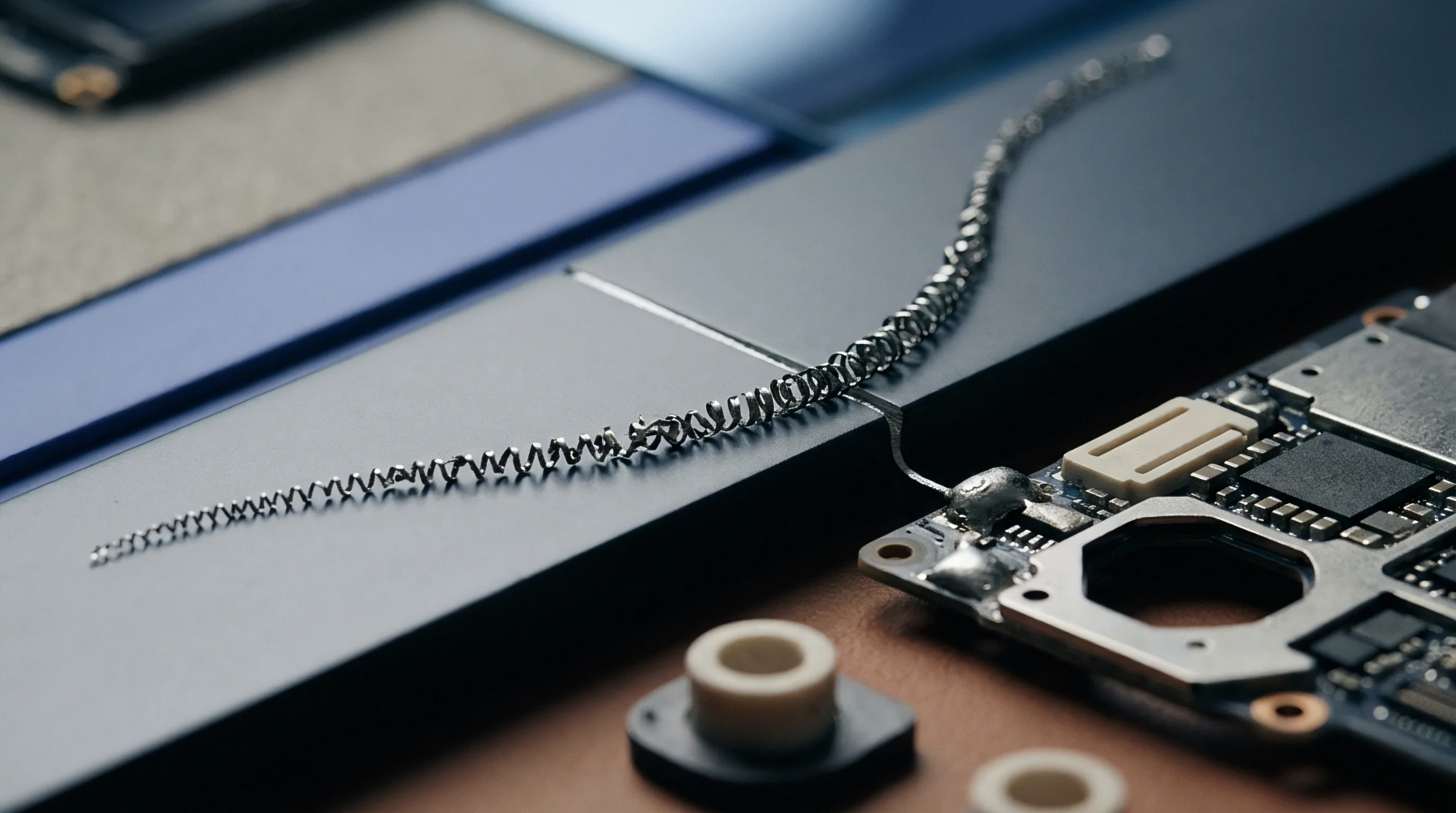
A printed circuit board defect involves the separation of the copper landing pad from the underlying composite substrate during high-temperature processing or mechanical stress. Occurrences of pad lifting failure are common during hand soldering, rework, or multiple reflow cycles where the adhesive bond of the resin is compromised. The resulting disconnect breaks the electrical connection between the component lead and the circuit board traces, rendering the electronic assembly non-functional.
Preventing this failure requires careful control of thermal profiles and board design to minimize localized stress on the solder joints.
Thermal Stress
Repeated exposure to temperatures exceeding the glass transition point of the resin laminate degrades the polymeric adhesive layer. An occurrence of pad lifting failure often happens when operators apply soldering irons for too long or at excessively high temperatures during component replacement. As the copper pad and the laminate expand at different rates, the resulting shear stress shears the weak bond between the metal and the resin.
Industrial ovens must use controlled ramp rates to prevent localized thermal gradients from destroying these delicate mechanical interfaces.
Interfacial Adhesion
The mechanical strength of the bond depends on the surface roughness of the copper foil and the curing state of the prepreg material. If a pad lifting failure occurs in a newly manufactured board, it usually points to insufficient resin curing or chemical contamination during the lamination process. Circuit board designers can mitigate this risk by adding anchoring spurs or thermal relief lines to the pads to distribute mechanical loads more evenly.
Laminate manufacturers must ensure high cross-linking density in the resin to maintain adhesive strength up to lead-free assembly temperatures.
Solderability Risk
Component leads must be soldered with minimal thermal input to preserve the structural integrity of the copper pads on the board. A pad lifting failure prevents the establishment of a reliable solder joint, which leads to intermittent signal faults or open circuits during subsequent operation. Destructive pull testing or microsectional analysis is used to evaluate the resistance of pads to mechanical separation under operational forces.
Automated optical inspection systems cannot always detect early-stage pad separation, so functional testing under thermal cycling is required to guarantee long-term field reliability. Engineers often establish specific solder rework guidelines that limit the number of heating cycles allowed on a single pad to ensure that the composite board does not suffer localized degradation.