Tier Two Sub-Component Utility Model Patent Verification before Coastal Exit Clearance
Verify tier-two utility model patents via CNIPA and GACC databases before export clearance to prevent customs detention and demurrage losses.
Detention
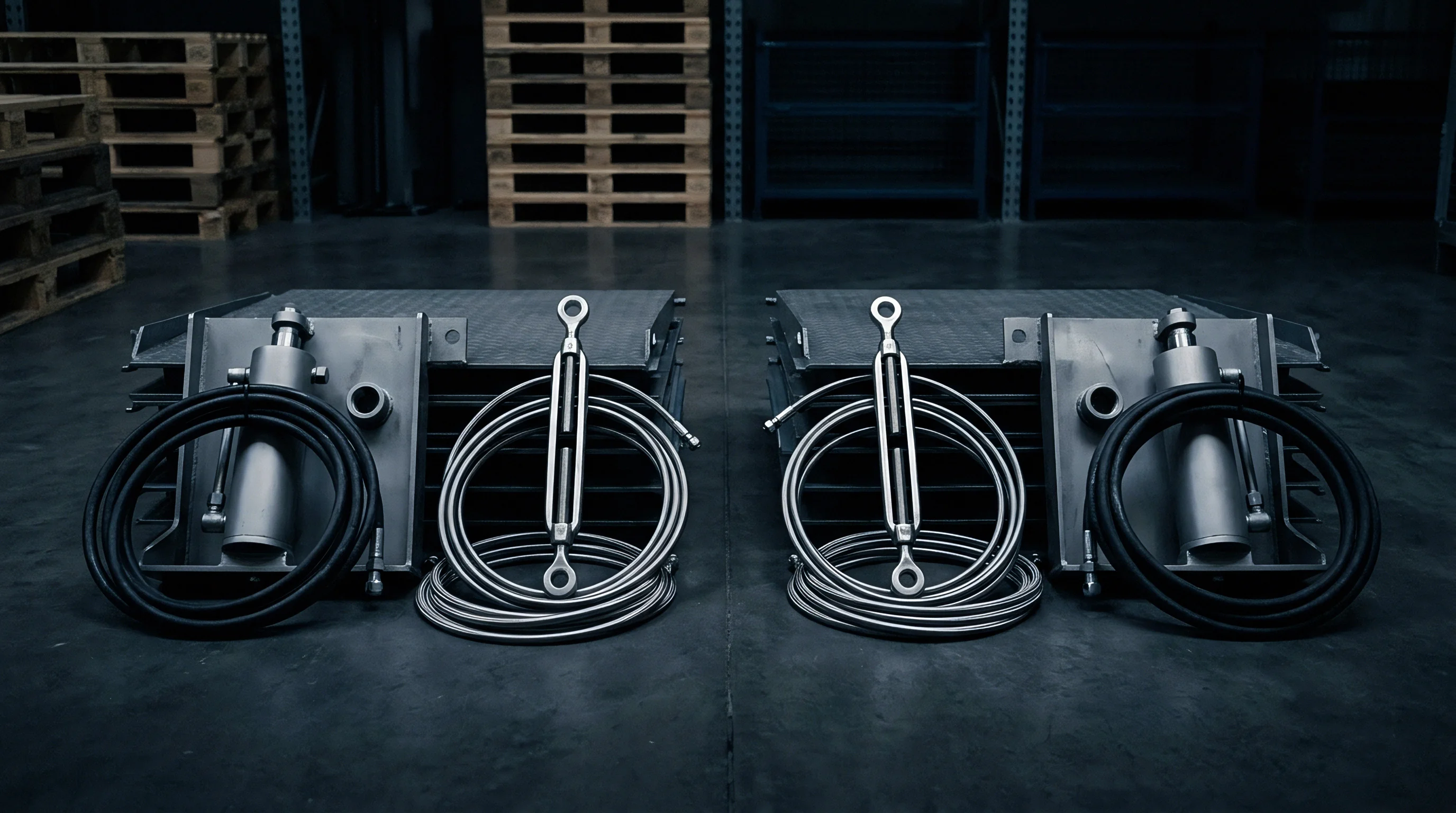
Export clearance at Chinese coastal container terminals halts when the General Administration of Customs electronic screening system flags a bill of lading against active intellectual property filings. Primary exporters regularly screen tier-one assemblies, but cargo seizures routinely start two layers deeper in the supply chain. A tier-two sub-component ~ a cast retaining clip, a molded connector housing, or an internal valve spindle ~ enters the export stream inside a broader system module.
When that sub-component infringes a PRC Utility Model patent recorded with customs by a domestic entity, the entire finished unit stops at the port gate.
The legal framework governing coastal exit holds comes from the Regulations of the People’s Republic of China on Customs Protection of Intellectual Property Rights. Article 15 empowers customs officers to exercise ex-officio detention authority when exported goods match recorded patent rights in the General Administration of Customs database. Under this statutory pathway, port authorities issue an official detention notice simultaneously to the exporter of record and the registered patentee.
The exporter receives three working days to challenge the detention, while the patent holder receives three working days to post an equivalent value bond to secure full seizure of the container stack.
Sub-components present unique vulnerabilities in utility model litigation. Utility models in China cover incremental structural and mechanical modifications; under Article 2 of the PRC Patent Law, they protect technical solutions relating to the shape, structure, or combination of a product. Because utility model applications historically passed through preliminary examination without substantive testing for novelty or inventive step, tens of thousands of active registrations sit on the National Intellectual Property Administration register covering basic geometry.
Local manufacturers frequently obtain utility models on standard sub-components, record them on the customs clearance platform, and monitor export manifests at major coastal ports including Ningbo-Zhoushan, Shenzhen, Shanghai, and Qingdao.
When port customs detains cargo, the economic leverage swings heavily toward the patent holder. Article 20 of the Customs IP Regulations grants customs an investigation period of thirty working days to determine patent status. If customs cannot resolve technical infringement on the dock, the matter transitions to the coastal IP court.
Meanwhile, demurrage, container lockup fees, and shipping line detention charges accrue against the exporter at rates averaging 250 dollars per container daily. A tier-two sub-component with a manufacturing cost of forty cents can freeze a twelve-container shipment valued at 1.4 million dollars.
The operational fallout from export detention forces exporters into immediate financial compromises. Supply agreements with overseas buyers contain strict delivery windows backed by delay liquidated damages, and the thirty-day administrative hold allowed to customs routinely pushes cargo past delivery cancellation dates. Patent holders exploit this pressure by demanding settlement fees calculated against the value of the finished export module rather than the manufacturing cost of the infringing sub-component.
Exporters operating without pre-verified sub-component dossiers face the option of paying extortionate license fees or forfeiting the export shipment to customs auction.
Detention of a completed export assembly at coastal clearance shifts financial liability for tier-two patent infringement directly to the exporter of record regardless of sub-tier procurement contracts.
Ex-officio customs holds follow strict administrative timelines that leave no room for delayed responses. Upon receiving formal notification from port customs, the exporter must verify within seventy-two hours whether the sub-component falls within the literal claim scope of the cited utility model. Securing a technical defense within this timeframe requires immediate access to engineering drawings, sub-tier supply records, and prior art evidence.
Missing the three-day initial response window allows customs to move the cargo into formal bonded storage, triggering administrative confiscation procedures.
Contractual indemnities negotiated with tier-one integrators rarely insulate exporters from coastal clearance holds. Tier-one suppliers frequently procure standardized parts from tier-two vendors through spot purchase orders lacking intellectual property warranties. When customs detains the cargo, the tier-one integrator points to the tier-two factory, which often lacks liquid capital or operating licenses.
The exporter of record remains solely liable under PRC Customs law for storage costs, administrative penalties, and potential civil damages claimed by the patentee.
Pre-clearance risk mitigation requires evaluating the exact point of export registration. Customs declarations list the export agent and the exporter of record, both of whom face joint liability under coastal customs enforcement guidelines. Filing export documentation without confirming tier-two patent clearance converts routine logistics into a high-yield enforcement target for domestic utility model holders seeking financial settlements prior to vessel departure.
Customs enforcement actions against sub-component utility model infringement have expanded across coastal manufacturing hubs. Regional customs bureaus maintain specialized intellectual property enforcement divisions trained to identify component-level markings during physical inspections. When a container undergoes physical cargo verification, inspectors match physical sub-component part numbers against the General Administration of Customs intellectual property recordation database.
An unverified tier-two component stamped with a part number matching a recorded utility model triggers immediate cargo hold procedures.
The direct consequence of an unverified sub-component exit attempt is complete loss of shipment liquidity. Exporters face accrued port storage charges exceeding the total profit margin of the production run within fourteen days of administrative detention.

Search
Comprehensive verification of tier-two sub-components begins with a dual-track search strategy across public patent registers and custom enforcement databases. Screenings must evaluate both the National Intellectual Property Administration public patent database and the General Administration of Customs intellectual property recordation system. Searching only the public patent register exposes exporters to undetected customs enforcement, because patentees frequently register granted utility models with customs months after initial issuance.
Utility model patents present search challenges distinct from invention patents. The absence of substantive examination during grant means CNIPA issues utility model certificates based solely on formal documentation review. Consequently, broad, invalid, or overlapping claims sit active in the public record until challenged through formal invalidation proceedings.
A thorough search protocol analyzes active utility model claims covering the structural parameters, mounting points, mechanical interfaces, and physical configurations of every sub-component inside the export assembly.
Searching the customs recordation platform requires matching sub-component specifications against recorded Chinese-language technical titles and customs tariff codes. The General Administration of Customs recordation database indexes filings by patent holder, registration number, target product description, and Harmonized System code. Because domestic patent holders describe sub-components using regional manufacturing jargon, search parameters must incorporate colloquial trade terms alongside official international patent classification codes.
Freedom-to-operate screening for sub-tier supply lines involves structured bill-of-materials decomposition. Engineering teams break down the finished assembly into discrete mechanical and electrical sub-units, isolating every custom-molded, cast, stamped, or machined component. Each sub-component receives a risk rating based on its structural complexity, custom tooling requirements, and supply origin.
Standardized off-the-shelf fasteners carry low exposure, whereas custom internal brackets, specialized heat sinks, and proprietary clips require rigorous patent landscape mapping.
Sub-Component Utility Model Patent Search Protocol Matrix
| Search Parameter | CNIPA Public Patent Register | GACC IP Recordation System | Sub-Tier Supply Documentation |
|---|---|---|---|
| Primary Objective | Identify active utility model claims and priority dates | Detect active export interception barriers and recorded rights | Verify component chain of title and sub-licensing rights |
| Database Coverage | All granted PRC utility models and pending applications | Patents explicitly approved for customs enforcement | Supplier purchase orders, BOMs, and manufacturing contracts |
| Technical Granularity | Full claim specifications, drawings, and legal status | Product descriptions, HS codes, and target brand lists | Part numbers, CAD files, and material specifications |
| Search Criteria | IPC classes, applicant names, structural key terms | GACC filing IDs, corporate entities, customs tariff headings | Physical part numbers, component drawings, batch codes |
| Clearance Window | Requires 10 to 15 working days for full analysis | Updated daily; requires continuous API or manual monitoring | Requires 5 working days for sub-tier document audit |
| Note: Effective verification requires matching sub-tier physical part numbers simultaneously across all three data streams prior to container loading. | |||
Interpreting utility model claim scope requires applying PRC Judicial Interpretation rules on patent infringement disputes. Article 7 of the Supreme People’s Court Interpretation (2009) No. 21 dictates that the protection scope of a utility model patent is determined by its literal claims, interpreted through the specification and attached drawings. Search analysts must perform an all-element comparison, mapping each technical feature listed in the utility model claims against the physical attributes of the sub-component.
Risk mapping identifies unexamined utility model filings held by competitors or disgruntled former manufacturing partners. In many supply chain disputes, a domestic sub-tier factory quietly files utility model patents on a buyer’s custom component designs during early sample development. Once granted, the sub-tier factory records the patent with customs and waits for the buyer to shift production to an alternative supplier.
When the buyer attempts to export assemblies containing parts made by the replacement factory, the original sub-tier supplier asserts its recorded utility model at the exit port.
Uncovering nominee filings forms a vital phase of sub-tier patent verification. Sub-tier suppliers frequently register utility models under the names of individual company founders, family members, or affiliated corporate entities to avoid detection during routine supply chain audits. A thorough search maps all known directors, shareholders, and engineering leads associated with tier-two suppliers against the CNIPA database to identify latent patents covering current production designs.
Translating technical component definitions into search queries demands specialized technical knowledge. Chinese patent drafting for utility models uses idiosyncratic technical vocabulary to describe basic mechanical structures. A simple spring latch might appear on the register under various descriptive terms, including flexible positioning element, elastic retaining structure, or resilient locking mechanism.
Failing to search all linguistic variations leaves critical utility model filings hidden in the public register.
Sub-tier patent searches uncover critical risk patterns when conducted prior to finalizing procurement contracts. Sub-components utilizing custom metal stamping or injection molding represent the highest risk category due to the low cost of filing structural utility models in China. Establishing a mandatory pre-procurement patent clearance stage gate prevents entering production runs with encumbered sub-tier components.
- Unexamined Claim Breadth ~ Utility model grants lack prior substantive examination, allowing broad claims covering generic sub-component geometry to sit active on the register.
- Unregistered Chinese Translation Variations ~ Sub-tier suppliers use non-standard technical terminology in Chinese patent descriptions, bypassing standard keyword query filters during FTO screenings.
- Nominee Entity Filings ~ Domestic sub-tier competitors file utility models under undisclosed individual founders or third-party holdings, disguising sub-tier supply-chain alignment.
- Omitted GACC Recordation Checks ~ Rights holders file GACC customs recordations post-grant without notifying downstream integrators, creating latent exit barriers at coastal export ports.
A public patent register search without a corresponding GACC recordation check leaves export shipments completely vulnerable to port-side cargo holds.
Sub-tier suppliers frequently offer verbal reassurances regarding the legal status of their component designs. When utility model risks are questioned, sub-components are routinely characterized as standard industry geometry unsuited for patent protection. This explanation ignores the reality of the Chinese utility model system, where unexamined patents issue automatically without prior art verification during the application phase.
Relying on informal assurances without independent register audits exposes exporters to immediate cargo detention. Long manufacturing histories are often presented as proof that component designs are immune to legal challenges, under the assumption that prior production invalidates competitor filings. Audit responses regularly cite local patent bureau clearances to argue that external entities cannot halt export shipments.

Dock
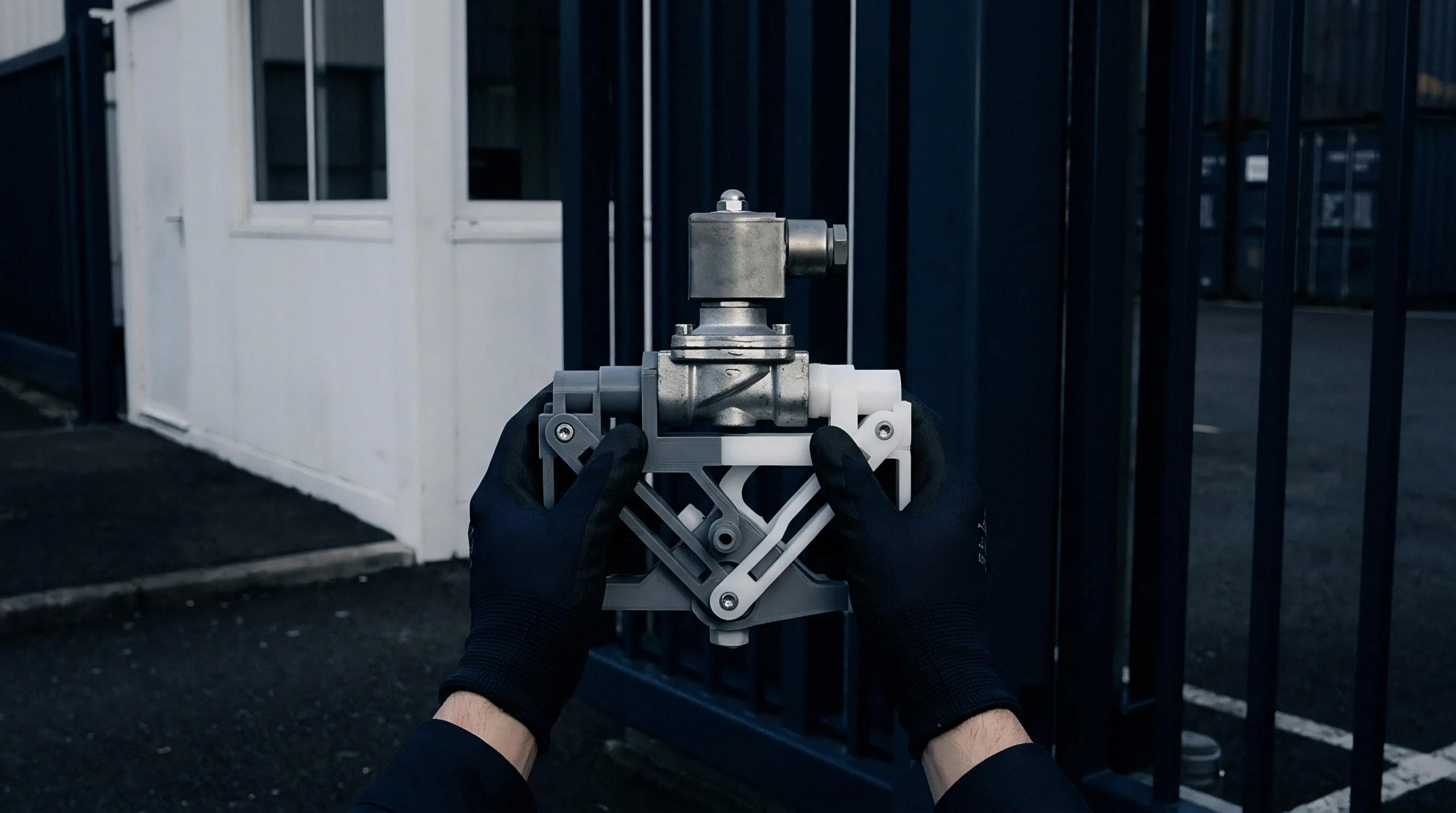
Physical inspection at port staging facilities and factory loading docks forms the practical line of defense against sub-component exit holds. Documentary clearance alone remains insufficient if physical sub-components carry unauthorized patent markings or structural deviations from approved non-infringing engineering drawings. Physical verification procedures validate that parts loaded into export containers match verified design dossiers.
Port staging inspections occur inside bonded logistics parks or container freight stations adjacent to major coastal terminals. Inspectors pull random samples from packed master cartons according to acceptable quality limit protocols. Sampling rates depend on sub-component criticality, with custom mechanical assemblies undergoing five percent destructive or non-destructive disassembly to inspect internal structural features.
Verifying physical patent markings aligns with Article 17 of the PRC Patent Law and its underlying implementation rules. Under Chinese law, falsely marking an unpatented item as patented or placing expired patent numbers on components constitutes patent counterfeiting under administrative law. If custom inspectors locate unauthorized, expired, or inaccurate patent markings stamped onto internal tier-two sub-components, customs detains the shipment under counterfeiting provisions, independent of any third-party civil infringement claims.

Who Carries Tier Two Utility Model Exposure When Customs Holds Container?
Determining legal and operational liability during a coastal exit hold requires analyzing the chain of contract and statutory export responsibility. Under PRC Customs Law, the exporter of record listed on the export declaration carries direct administrative liability for cargo holds, demurrage accumulation, and customs penalties. While the exporter holds statutory responsibility before customs authorities, secondary financial liability depends entirely on the commercial agreements connecting the exporter, tier-one integrator, and tier-two component supplier.
Tier-one integrators standardly push liability downstream by incorporating general indemnity clauses into purchase orders. However, if the contract fails to specify PRC court jurisdiction and liquid asset attachment mechanisms, enforcing an indemnity claim against a tier-two sub-tier vendor takes months of civil litigation. In practice, the exporter of record absorbs immediate cash drain from port demurrage fees, vessel missed-booking penalties, and buyer cancellation claims long before recovering funds from sub-tier suppliers.
Exporters mitigate this structural exposure by establishing escrow retention funds and strict physical dock inspection procedures before cargo departure. Requiring sub-tier suppliers to post financial guarantees or accept deferred payment terms tied to successful coastal clearance aligns sub-tier financial interests with export non-infringement requirements. Without enforceable financial leverage, exporters carry the entire exposure of tier-two utility model litigation.
Physical teardown inspections verify the structural features of sub-components against non-infringement legal opinions. Inspectors use specialized tools to isolate tier-two items, checking dimensional tolerances, mounting hole positions, structural rib counts, and mechanical attachment mechanisms. Any physical alteration introduced by sub-tier suppliers during production runs can inadvertently push a non-infringing sub-component into the literal claim scope of an active utility model patent.
- Inspect outer shipping crates and sub-tier packaging at the staging warehouse for declared PRC patent markings before export customs declaration filing.
- Perform destructive or non-destructive physical tear-down on three randomized units per lot to expose embedded tier-two sub-component stamped part numbers.
- Compare physical sub-component structural dimensions against the patent evaluation report claims supplied in the verification dossier.
- Seal container doors with serialized bolt tags and record physical component hashes in the export clearance manifest before transport to the coastal terminal gate.
Sample testing of tier-two sub-components at port staging facilities must achieve a ninety-nine percent confidence interval to prevent unauthorized design changes from reaching coastal customs gates.
Managing container loading and sealing protocols ensures supply chain security between factory staging and port gates. Once physical inspection confirms component compliance, logistics teams secure container doors using high-security serialized bolt seals compliant with ISO 17712 standards. Seal numbers are cross-referenced on export verification manifests and transmitted electronically to customs brokers to ensure cargo integrity throughout coastal transport.
Discrepancies between physical sub-components and engineering documentation trigger immediate staging holds. When a sub-tier factory substitutes materials or modifies component geometry without prior authorization, the affected lot is returned to the production facility for re-engineering or component replacement. Exporting unverified, modified sub-components creates unacceptable legal risks at port clearance gates.
Physical verification at the dock prevents uncleared components from entering international freight streams. Conducting rigorous physical teardowns before container sealing ensures export shipments pass coastal customs inspections without administrative holds or financial loss.
Checking component markings and physical geometry at the staging warehouse is essential for export risk management.

Dossier
Assembling a pre-clearance verification dossier creates the essential documentary defense required to defeat coastal exit holds. When customs detains cargo or a patentee threatens enforcement, presenting a complete legal and technical dossier to customs authorities and IP court judges provides the fastest mechanism for container release. The verification dossier compiles technical evaluations, non-infringement legal opinions, chain-of-title documentation, and contractual indemnities into an authoritative evidentiary package.
The foundation of the verification dossier is the official Patent Evaluation Report (专利权评价报告) issued by CNIPA under Article 66 of the PRC Patent Law. Because utility models do not undergo substantive examination prior to grant, patent holders or interested parties must request a Patent Evaluation Report from CNIPA to assess the patent’s validity over prior art. A Patent Evaluation Report showing that a cited utility model lacks novelty or inventive step provides decisive administrative leverage, allowing exporters to convince customs authorities that the patent holder’s enforcement action rests on an invalid legal basis.
A comprehensive non-infringement legal opinion (未侵犯专利权法律意见书) prepared by a qualified PRC patent attorney forms the second critical pillar of the dossier. The legal opinion applies Supreme People’s Court judicial interpretation rules to perform a detailed element-by-element comparison between the cited utility model claims and the physical sub-component structure. The opinion must explicitly identify at least one claim element present in the utility model that is missing or structurally distinct in the sub-component, proving non-infringement under the All-Element Rule.
Pre-Clearance Verification Dossier Structural Components
| Document Title | Issuing Authority / Drafter | Governing Legal Provision | Evidentiary Function at Coastal Customs |
|---|---|---|---|
| CNIPA Patent Evaluation Report | National Intellectual Property Administration | PRC Patent Law Article 66 | Determines official validity and prior art standing of utility model |
| Non-Infringement Legal Opinion | Licensed PRC Patent Attorney / Law Firm | SPC Judicial Interpretation (2009) No. 21 | Demonstrates technical non-infringement under All-Element Rule |
| Sub-Tier Chain of Title Certificate | Tier-Two Supplier & Patentee / Licensee | PRC Civil Code Article 465 | Establishes licensed procurement source and sub-licensing rights |
| Prior Art Commercial Use Proof | Exporter / Original Manufacturer | PRC Patent Law Article 67 | Establishes absolute prior use defense predating patent application |
| Sub-Tier IP Guarantee Agreement | Tier-Two Vendor & Prime Exporter | PRC Civil Code Governing Provisions | Provides legal basis for immediate liquid asset attachment |
Documenting chain of title and licensing authorization protects sub-components produced under patent licenses. If the cited utility model is validly licensed to a tier-two supplier, the dossier must contain the fully executed license contract registered with CNIPA under the Patent Licensing Contract Recordation Measures. Furthermore, the contract must explicitly grant the sub-tier supplier sub-licensing and downstream export distribution rights, ensuring that finished assemblies incorporating the sub-component retain full exhaustion-of-rights protection under PRC Patent Law Article 75.
Establishing an absolute prior use defense under Article 67 of the PRC Patent Law offers a reliable strategy for defeating bad-faith utility model filings. If the exporter or sub-tier supplier manufactured or utilized the exact sub-component design prior to the priority filing date of the cited utility model, the prior use defense applies. The dossier must contain dated engineering drawings, bill-of-materials revisions, mold manufacturing invoices, and historic tax receipts proving prior production within the PRC territory.
Sub-tier indemnities and IP warranty contracts must be drafted under PRC law to ensure enforceability in local courts. A Western-style indemnity template drafted under foreign governing law provides zero practical protection during a coastal customs seizure. Enforceable sub-tier agreements specify exclusive jurisdiction in the PRC court holding territorial jurisdiction over the vendor’s primary assets, incorporate fixed liquidated damage penalties, and require vendors to maintain liquid escrow reserves dedicated to potential customs bond disbursements.
Maintaining a digital verification dossier repository linked to export lot numbers accelerates customs response times. When port customs issues an administrative hold notice, the exporter’s legal team must submit the translated, certified dossier to the coastal customs IP enforcement officer within forty-eight hours. Delays in producing certified documentation allow customs to finalize container detention orders, forcing the cargo into formal administrative disputes.
Compiling verification dossiers requires active cooperation between cross-border legal advisors, procurement directors, and sub-tier engineering teams. Establishing automated dossier creation pipelines ensures every exported assembly carries a complete, defensible evidentiary file prior to vessel loading.
- CNIPA Search Certificate Verification ~ Confirm the utility model holds an official Patent Evaluation Report showing all claims meet novelty and inventive step criteria.
- All-Element Technical Comparison ~ Document that at least one literal element of the utility model claim is missing from the sub-component structure.
- Chain of Authorization Documentation ~ Trace every sub-component purchase order back to the patentee or authorized licensee with explicit sub-licensing rights.
- PRC Forum Indemnity Enforceability ~ Ensure sub-tier warranty clauses specify PRC court jurisdiction and liquid asset reserves held in domestic accounts.
A Non-Infringement Legal Opinion rendered by a licensed PRC patent attorney provides the formal legal basis required by coastal customs officers to evaluate administrative cargo releases.
Integrating non-infringement legal opinions into export contracts changes the commercial dynamic between exporters and tier-two suppliers. Standard procurement agreements routinely leave intellectual property verification responsibilities ambiguous, leading to disputes when customs detains cargo at export docks.
Exporters strengthen their legal position by inserting explicit dossier submission clauses into sub-tier supply agreements: “The Tier-Two Vendor provides a certified CNIPA Patent Evaluation Report and an unqualified Non-Infringement Legal Opinion issued by licensed PRC patent counsel for every custom component design thirty days prior to initial production clearance, and failure to supply these executed instruments grants the Exporter immediate authority to withhold twenty percent of total contract value as an escrow deposit against customs detention liabilities.”

Release
When port customs detains export cargo despite pre-clearance preparations, executing administrative and judicial release procedures represents the final mechanism to clear containers for coastal departure. Exporters must navigate custom administrative counter-guarantee procedures or pursue immediate judicial relief in regional IP courts to prevent catastrophic supply chain failures.
The administrative mechanism for securing cargo release during a patent hold is the customs counter-guarantee (海关反担保) provision set forth in Article 24 of the Regulations of the PRC on Customs Protection of Intellectual Property Rights. Under this statutory pathway, if customs detains goods suspected of infringing a patent (utility model or design patent), the exporter or importer of record can submit a formal application to customs requesting container release upon posting a cash counter-security deposit or equivalent financial guarantee letter equal to the total value of the declared export shipment.
Counter-guarantee provisions apply specifically to patent disputes, reflecting the legal reality that patent validity and technical infringement require complex judicial evaluation that customs officers cannot resolve on the dock. Once the exporter posts the required counter-security bond, customs lifts the administrative detention and releases the container stack for vessel loading, ensuring international delivery schedules remain uninterrupted while the underlying patent dispute undergoes formal judicial review.

Coastal Exit Clearance Resolution Pathway Comparison
| Resolution Pathway | Governing Statute / Mechanism | Financial Bond Requirement | Timeline to Container Release | Finality of Legal Outcome |
|---|---|---|---|---|
| Customs Counter-Guarantee Bond | PRC Customs Protection Regulations Article 24 | 100% of declared cargo value in cash or bank guarantee | 3 to 7 working days post bond deposit approval | Temporary release; requires litigation in PRC court |
| CNIPA Invalidations Proceeding | PRC Patent Law Article 45 | Standard administrative filing and agency fees | 6 to 12 months for formal CNIPA decision | Permanently invalidates utility model across PRC |
| Non-Infringement Action | PRC Civil Procedure Law Article 119 | Court filing fees and legal representation costs | 3 to 9 months for court judgment | Binds patentee; prevents future coastal customs holds |
| Direct Rights Holder Settlement | Private Commercial Settlement Agreement | Negotiated license fee or royalty settlement payment | 1 to 3 working days post agreement execution | Immediate release; releases customs hold upon withdrawal |
Calculating counter-security bond amounts requires managing significant financial liquidity. Article 24 mandates security deposits equal to the complete declared customs value of the exported goods. For high-value electronic or industrial shipments, posting equivalent cash bonds ties up substantial capital for extended periods.
Exporters must arrange standing bank guarantee facilities (银行保函) with approved domestic Chinese financial institutions to provide acceptable customs counter-security without draining cash reserves.
Initiating a formal Action for Declaratory Judgment of Non-Infringement (确认不侵犯专利权之诉) under Supreme People’s Court judicial guidelines provides a powerful legal countermeasure against bad-faith utility model assertions. Under these rules, when a patentee issues an infringement warning or initiates a customs hold but fails to bring a formal civil court lawsuit within a reasonable period, the exporter can send a formal written notice demanding the patentee initiate litigation. If the patentee fails to bring suit within one month of receiving the notice, the exporter files a declaratory judgment action in the competent regional IP court to secure a judicial declaration of non-infringement.
Securing a favorable judgment in a declaratory non-infringement suit permanently closes the customs enforcement route for the cited utility model. A binding court judgment confirming non-infringement is submitted directly to the General Administration of Customs, triggering the immediate cancellation of the patentee’s GACC recordation and prohibiting customs officers from detaining future export shipments containing the verified sub-component.
Concurrent invalidation proceedings (专利权无效宣告程序) filed with the CNIPA Reexamination and Invalidation Department target the legal foundation of the cited utility model. Because utility models lack substantive examination during grant, over sixty percent of contested utility model claims undergo complete or partial invalidation when challenged with relevant prior art. Demonstrating to an IP court judge that an invalidation proceeding is active frequently prompts the court to stay civil proceedings or order the release of posted counter-security bonds.
Securing rapid container release at coastal export ports demands executed coordination between customs brokers, litigation counsel, and corporate finance teams. Successfully navigating customs counter-guarantee procedures allows exporters to maintain international delivery schedules while systematically defeating invalid sub-tier utility model claims in court.
Which specific judicial standards will Chinese IP courts establish to calculate statutory damages when a bad-faith utility model customs hold intentionally targets a multi-million-dollar export module using a forty-cent sub-component?