Micro-Spectroscopic and Spectrographic Analysis of Ink Aging Decay in Contested Chinese Commercial Execution Documents
Spectrographic ink decay analysis establishes Chinese document age by measuring solvent evaporation kinetics and resin polymerization to defeat backdated claims.

Execution
Corporate governance disputes in Chinese commercial transactions frequently hinge on the precise physical age of inked signatures and stamped seals on legal instruments. Foreign commercial parties routinely face allegations that supply agreements, equity transfer deeds, or debt guarantees were executed years after their stated effective dates, or conversely, that genuine recent signatures were fraudulently stamped onto pre-sealed antedated paper stocks. The legal representative chop, corporate red seal, and handwritten signatures constitute the tri-fold authorization mechanism under Chinese corporate law.
When a dispute arises in a Chinese tribunal, oral testimony regarding contract signing rarely overcomes the physical evidence embodied in the paper and ink layer.
The physical composition of writing instruments in mainland China has shifted dramatically over the past two decades. Ballpoint pens utilizing oil-based dye mixtures, gel pens based on water-soluble pigment suspensions, and traditional red seal pastes containing cinnabar suspended in castor oil yield distinct chemical and physical decay tracks. Modern forensic document examination relies on micro-spectroscopic and spectrographic techniques to extract age-dependent chemical changes from sub-milligram ink samples without compromising document integrity.
Document Authentication Anatomy
Contested paper instruments usually present overlapping physical elements where ink lines intersect with stamp marks. Determining the sequence of deposition between a red corporate seal and a black ballpoint signature establishes whether a blank document was pre-stamped before text inclusion or signed after formal sealing. The mark stays clear.
Micro-spectroscopic depth profiling and confocal laser scanning microscopy isolate the relative vertical elevation of pigment particles at intersecting boundaries.
- Sequence Overlap Alteration occurs when a signature line traverses a pre-existing seal impression, placing signature solvent binders above the insoluble cinnabar matrix.
- Antedated Document Fabrication involves applying modern gel pen ink onto artificially aged paper substrate to simulate a historical execution date.
- Chop Impression Transfer utilizes wet silicone transfer pads to replicate genuine corporate seals onto fraudulent agreements using secondary ink formulations.
- Selective Page Substitution replaces middle pages of multi-page commercial contracts while retaining the original signature and seal on the final execution page.
Determining whether a document was generated on its recorded date requires measuring chemical decay markers within the ink layer. As liquid ink leaves the pen nib and settles onto cellulose fibers, three distinct physical processes begin immediately: solvent evaporation, dye photodegradation, and binder resin polymerization. The rate of each process follows distinct thermodynamic curves that allow analytical laboratories to estimate the age of a mark relative to reference standards.
Including a mandatory original-counterpart retention clause with designated climate storage parameters alters the burden of production during subsequent document authenticity disputes under Article 67 of the PRC Civil Procedure Law.


Spectra
Analytical photonics allows forensic laboratories to evaluate physical evidence without destroying the underlying paper fiber. Confocal Laser Raman Micro-Spectroscopy provides non-destructive structural characterization of organic dyes and inorganic pigments down to single-micrometer spatial resolution. Raman scattering measures the vibrational modes of dye molecules, capturing subtle molecular transformations caused by ambient oxidation and ultraviolet exposure.
By focusing a monochromatic laser beam through a high-numerical-aperture microscope objective, examiners obtain discrete Raman spectra from ink lines without burning the substrate. Common excitation wavelengths include 532 nm, 633 nm, and 785 nm. The 785 nm near-infrared laser minimizes background fluorescence interference generated by optical brighteners embedded in commercial paper fibers.
Non Destructive Optical Mapping
Confocal laser excitation focused through high-magnification microscope objectives isolates micro-gram dye deposits within individual cellulose capillaries. Raman spectra reveal bound pigments. Triarylmethane dyes, including crystal violet and methyl violet, dominate ballpoint pen formulations in Chinese commercial documents.
These compounds undergo progressive N-demethylation under ambient light and thermal stress, converting crystal violet into lower-methylated homologues such as methyl violet 2B and pararosaniline. This chemical shift causes measurable intensity drops at specific wavenumber peaks, notably the C-N stretch vibration near 1585 cm⁻¹ and the aromatic ring deformation mode near 1172 cm⁻¹.
Higher laser power destroys organic dye structures before reliable Raman scattering signals emerge from the paper background.
Fourier-Transform Infrared Micro-Spectroscopy (Micro-FTIR) complements Raman analysis by targeting the organic binder resins and surfactant additives in pen formulations. Utilizing Attenuated Total Reflectance (ATR) micro-probes, Micro-FTIR captures infrared absorption spectra directly from ink-bearing paper surfaces. Synthetic resins, such as alkyd, phenolic, and epoxy resins used as viscosity modifiers in gel and ballpoint inks, undergo cross-linking polymerization over time.
The relative intensity ratio of the ester carbonyl C=O stretch at 1725 cm⁻¹ against the aromatic C-H bending band at 740 cm⁻¹ serves as a quantitative index of resin curing depth.
| Technique | Excitation Source / Wavelength | Spatial Resolution | Destructive Character | Target Measured Parameter |
|---|---|---|---|---|
| Confocal Micro-Raman | 532 nm, 633 nm, 785 nm Lasers | 1.0 μm | Non-destructive (<0.5 mW power) | Dye triarylmethane N-demethylation peak shifts |
| Micro-FTIR (ATR) | Broadband Mid-IR (4000-600 cm⁻¹) | 10.0 μm | Non-destructive contact press | Resin binder ester carbonyl polymerization ratio |
| Micro-Spectrophotometry (MSP) | Tungsten-Halogen (200-800 nm) | 2.5 μm | Non-destructive optical transmission | Absorbance spectrum broad band UV-Vis decay |
| Laser-Induced Breakdown (LIBS) | Nd:YAG 1064 nm Pulsed Laser | 50.0 μm | Micro-destructive (laser ablation crater) | Elemental metal oxide ratios (Cu, Fe, Zn, Ti) |
Micro-Spectrophotometry (MSP) records transmittance and reflectance spectra in the ultraviolet and visible regions (200 nm to 800 nm). MSP measures the macro-colorimetric shift of ink strokes over time. Chromophore degradation shifts the maximum absorption wavelength (lambda max) toward shorter wavelengths, a hypsochromic shift that correlates directly with light exposure duration and oxidative atmospheric decay.
Raman peak intensity ratios between degraded and undegraded dye vibrational modes yield a decay curve when plotted against documented reference samples. Higher laser power destroys organic dye structures before reliable Raman scattering signals emerge from the paper background.

Volatiles
Liquid ink formulations leave persistent organic compounds inside paper sheets that evaporate according to predictable thermal and temporal kinetic curves. High-performance liquid vehicles in ballpoint and gel inks rely on high-boiling-point organic solvents to maintain fluid consistency inside pen cartridges. The most ubiquitous solvent compound in modern Asian commercial inks is 2-phenoxyethanol (2-PE), accompanied by benzyl alcohol, ethoxyethanol, and dipropylene glycol.
Solvents evaporate quickly.
Upon application to paper, volatile organic compounds undergo a rapid initial evaporation phase lasting roughly thirty days, followed by a slow, diffusion-controlled desorptive decay phase extending up to three years. Gas Chromatography-Mass Spectrometry (GC-MS) provides absolute quantitative measurement of these ultra-trace solvent remnants.

Micro Sampling Protocol and Solvent Extraction
Standard analytical workflows isolate millimeter-long ink threads using fine surgical scalpels under optical stereomicroscopes. Micro-punching tools extract circular paper cores measuring 0.5 mm in diameter directly from written stroke lines. The extracted core is placed into a micro-vial containing an organic extraction solvent, typically acetonitrile or methanol containing an internal standard such as deuterated 2-phenoxyethanol (2-PE-d4).
The sample undergoes ultrasonic bath extraction for fifteen minutes at ambient temperature before injection into a Gas Chromatograph equipped with a capillary column and a Quadrupole Mass Spectrometer.
- Mechanical micro-core extraction isolating 1.0 mm ink stroke length from paper surface under 40x magnification.
- Submersion of core sample in 20 microliters of HPLC-grade acetonitrile containing 1.0 ppm deuterated internal standard.
- Ultrasonic agitation at ambient temperature for exactly 15 minutes to fully desorb unevaporated organic solvents.
- Gas Chromatographic separation on a 30-meter 5% phenyl-methylpolysiloxane capillary column using helium carrier gas.
- Mass Spectrometric detection in Selected Ion Monitoring (SIM) mode tracking m/z 138 for 2-PE and m/z 142 for internal standard.
- Quantification of Solvent Ratio (R-value) calculated by dividing extracted 2-PE mass by total ink dye mass determined via spectrophotometry.
Extracted 2-phenoxyethanol mass dropping below 0.05 nanograms per millimeter of ink stroke indicates an ink age exceeding twenty-four months under standard room storage conditions.

Can GC MS Distinguish a Six Month Document from a Two Year Old Signature?
Gas chromatography coupled with mass spectrometry measures residual organic compounds to establish a clear temporal threshold. The dynamic range for 2-phenoxyethanol solvent desorption analysis peaks between zero and eighteen months. Beyond twenty-four months, solvent mass levels off near an asymptotic baseline concentration trapped deep within cellulose crystalline micro-fibrils.
Baseline values decay.
To overcome variations in initial ink laydown volume, analytical protocols utilize the Solvent Aging Ratio (R) or Desorption Rate Index (DRI). The DRI compares solvent extracted during a mild room-temperature wash against total residual solvent released after elevated thermal desorption at 120 degrees Celsius. Heat accelerates solvent loss.
Fresh ink strokes display high room-temperature desorption rates yielding high DRI values. Aged ink strokes, where easily accessible surface solvent has already evaporated, release solvent only under thermal desorption, yielding low DRI values.
Failing to account for ambient temperature spikes during paper storage leads laboratories to underestimate ink age, turning valid historical contracts into unenforceable instruments in court.


Matrix
Chemical composition determines how quickly an ink layer solidifies, oxidizes, and interacts with paper fibers over years of storage. Gel pen formulations utilize aqueous dispersions of insoluble organic pigments such as copper phthalocyanine blue or carbon black, suspended in cross-linked polyacrylate or carboxymethylcellulose hydrogels. Unlike ballpoint inks, gel inks dry primarily by water absorption into the paper substrate rather than solvent evaporation.
Consequently, solvent-based aging models fail when applied to gel pen executions.
Gel ink decay relies on resin cross-linking kinetics and pigment aggregation dynamics. Micro-spectroscopic measurement of resin solubility changes provides the primary aging metric. As acrylic polymer networks form within the dry stroke, the ink layer becomes progressively insoluble in standard organic solvents.
A micro-drop of dimethylformamide (DMF) applied to a fresh gel ink stroke dissolves the stroke within ten seconds. On a three-year-old stroke, the same solvent requires several minutes to soften the polymer matrix.

Polymerization Kinetics and Seal Ink Migration
Traditional Chinese red chop pastes utilize a mixture of pulverized cinnabar pigment suspended in oxidized castor oil. Castor oil consists primarily of ricinoleic acid triglycerides. When stamped onto porous cotton or cellulose paper, the castor oil vehicle separates from the insoluble cinnabar (alpha-HgS) mineral particles and migrates outward into surrounding paper fibers through capillary action.
Castor oil migrates laterally.
The halo of oil diffusion expanding outward from the structural edge of a red seal mark provides a geometric aging index. Under ultraviolet fluorescent illumination (365 nm excitation), castor oil fluoresces with a characteristic pale yellowish halo. Measuring the physical width of this fluorescent halo using calibrated digital microscopy establishes a diffusion timeline.
The oil migration rate obeys Fickian diffusion kinetics, where halo width expands proportionally to the square root of time elapsed since stamping.
| Ink Category | Primary Binder Matrix | Dominant Solvent / Vehicle | Primary Aging Metric | Effective Analytical Window |
|---|---|---|---|---|
| Oil Ballpoint | Alkyd / Phenolic Resin | 2-Phenoxyethanol, Benzyl Alcohol | GC-MS 2-PE solvent desorption index (DRI) | 0 to 24 months |
| Water-Based Gel | Polyacrylate / Xanthan Gum | Water, Glycerol, Ethylene Glycol | Micro-FTIR ester polymerization cross-linking | 6 to 48 months |
| Cinnabar Chop Paste | Oxidized Castor Oil / Mineral Wax | Castor Oil Triglycerides | UV-fluorescent halo capillary diffusion width | 1 to 10 years |
| Liquid Fountain Ink | Shellac / Polyvinyl Alcohol | Water, Diethylene Glycol | Raman triarylmethane photolytic peak decay | 3 to 36 months |
Environmental factors significantly alter matrix aging velocity. Paper stored in high-humidity environments in Southern China exhibits accelerated capillary oil diffusion compared to identical documents stored in dry Northern warehouses. Elevated temperatures accelerate both resin polymerization and volatile solvent loss.
Dye concentration yields ratios.
SF/Z JD0107002 requires forensic appraisers to calibrate ink decay curves against reference samples stored under controlled atmospheric conditions of 20 degrees Celsius and 50 percent relative humidity.
The factory representatives routinely assert that document storage variations in local warehouses account for all observed discrepancies in seal paste oil diffusion.


Courts
Judicial proceedings in China evaluate scientific evidence through institutional appraisal reports issued by accredited technical centers. Chinese courts do not use Western-style Daubert hearings to evaluate scientific methodology in real time. Instead, tribunals rely on the licensed qualifications of Judicial Appraisal Institutions registered with the Ministry of Justice.
Technical reports, termed Judicial Appraisal Opinions (jianding yijian), carry heavy evidentiary weight under Article 66 of the PRC Civil Procedure Law.
Judicial Identification Standards published by the Ministry of Justice establish mandatory scientific protocols for forensic document examination. Standard SF/Z JD0107001 governs ink aging appraisal, while SF/Z JD0107002 details chromatographic analysis of document execution dates. Courts reject private expert reports that fail to strictly adhere to these state standards.

Judicial Appraisal Standards and Procedural Challenges
Technical appraisals governed by Ministry of Justice regulation SF/Z JD0107001 establish specific scientific criteria for ink age determination. The court orders appraisal. Parties contesting a judicial appraisal report must submit formal written objections during the pre-trial evidentiary exchange period under the Supreme People’s Court Rules on Evidence in Civil Litigation (2020 Revision).
- Sampling Method Objections target unauthorized destructive sampling performed without joint party supervision or failure to retain original core control samples.
- Standard Curve Discrepancies challenge appraisal conclusions based on reference ink databases that lack the specific ink brand or regional chop formulation present on the contested instrument.
- Environmental Variance Neglect asserts that the court-appointed laboratory failed to measure ambient micro-climate parameters of the storage facility housing the subject paper.
- Methodological Exceedance Claims challenge absolute date claims issued for inks aged beyond the validated twenty-four-month analytical boundary of GC-MS solvent testing.
Cross-examination of judicial appraisers occurs under Article 80 of the PRC Civil Procedure Law. Litigants may petition the court to require the court-appointed appraiser to appear in person. Parties frequently engage an Expert Assistant (zhuanjia fuzhu ren) to challenge the appraiser’s spectrographic interpretations on the witness stand.
Proving that an appraiser utilized an inappropriate baseline dye decay model destroys the report’s legal credibility. The judge controls sampling. When an appraisal report is successfully discredited, the court must order a re-appraisal by a secondary licensed institution or dismiss the physical document evidence entirely.
Whether provincial high courts will eventually adopt quantitative confidence intervals for GC-MS solvent decay ratios remains disputed among forensic appraisal committees.

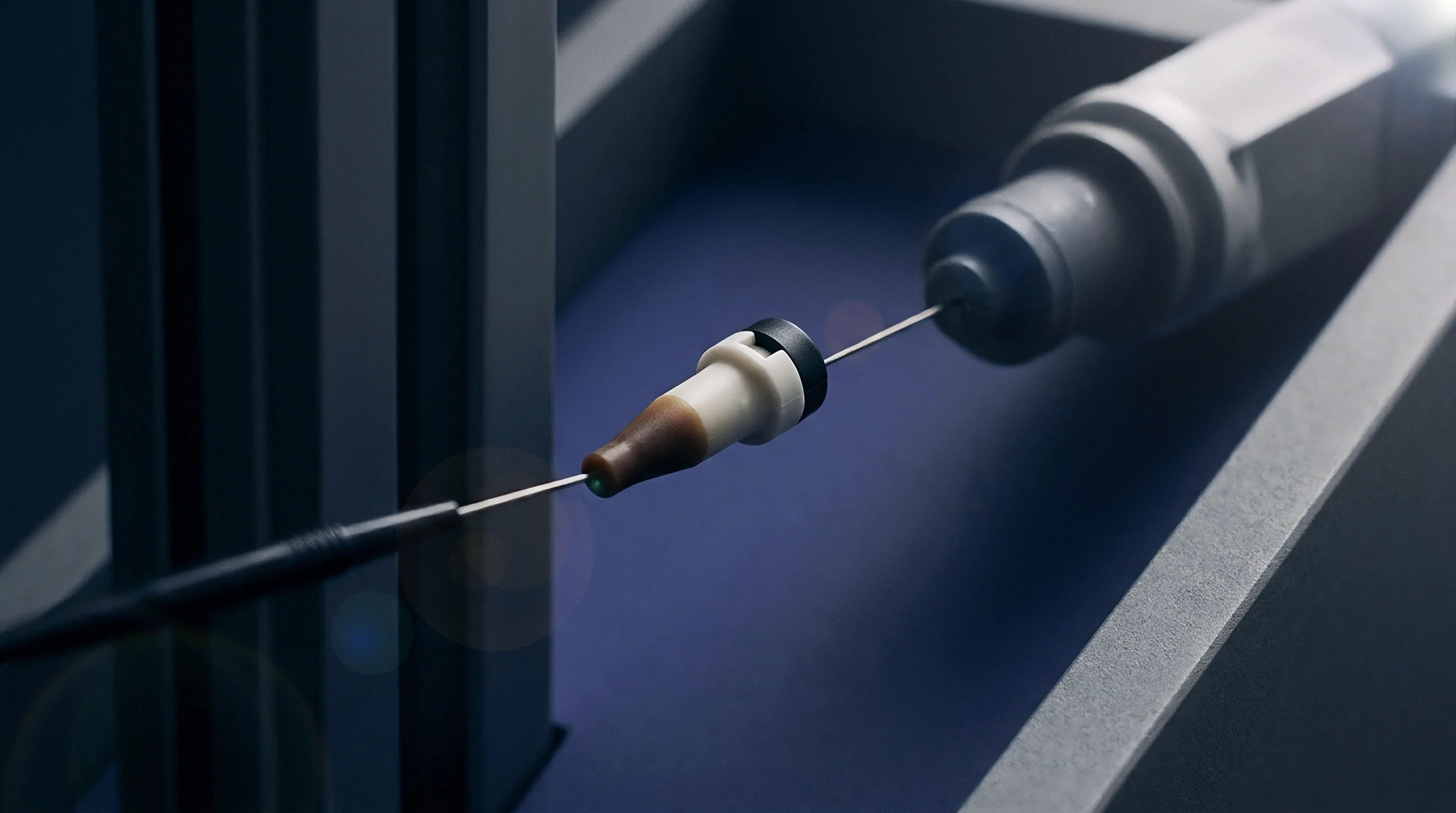
Dossier
Protecting commercial positions against fraudulent claims demands rigorous contemporaneous record-keeping across all domestic and cross-border transactions. Foreign enterprises operating in China cannot rely solely on post-dispute laboratory analysis to defeat fraudulent execution claims. Physical document management strategies must incorporate anti-forensic safeguards directly into document creation procedures.
Establishing an unbroken chain of custody for execution documents requires capturing digital, chemical, and physical metadata at the moment of signing. Dual-wavelength UV-Vis optical scanning of original documents immediately following execution records baseline ink reflectance values before natural decay begins.

Forensic Audit Construction and Risk Mitigation
Cross-border entities operating in mainland China build multi-layered evidentiary files prior to executing high-value commercial agreements. Storing original contracts alongside un-inked blank control sheets from the identical paper batch allows future laboratories to subtract substrate solvent background noise from ink GC-MS measurements. The timeline collapses.
| Litigation Stage | Procedural Action | Statutory Authority | Typical Cost Range (RMB) | Procedural Timeline |
|---|---|---|---|---|
| Pre-Trial Exchange | Petition for Judicial Appraisal | SPC Evidence Rules Art. 31 | 15,000 to 50,000 | 15 to 30 Days |
| Appraisal Execution | Joint Core Micro-Sampling | SF/Z JD0107001 Protocol | 30,000 to 120,000 | 30 to 90 Days |
| Evidentiary Review | Submission of Expert Objections | PRC Civil Procedure Law Art. 79 | 20,000 to 80,000 | 10 Days post-report |
| Court Hearing | Expert Assistant Cross-Examination | PRC Civil Procedure Law Art. 80 | 40,000 to 150,000 | Trial Date |
Deploying specialized ink formulations containing unique trace elements or rare-earth fluorescent markers provides immediate confirmation of document authenticity during subsequent litigation. Laser-Induced Breakdown Spectroscopy (LIBS) detects trace elemental markers, such as lanthanum or yttrium oxides embedded in corporate seal pastes, within milliseconds.
Retaining un-inked control samples from identical paper manufacturing lots reduces analytical error margins in GC-MS solvent extraction testing by up to forty percent.
Constructing a comprehensive document dossier involves pairing physical storage controls with digital timestamps recorded on local public notary servers (gongzheng處). Maintaining dual original document sets in humidity-controlled offline storage provides the primary technical defense when counterparty signatures face retrospective challenge.