Judicial Forensic Evaluation Parameters for Disputed Chinese Execution Impressions
Authenticate Chinese execution impressions by combining 3D laser profilometry, Raman ink spectroscopy, and Public Security Bureau recordation matching.


Ink
Judicial appraisal of disputed execution impressions in Chinese civil litigation hinges on physical and chemical analysis of the stamping medium. Commercial contracts across China rely on red seal impressions made with oil-based pad formulations, liquid stamp ink, or light-resistant cinnabar paste. When a party challenges the authenticity of a chop on a contract, loan agreement, or corporate guarantee, examiners first establish the chemical makeup of the ink deposit.
The central distinction lies between traditional cinnabar oil pastes, known as yin ni, and modern synthetic solvent inks formulated for self-inking rubber or acrylic stamps.
Traditional pastes combine ground cinnabar or synthetic mercuric sulfide with castor oil and binding plant fibers like moxa. Modern desk pads instead disperse synthetic azo dyes or organic red pigments into mineral oil, volatile organic solvents, or water-soluble glycol bases. Micro-Raman spectroscopy identifies these functional groups without damaging the document substrate.
Under monochromatic laser excitation at 785 nanometers, mercuric sulfide produces a distinctive Raman peak at 253 wave-numbers, confirming a traditional cinnabar formulation, whereas synthetic organic pigments generate broad fluorescent backgrounds with characteristic peaks at higher wave-number shifts.
Traditional cinnabar seal paste exhibits minimal solvent migration into paper cellulose over time compared to synthetic dye inks.
Gas chromatography coupled with mass spectrometry identifies volatile organic carriers remaining in the ink impression. Solvent residue concentrations drop along a predictable decay curve during the first eighteen months after application. Because ink pad chemistry governs drying speed, measuring the relative abundance of light solvents like toluene or glycol ethers against heavy mineral oil fractions yields an estimated time window for when the seal was applied.
When a document dated six years prior displays high concentrations of volatile glycol solvent, the forensic report concludes the impression was created recently, refuting the stated age of the document.

Physicochemical Properties of Chinese Seal Paste Formulations
Substrate interaction determines how ink settles into paper fibers. High-grade Xuan paper and standard 80-gram wood-pulp office paper absorb oil carriers through capillary action at very different rates. Forensic laboratories use Fourier-transform infrared spectroscopy equipped with attenuated total reflectance modules to trace oil absorption profiles across paper cross-sections.
Castor oil from traditional paste remains localized in top fiber layers, whereas low-viscosity mineral oils in self-inking pads penetrate through the full thickness of standard printer paper within minutes.
Because paper porosity alters edge sharpness, the spatial distribution of pigment particles along the boundary line of a seal character provides diagnostic evidence of stamping pressure and ink viscosity. Cinnabar particles range from 2 to 15 micrometers in size, creating a granular perimeter under 100x optical magnification. Liquid dye inks lack particulate structure, producing smooth, continuous stroke edges with visible bleeding into adjacent paper fibers.
When a disputed contract features a seal impression with perfectly smooth strokes despite allegedly being stamped with a traditional metal seal and red paste, microscopic particulate analysis reveals the discrepancy.

Spectroscopic Differentiation of Ink Pad Bases and Pigment Migration
Determining the sequence of intersecting lines is a central challenge in contract forgery disputes. Contracts frequently feature overlapping signature strokes, printed text, and seal impressions. Assessing whether a legal representative signed before or after the corporate seal was stamped establishes whether an authorized signature validated a stamped page or an authorized seal was placed over a pre-signed blank sheet.
Forensic document examiners use three-dimensional laser scanning confocal microscopy and micro-Raman mapping to resolve line crossing order. When a ballpoint pen stroke containing phthalocyanine blue dye crosses a red cinnabar seal impression, physical displacement of ink particles occurs at the junction. A pen ball rolling over fresh or dried red seal paste pushes red pigment particles into the grooves of the pen line.
Conversely, a seal stamped over a pre-existing pen line deposits a continuous red film across the structural indentation left by the pen tip. Spectral mapping across the intersection grid generates a depth profile confirming which material occupies the uppermost layer.
| Parameter | Traditional Cinnabar Paste | Synthetic Solvent Pad Ink | Water-Based Stamp Ink |
|---|---|---|---|
| Primary Pigment Class | Mercuric Sulfide (HgS) | Azo Dyes / Rhodamine B | Water-Soluble Red Acid Dyes |
| Raman Spectra Peak | Sharp peak at 253 cm⁻¹ | Broad fluorescence, 1360 cm⁻¹ | Diffuse organic bands |
| Substrate Penetration | Low (surface accumulation) | High (mineral oil migration) | Moderate (aqueous diffusion) |
| Particulate Granulometry | 2 to 15 micrometer grains | Sub-micron molecular dispersion | Dissolved molecular state |
| Solvent Residue Decay | Stable over decades | Volatiles diminish in 12-18 mos | Rapid moisture loss in weeks |
Forensic examiners evaluate ink migration across paper fibers under monochromatic lighting during pre-appraisal screening. Non-destructive optical screening eliminates unviable claims before submitting formal appraisal applications to PRC courts. Ink pad formulation variance between distinct business branches provides clear evidentiary tracks during multi-party fraud investigations.
Visual inspection alone fails in court because stamping media selection determines the longevity and physical characteristics of forensic evidence. Traditional cinnabar paste maintains structural stability across decades, preserving stroke relief and particulate arrangement. Liquid synthetic inks degrade faster under ambient light and humidity, blurring fine carving details within years.
Forensic appraisal protocols require baseline measurements of ink composition before conducting physical contour matching against reference seals.


Morphology
Seal matrices carved from horn, wood, acrylic, or brass impart distinct mechanical signatures onto paper during impression. Chinese corporate chops feature precise dimensional parameters regulated by public security authorities, including circular diameters, five-pointed star dimensions, and specific Chinese character fonts. When an impression is contested in judicial proceedings, appraiser analysis focuses on morphological defects, carving toolmarks, and pressure-induced stroke deformation.
Carving methodology leaves distinct microscopic indicators. Hand-carved wooden or ox-horn seals exhibit irregular cut angles, uneven depth profiles, and microscopic chatter marks along character margins. Laser-carved acrylic seals show flat channel bottoms with sharp, vertical side walls, accompanied by melt-bead artifacts along outer stroke boundaries.
CNC-milled metal seals display uniform tool paths with parallel machining striations inside recessed zones. Identifying these manufacturing artifacts in a disputed impression allows forensic appraisers to determine whether the matrix matches the historical manufacturing origin of the genuine company chop.
Deformation dynamics during application alter stroke thickness, character distance, and outer perimeter dimensions as rubber matrices compress under load. A seal stamped with 5 newtons of downward force produces slender character strokes, whereas 30 newtons of force compresses the matrix, broadening line widths by up to 15 percent and forcing ink outward to form prominent edge ridges. Forensic evaluation algorithms account for elastic deformation by mapping relative topological ratios rather than absolute spatial distances.

Structural Characteristics of Carved and Molded Seal Matrices
Authentic Chinese corporate seals registered with Public Security Bureau database systems possess defined geometric tolerances. Standard enterprise chops measure 40 or 42 millimeters in diameter, featuring a central five-pointed star measuring 14 millimeters across. Surrounding text follows official simplified Chinese typography arranged in an arc.
Forensic appraisers measure arc curvature, radial spacing of individual characters, and stroke junction angles using automated coordinate measuring software.
Physical wear patterns develop as a seal experiences repeated commercial use. Accidental impacts create micro-fractures in horn matrices or chips in acrylic edges. Foreign particles embedded in engraving grooves block ink transfer, leaving consistent white voids in subsequent impressions.
These dynamic wear characteristics convert a standardized factory seal into a unique physical artifact. Appraisers compile a chronological matrix history by collecting undisputed historical company documents, tracing the appearance and progression of specific defects over time.
- Edge Chamfer Imperfections distinct notch profiles along the outer circular ring created by physical drop impact or manual blade trimming during manufacturing.
- Star Tip Truncation worn or broken points on the central national emblem star that fail to transfer ink to paper under normal pressure.
- Character Stroke Fractures narrow gaps across radical lines resulting from stress cracks in aged ox-horn or dried wooden matrices.
- Channel Depth Asymmetry unequal carving depth causing lower stroke areas to pick up excess background ink pad residue during impression.
- Spine Ridge Chatter micro-serrated line margins left by high-speed CNC milling cutters moving along curved character vectors.
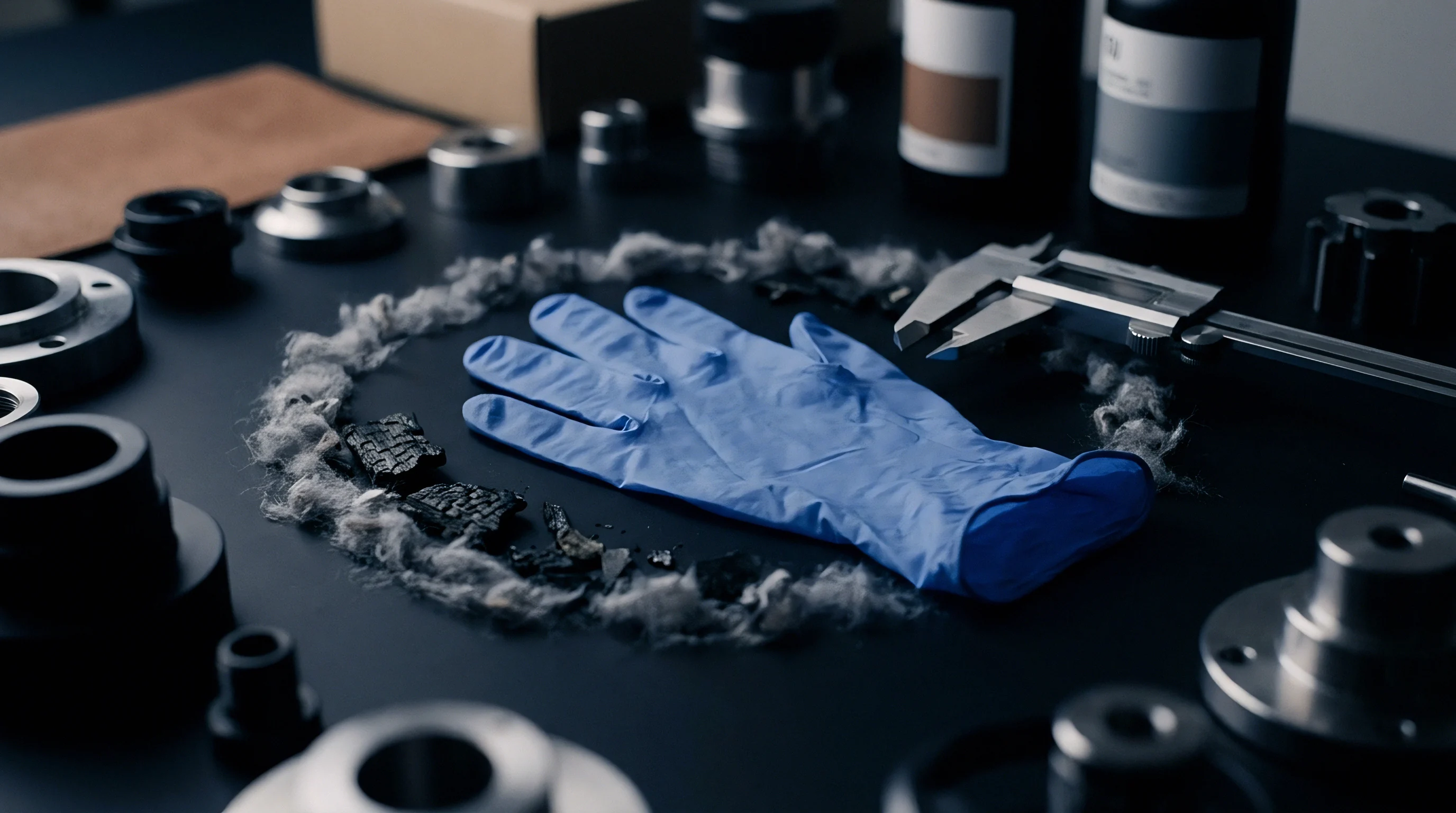
Deformation Dynamics under Uniaxial Stamping Pressure
Contact angle tilt introduces directional distortion across the impression area. When an operator applies uneven manual pressure, one quadrant of the circular stamp bears higher force, squeezing ink outward and expanding stroke width, while the opposing quadrant receives insufficient pressure, yielding thin or fragmented character lines. Automated image correction algorithms normalize non-uniform pressure gradients before performing structural vector alignment against reference impressions.
Substrate resilience influences morphological transfer. Hard desktop surfaces beneath paper force ink outward into sharp peripheral rims, creating double-line edge effects along character boundaries. Soft padded undersurfaces sink under pressure, driving ink deep into the paper weave and widening character lines toward the center.
Appraisers record paper impression depth using non-contact optical profilometry, establishing whether pressure levels applied during execution match the structural capabilities of the alleged matrix material.
Attributing a 2-millimeter diameter variance between an execution impression and an official registration sample to natural wood shrinkage or normal wear contradicts physical testing data, which demonstrates that seasoned hardwood and acrylic matrices exhibit dimensional drift under 0.05 millimeters under standard commercial office storage conditions.


Bench
Judicial document appraisal in PRC court proceedings adheres to standardized technical specifications issued by the Ministry of Justice. The primary standard governing seal appraisal is SF/Z JD0101002-2018, which establishes technical protocols for physical inspection, optical analysis, and digital overlay comparisons. Operating within this standardized framework ensures that forensic evaluation reports survive evidentiary challenge during tribunal cross-examination under Chinese Civil Procedure Law.
Appraisal laboratories rely on specialized optical and electronic hardware. High-resolution stereomicroscopes equipped with ring lighting capture surface texture and ink particle distribution under magnification ranging from 10x to 200x. Video spectral comparators supply multi-wavelength illumination from ultraviolet to infrared, revealing secondary ink lines, erased pencil guides, or chemical washing treatments.
Digital image analysis stations use dedicated software to convert scanned impressions into vector overlays for high-precision geometric comparison.
A forensic re-appraisal in Shanghai cost 42000 RMB after an initial laboratory ignored ink pad solvent residue. The second laboratory used gas chromatography mass spectrometry alongside digital overlay analysis, proving the disputed seal was applied two years after the document date and securing a full rejection of the plaintiff’s enforcement claim.

Forensic Appraisal Instruments and Optical Measurement Protocols
3D laser profilometry measures the microscopic topographical profile of paper impressions. Stamping a hard metal or acrylic seal leaves physical indentations in cellulose fibers ranging from 5 to 35 micrometers deep. Laser profilometers construct digital elevation maps of these depressions, quantifying depth variation across character strokes.
Scanning an original execution document confirms physical stamping, whereas flat digital printouts or high-end inkjet transfer forgeries exhibit zero fiber indentation despite showing visually identical red images.
Color channel separation isolates red seal impressions from underlying black printed text, signature lines, or security backgrounds. Converting optical images into the CIE Lab or CMYK color spaces allows software filters to isolate the magenta and yellow channels, removing black text components that obstruct character intersections. Forensic examiners extract clean, unoccluded vector outlines of seal characters, enabling unobstructed geometric alignment against reference stamps.
| Instrument Type | Analytical Parameter | PRC Standard Threshold | Diagnostic Purpose |
|---|---|---|---|
| Laser Profilometer | Substrate indentation depth | 0.1 micrometer resolution | Distinguishes physical stamps from inkjets |
| Video Spectral Comparator | Infrared luminescence response | 400 to 1000 nm spectra | Detects ink additions and chemical washing |
| Stereomicroscope | Particulate edge dispersion | 20x to 200x magnification | Identifies toolmarks and line crossing order |
| GC-MS Spectrometer | Solvent residue concentration | Parts per million threshold | Determines absolute document aging window |
| Optical Comparator | Character vector discrepancy | Tolerance under 0.05 mm | Maps geometric divergence against controls |

Micro-Photogrammetric Reconstruction and Digital Overlay Alignment
Digital overlay analysis requires rigid alignment protocols to prevent optical distortion artifacts. Examiners scan disputed and sample documents at a minimum optical resolution of 1200 dots per inch using flatbed scanners calibrated against glass target grids. Software compensates for rotational offset by establishing a coordinate grid anchored to fixed geometric nodes, such as the tip points of the central five-pointed star or outer circle quadrant intersections.
Once aligned, appraisers perform dynamic color flashing and digital subtraction. In dynamic color flashing, the disputed impression renders in green and the reference sample renders in red, overlapping into yellow where features match perfectly. Discrepancies appear as pure green or red line margins, highlighting matrix variance instantly.
Digital subtraction subtracts pixel values of the sample from the disputed image; identical impressions leave a clean grey background, while non-matching impressions leave dark residual line contours.
- Calibrate the optical flatbed scanner using a certified glass grid target to eliminate lens distortion across the scanning bed.
- Capture high-resolution 1200 DPI uncompressed TIFF images of both the disputed impression and undisputed reference chops.
- Isolate the red seal channel using chromatic matrix filtering to remove overlapping signatures, background lines, and text.
- Establish primary spatial anchor nodes at the central star tips and outer perimeter quadrant points.
- Execute digital coordinate translation and rotation algorithms to align reference and target anchor grids.
- Apply dynamic dual-color overlay flashing to highlight structural boundary deviations exceeding 0.02 millimeters.
- Calculate character stroke area ratios and edge-similarity coefficients using statistical vector comparison tools.
- Compile quantitative deviation metrics into the official forensic appraisal dossier under SF/Z JD0101002-2018 specifications.
Forensic protocol compliance dictates report admissibility. Failure to follow standardized optical scanning angles or skipping ink chemical validation exposes the appraisal opinion to challenge during judicial review. When an appraisal report relies solely on low-resolution digital scans provided via mobile applications, court tribunals routinely discard the conclusions upon objection by opposing legal counsel.


Docket
Judicial evaluation of disputed execution impressions follows strict procedural rules under PRC Civil Procedure Law and the Supreme People’s Court Provisions on Evidence in Civil Litigation. When a defendant claims a contract seal was forged, stolen, or improperly applied, the timing and phrasing of the appraisal application determine evidentiary burden allocation. Parties submit written requests for forensic appraisal during the pre-trial evidence exchange period specified by the hearing court.
Court-appointed appraisal institutions dominate judicial fact-finding in China. Courts select appraisal agencies from designated provincial lists through random selection or mutual party agreement. Private appraisal reports commissioned independently by litigants before litigation carry minimal weight if the opposing party refuses to cross-examine or dispute the findings.
The court-appointed appraiser acts as an officer of the judicial system, submitting an official forensic report directly to the panel of judges.
Court-appointed appraisal institutions selected from judicial rosters produce forensic reports that courts accept as authoritative evidence in over 90 percent of contract seal disputes.
Cross-examination of expert appraisers is a crucial procedural right under Civil Procedure Law Article 79. Litigants possess the legal right to apply for expert assistants, known as zhuan jia xing shi ren, to appear in court and cross-examine the court-appointed appraiser. Expert assistants review the underlying laboratory bench notes, spectral graphs, and optical overlays, challenging technical procedural errors or flawed analytical assumptions made by the court’s designated appraiser.

Court-Appointed Appraisal Mechanics under PRC Civil Procedure Law
Counsel and transactional parties secure public security recordation filings prior to contract execution. In disputed seal litigation, courts compare execution impressions against two primary reference sets: historical commercial documents executed during normal business operations and official seal impressions recorded with the Public Security Bureau during enterprise registration. Public security filings carry high evidentiary credibility as undisputed reference standards.
Proving unauthorized seal usage requires a distinct evidentiary path from proving physical forgery. When forensic appraisal proves the physical chop on a contract matches the genuine company seal, the burden shifts to the enterprise to prove unauthorized application, illegal possession, or criminal misuse under Chinese Criminal Law provisions regarding seal theft or fraud. Demonstrating that an employee acted without corporate authorization does not automatically invalidate a signed contract if the counterparty acted in good faith reliance on apparent authority under PRC Civil Code provisions.

Which Party Bears the Burden When Seal Impressions Disagree?
Burden of proof allocation follows the basic procedural rule that the party asserting a fact carries the duty to prove it. A plaintiff presenting a stamped contract establishes an initial presumption of valid contract execution. When the defendant denies the authenticity of the impression, the defendant must make a formal application for forensic appraisal and advance the preliminary appraisal fee to the court-designated laboratory.
Failure to advance appraisal fees or provide adequate reference samples results in adverse procedural consequences. If a defendant enterprise claims forgery but refuses to provide access to its genuine company chops or historical execution files for comparison, the court deems the forgery claim unsupported and holds the seal impression authentic. Litigants must preserve undisputed historical documents executed contemporary to the disputed contract date to supply valid comparison baselines.
An enterprise contract clause stating that contracts become valid only upon affixing the specific registered contract seal with internal code 02 does not bind third parties acting in good faith who receive an impression of the general corporate chop with internal code 01, unless explicit written notice of the restriction was delivered to the counterparty before signature.

Divergence
Forgers employ increasingly sophisticated technical methods to replicate Chinese execution impressions. Understanding these forgery methodologies enables forensic document examiners and cross-border commercial litigation counsel to identify physical diagnostic markers that reveal fraudulent origin during early document disclosure phases.
High-resolution scanning and laser engraving represents the most prevalent mechanical forgery mode. A bad actor scans a genuine seal impression from a published corporate filing, converts the raster image into vector paths using graphics software, and cuts a duplicate matrix using an industrial desktop acrylic laser engraver. While this process reproduces general character shapes, vector tracing smooths out micro-defects while introducing pixelation artifacts along curved lines.
The resulting laser-engraved duplicate lacks the microscopic toolmark topography and authentic wear history of the original corporate seal.
Photopolymer gel transfer seals introduce distinct physical edge characteristics. Forgers expose liquid UV-curable polymer gel through a high-contrast film negative produced from a scanned original impression. Uncured polymer washes away in solvent, leaving a raised stamp matrix.
Photopolymer stamps absorb stamping ink unevenly, producing spongy, rounded stroke edges and characteristic micro-cavities across flat background areas caused by air bubbles trapped during gel exposure.
Forgery Methodologies and Physical Artifact Identification
Chemical transfer techniques bypass matrix manufacturing entirely. Forgers copy a genuine seal impression using an intermediate gel pad, adhesive tape, or chemical solvent bath to lift ink from an authentic document and press it onto a fraudulent contract. Chemical transfers exhibit pale, washed-out pigment density, diffuse character borders, and microscopic chemical solvent halos surrounding the impression area.
Solvent halos fluoresce intensely under ultraviolet illumination during Video Spectral Comparator examination.
High-resolution color inkjet printing represents a fully digital forgery method. Advanced office multi-function printers drop sub-micron red ink droplets onto paper to simulate a stamped chop. Inkjet impressions lack physical fiber displacement, displaying microscopic magenta and yellow dot matrix patterns under 40x optical magnification.
Under 3D laser profilometry, inkjet printed impressions show zero depth depression, proving the complete absence of physical matrix impact.
| Forgery Method | Physical Edge Artifacts | Substrate Profilometry | Spectral / Microscopic Identifiers |
|---|---|---|---|
| Laser Acrylic Engraving | Smooth pixelated curves, melt beads | Uniform hard stroke depth | Lacks authentic historical micro-wear defects |
| Photopolymer Gel Molding | Rounded spongy edges, micro-voids | Variable elastic compression | Sub-surface micro-bubbles under 50x optical |
| Solvent Chemical Transfer | Blurry diffuse borders, solvent halo | Zero fiber surface displacement | Ultraviolet fluorescence halo around impression |
| Color Inkjet Replication | CMYK cyan/magenta dot matrix | Flat zero-depth surface | Absence of physical pigment particulate buildup |
| CNC Metal Milling Copy | Machining striation chatter lines | Deep crisp stroke indentation | Geometric vector variance from PSB records |

Photopolymer Transfer and High-Resolution Inkjet Replication Modes
Examiners evaluate edge relief artifacts under high-magnification optical microscopes to identify photopolymer matrix transfers. Natural physical stamps deposit ink thickest along stroke edges due to hydrostatic pressure pushing liquid pad ink outward from beneath the hard matrix character faces during impression. Photopolymer matrices compress excessively, causing ink to puddle randomly across character centers while leaving thin, starved outer borders.
Statistical tolerance thresholds separate legitimate stamp variance from fraudulent structural divergence. Temperature shifts, paper moisture content, ink load volume, and manual stamping pressure introduce physical variance between authentic impressions made by the exact same physical seal. Statistical algorithms calculate acceptable structural tolerance bands based on multiple reference samples; discrepancies exceeding 0.03 millimeters in character arc positioning indicate secondary matrix replication rather than natural stamping variance.
- Absence of Fiber Depression flat paper cross-section measured under laser profilometry indicating digital printing rather than physical stamping.
- Dot Matrix Micro-Structure arrangement of individual cyan, magenta, and yellow ink droplets along character margins under 40x magnification.
- Chemical Solvent Luminescence glowing outer ring visible under 365 nanometer ultraviolet light caused by ink transfer solvents.
- Character Line Shrinkage uniform 1 to 3 percent dimensional contraction of character vectors resulting from photopolymer UV curing heat.
- Synthetic Vector Smoothness unnatural geometric perfection along character curves produced by automated image tracing software.
A key evidential problem is whether cumulative wear across a ten-year operational lifespan allows an enterprise to credibly disavow a historic execution impression when undisputed interim reference samples cannot be located.


Ledger
Financial exposure arising from disputed Chinese execution impressions highlights the necessity of structured contract risk management. In cross-border transaction structures, foreign investors, equipment suppliers, and international lenders frequently discover too late that an executed contract carries an invalid, forged, or unauthorized seal. Understanding the intersection between physical forensic appraisal parameters and Chinese contract law prevents catastrophic commercial losses.
Corporate authority in China vests primarily in physical seal possession rather than individual signatures. PRC Civil Code Article 490 establishes that a contract becomes legally binding when the parties affix their signatures or corporate seals. A contract stamped with a genuine corporate chop creates a strong legal presumption of corporate consent, binding the enterprise even if the individual signatory lacked express corporate board authorization, provided the counterparty acted in good faith.
Because legal representative signatures carry statutory authority under the business license, pairing that signature with an official corporate seal provides the highest evidentiary security. When a dispute arises, proving the authenticity of either the legal representative signature or the corporate chop satisfies the execution requirement under PRC judicial practice.
Commercial parties enforce corporate contract obligations by pairing seal appraisal with bank transfer records. Demonstrating partial performance, such as accepting payment into registered corporate bank accounts or receiving equipment deliveries, cures minor execution impression defects under PRC Civil Code provisions. Courts uphold contract validity when subsequent enterprise conduct confirms ratification of an improperly stamped agreement.
Commercial Risk Allocation for Unregistered Seal Impressions
Enterprise risk management mandates establishing a documented baseline of valid company seals before entering major commercial arrangements. Foreign buyers and lenders must require Chinese counterparties to provide clean impressions of their registered corporate seal, contract seal, and legal representative personal seal alongside the official Public Security Bureau seal recordation filing, known as gong an ju bei an xuan ce.
Unregistered seals carry severe legal vulnerabilities. Many enterprises use specialized department stamps, financial seals, or temporary project chops that lack official public security recordation. If a dispute reaches litigation, proving the authenticity of an unregistered chop requires gathering extensive historical documentation, increasing forensic appraisal costs and extending procedural trial timelines by six to twelve months.
Corporate governance controls reduce internal seal misuse risks. Enterprises must implement physical seal control procedures, including dual-custody vault storage, electronic stamp usage logs, and smart digital seal cages that record photographic evidence and GPS coordinates for every impression. In litigation, presenting computerized usage logs matching the execution timestamp of a disputed contract effectively refutes claims that an employee executed an unauthorized agreement without corporate management knowledge.
Contractual risk clauses protect foreign counterparties against seal execution invalidity. Drafting robust representation and warranty clauses regarding seal authority creates direct personal contractual liability for individual company directors and representatives. Combining physical seal verification, PSB recordation matching, and comprehensive corporate authority warranties minimizes exposure to fraudulent execution defenses in Chinese courts.