Evidentiary Protocols for Trade Secret Misappropriation Claims in Chinese Courts
Proving trade secret theft in Chinese courts requires notarized evidence preservation, granular secret point definitions, and trigger proof for Article 32 burden shifting.


Foil

Physical and Digital Access Boundaries
Litigation over technical drawings and chemical ratios in Chinese courts turns on whether the rights holder took reasonable precautions before any disclosure happened. Article 9 of the PRC Anti-Unfair Competition Law demands proof of working secrecy protocols, not just contractual declarations. Foreign companies often show up with signed non-disclosure agreements expecting paperwork alone to secure statutory protection.
In practice, judges examine the physical, digital, and procedural barriers surrounding the information right where it was developed or transferred.
Physical safeguards come down to basic facility controls: turnstiles, visitor logs, locked server cages, and hard-copy documents stamped confidential. On the digital side, courts look for role-based permissions, multi-factor authentication records, encrypted drives, and export monitoring. Agreements with employees and contractors also need localization, precise schedules of what technical modules are covered, and clear post-employment terms.
Courts in jurisdictions like the Shanghai Intellectual Property Court and the Shenzhen Intermediate People’s Court consistently dismiss claims when design files were left on open company shares without passwords or tracking.
Confidentiality claims collapse in Chinese courts when technical files sit on shared company drives without individualized login credentials and active download tracking.
Security measures have to reflect both the commercial value and the format of the information. A high-density circuit board design demands much tighter containment than a standard price sheet. When foreign firms send CAD drawings or firmware source code to contract manufacturers or joint ventures in Jiangsu or Guangdong, those files have to move across dedicated, audited endpoints.
Corporate policies drafted at headquarters carry no weight if the local operation in China ignored them on the shop floor.

Operational Logging and Access Security
Under Chinese civil procedure, establishing trade secret status requires showing that containment was continuous. Written policy has to translate into hard technical constraints that generate an unbroken audit trail.
- Document Classification Markings Watermarks displaying user IDs, timestamps, and Chinese-language confidentiality notices belong on every page of physical and electronic drawings.
- Role-Based Privilege Arrays Permissions restricted to specific job functions limit lateral browsing, backed by system logs that retain three years of access records.
- Data Loss Prevention Triggers Automated network rules block USB mass storage and intercept outgoing attachments that carry proprietary file headers.
- Offboarding System Revocations Disabling credentials within one hour of an employee departure notice shuts down ex-employee access to engineering drives.
Proving compliance with Article 9 means tying technical access records directly to Chinese employment agreements. In manufacturing plants across Zhejiang, security manuals often sit untranslated in English. Courts discard foreign-language protocols unless the plaintiff submits certified Chinese translations and proves local personnel were formally trained on them.
Handbooks have to spell out exactly what material is proprietary and secure signed acknowledgment slips. Without those countersigned Chinese receipts, judges routinely decide workers were never given lawful notice.
Employment contracts must define the actual technical scope rather than falling back on broad boilerplate. Language declaring all company information confidential fails judicial scrutiny almost every time. Judges want explicit boundaries identifying the specific engineering modules, formulas, or client data covered by the covenant.
A standard non-disclosure agreement drafted under foreign law carries little weight in Chinese litigation. Domestic agreements need to specify local court jurisdiction, cite the Anti-Unfair Competition Law, and set out concrete procedures for data handling. A typical clause that secures judicial recognition states: The receiving party acknowledges that technical schematics marked with confidentiality stamps remain proprietary trade secrets under Article 9 of the PRC Anti-Unfair Competition Law, subject to restricted access via isolated server networks with mandatory dual-factor credentialing.


Deposit

Notarization and Timestamping Infrastructure
Evidence submitted in Chinese IP litigation faces strict authenticity scrutiny under the PRC Civil Procedure Law and accompanying judicial interpretations. Uncertified digital files, internal server logs, and local email exports carry almost no weight once challenged. Overseas records require consular legalization or an apostille certificate under the Hague Apostille Convention.
Domestic electronic evidence needs early, tamper-evident preservation through a local notary office or an authorized electronic timestamping service before filing suit.
Under Article 69 of the PRC Civil Procedure Law, courts grant strong evidentiary weight to collections supervised by domestic notary offices. When a notary watches the data extraction, download, or physical seizure, the resulting certificate carries a statutory presumption of authenticity. Electronic evidence anchored through verified cryptographic platforms, including the National Time Service Center timestamping system or recognized commercial blockchains, receives comparable deference provided the acquisition workflow survives forensic scrutiny.
| Preservation Method | Admissibility Threshold | Evidentiary Presumption | Vulnerability to Challenge |
|---|---|---|---|
Securing evidence before serving warning letters keeps rogue employees or suppliers from scrubbing critical trails. Defendants routinely flush caches, wipe workstations, and overwrite drives the instant they receive notice. Rights holders can run up $240,000 in unrecoverable forensic expenses when a supplier sanitizes its local network hours after getting a demand letter, before a notary ever secures the machine state.

Preservation Sequence for Digital Contamination
Capturing digital proof of trade secret theft demands rigid adherence to chain-of-custody rules recognized by Chinese judges. Any slip during forensic acquisition gives defense counsel an easy path to exclude the resulting data.
- Retain a Chinese notary public to witness the extraction session inside a designated clean-room facility.
- Attach target drives to hardware write-blockers before mounting the volumes.
- Generate SHA-256 hash digests across each raw disk image and file directory.
- Upload the hash strings directly to the National Time Service Center server to obtain a certified timestamp.
- Store the source media in tamper-evident anti-static bags signed by both the notary and the forensic technician.
Evidence preservation petitions under Article 81 of the PRC Civil Procedure Law offer another avenue. Judges can issue orders before or during trial to impound product samples, engineering drawings, and server logs right off the defendant’s premises. Even so, courts demand a credible preliminary showing and require the applicant to post a counter-bond covering any business disruptions the defendant suffers if the action proves groundless.
Financial security deposits for judicial evidence preservation orders typically range from fifty percent to one hundred percent of the estimated commercial impact caused by the temporary seizure.
Preservation motions have to pinpoint specific machines, server racks, or accounting databases. Broad petitions asking the court to inspect entire facilities get dismissed immediately. The moving party must establish that the records reside at that specific location and will disappear or be altered without swift judicial seizure.


Index

Identifying Non-Public Technical Elements
Trade secret claims stumble early when a plaintiff cannot define the proprietary asset in concrete technical terms. Chinese courts expect an exacting breakdown of the non-public elements right at filing. Sweeping assertions over an entire machine, software suite, or chemical workflow get thrown out; counsel has to isolate the specific algorithms, structural tolerances, process timings, or formulation ratios at issue.
Proving non-public status means showing that competitors cannot readily extract or reconstruct the information from open channels. Defendants routinely comb published patents, academic literature, and national standards to argue the claimed features are public knowledge. Plaintiffs must counter with technical charts that show how their particular combination, parameter tweak, or method diverges from known prior art.
- Component Level Isolation Breaking assemblies down to part drawings separates custom tolerances and unique clearances from standard parts.
- Process Sequence Cataloging Documenting production steps brings out non-obvious temperature windows, cycle times, and chemical additions.
- Software Logic Decoupling Splitting off open-source libraries from custom schemas and proprietary algorithms draws a clean technical perimeter.
- Commercial Data Filtering Removing directory-level contact data leaves protected order records, negotiated rebate structures, and freight arrangements.
Judges require a formal Secret Point Statement listing each discrete feature asserted in the lawsuit. This filing acts as the touchstone for both judicial review and forensic assessment. Claiming too much gives the defense ample room to cite public literature that undercuts the whole action.
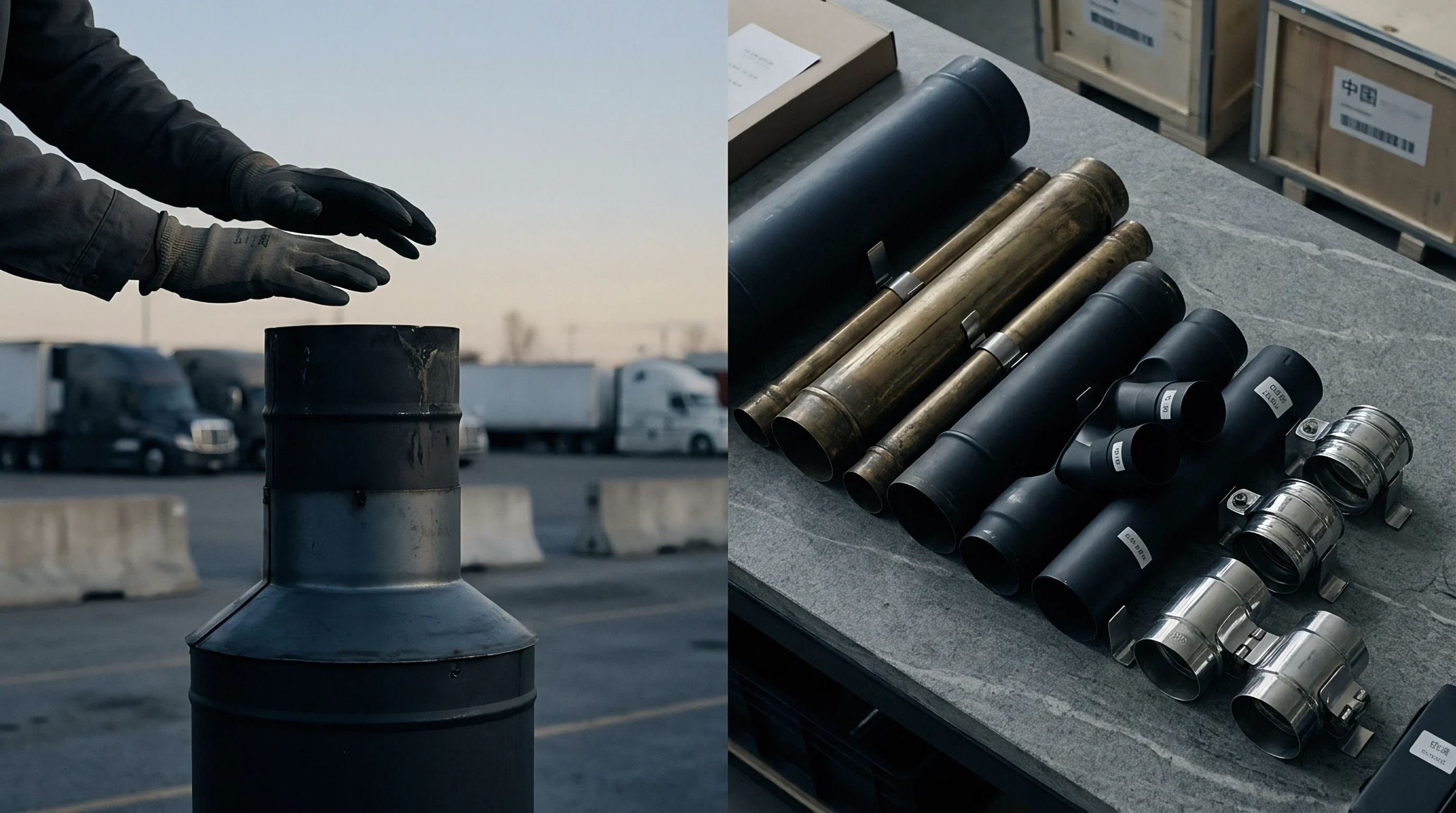
Refining the Granularity of Secret Scope
Drafting the statement demands close work between plant engineers and domestic IP counsel. In-house technical staff often struggle to distinguish standard industry practice from the proprietary calibrations developed through years of internal trial and error.
Technical investigators reject vague claims that fail to distinguish baseline parameters from general trade knowledge.
Failing to isolate specific technical micro-adjustments from general industry knowledge destroys the legal status of the entire secret point statement.
Every secret point in the dossier must rest on hard technical documentation. Assembly prints need explicit dimensions, surface finish callouts, metallurgy specifications, and fabrication notes. For chemical formulations, submissions must specify dynamic viscosity curves, concentration ratios, thermal cycles, and addition sequences.
A tightly bounded secret index lays the groundwork for proving substantial similarity later on. Clear scope blocks defendants from claiming they developed their product independently using standard industry methods, while keeping court-ordered forensic appraisals focused on the real disputes.


Burden

Burden-Shifting Protocols under Article 32
Proving misappropriation once imposed an almost insurmountable barrier on foreign plaintiffs, who had to document the actual taking and unlawful use. The 2019 revisions to the Anti-Unfair Competition Law added Article 32, resetting how these disputes play out in court. Under Article 32, once an owner presents a prima facie case showing reasonable secrecy measures, non-public character, access, and substantial technical similarity, the burden of proof shifts to the defendant to demonstrate independent research or lawful acquisition.
Article 32 sets up a two-step evidentiary progression. First, the plaintiff must establish three elements: a protectable secret, the defendant’s opportunity to access it, and substantial similarity between the proprietary design and the competing product. Once the court accepts that showing, the defendant must prove the contested solution was derived through independent engineering, reverse engineering, or a legitimate third-party license.
| Judicial Forum | Access Proof Standard | Substantial Similarity Threshold | Rebuttal Rigor Required for Defense |
|---|---|---|---|
Triggering the shift turns primarily on access. Plaintiffs do not need to prove the defendant opened or exported a specific file. Establishing that a former engineer worked in the development team, held login credentials, or attended technical design reviews is generally enough to satisfy the access standard.
Counsel establishes the access timeline through employment agreements, badge-swipe records, server access trails, and internal emails. Demonstrating that technical personnel accessed proprietary repositories shortly before jumping to a competitor forms a solid basis for Article 32 relief.
Is Prima Facie Access Sufficient to Shift Onus?
Establishing access requires tying the defendant’s prior role or commercial relationship directly to the confidential records. Mere theoretical opportunity without digital or physical corroboration will not shift the burden under Article 32.
Substantial similarity turns on technical fingerprints that independent engineering cannot explain. Judges look for mirrored design mistakes, identical tooling artifacts, non-functional layout choices, repeated code comments, or identical impurity profiles in chemical mixtures. Catching an identical drafting typo in production prints remains one of the strongest proofs of direct copying.
Rebutting an Article 32 presumption demands clean, contemporaneous records of independent development. Judges dismiss retroactive memos and self-serving witness statements. Defendants have to present dated lab notebooks, raw commit histories, material procurement invoices, and direct testimony from the engineers who built the design without access to the plaintiff’s materials.
A reverse-engineering defense under Supreme People’s Court interpretations requires proving the product was lawfully purchased on the open market and that the defendant possessed the tools and time to deconstruct it. That defense fails if the original product had not reached public distribution when the defendant began producing its rival unit.
Courts continue to weigh how much evidentiary weight to give incomplete server logs when a departing worker intentionally deletes tracking files. Whether fragmented system traces combined with an unusually fast market launch should trigger an Article 32 shift remains an open point of divergence among provincial high courts.


Appraisal
Judicial Forensic Authentication Mechanisms
Chinese IP courts rely heavily on judicial forensic appraisal institutions, known as Sifa Jianding Jigou, to evaluate specialized evidence. In disputes involving software code, semiconductor layouts, or chemical processing, tribunals routinely appoint appraisal panels. Their forensic conclusions carry decisive weight, often settling whether the information was non-public and whether the defendant’s design is substantially similar.
Under Supreme People’s Court provisions, technical investigators sit on the bench with the judges. These court officials review secret point statements, take part in examining the appraisal witnesses, and brief the judges on engineering questions, subjecting the forensic report to internal scrutiny before the court relies on it.
- Appraisal Scope Selection Drafting neutral, tightly bounded questions keeps the agency’s evaluation focused on relevant technical comparisons.
- Sample Authenticity Validation Verifying that specimens sent for testing originate from traceable manufacturing runs prevents tainted comparison findings.
- Methodology Cross-Examination Probing laboratory protocols, equipment calibration records, and baseline controls can expose flawed appraisal methodology.
- Expert Assistant Deployment Retaining technical assistants under Article 79 of the PRC Civil Procedure Law gives trial counsel the technical depth needed to challenge appraisers directly.
Designating an appraisal agency requires mutual consent between the litigants or selection via court lottery from an official roster. Counsel must examine lab accreditations, investigator backgrounds, and potential conflicts among shortlisted institutions. Either side may formally challenge an agency that lacks the testing equipment or technical expertise the dispute requires.
The forensic appraisal must survive examination in open court. Under Article 79 of the PRC Civil Procedure Law, parties can introduce expert assistants to the bench. These independent technical specialists scrutinize the agency’s methodology, identify scientific errors, and directly question the court-appointed appraisers on the stand.

Managing Technical Experts and Forensic Agencies
Interacting with judicial appraisal bodies requires strict procedural discipline. Parties cannot engage in ex parte contact with appointed experts; all technical documentation, physical exhibits, and inquiries must route through the presiding judge.
Submitting unauthenticated reference samples can sink an entire claim. The plaintiff must furnish authenticated prototypes of its proprietary asset alongside verified units of the defendant’s product acquired through notarized purchases or court seizures. Chain-of-custody gaps draw swift objections and lead to excluded findings.
Preparing comparison briefs that map each secret point directly to specific source code lines or dimensional tolerances before the court sends the dossier to the agency helps prevent ambiguous findings.
Appraisal costs represent a significant financial outlay in Chinese trade secret cases. Forensic agencies price their engagements around technical complexity, the number of secret points, and laboratory bench hours. The plaintiff advances these payments, though tribunals routinely assess them against the losing party in the final judgment.


Redress

Calculations for Commercial Loss and Unlawful Gain
Winning monetary relief under the Anti-Unfair Competition Law means converting misappropriation into substantiated financial loss. Article 17 sets out the recovery hierarchy: compensation rests on the actual damages suffered by the rights holder, the illicit gains realized by the infringer, reasonable multiples of licensing royalties, or statutory amounts awarded at the court’s discretion.
Actual loss calculations examine lost sales volume, price erosion caused by the defendant’s entry, eroded market share, and stranded R&D investment. Infringer profit claims multiply the defendant’s sales volume by its profit margin, deducting only verified overhead tied directly to the infringing product line. When a defendant defies document orders by withholding sales ledgers, judges can adopt market estimates or shift the calculation burden under Civil Code evidentiary rules.
| Calculation Framework | Primary Statutory Basis | Required Documentation | Judicial Discretion Range |
|---|---|---|---|
Punitive awards give plaintiffs leverage against egregious misappropriation. Under Article 17, courts can award between one to five times the baseline financial assessment when the infringement is willful and serious. Behavior that triggers punitive multipliers includes predatory poaching schemes, deliberate deletion of audit logs, continued production after cease-and-desist warnings, and publishing proprietary source code online.
Injunctions provide swift relief by halting the fabrication, distribution, and export of products using misappropriated technology. Courts grant preliminary injunctions under Article 100 of the PRC Civil Procedure Law where a rights holder demonstrates an imminent threat of irreparable harm. Permanent injunctions in final rulings require the infringer to cease using the trade secret and destroy all drawings, specialized tooling, dies, and digital drives holding the confidential data.

Enforcing Financial Judgments and Injunction Orders
Converting a damages award into actual recovery demands aggressive asset tracing and formal execution. A favorable ruling is useless if the defendant siphons capital, winds down operating subsidiaries, or conceals bank accounts during the suit.
Property preservation orders under Article 100 of the PRC Civil Procedure Law freeze target bank accounts, real estate, corporate shares, and factory machinery up to the value of the claim. Freezing operational accounts creates immediate commercial leverage, often compelling an infringing supplier to negotiate terms before trial.
Enforcing injunctive orders against defiant defendants depends on judicial sanctions, including civil fines, property seizures, and inclusion on debtor blacklists under the SPC Enforcement Framework. When an infringer refuses to obey inspection or surrender orders, civil courts refer the matter to public security bureaus for prosecution under Article 313 of the PRC Criminal Law for refusal to execute judgments.
Criminal enforcement runs parallel to civil remedies under Article 219 of the PRC Criminal Law. Where losses or unlawful gains surpass 300,000 RMB, public security bureaus may launch criminal investigations ~ raiding facilities, seizing servers, and detaining suspects. Evidence secured through police powers, such as mirrored storage drives and signed interview transcripts, can be introduced into subsequent civil actions, establishing facts that private investigation could never uncover.
Securing long-term protection requires embedding injunctive terms into the final settlement agreement. A durable settlement mandates immediate scrap of dedicated tooling, total credential revocations, independent technical audits every six months, and explicit liquidated damages for any subsequent breach of the confidentiality covenant.