Court Execution Bureau Asset Tracing and Property Preservation Procedures
Civil execution bureaus seize and auction commercial assets using automated bank sweeps, frozen registries, and corporate officer spending bans.


Inventory

Statutory Scope under Civil Procedure Law
Execution bureaus attached to basic and intermediate people’s courts operate under Article 249 through Article 253 of the PRC Civil Procedure Law. These statutory provisions grant enforcement judges broad authority to interrogate bank deposits, real estate registries, vehicle databases, and equity ledgers. Creditors initiate this machinery by lodging an execution application within two years of the effective date of an enforceable legal instrument.
The bureau assigns an enforcement officer who issues an Execution Notice and an Order to Report Property to the judgment debtor.
Failure to report triggers statutory sanctions. These measures include fines under Article 114, judicial detention up to fifteen days, and formal entry into the national list of untrustworthy judgment debtors. The bureau searches beyond liquid balances.
Real estate ownership, state-owned land use rights, patent registrations at the China National Intellectual Property Administration, equipment tooling, and equity held in downstream subsidiaries fall within the statutory discovery perimeter. Enforcement judges possess independent authority to enter corporate offices, seize physical ledgers, and freeze operating accounts on the day the execution docket opens.

Automated Interrogation Systems
Execution bureaus run property investigations through the Supreme People’s Court Online Property Investigation and Control System. This automated clearing pipeline links judicial execution desks directly with the People’s Bank of China, commercial banking institutions, the Ministry of Natural Resources, and the State Administration for Market Regulation. The system queries account holdings across thousands of domestic financial institutions simultaneously.
Officers view liquid capital balances within hours of issuing an electronic search instruction.
Interrogation commands also route through the Ministry of Public Security for commercial vehicle tracing and the China Securities Depository and Clearing Corporation for listed shares. Localised municipal platforms augment this central infrastructure. Provincial execution bureaus integrate regional utilities, digital transaction processors such as Alipay and WeChat Pay, and customs shipping registries to expose concealed revenue flows.
The national inquiry platform exposes debtor balances across commercial banking networks within twenty-four hours of docket registration.
Execution officers freeze digital balances directly from their consoles without sending personnel to bank branches. The judicial freeze stops outgoing fund transfers immediately. Inbound transactions continue to settle into frozen bank accounts, accumulating capital for subsequent judicial distribution.
The automated inquiry cycles at periodic intervals throughout the standard six-month statutory execution window.
| Asset Class | Inquiry Platform or Forum | Statutory Authority | Typical Discovery Window |
|---|---|---|---|
| Commercial Bank Balances | SPC Online Property Investigation System | PRC Civil Procedure Law Article 249 | 1 to 3 Business Days |
| Direct Equity and Shares | SAMR Enterprise Registry and CSDC | PRC Civil Procedure Law Article 251 | 2 to 5 Business Days |
| Real Property and Land Use | National Real Estate Registration System | PRC Civil Procedure Law Article 251 | 3 to 7 Business Days |
| Intellectual Property Rights | CNIPA Trademark and Patent Databases | SPC Judicial Interpretation on Execution | 5 to 10 Business Days |
| Digital Settlement Balances | Major Payment Institution Gateways | SPC Property Investigation Provisions | 2 to 4 Business Days |
Asset concealment schemes frequently exploit delays between automated inquiry sweeps. When debtors shift capital to obscure third-party suppliers, tracking requires supplemental forensic motions submitted by claimant counsel.


Embargo

Pre-Action Preservation Mechanics
Article 103 and Article 104 of the Civil Procedure Law establish pre-action property preservation, permitting claimants to freeze debtor property before lodging an underlying statement of claim. An applicant files directly with the basic people’s court holding jurisdiction over the target asset or the respondent’s domicile. The filing party proves emergency circumstances where failure to act immediately causes irreparable economic damage.
The court issues a written ruling within forty-eight hours of receiving a compliant application accompanied by adequate counter-security.
Statutory timelines run strictly. The claimant initiates arbitration or files a formal court action within thirty days of the preservation ruling. Failure to meet this thirty-day window compels the court to cancel preservation measures immediately.
The preserved assets unlock automatically, leaving the creditor unshielded during the subsequent trial proceedings.
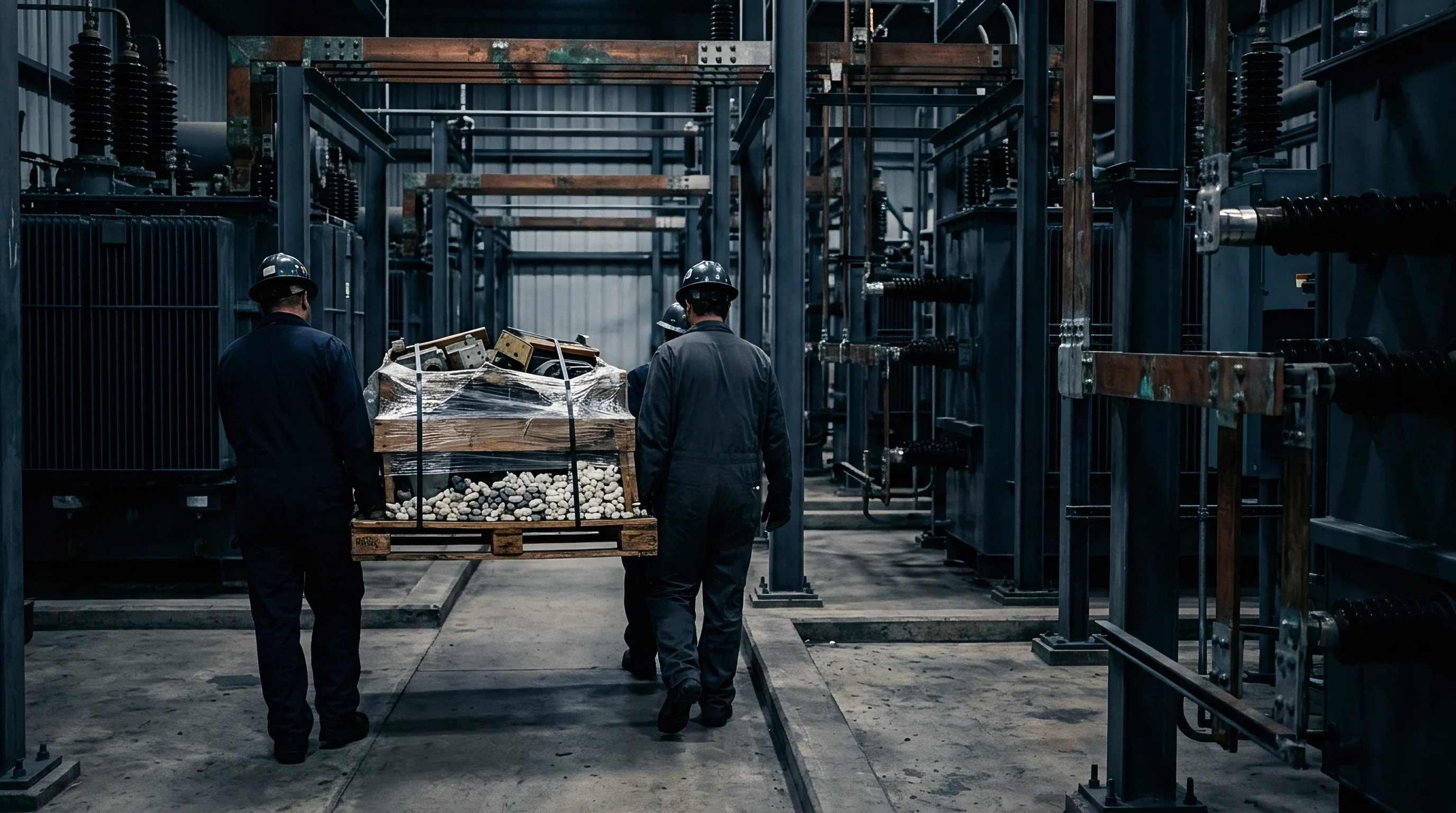
Litigation Property Preservation
Preservation inside active litigation proceeds under Article 103, paragraph one. Claimants apply during trial or appellate proceedings when an adverse counterparty disposes of inventory, withdraws project funds, or pledges corporate shares to secure friendly debts. The claimant provides property clues to the trial division handling the main dispute.
Once approved, the trial division transfers the preservation ruling directly to the court execution bureau for operational implementation.
| Preserved Asset Category | Maximum Initial Freeze Period | Renewal Application Window | Legal Basis |
|---|---|---|---|
| Bank Deposits and Liquid Balances | 1 Year | 5 to 7 Days Prior to Expiry | SPC Provisions on Property Preservation |
| Vehicles and Movable Machinery | 2 Years | 10 to 14 Days Prior to Expiry | SPC Provisions on Property Preservation |
| Real Estate and Physical Fixtures | 3 Years | 15 to 30 Days Prior to Expiry | SPC Provisions on Property Preservation |
| Corporate Equity and Dividends | 3 Years | 15 to 30 Days Prior to Expiry | SPC Provisions on Property Preservation |
Judicial preservation does not execute automatically into cash recoveries. The measure maintains structural leverage by preventing the dissolution of reachable net worth while the trial moves through initial hearings, evidence exchanges, and appeals.
Failing to file an equity preservation renewal thirty days before the three-year window expires extinguishes judicial priority over the share ledger.
Counsel monitors calendar markers diligently. When an unrenewed freeze lapses, subsequent creditors seize statutory priority over the unencumbered assets, destroying months of technical recovery preparation.


Surety

Counter-Security Demands
Judges mandate counter-security to insulate respondents against wrongful preservation losses. For pre-action applications, courts require financial collateral covering up to one hundred percent of the total preservation target amount. In litigation preservation, required security levels drop to between ten percent and thirty percent of the claimed amount, subject to local judicial guidelines.
Cash deposited directly into court accounts remains the fastest counter-security vehicle, though it locks corporate operating liquidity for the duration of the underlying dispute.
Real property owned by domestic entities serves as an alternative form of security. The court registers a formal mortgage over the guarantor’s asset before approving the preservation writ. Real property counter-security requires third-party appraisal reports, adding procedural time to time-sensitive emergency actions.

Commercial Guarantee Insurance
Litigation preservation liability insurance constitutes the dominant counter-security vehicle in cross-border litigation. Specialised domestic insurers issue judicial guarantee letters directly to the hearing court. The insurer charges a non-refundable commercial premium calculated against the total preserved value.
The applicant avoids tying up cash reserves while satisfying statutory counter-security standards under Article 108 of the Civil Procedure Law.
Premium calculations vary by jurisdiction, asset liquidity, and underlying claim complexity. A claimant preserving twenty million yuan of commercial inventory calculates financial exposure across established surety underwriting bands:
- Conservative Underwriting Standard generates insurance premiums between 0.15 percent and 0.25 percent of the preserved asset value when claims rest on notarised contracts and dishonoured bank notes.
- Contested Liability Standard produces premiums between 0.30 percent and 0.50 percent where trade secret claims, intellectual property damages, or unliquidated counterclaims introduce substantive loss risks for the underwriter.
- High Volatility Standard escalates premium costs above 0.80 percent or demands supplementary cash margin deposits whenever perishable goods, volatile equities, or operating assembly tooling are targeted for physical sealing.
Insurance policies state that the underwriter indemnifies the respondent if the court ultimately finds the preservation wrongful. If the claimant loses the substantive suit and causes documented business disruption, the insurer pays damages directly and pursues subrogation claims against the policy applicant.
A claimant budget plans for non-recoverable surety costs alongside court filing charges and asset valuation fees.


Seizure

Movable Tooling and Assembly Assets
Execution officers apply physical control measures over factory inventory, tooling dies, and specialised manufacturing equipment pursuant to Article 250 of the Civil Procedure Law. Officers execute physical seizures on site by applying adhesive court seals across warehouse entrances, primary machinery interfaces, and finished goods crates. The bureau appoints a custodian, frequently the factory warehouse manager or a professional logistics contractor, responsible for safeguarding the physical integrity of the seized lots.
Seizing active industrial machinery presents practical difficulties. Courts differentiate between sealing equipment through physical cessation and sealing through legal prohibition of title transfer. The latter mechanism permits the debtor to run production while prohibiting sale, mortgage, or physical relocation of the equipment.
Equipment preservation orders that allow continued operation preserve industrial value without triggering immediate shutdown liabilities.
Officers compile detailed property inventories listing serial numbers, operating hours, tooling conditions, and baseline valuations. When high-precision moulds are seized, improper environmental storage causes corrosion that destroys production capability before an auction convenes.

Intangible Property and Equity Interlocking
Direct equity interests in limited liability companies are secured through electronic orders served on the local Market Supervision and Administration Bureau. The registry places a transfer block on the enterprise’s corporate ledger. The targeted company cannot register shareholder changes, reduction of registered capital, or mergers while the judicial order remains valid.
Dividends declared on frozen shares route directly into court escrow accounts.
Intellectual property requires parallel execution routes. Preservation orders covering registered trademarks, utility models, and invention patents are transmitted directly to the China National Intellectual Property Administration in Beijing. The registry suspends assignment filings, licensing recordations, and voluntary abandonments for up to three years.
If an enterprise attempts to sell core product patents during litigation, a registered CNIPA preservation order invalidates the commercial assignment at the national level.


Liquidation

Judicial Appraisal and Reserve Pricing
Preserved assets convert into liquid recoveries through judicial valuation and public auction managed under the Supreme People’s Court Provisions on Auctioning and Selling Property in Execution Proceedings. The court execution bureau selects appraisal institutions via an automated digital draw to prevent collusion. The selected valuer inspects the seized property, reviews acquisition invoices, evaluates local market demand, and issues a formal asset appraisal report.
The appraisal figure sets the baseline for the first online judicial auction. The court discounts this valuation by up to thirty percent to establish the initial opening reserve price. If the asset fails to attract bidders, a second auction is scheduled within thirty days, permitting an additional discount of up to twenty percent from the first reserve price.

Online Public Auction Infrastructure
Judicial auctions run on authorised public web platforms, primarily the Taobao Judicial Auction Platform and the JD Judicial Auction Platform. Bidders place digital earnest money deposits prior to auction opening. Bidding windows remain open for twenty-four hours, with five-minute bidding extensions triggered by late offers.
| Stage of Judicial Disposition | Statutory Timing Window | Maximum Allowable Reserve Discount | Procedural Consequence on Failure |
|---|---|---|---|
| Initial Judicial Appraisal | 30 to 60 Days Post-Seizure | Baseline Market Valuation | Establishes Benchmark Asset Value |
| First Online Public Auction | Notice Published 30 Days Prior | Up to 30 Percent Below Appraisal | Triggers Second Auction Mandate |
| Second Online Public Auction | Scheduled Within 30 Days | Up to 20 Percent Below First Reserve | Triggers Debt Settlement Offer |
| Public Judicial Selling Period | 60-Day Open Disposition Window | Priced at Second Auction Reserve | Reversion to Debtor or Asset Return |
Auction proceeds deposit into designated court accounts. Execution officers disburse funds according to statutory priority ladders. Taxes and registered security interests take first position, followed by judicial costs, preservation expenses, and unencumbered general execution claims.
If two consecutive auctions fail and the public debt-clearing window attracts no buyers, the creditor accepts the physical property at the final reserve price to satisfy the judgment debt.


Compulsion

Restricting Legal Representatives
When an enterprise refuses to satisfy an enforceable judgment, the execution bureau invokes individual coercive measures against its operational leadership under Article 262 of the Civil Procedure Law. The court issues a formal High Spending Restriction Order. This restriction applies to the company’s registered legal representative, executive directors, general manager, and ultimate beneficial controllers.
Individuals targeted by the order cannot travel via high-speed rail, purchase domestic or international airline tickets, book luxury hotel accommodations, purchase real estate, or enrol children in private fee-paying academies.
- The execution bureau issues the formal restriction order following thirty days of non-compliance with the Execution Notice.
- Targeted individual identity data uploads directly to the national transportation network and state immigration databases.
- Exit bans block border crossing points across international airports, coastal ferry terminals, and land entry ports.
- The individual remains listed on the public executive credit platform until the underlying debt satisfies in full or an approved settlement executes.

Willful Non-Execution Criminality
Debtors who intentionally transfer capital, conceal physical assets, or fabricate fraudulent commercial liabilities to evade judicial enforcement face criminal prosecution under Article 313 of the PRC Criminal Law. The crime of refusing to execute a court judgment carries fixed-term imprisonment of up to three years, escalating to seven years for exceptionally serious violations. Execution bureaus refer non-compliant debtor dossiers directly to the Ministry of Public Security for formal criminal investigation.
Private claimants initiate criminal self-prosecution proceedings when police bureaus decline to open investigations. The claimant proves the existence of an effective judgment, the debtor’s actual financial capability to pay, and concrete bad-faith evasion schemes. The threat of personal criminal liability changes counterparty settlement dynamics rapidly.
A supplier who refuses to pay civil debts often resolves claims immediately when executive leadership faces personal detention at regional borders.


Distribution

Creditor Priority Conflicts
Recovered funds generate distribution conflicts when multiple claimants pursue a single undercapitalised enterprise. Under Article 55 of the SPC Judicial Interpretation on the Application of the Civil Procedure Law, execution proceeds disburse according to strict property rights hierarchies. Construction project liens take statutory priority over general mortgages.
Registered commercial mortgages, pledge contracts, and judicial preservation liens established prior to insolvency rank ahead of ordinary unsecured creditors.
Preservation priority governs general unsecured balances. The creditor who secures the earliest valid judicial freeze over an unencumbered bank balance holds primary drawing rights up to the value of its underlying claim. Subsequent freezing orders obtain secondary claims, collecting proceeds only after earlier preservation demands clear completely.

Bankruptcy Conversion through Ensolvency
When debtor assets fail to cover aggregate execution claims, courts trigger the execution-to-bankruptcy transition mechanism under Article 513 of the Civil Procedure Law Interpretation. The execution bureau transfers the case file to the bankruptcy division of the relevant court with the consent of either the debtor or an active execution creditor. The transition pauses individual enforcement seizures and brings all enterprise assets into an estate governed by the PRC Enterprise Bankruptcy Law.
The insolvency transition strips priority from early-preserving individual creditors. The judicial receiver liquidates the collective corporate estate and distributes dividends ratably among all registered creditors within identical statutory classes. Secured creditors retain asset-specific mortgages, while general litigation claimants split remaining liquid balances on a percentage recovery basis.
Creditors calculate whether immediate partial recovery via a single preserved asset provides greater capital realization than forcing an enterprise into long insolvency proceedings.