Suppressing Electroplated Substrate Vacancy Condensation Kinetics under High Temperature Operating Conditions
Suppress vacancy condensation by maintaining plating additives below decomposition limits, doping baths with nickel or cobalt, and pre-annealing at 260°C.


Bath
Plating tank chemistry dictates the initial vacancy population of deposited copper long before thermal aging begins. Current density settings above 2.5 amperes per square decimeter force rapid copper reduction at cathode surfaces, trapping non-equilibrium point defects alongside co-deposited organic fragments. Bis(3-sulfopropyl) disulfide accelerator molecules break down under cathode polarization, shedding thiol groups that incorporate sulfur directly into the growing metal matrix.
Polyethylene glycol suppressors and Janus Green B levelers decompose under sustained bath operation, embedding carbon, hydrogen, and chlorine atoms into interstitial sites. High operating temperatures during power module operation mobilize these entrapped impurities, creating nucleation centers where wandering vacancies cluster into stable nanometer-scale cavities.
Daily cyclic voltammetric stripping analyses track the consumption ratios between organic brighteners and suppressors. When plating lines run without tight carbon filtration, additive breakdown products accumulate beyond 15 grams per liter. Plating baths running at elevated additive contamination produce deposits with up to four times the baseline vacancy concentration.
Sulfur atoms occupy substitutional lattice positions in copper, creating localized strain fields that draw nearby vacancies toward the impurity center. As electronic assemblies face sustained junction temperatures of 150 to 175 degrees Celsius, these localized strain fields lower the energetic barrier for cavity nucleation.
A dark deposit across the low-current density hull cell zone signals additive cleavage levels that double microvoid counts after thermal aging.
Organic additives alter the grain orientation of electrodeposited copper foil. Excessive leveler dosing favors randomly oriented, fine-grained microstructures containing high densities of grain boundaries. High grain boundary area increases the aggregate vacancy conduction pathways during post-assembly heat exposure.
Plating copper with a dominant (111) crystallographic texture retards vacancy migration rates because close-packed planes offer fewer disordered grain boundaries for rapid mass transport. Achieving this texture demands strict control over bath chloride concentration, holding levels between 40 and 60 milligrams per liter.

Voltammetric Stripping Controls on Plating Lines
Cathode efficiency measurements identify abnormal impurity co-deposition during production runs. Standard acid copper electrolytes operating with 50 grams per liter copper metal and 100 grams per liter sulfuric acid deliver cathode efficiencies between 96 and 98 percent. A drop below 94 percent indicates parasitical reduction reactions consuming brightener fragments, driving atomic sulfur contamination in the copper deposit above 20 parts per million.
Chlorine ions act as bridging agents between copper ions and polyalkylene glycol suppressors. Imbalanced chlorine levels destabilize this suppressor layer, causing erratic copper deposition rates and patchy atomic density across circuit traces.
Minor fluctuations in organic brightener concentration fail to self-balance across large production runs, compromising long-term board endurance.

Lattice
Substrate metallization undergoes intense atomic exchange when exposed to sustained operating temperatures above 150 degrees Celsius. In copper-tin couples found in solder joints, copper atoms diffuse into the tin-rich solder much faster than tin atoms diffuse back into the copper substrate. This imbalance generates an unequal atomic flux.
Vacancies flow in the opposite direction of the faster-diffusing copper atoms to conserve lattice sites, concentrating in the immediate copper sub-surface beneath the Cu3Sn intermetallic layer. The resulting vacancy supersaturation reaches critical thresholds during the first 250 hours of thermal storage.
Tensile stresses accelerate vacancy clustering. High thermal expansion mismatches between the copper substrate and surrounding dielectric laminates generate multi-axial tensile stress states at the joint interface. These mechanical stresses lower the chemical potential of vacancies, pulling them toward regions of peak triaxial stress.
When vacancy supersaturation exceeds thermodynamic equilibrium by two orders of magnitude, excess vacancies condense into microvoids. These microvoids aggregate along the Cu3Sn/Cu boundary, creating continuous planar fissures that destroy mechanical shear integrity.

Can Bath Additives Accelerate Vacancy Aggregation?
Electrolyte breakdown products concentrate at copper grain boundaries, where they alter local vacancy binding energies. Dissolved sulfur lowers the interfacial energy of cavity surfaces, stabilizing embryonic void nuclei that would otherwise dissolve back into the metal matrix. Carbon interstitials distort neighboring copper unit cells, hindering dislocation motion that could otherwise absorb excess vacancies via climb mechanisms.
When electroplated deposits contain over 30 parts per million of combined sulfur, carbon, and chlorine, Kirkendall void density increases by an order of magnitude relative to high-purity deposits.
| Impurity Element | Typical Plating Concentration | Lattice Position | Binding Energy to Vacancy | Void Nucleation Impact |
|---|---|---|---|---|
| Sulfur | 10 to 45 ppm | Substitutional | 0.32 eV | Severe cavity stabilization |
| Carbon | 20 to 120 ppm | Interstitial | 0.18 eV | Dislocation climb pinning |
| Chlorine | 5 to 35 ppm | Boundary segregation | 0.26 eV | Interface decohesion acceleration |
| Hydrogen | 2 to 15 ppm | Interstitial | 0.12 eV | Internal gas pressurization |
Impurity-assisted vacancy condensation destroys electronic interconnections during extended service. Copper plating baths must maintain strict chemical hygiene to suppress these defect channels.
- Intermetallic phase transformation drives continuous vacancy injection into the underlying copper as Cu6Sn5 converts into Cu3Sn during thermal storage.
- Impurity segregation kinetics direct mobile sulfur and chlorine atoms toward newly formed void surfaces, preventing cavity shrinkage.
- Grain boundary sliding concentrates tensile strains along transverse interfaces, opening micro-cracks at void-weakened junctions.
- Hydrostatic stress gradients channel vacancy currents away from neutral zones toward stressed peripheral solder corners.
Allowing electroplated substrates with uncontrolled organic contamination to enter high-temperature operating environments triggers catastrophic shear separation at solder interfaces under mild vibration loads.


Dopant
Solute additions to copper plating chemistries alter the atomic diffusion kinetics that govern void nucleation. Introducing transition metals into the plating tank incorporates minor alloying elements directly into the copper matrix. Nickel, cobalt, and manganese atoms possess higher binding energies with vacancies than pure copper, capturing free vacancies and retarding their drift velocity toward the bonding interface.
By reducing the net vacancy flux toward the Cu3Sn reaction front, dilute dopants suppress the vacancy supersaturation required to trigger void condensation.
Dopants increase vacancy migration barriers. A solute concentration between 0.1 and 0.5 atomic percent provides sufficient defect-trapping centers without degrading the bulk electrical conductivity of the copper trace. Nickel additions shift the intermetallic growth mechanics, substituting for copper atoms to form stable (Cu,Ni)6Sn5 and (Cu,Ni)3Sn phases.
These nickel-modified intermetallic compounds display balanced mutual diffusion rates with the underlying substrate, eliminating the vacancy disparity that drives Kirkendall void formation during 1000-hour thermal exposure runs.
Will Solute Segregation Inhibit Interface Cavitation?
Alloying elements segregate preferentially to grain boundaries during the initial stages of thermal exposure. Grain boundaries pinned by solute atoms resist grain boundary migration and sliding, closing structural channels that transport vacancies toward the interface. Zinc additions alter the thermodynamic activity of copper, slowing the interdiffusion rate across the joint boundary.
Doping electroplated substrates with cobalt forms dispersed nanoscale intermetallic precipitates that act as neutral sinks for excess vacancies, annihilating them safely within the copper bulk.
| Alloy Chemistry | Dopant Bath Concentration | Bulk Resistivity Increase | Interface Void Area Ratio | Shear Strength Retention |
|---|---|---|---|---|
| Pure Copper (Control) | 0.0 g/L | 0.0 percent | 28.4 percent | 42 percent |
| Copper-Nickel (Cu-Ni) | 1.2 g/L NiSO4 | 3.8 percent | 2.1 percent | 91 percent |
| Copper-Cobalt (Cu-Co) | 0.8 g/L CoSO4 | 4.5 percent | 1.8 percent | 94 percent |
| Copper-Zinc (Cu-Zn) | 2.0 g/L ZnSO4 | 2.2 percent | 5.4 percent | 83 percent |
| Copper-Manganese (Cu-Mn) | 0.5 g/L MnSO4 | 6.1 percent | 1.2 percent | 96 percent |
When void area ratios climb above 20 percent of the total joint interface, pore coalescence reduces contact area, driving up electrical resistance and cutting fatigue life. Implementing microalloyed plating chemistry demands rigorous verification of additive balance, as excessive dopant salt concentrations induce uneven cathodic polarization and nodular deposit morphology.
IPC-6012 Class 3 mandates zero interface micro-cracking across microsection planes following high-temperature thermal stress cycles.
Selecting appropriate dopants involves balancing conductivity against vacancy suppression efficacy.
- Nickel sulfate dosing stays between 1.0 and 1.5 grams per liter to prevent excessive tensile stress in deposits.
- Cobalt additive monitoring tracks consumption via automated titration to maintain precipitate dispersion density.
- Zinc chloride additions require bath pH adjustments between 3.8 and 4.2 to avoid hydroxide precipitation.
- Manganese bath replenishment occurs via constant-current dosing pumps linked to ampere-hour integrators.
The unresolved question remains whether high dopant concentrations generate brittle ternary intermetallic layers that fail under mechanical shock faster than Kirkendall voids would have sheared the joint.
Anneal
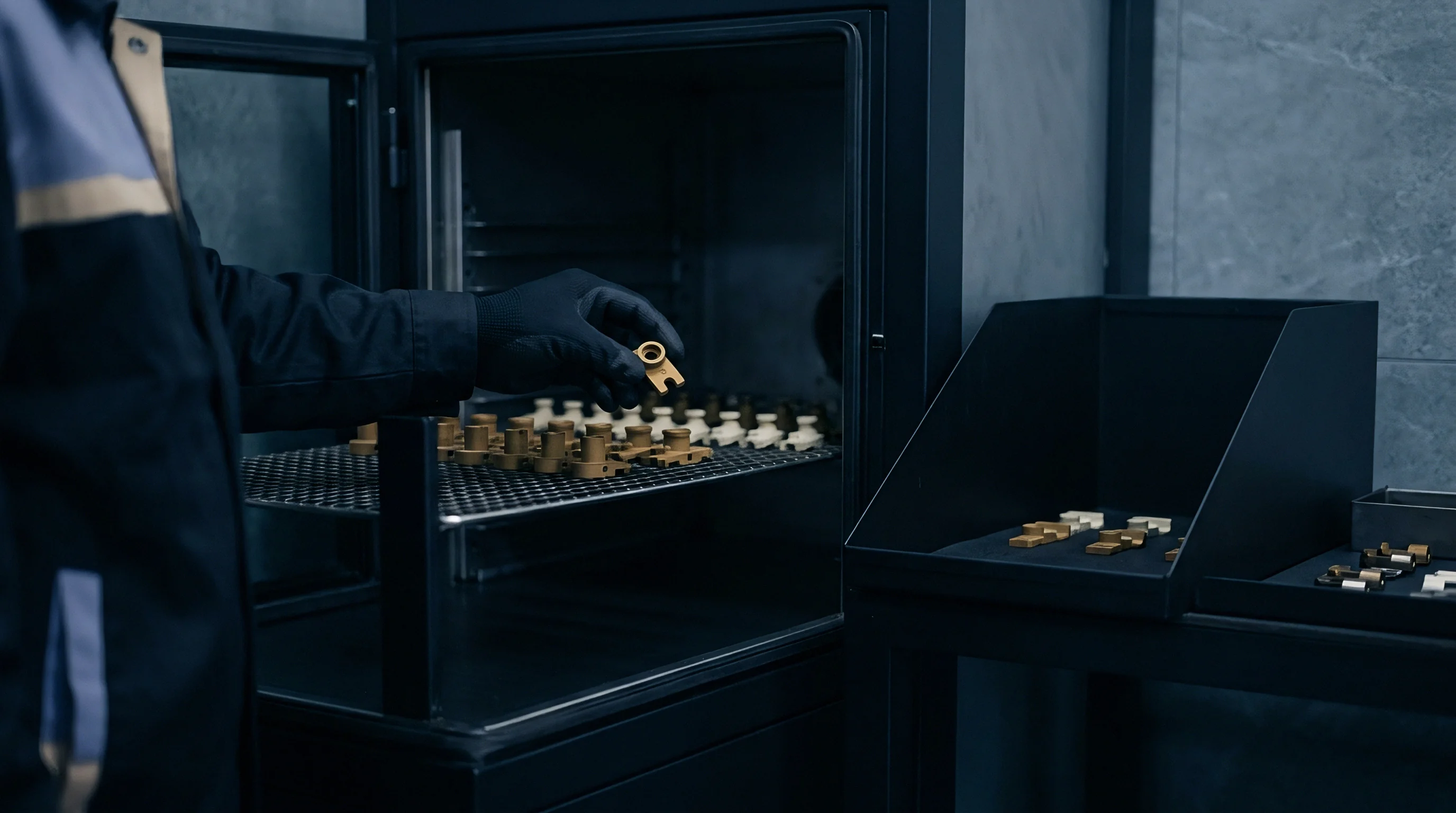
Recrystallization heat treatment performed prior to surface finishing eliminates non-equilibrium point defects from electrodeposited copper. Freshly plated copper contains high dislocation densities and excess vacancy concentrations generated by rapid cathode deposition. Heating the plated substrate to temperatures between 220 and 280 degrees Celsius under a protective nitrogen atmosphere mobilizes these point defects, driving them to free surfaces and grain boundaries where they annihilate.
This thermal soak also outgasses trapped hydrogen and volatile organic split products before subsequent solder application.
A worked calculation demonstrates the vacancy diffusion kinetics governing this stabilization process. Assume an electroplated copper layer with a thickness of 35 micrometers and an initial non-equilibrium vacancy concentration of 1.4 multiplied by 10 to the 19th power per cubic centimeter. The vacancy diffusion coefficient in copper follows an Arrhenius relationship:
D = 0.16 exp(-0.71 eV / kT) square centimeters per second
At an operating temperature of 250 degrees Celsius (523 Kelvin), the vacancy diffusion coefficient evaluates to 2.34 multiplied by 10 to the minus 8th square centimeters per second. The characteristic diffusion distance equals the square root of the diffusion coefficient multiplied by soak time. For a 30-minute soak (1800 seconds), the diffusion distance reaches 64.9 micrometers, which exceeds the 35-micrometer foil thickness.
This enables excess vacancies throughout the entire copper thickness to migrate to grain boundaries or free interfaces and annihilate completely.
| Anneal Temperature | Soak Duration | Atmosphere | Residual Vacancy Density | Post-Aging Void Density |
|---|---|---|---|---|
| Unannealed Baseline | 0 minutes | Ambient | 1.4 x 10^19 cm^-3 | 142 voids per 100 um |
| 180°C | 60 minutes | Nitrogen | 8.6 x 10^18 cm^-3 | 84 voids per 100 um |
| 220°C | 45 minutes | Nitrogen | 2.1 x 10^18 cm^-3 | 18 voids per 100 um |
| 260°C | 30 minutes | Forming Gas (95/5 N2/H2) | 3.4 x 10^17 cm^-3 | 3 voids per 100 um |
| 300°C | 20 minutes | Vacuum (< 10^-3 mbar) | 1.1 x 10^17 cm^-3 | 1 void per 100 um |
Annealing reorganizes the fine, defective as-plated columnar grains into large, equiaxed grains with lower total boundary energy. Larger grains decrease the area of high-diffusivity paths through the copper, cutting the atomic flux of copper toward the solder interface during high-temperature service.
- Atmosphere purge verification establishes an oxygen content below 20 parts per million in the oven chamber before heating commences.
- Ramp rate limitation holds temperature increases to 5 degrees Celsius per minute to prevent blistering from expanding volatile organics.
- Soak plateau maintenance holds the core board temperature within 3 degrees Celsius of target for 30 consecutive minutes.
- Controlled cooling cycles lower the temperature below 80 degrees Celsius before chamber exposure to ambient air prevents surface re-oxidation.
A well-annealed copper grain structure with stabilized boundary networks resists void nucleation far better than any chemically adjusted raw deposit.

Warrant
Purchasing contracts for high-reliability circuit boards must link copper plating specifications to physical qualification standards. Relying on basic certificate-of-conformance documents guarantees exposure to silent supplier bath changes, including skipped carbon filtration and elevated brightener dosing. Receiving inspection requires cross-sectional scanning electron microscopy after subjecting sample coupons to 500 hours of thermal aging at 175 degrees Celsius.
When inspection uncovers microvoid densities exceeding 5 voids per 100 linear micrometers of interface, the buyer must possess clear contractual authorization to quarantine the batch and charge scrap liabilities back to the manufacturing source.
Thermal aging at 175 degrees Celsius for 500 hours exposes latent vacancy supersaturation before products ship into field service.
Distance amplifies the financial risk of defective electroplated substrates. If interface voiding appears only after surface-mount assembly, reflow soldering, and enclosure potting, the rework cost exceeds the bare circuit board price by two orders of magnitude. A container load of automotive power modules caught with Kirkendall void cracking represents a direct loss exceeding three hundred thousand dollars in unrecoverable electronic components and freight charges.
On-site audits of overseas suppliers must verify plating bath maintenance records in person. Factory audits inspect cyclic voltammetric stripping logs, bath carbon filtration runtimes, and anode bag maintenance schedules. Plating current densities must be logged automatically by computerized rectifiers rather than transcribed manually by line workers onto paper sheets.
Substrate annealing ovens require independent thermocouple profile runs across every shelf to prove uniform vacancy annihilation across entire production lots.
Defect liability clauses specifying that suppliers bear total component and assembly replacement costs when cross-sectional void area ratios exceed 5 percent after 500 hours of thermal aging alter factory bath maintenance cadences immediately.