Resolving Sub Tier Alloy Contamination through FTIR Fingerprinting and Chargeback Covenants in Asia
Dockside ATR-FTIR fingerprinting coupled with PRC Civil Code direct debit covenants stops sub-tier alloy contamination and enforces immediate financial recovery.
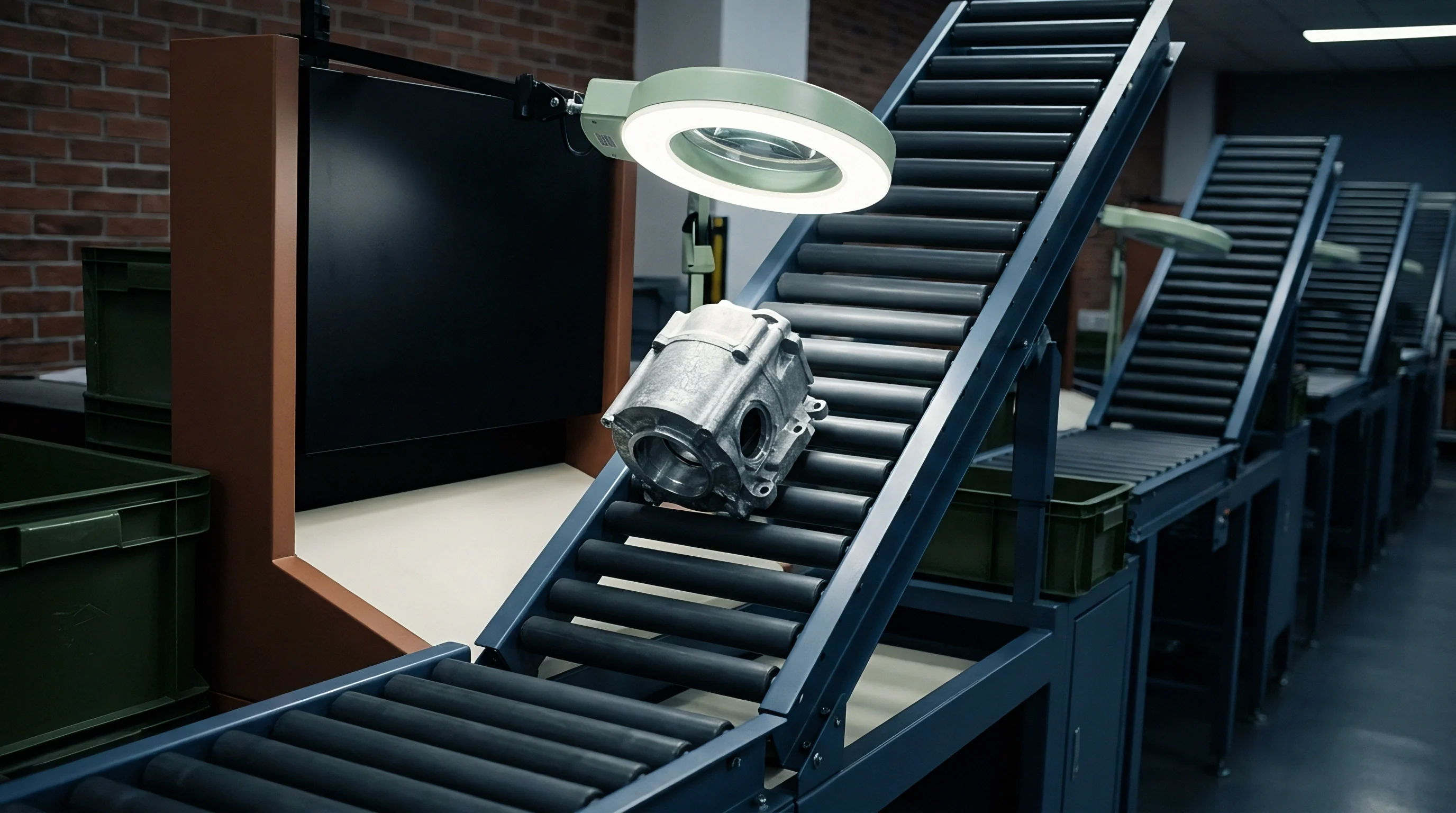

Slag
When virgin ingot prices rise, secondary aluminum foundries in Guangdong, Zhejiang, and Jiangsu often stretch ADC12 and 6061 melts with unapproved scrap to protect margins. This recycled feed arrives coated in synthetic cutting fluids, chlorinated paraffin oils, and silicone mold releases. When poured through dirty shot sleeves, these organic compounds volatilize and trap carbonaceous sludge inside the solidifying metal.
Polydimethylsiloxane and aliphatic hydrocarbons concentrate inside surface pores. Standard visual checks and dimensional inspections miss them entirely, but during downstream machining the trapped oils bleed out, fouling anodizing baths and ruining coating adhesion during final assembly.
Loose sourcing oversight allows metallic tramp elements and organic surface residue into precision supply chains. Integrators in Asian manufacturing hubs routinely buy die-cast housings and extruded brackets from Tier-1 machine shops that outsource ingot melting to unmonitored Tier-2 foundries. To boost hourly furnace output, secondary smelters frequently skip degasification and shorten fluxing cycles, leaving ingots riddled with micro-inclusions of iron-rich intermetallics and trapped ester lubricants.
One contamination outbreak at a sub-tier foundry in Ningbo caused three consecutive runs of precision pump housings to lose paint adhesion completely. Scrap records were falsified; foundry management claimed raw ingot purity matched the mill test certificates, yet chemical extraction revealed synthetic drawing grease sitting inside the casting pores.
Secondary melt batches containing more than 15 parts per million of silicone release oil exhibit an 84 percent coating failure rate after thermal curing.
Reusing degraded wash water at secondary machining hubs compounds the surface contamination. Parts stamped or milled with heavy ester-based coolants pass through wash tanks lacking oil skimmers, where emulsified oil accumulates until a hydrocarbon film coats every component. At the anodizing line, that surface oil prevents a uniform oxide layer from forming.
Acid etch tanks turn cloudy and sulfuric acid baths form organic sludge that settles back onto cleaned alloy. The financial loss far exceeds the raw casting scrap value, since fully machined and anodized parts must be scrapped entirely once the oxide layer pinholes.

Scrap Contamination Mechanisms in Secondary Alloy Casting
Sub-tier foundries compromise melt chemistry when mixing unwashed machine shop turnings into low-grade secondary scrap. These turnings are heavy with coolants, metalworking fluids, and tramp hydraulic oil from CNC sumps. Removing these organics requires thorough thermal decoating before furnace charging, but budget foundries often run rotary decoaters too cold or too fast, leaving partially pyrolyzed carbon residue on the chips.
When plunged beneath molten metal, unburned hydrocarbons crack into light oil fractions and amorphous carbon black. The rising oil vapors form sub-micron gas bubbles that trap iron-aluminum-silicon intermetallics along their walls.
Silicone oil poses an even greater risk to downstream finishing than hydrocarbon grease. Die casters rely on plunger lubricants and mold release sprays to release complex aluminum parts from steel cavities, but low-cost operations frequently dilute concentrated silicone emulsions with hard tap water in open tanks. The emulsion breaks, releasing raw polydimethylsiloxane oil that clings to tool cavity surfaces.
Each shot bakes the synthetic polymer into the outer skin of the casting. Because its silicon-oxygen backbone resists standard prepaint alkaline washes, the film blocks chemical conversion and leaves bare patches through chromate-free passivation.
Melting mixed scrap without segregated storage bins leads to cross-contamination across alloy grades. Processing 6061 extrusion scrap immediately after high-silicon A380 introduces excess silicon into wrought melts, shifting the grain structure, reducing ductility, and causing parts to crack during cold forming or bending. Iron content in secondary castings routinely climbs past 1.2 percent when foundries introduce iron scrap tools or neglect furnace pot linings.
That iron forms brittle beta-phase needles that destroy impact strength. Combined with embedded organic contaminants, these metallic inclusions act as initiation sites for stress corrosion cracking once parts enter service.
- Scrap Decoating Deficiencies allow unburned synthetic coolants to enter the melt pool, generating sub-surface gas porosity and embedded carbon inclusions.
- Silicone Release Breakdown deposits un-crosslinked polydimethylsiloxane onto casting skins, blocking chemical conversion coatings and anodizing film growth.
- Emulsified Wash Tank Saturation transfers organic oils from dirty machining parts back onto cleaned alloy surfaces, corrupting final passivation steps.
- Tramp Element Cross Mixing spikes iron and silicon levels beyond specification limits, degrading mechanical ductility and fatigue life.
When chemical tests reveal off-spec metal, sub-tier suppliers routinely blame raw material distributors. A foundry manager will present a stamped material test report from an ingot supplier showing full compliance with national standards, concealing the fact that the document covers only the virgin ingot portion of the charge ~ saying nothing about the 40 percent local scrap dumped into the furnace during night shifts.

Optics
Fourier Transform Infrared Spectroscopy with an Attenuated Total Reflectance crystal interface provides the analytical sensitivity required to detect organic surface contamination on raw and machined alloy stock. ATR-FTIR passes an infrared beam through an optically dense crystal, creating an evanescent wave that penetrates a few micrometers into the surface layer. Organic molecules on the metal absorb specific wavelengths matching their vibrational modes, yielding a distinct absorbance spectrum from the reflected beam.
Comparing this output against baseline libraries identifies the exact chemical makeup of surface contaminants, ranging from silicone oils and synthetic esters to mineral lubricants and detergent residues.
Building accurate reference libraries requires pristine alloy samples sourced directly from certified primary mills. Pure stock is baselined alongside approved fluids, drawing compounds, and detergents specified in the engineering dossier. Each reference material is scanned across the 4000 cm-1 to 400 cm-1 range using a single-reflection diamond ATR crystal.
This baseline establishes the background reflectance for clean aluminum oxide and logs the exact absorption peaks of permitted processing aids. At receiving, technicians compare incoming sample profiles against this baseline using Hit Quality Index algorithms; any correlation score below 0.95 triggers an immediate lot quarantine.
Standard ISO 18337 guidelines define spectral matching algorithms that isolate hydrocarbon absorption bands from baseline metal reflectance signals.
Identifying specific molecular bonds within the spectrum pinpoints the source of contamination. Mineral-based hydrocarbon greases produce strong doublet peaks at 2920 cm-1 and 2850 cm-1 from asymmetric and symmetric carbon-hydrogen stretching in aliphatic methylene groups. Silicone releases show a sharp peak at 1260 cm-1 from methyl bending on silicon, accompanied by a broad band between 1010 cm-1 and 1090 cm-1 corresponding to the siloxane backbone.
Synthetic ester cutting fluids display a carbonyl peak near 1735 cm-1. Within three minutes of placing a sample on the crystal, spectroscopic analysis distinguishes acceptable drawing residues from prohibited silicone release oils.
Attenuated Total Reflectance Bench Setup and Calibration
Operating an ATR-FTIR bench on a factory floor demands environmental controls and regular calibration. Temperature swings and high humidity in South China or Southeast Asian industrial parks push water vapor and carbon dioxide absorption into critical spectral regions. Portable FTIR units deployed on receiving docks require sealed optical engines with zinc selenide beam splitters and desiccant cartridges.
Inspectors run open-crystal background scans every sixty minutes to subtract carbon dioxide absorption at 2350 cm-1 and water vapor bands between 1400 cm-1 and 1800 cm-1 from sample readings.
Sample preparation dictates the accuracy of surface measurements. Raw metal components must be clamped against the diamond crystal using a calibrated torque knob to ensure uniform optical contact. Excessive pressure deforms soft aluminum, risking diamond damage or light path distortion, while insufficient pressure leaves air gaps that flatten absorption peaks and yield false pass results.
Where complex geometry prevents direct crystal contact, technicians rely on solvent extraction: high-purity HPLC-grade n-hexane or isopropanol washes a defined 100 square centimeters, after which the solvent is applied to an infrared transmission card, dried under nitrogen, and scanned for concentrated residue.
| Wavenumber Band | Functional Group | Chemical Source | Action Threshold |
|---|---|---|---|
| 2920 – 2850 cm-1 | C-H Aliphatic Stretch | Mineral Lubricants / Machining Coolants | Absorbance > 0.05 AU |
| 1735 – 1750 cm-1 | C=O Carbonyl Stretch | Synthetic Ester Drawing Fluids | Absorbance > 0.03 AU |
| 1260 cm-1 | Si-CH3 Methyl Bend | Polydimethylsiloxane Release Oil | Absorbance > 0.01 AU |
| 1010 – 1090 cm-1 | Si-O-Si Siloxane Backbone | Silicone Emulsions / Defoamers | Absorbance > 0.02 AU |
| 1400 – 1460 cm-1 | C-H Bending Mode | Tramp Hydraulic Oil / Quench Fluids | Absorbance > 0.04 AU |
Quantitative calibration models convert raw absorbance values into contaminant mass per unit area. Technicians prepare standard solutions with known silicone concentrations and apply measured volumes onto clean aluminum coupons. Plotting the integrated peak area of the 1260 cm-1 band against surface concentration produces a linear Beer-Lambert curve.
Surface silicone levels above 0.5 micrograms per square centimeter correlate directly with paint failure during salt spray testing. Establishing an objective threshold eliminates disputes between Tier-1 vendors and sub-tier die casters over surface cleanliness standards.
Portable bench FTIR spectrometers enable dock workers to screen incoming lots without sending samples to off-site labs. Modern software compares incoming spectra against saved libraries, returning a pass or fail result along with the identified compound name. If an unknown peak appears, the system searches ten thousand public chemical spectra to identify obscure additives such as sulfurized extreme-pressure agents or glycol ethers.
Verifying the surface purity of incoming casting batches before clearing shipments for production machining cuts downstream finishing scrap rates dramatically.
Cleaning the crystal face between tests is critical. Residual oil left on the diamond from a contaminated sample can transfer to the next part, causing false rejections. Technicians must wipe the crystal with lint-free optical wipes soaked in electronics-grade solvent, running background checks if solvent residue introduces baseline noise.


Quarantine
Receiving docks at Asian assembly plants represent the final physical barrier keeping non-conforming raw material off manufacturing lines. Establishing a dockside quarantine gate prevents off-spec castings from mixing with verified inventory. When a container arrives from a secondary foundry, dock workers hold the lot inside a designated staging area until infrared fingerprint clearance is recorded in the enterprise management system.
Automated controls block inventory movement transactions for unverified lots, preventing warehouse staff from transferring unreleased crates to CNC cells.
Sampling plans must account for the batch-to-batch variation typical of secondary melts and multi-cavity dies. Standard ISO 2859-1 inspection tables often miss localized silicone oil contamination resulting from worn shot sleeves or uneven release spraying. A stratified sampling plan pulls five parts per cavity position across early, middle, and late runs within a single lot.
For a shipment of ten thousand pump housings, inspectors select fifty samples across top, middle, and bottom pallet layers. Testing three points on each housing catches localized oil pooling in recessed bolt holes or fluid channels before the batch is released.

How Does Dockside FTIR Prevent Line down Disruption?
Positioning FTIR testing directly on receiving docks reduces lot turnaround from three days to eight minutes. Traditional protocols required sending samples to off-site analytical labs for solvent extraction and gas chromatography-mass spectrometry. While off-site testing provided detailed chemical breakdowns, that three-day delay forced facilities to maintain excessive safety stock or risk feeding unverified components directly onto production lines.
Immediate dockside verification enables receiving managers to reject non-conforming lots while the transport vehicle remains at the bay, assigning return freight costs directly to the carrier or sub-tier vendor.
- The container arrives at the receiving dock, and inventory control assigns a visual quarantine status in the warehouse software system.
- Quality inspectors extract stratified component samples based on cavity position and pallet depth according to the lot inspection plan.
- Technicians clean the component surface and execute three direct ATR-FTIR scans on functional mounting pads and coating interface zones.
- Software algorithms match sample spectra against the approved reference library, calculating surface contaminant mass concentrations.
- Spectral correlation exceeding 0.95 releases the inventory lot automatically; spectral failure triggers physical tagging and automated ERP quarantine locks.
- Quarantined lots move directly to a secure wire-cage holding bay pending joint technical review and sub-tier chargeback claim generation.
Automated software controls prevent operators from altering inspection results on the plant floor. Technicians scan part serial numbers using handheld barcode readers to link each component directly to the spectrometer output log. The FTIR software uploads raw spectral files and pass-fail results to a secure cloud server, preventing facility staff from overriding rejections to meet daily production quotas.
If a supplier disputes a rejection, the archived spectral file provides evidence of organic contamination, complete with timestamped background subtractions and calibration logs.
Standard ISO 9001 quality frameworks require positive lot identification and automated hold mechanics to prevent non-conforming inventory usage.
Physical containment requires locked quarantine cages monitored by closed-circuit cameras. Low-cost suppliers sometimes attempt to send personnel onto receiving docks to clean rejected components using manual solvent wipes or flame torches. These temporary remedies alter surface tension briefly while driving organic oils deeper into the aluminum micro-porosity.
Strict containment rules prohibit vendor personnel from accessing rejected inventory within the facility. Quarantined crates remain secured behind wire mesh until chargeback documentation is processed and transport carriers reload the lot for return to the foundry.
A bypassed quarantine gate allowed forty contaminated engine blocks into precision cylinder boring, triggering a full line shutdown. Silicone release oil from the casting surface transferred into boring machine coolant tanks, corrupting eight thousand liters of soluble emulsion. That contaminated fluid then re-deposited silicone oil onto every engine block running through the line over the next two shifts.
Remediating the system required draining the central coolant supply, flushing lines with solvent, replacing filter elements, and scrapping six hundred fully machined blocks. The incident cost one hundred forty thousand dollars in total ~ demonstrating that dockside quarantine represents a fraction of the expense caused by a line contamination event.
Rapid containment protocols protect downstream finishing operations from secondary damage. Anodizing baths and electrocoating tanks require days to drain, clean, and recharge once organic oil enters the fluid. Intercepting contaminated alloy at the receiving dock protects chemical bath integrity, maintains consistent coating quality, and avoids delivery delays.

Covenant
Cross-border agreements with Asian manufacturers require covenants linking material parameters directly to financial remedies. Standard purchase order terms drafted under Western legal frameworks are rarely enforceable when recovering losses from sub-tier foundries in China or Southeast Asia. Under the PRC Civil Code, contract clauses must specify precise technical default criteria, explicit damage calculation methods, and pre-agreed direct debit remedies.
A generic clause requiring components to be free from defects will not sustain a claim when sub-tier alloy contamination causes downstream finishing failures.
Enforceable quality covenants must explicitly incorporate the ATR-FTIR fingerprint baseline into the specification annex. The agreement defines any lot exceeding threshold surface hydrocarbon absorbance as a material breach, while establishing joint and several liability between the primary Tier-1 contract manufacturer and its sub-tier raw material suppliers. Executing the quality contract obligates the Tier-1 vendor to assume legal and financial responsibility for contamination introduced by sub-contractors, precluding claims of supplier independence.
| Covenant Provision | Legal Basis (PRC Civil Code) | Execution Mechanism | Financial Recovery Rate |
|---|---|---|---|
| Direct Invoice Set-off | Article 568 (Right of Set-off) | Automatic debit against active PO invoices | 100% of claimed scrap / rework costs |
| Quality Reserve Fund | Article 588 (Security Deposit) | 5% retention on monthly billing balance | Immediate drawdown upon quarantine issue |
| Line-Down Damage Multiplier | Article 585 (Liquidated Damages) | Pre-agreed hourly charge for assembly halts | Contractual rate ($2,500 – $10,000/hr) |
| Sub-Tier Access Covenant | Article 509 (Performance in Good Faith) | Unannounced audit access to Tier-2 melt floors | Forfeiture of contract upon access denial |
| Scrap Metal Liquidation | Article 590 (Force Majeure & Mitigation) | Buyer retains and sells scrap metal locally | Net recovery credited against chargeback balance |
Liquidated damages clauses require explicit monetary formulas rather than open-ended penalty assertions. Asian judicial and arbitral bodies routinely dismiss contract terms deemed penal rather than compensatory. To uphold a chargeback covenant in legal proceedings, the contract must define liquidated damages as a reasonable pre-estimate of direct costs, including inspection labor, laboratory validation fees, scrap depreciation, downtime, and chemical bath replacement.
Aligning the chargeback structure with verifiable cost accounting demonstrates its compensatory nature.

Structure of Asia Tier Two Quality Covenants
Structuring cross-tier contracts requires establishing clear legal privity without sacrificing direct audit and enforcement rights over sub-tier facilities. Tri-party quality agreements executed by the buyer, Tier-1 machining vendor, and Tier-2 foundry establish binding obligations across all operational levels. The agreement requires the Tier-2 foundry to submit baseline melt samples directly to the buyer for FTIR fingerprint approval before mass production starts.
It also grants quality engineers unannounced access to sub-tier melt floors, wash stations, and raw material storage areas.
Direct debit authorization clauses form the foundation of effective chargeback enforcement. Under a direct debit covenant, the Tier-1 vendor authorizes the buyer to deduct verified non-conformance chargebacks directly from outstanding purchase order invoices. If a sub-tier contamination event causes twenty thousand dollars in scrap and rework, the buyer issues a debit note supported by timestamped FTIR spectral reports.
The buyer subtracts that amount from the vendor’s payment voucher in the following billing cycle, transferring the financial burden back to the supplier.
- Define Objective Technical Pass Standards based on specific FTIR absorption peak heights and spectral correlation coefficients in the contract annex.
- Establish Direct Invoice Set-off Rights permitting immediate deduction of verified scrap costs from active vendor accounts payable balances.
- Mandate Tier-2 Audit Access allowing unannounced inspection of sub-tier foundry melt practices, decoating operations, and release agent dilution tanks.
- Incorporate Liquidated Damage Schedules detailing pre-calculated hourly line-down charges and chemical bath decontamination expenses.
- Require Quality Deposit Retentions holding five percent of invoice values in escrow until post-finishing assembly pass rates clear agreed targets.
Sub-tier suppliers frequently resist executing explicit chargeback covenants, claiming secondary melting involves inherent process variation. During negotiations, vendor sales teams often downplay surface oil contamination as a cosmetic issue easily resolved by solvent cleaning. Linking the covenant to verifiable absorbance thresholds and joint liability compels supplier management to accept commercial accountability for sub-tier operational practices.
Section 14.3 of the Master Supply Agreement specifies: “The Buyer maintains absolute right of financial set-off under PRC Civil Code Article 568, deducting verified sub-tier contamination losses directly from pending payment vouchers upon issuing spectroscopic test certificates.”
The contract structure held firm during a major dispute involving sixty thousand contaminated extruded aluminum heat sinks. The Tier-1 supplier claimed its subcontractor used standard metalworking fluids and denied responsibility for downstream paint failure. Citing Section 14.3 of the Master Supply Agreement and presenting FTIR spectra that proved silicone release contamination enabled eighty-five thousand dollars to be deducted from active payment vouchers.
The vendor submitted the claim to local arbitration, but the panel upheld the deduction based on the explicit contractual baseline and Civil Code set-off provisions.

Offset
Recovering funds for sub-tier alloy contamination requires close coordination between quality engineering and accounts payable. When dock inspection rejects a casting lot due to FTIR spectral failure, quality managers log an electronic non-conformance report containing raw spectral data, lot numbers, and preliminary scrap estimates. Accounting then places an immediate payment hold on corresponding purchase order invoices, halting disbursement while cost assessments are finalized.
The full cost of sub-tier contamination extends beyond the unit price of raw castings. Accounting calculates the land-down expense by combining scrap losses, unrecoverable freight duties, machine shop labor, laboratory spectroscopic validation, and line recovery time. If contaminated components undergo CNC machining before detection, the chargeback calculation also incorporates tool wear, operator hours, utility allocations, and wasted cutting fluid.
| Operating Parameter | Without FTIR Quarantine | With Portable Dockside FTIR | Net Commercial Variance |
|---|---|---|---|
| Capital / Tooling Investment | $0 (No FTIR Instrument) | $42,000 (Portable Bench Unit) | -$42,000 Initial Cost |
| Inspection Labor per Lot | 0.5 Hours (Visual Check) | 0.2 Hours (FTIR Scan) | +$15 Labor Savings / Lot |
| Escaped Contamination Events / Year | 4 Major Outbreaks | 0 Outbreaks (100% Interception) | +4 Intercepted Events |
| Downstream Scrap & Rework Costs | $215,000 / Year | $4,200 / Year (Raw Scrap Only) | +$210,800 Annual Recovery |
| Anodizing Bath Replacement Costs | $36,000 / Year | $0 / Year | +$36,000 Annual Savings |
| Net Annualized Financial Return | -$251,000 Baseline Loss | +$204,800 Net Savings | +$204,800 First Year ROI |
Scrap credit balance sheets preserve commercial stability while long-term legal disputes with sub-tier foundries play out. Returning rejected castings to a distant foundry often creates high freight costs and customs complications. Instead, the buyer can retain rejected lots, scrap the metal locally through certified recyclers, and apply that net recovery value against the vendor chargeback.
Liquidating non-conforming inventory locally lowers the vendor’s total liability while covering the buyer’s immediate cash outlay.
Quality reserve accounts provide buyers with structural leverage when enforcing recovery covenants. Standard contract terms permit the buyer to withhold three to five percent of monthly billing in a dedicated escrow account. When contamination occurs, accounting draws verified chargeback amounts directly from that reserve without waiting for vendor wire transfers.
If the supplier maintains acceptable quality metrics for twelve consecutive months, the buyer releases the escrow balance with accrued interest.
Flat cash retentions held in quality reserve accounts eliminate cross-border debt collection delays when recovering sub-tier quality losses.
Financial recovery workflows must operate within precise payment windows to maintain cash leverage. Most Asian supply contracts run on net-60 or net-90 terms. Issuing debit notes within fifteen days of quarantine ensures offsets apply to pending invoices before funds leave buyer accounts.
Missing this window forces the buyer to pursue legal remedies in foreign jurisdictions, where legal expenses can rapidly exceed smaller recovery claims.
Unresolved questions remain regarding hidden liabilities when sub-tier contamination escapes detection and enters consumer markets. When embedded organic impurities cause fatigue cracks or coating failures after twelve months in service, calculating indirect warranty expenses, brand damage, and replacement costs leads to contentious disputes between integrators and sub-tier smelters. Legal and financial teams continue to debate whether chargeback covenants can enforce unlimited field warranty indemnities against mid-sized foundries operating on limited capital reserves.

Clamp
Long-term containment requires physical process controls, tooling modifications, and strict wash tank monitoring on shop floors. Penalizing suppliers through chargebacks balances accounting ledgers but does not resolve root causes within sub-tier facilities. Engineering teams must enforce physical operational standards across Tier-2 casting, machining, and washing operations to prevent contamination before liquid metal enters the molds.
Machine shop wash stations represent a primary control point against cross-contamination during secondary machining. Sub-tier vendors using basic wash tanks require multi-stage oil separation systems equipped with coalescing disk skimmers and overflow weir baffles. Coolants and alkaline washes require daily oil concentration testing using refractometers and test kits.
Maintaining wash solution temperatures between 60°C and 70°C ensures optimal surfactant activity, stripping tramp hydraulic fluid from aluminum surfaces before components enter drying ovens.
Tooling modifications reduce reliance on silicone mold releases in precision die casting. Coating die cavities with physical vapor deposition layers, such as chromium nitride or titanium aluminum nitride, reduces aluminum soldering and facilitates part ejection without heavy liquid release sprays. Foundries that transition to water-based synthetic wax releases eliminate polydimethylsiloxane from their casting cells, while automatic micro-dosing manifolds replace manual spray wands to deliver precise lubricant quantities to slide cores without leaving standing oil on cavity surfaces.
- Raw Ingot Traceability Dossier linking certified mill heat numbers to specific sub-tier furnace melt logs and virgin metal charge ratios.
- Metalworking Fluid Control Logs recording daily coolant concentration, wash tank oil skimming status, and pH levels across all machining cells.
- Release Agent Substitution Record proving complete elimination of silicone-based release oils from die casting machine spray systems.
- FTIR Calibration and Scan Archive storing raw spectral background files, daily instrument calibration logs, and timestamped lot scan records.
- Sub-Tier Scrap Handling Protocol detailing physical segregation barriers, chip drying parameters, and furnace charge decoating standards.
Regular sub-tier audits ensure process improvements endure beyond initial chargeback enforcement. Quality auditors conduct unannounced quarterly visits to Tier-2 foundries to verify that scrap bins remain segregated and that furnace operators follow written decoating procedures. Auditors inspect plunger lube pumps, review chemical inventories, and take fluid samples directly from active wash tanks for laboratory analysis.
Suppliers failing these audits face immediate allocation reductions or temporary suspension from approved vendor lists.
Addressing sub-tier alloy contamination across Asian supply chains relies on combining physical containment, FTIR fingerprinting, and enforceable contract covenants. Deploying portable spectroscopic dock gates provides receiving teams with immediate visibility into surface purity, intercepting contaminated lots before they reach high-value machining and finishing operations. Enforceable legal terms and direct debit accounting convert technical non-conformances into rapid financial recoveries, driving integrators and sub-tier foundries to maintain operational discipline.
Combining dockside analytical testing with contractual accountability protects assembly line continuity and secures finished product quality.