Quantifying Accelerated Thermal Aging Effects on Substrate Bond Integrity
Accelerated thermal aging quantifies bond life by applying Arrhenius kinetic modeling to lap shear decay under controlled chamber conditions.

Degradation
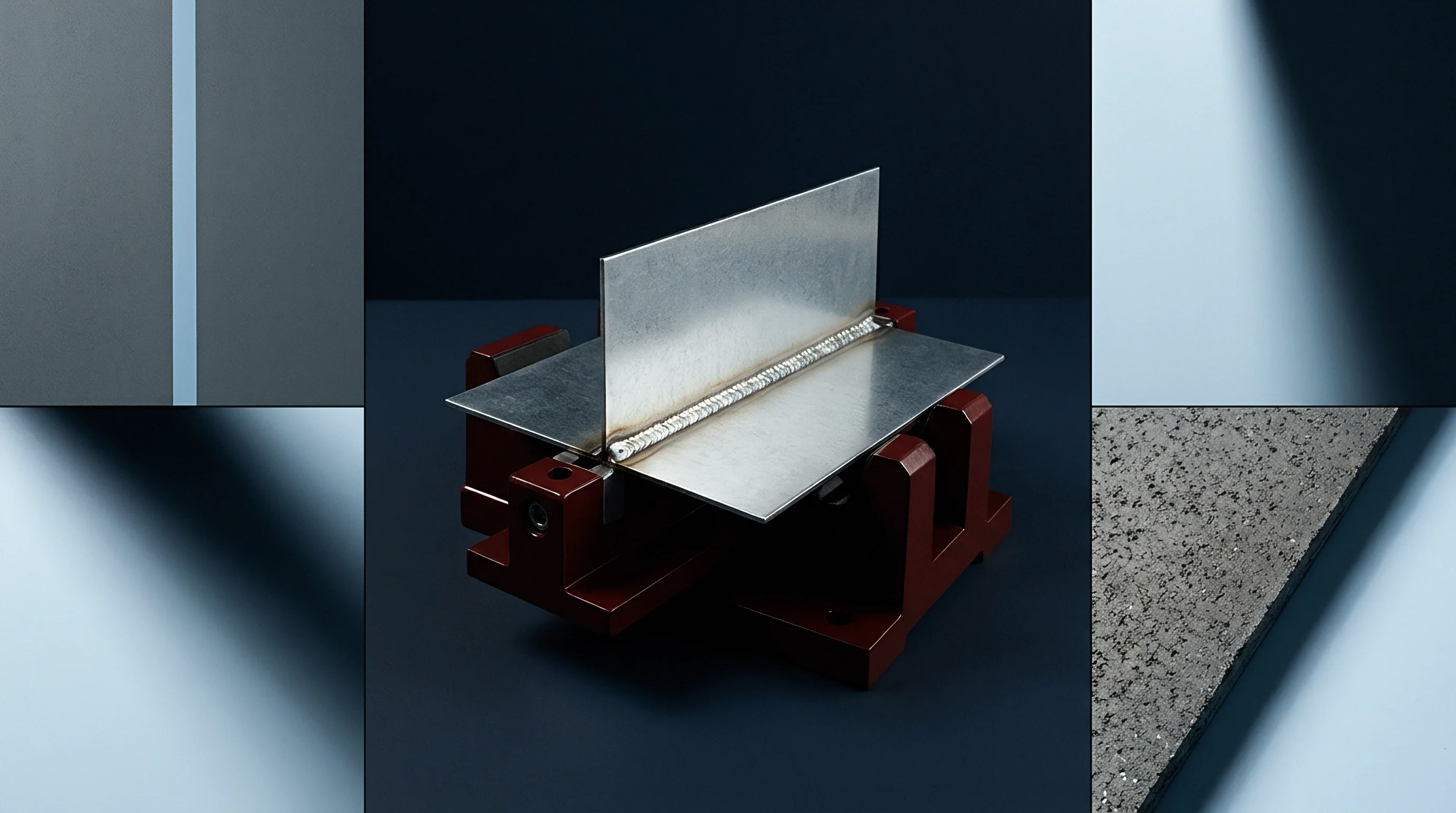
Polymers at structural interfaces undergo physical and chemical breakdown when exposed to elevated temperatures over extended operational windows. Heat accelerates cross-link cleavage, chain scission, and post-curing reactions within the adhesive layer while simultaneously inducing mechanical strain across the bond line. Glass transition dictates rate changes.
When ambient exposure exceeds the glass transition threshold of an adhesive polymer, chain mobility increases, altering reaction rates and mechanical creep properties. Quantifying these changes demands separating thermal oxidation mechanisms from stress-induced physical aging.

Kinetic Reaction Rates and Interface Mechanics
Chemical degradation rates follow temperature-dependent relationships modeled through the classical Arrhenius equation. High thermal exposure accelerates oxidation pathways, causing embrittlement or softening depending on the specific resin matrix. Moisture ingress at the joint edge compounds thermal effects through hydrolysis, breaking bond chains along the substrate surface.
Coefficient of thermal expansion mismatches between rigid substrates and flexible polymer matrices create continuous shear stresses during thermal cycling. These interfacial stresses lower the effective activation energy required for bond cleavage, accelerating mechanical loss faster than bulk thermal exposure models predict.
Oxidation accelerates physical embrittlement. Long-term exposure to heat alters the molecular weight distribution within the polymer matrix. Low molecular weight fractions migrate toward the interface, forming weak boundary layers that diminish bond performance.
In thermosetting adhesives like epoxies, unreacted monomer groups undergo secondary cross-linking under elevated temperatures, raising modulus while drastically reducing fracture toughness. The resulting bond becomes brittle, prone to sudden interfacial failure under micro-impacts or thermal fluctuations.

Thermal Activation Energies across Adhesive Systems
Activation energy values govern how rapidly a bond system degrades when temperature rises. Epoxies generally present higher thermal endurance than acrylic or polyurethane formulations, requiring greater energy input to initiate primary chain degradation. Selecting an acceleration temperature requires knowing the precise transition boundaries of the material system to avoid triggering non-representative degradation mechanisms.
| Adhesive Polymer Chemistry | Activation Energy Range (kJ/mol) | Maximum Continuous Temperature Limit (°C) | Primary Thermal Degradation Mechanism |
|---|---|---|---|
| Single-Component Structural Epoxy | 85 to 115 | 150 | Thermo-oxidative chain scission and glass transition shift |
| Two-Part Polyurethane | 60 to 80 | 90 | Urethane link hydrolysis and thermal depolymerization |
| Structural Acrylic | 65 to 85 | 120 | Free-radical monomer generation and side-chain cleavage |
| High-Temperature Silicone | 110 to 140 | 220 | Siloxane backbone rearrangement and cross-link density loss |
Establishing accurate life-prediction models relies on determining whether degradation kinetics remain constant across the chosen test temperature spectrum. A shift in mechanism, such as plasticizer volatilization at high temperatures, alters the slope of the Arrhenius plot, rendering life projections invalid for actual service conditions. The remaining challenge sits in separating pure thermal oxidation kinetics from stress-induced chemical degradation across complex multi-material joints exposed to outdoor environmental variations over decade-long lifespans.

Shear
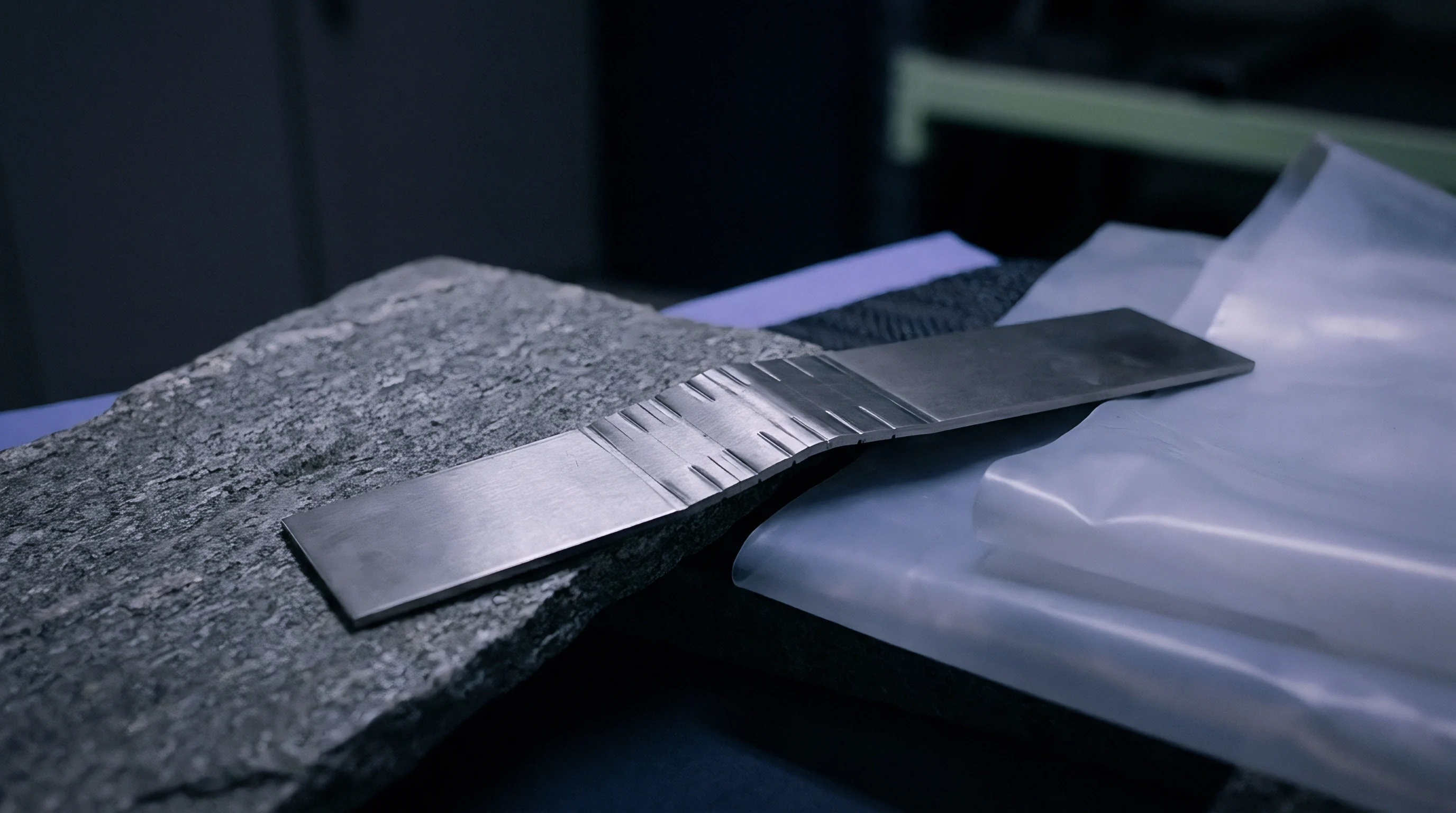
Mechanical verification of aged structural bonds relies on standardized force application until structural separation occurs. Mechanical testing isolated after thermal conditioning reveals whether cohesive resin loss or interfacial failure drives overall joint decay. Lap shear configuration provides direct measurement of effective load transfer across rigid planar substrates.
Peel testing isolates resistance to localized stress concentrations at bond edges, making it highly sensitive to surface preparation deficiencies exposed by heat.

Standardized Mechanical Test Methods
Evaluating mechanical retention post-aging demands rigorous control over loading geometry, strain rates, and environmental conditioning. Testing standard ASTM D1002 measures lap shear strength for metal-to-metal bonds under uniaxially applied tensile loading. For flexible-to-rigid substrate combinations, 180-degree peel tests per ASTM D903 reveal interfacial adhesion decay that standard lap shear loading fails to detect.
Tensile pull-off testing per ASTM D4541 isolates perpendicular tension forces, exposing micro-voiding and localized substrate contamination.
Lap shear strength measurements conducted after aging require specimen equilibration for twenty-four hours at controlled ambient humidity to prevent false readings driven by temporary moisture loss.
Dwell time alters yield. Test speed directly affects measured peak stress due to the viscoelastic nature of polymer adhesives. Rapid strain rates artificially inflate measured ultimate force, masking subtle embrittlement caused by thermal oxidation.
Testing procedures must specify uniform crosshead displacement speeds, typically 1.27 millimeters per minute, across all baseline and post-aging sample sets.

Equilibration and Stress Artifacts
Removing aged specimens from thermal chambers immediately introduces micro-cracking risks if thermal gradients across the substrate are steep. Rapid cooling induces transient internal stresses that add to degradation profiles. Specimens must cool inside the chamber at controlled ramp down rates or sit in a room-temperature desiccator prior to physical pull testing.
Uncontrolled ambient moisture absorption during post-aging storage masks heat-induced embrittlement by temporarily plasticizing the polymer matrix.
When Does Thermal Stress Exceed Activation Energy Limits?
Applying aging temperatures above a polymer’s glass transition threshold fundamentally alters degradation behavior. When test temperatures cross this boundary, kinetic rate constants shift discontinuously as polymer chain mobility increases dramatically. At these elevated energy states, secondary failure modes such as substrate outgassing or cure-agent volatilization dominate, generating degradation profiles that never occur during normal operating thermal cycles.
Aging procedures conducted above activation energy stability limits yield falsely pessimistic longevity forecasts that force unnecessary material substitutions.
Categorizing fracture surfaces post-test provides necessary context for load retention metrics:
- Interfacial Adhesive Failure occurs directly at the boundary between substrate surface and polymer layer, indicating chemical bond decay or surface contamination effects.
- Cohesive Resin Failure occurs entirely within the adhesive matrix, demonstrating internal polymer backbone scission while surface adhesion remains intact.
- Substrate Delamination represents structural failure within the base substrate material, proving that bond integrity exceeds parent material strength.
- Mixed Mode Failure combines interfacial peeling and internal resin cracking across the test area, reflecting non-uniform stress distribution during loading.
Cold samples resist peel. As a rule of thumb, structural bonds showing over twenty percent interfacial failure after aging indicate substrate surface preparation failure rather than adhesive resin degradation.

Chamber
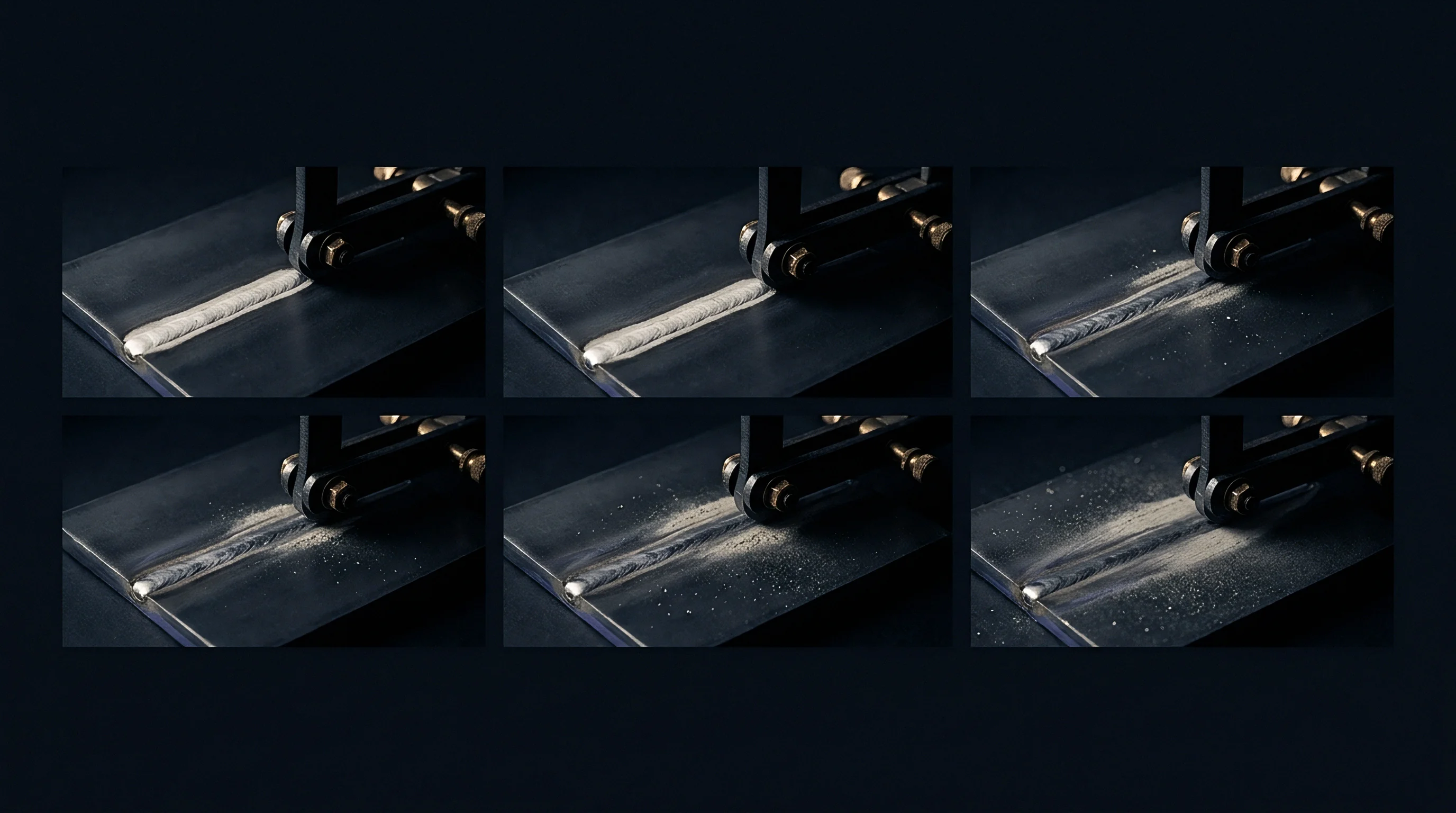
Reliability testing requires precise environmental control to force accelerated chemical aging without altering basic failure mechanisms. Forced-convection thermal ovens maintain uniform temperature distribution across all test specimens, preventing localized hot spots that skew aging rate data. Relative humidity levels inside aging chambers must remain controlled or measured continuously, as elevated thermal conditions magnify hydrolytic degradation in structural polymers.

Environmental Chamber Calibration Standards
Airflow variation alters profile. Chamber calibration per ASTM E145 ensures spatial temperature uniformity within plus or minus one degree Celsius throughout the working chamber volume. Temperature gradients across specimen racks induce non-uniform aging rates, yielding high scatter in subsequent lap shear measurements.
Thermocouples attached directly to substrate surfaces monitor actual component temperatures rather than relying solely on ambient chamber air sensors.
Chambers operating with internal temperature variation exceeding two degrees Celsius generate lap shear test scatter that renders Arrhenius acceleration calculations statistically invalid.
Specimen orientation inside the aging oven governs airflow exposure and heat transfer efficiency. Packing specimens densely blocks forced air circulation, creating stagnant thermal zones that under-age inner samples. Minimum clearance spacing of twenty-five millimeters between test panels maintains uniform thermal transfer across all exposed bond lines.

Worked Acceleration Factor and Lifetime Calculation
Determining total test duration to simulate target operational lifespans requires calculating an Arrhenius Acceleration Factor. Assume an automotive bond line operates at a continuous baseline temperature of 40°C (313.15 K) with a targeted service life of ten years. The engineering team chooses an accelerated chamber aging temperature of 85°C (358.15 K).
The structural epoxy adhesive demonstrates an experimentally determined apparent activation energy (Ea) of 75 kJ/mol (75,000 J/mol). Universal gas constant R equals 8.314 J/mol·K.
The Arrhenius Acceleration Factor (AF) calculation follows:
AF = expleft
Inserting absolute temperatures into the reciprocal difference yield:
frac1313.15 – frac1358.15 = 0.0031933 – 0.0027921 = 0.0004012 K-1
Multiplying by the energy constant ratio:
frac750008.314 = 9020.93 K
AF = exp(9020.93 · 0.0004012) = exp(3.6192) ≈ 37.31
An acceleration factor of 37.31 establishes that one hour inside the 85°C test chamber equals 37.31 hours of continuous real-world exposure at 40°C. Simulating one full year (8,760 hours) of continuous service requires 234.8 hours of uninterrupted chamber exposure. A full ten-year operational life projection requires 2,348 hours of chamber exposure.
Extrapolating long-term bond survival requires validation through multi-temperature aging matrix studies rather than single-point thermal exposure assumptions.
Activation energy shifts alter acceleration scales significantly. Sensitivity mapping across potential activation energies demonstrates how small errors in material characterization impact qualification timelines.
| Stress Temperature (°C) | Ea = 65 kJ/mol (AF / Hours) | Ea = 75 kJ/mol (AF / Hours) | Ea = 85 kJ/mol (AF / Hours) | Field Equivalent per 500 Chamber Hours |
|---|---|---|---|---|
| 70 | 10.36 / 8,455 hrs | 13.88 / 6,311 hrs | 18.59 / 4,712 hrs | 0.79 Years (Ea=75) |
| 80 | 21.84 / 4,011 hrs | 31.81 / 2,754 hrs | 46.33 / 1,891 hrs | 1.82 Years (Ea=75) |
| 85 | 31.22 / 2,806 hrs | 37.31 / 2,348 hrs | 57.82 / 1,515 hrs | 2.13 Years (Ea=75) |
| 95 | 50.41 / 1,738 hrs | 83.74 / 1,046 hrs | 139.10 / 630 hrs | 4.78 Years (Ea=75) |
Thermal history governs endurance. Selecting an overly aggressive stress temperature risks triggering non-Arrhenius degradation modes, leading to false rejection of valid bond designs. Skipping baseline activation energy characterization causes inaccurate life projections that result in catastrophic field failures or excessive product redesign costs.


Discrepancy
Audit inspections of overseas manufacturing sites frequently reveal major gaps between lab certificates and physical testing practices. Factory quality labs under pressure to maintain line speed often truncate sample equilibration periods or use non-standard chamber loading profiles. Uncalibrated thermal chambers, unmonitored ambient humidity during pull testing, and selective sample retention obscure true bond aging profiles.
Floor Testing Deviations and Artifacts
Uncalibrated ovens invalidate data. Standard operational shortcuts include pulling hot test panels directly from thermal aging ovens and executing lap shear pulls immediately. Testing hot specimens drastically lowers measured lap shear forces, creating artificial failure records that obscure true chemical retention metrics.
Conversely, allowing samples to equilibrate in unmonitored ambient rooms during high-humidity seasons allows moisture plasticization, altering matrix fracture modes.
Factory lab validation demands witnessing raw specimen preparation, surface energy testing, and actual mechanical pull sequences firsthand during site visits.
Substrate surface contamination prior to bonding represents another widespread source of discrepancy. Thermal aging accelerates failures originating from unremoved stamping oils or mold release agents. When aging tests fail, suppliers frequently blame resin formula changes rather than investigating poor wash line maintenance or expired primer lots on the production floor.
Audit Routine for Lab Records
Enforcing rigorous compliance across supplier testing facilities requires installing a sequential audit protocol for all qualification dossiers.
- Verify specimen substrate source, batch numbers, surface treatment parameters, and adhesive lot codes against production logs.
- Inspect chamber calibration tags, thermal sensor placement, continuous data logs, and maintenance histories for every oven used in the qualification program.
- Audit mechanical testing machine calibration certificates, load cell capacity ranges, crosshead speed settings, and specimen grip designs.
- Compare raw load-displacement curves against summarized factory summary tables to detect manual data smoothing or omitted sample rejections.
- Perform witness testing on aged retain samples, confirming that failure modes align with historical lab report photos.
Verification demands physical witnessing. A complete laboratory qualification package must bundle specific raw test artifacts rather than relying on basic summary pass certificates.
- Raw Chamber Data Logs must contain minute-by-minute temperature and relative humidity recordings spanning the complete test duration.
- Calibrated Load Cell Trace Curves must capture individual crosshead displacement metrics against force for every tested coupon.
- High-Resolution Fracture Surface Photos must clearly document the ratio of cohesive to adhesive failure for every broken test panel.
- Material Lot Traceability Certificates must link adhesive batch numbers, hardener ratios, mix logs, and substrate surface treatment records directly to tested specimens.
When questioned about lap shear test discrepancies, factory quality managers typically claim that ambient humidity variations during transport between chamber and pull tester caused the unexpected strength drops.


Liability
Bond degradation translates directly to field failure liability, commercial exposure, and warranty clawback disputes. Incomplete or biased thermal aging data leaves original equipment manufacturers exposed to widespread structural failures once products enter high-temperature operating environments. Integrating standardized lap shear retention thresholds into purchase orders establishes legally defensible criteria for batch rejection and financial recovery.
Commercial Risk Allocation Terms
Unresolved bond integrity risks create substantial financial exposures, including field product recalls, line-stoppage penalties, and brand damage. Purchase contracts must bind component vendors to specific mechanical retention thresholds measured after standardized accelerated thermal exposure schedules. Relying on generic raw material supplier data sheets without verifying final assembly bond lines leaves buyers fully liable for assembly-level degradation.
Quality guarantee agreements must establish that failure to meet post-aging shear retention limits triggers full lot rejections at the supplier’s expense.
Interfacial voiding reduces margin. Specifying unambiguous quality acceptance limits forces vendors to maintain strict control over surface preparation lines, adhesive mix ratios, and cure cycles during mass production.

Batch Rejection Thresholds and Warranty Clauses
Establishing clear commercial consequences based on post-aging mechanical performance prevents long legal disputes when field degradation occurs.
| Accelerated Aging Status (85°C Chamber) | Lap Shear Strength Retention Limit | Observed Failure Mode Shift | Mandatory Commercial Action |
|---|---|---|---|
| Initial Lot Qualification (500 Hours) | Greater than 85% of baseline | 100% Cohesive failure | Full batch approval and release to production |
| Routine Production Audit (250 Hours) | 70% to 84% of baseline | Minor interfacial edge creep (<10%) | Conditional acceptance; vendor mandatory root-cause action plan |
| Elevated Stress Audit (500 Hours) | 50% to 69% of baseline | Moderate interfacial failure (10% to 30%) | Batch rejection; line quarantine; mandatory third-party re-testing |
| Critical Qualification Failure (<500 Hours) | Less than 50% of baseline | Severe interfacial failure (>30%) | Immediate supplier halt; warranty clawback for all affected lots |
Retention metrics determine acceptance. Contractual terms must specify that any batch exhibiting under seventy percent lap shear retention following 500 hours of 85°C thermal aging automatically invokes standard warranty recovery terms per Clause 8.2 of the International Material Supply Agreement.