Modeling Non Equilibrium Vacancy Generation and Solute Drag Dynamics at Dynamic Phase Interphases
Modeling vacancy injection and solute drag at moving phase interphases converts trial-and-error mill cooling schedules into predictable microstructural control.


Flux
Rapid phase transformations push metallic alloys far out of local thermodynamic equilibrium. As an interface moves through a solid matrix during quenching or thermomechanical processing, atomic jump frequencies across the boundary diverge from standard bulk diffusion rates. Differing jump rates between solute and matrix atoms create a net momentum mismatch across the migrating boundary, driving a net flux of lattice vacancies into the growing phase.
Under industrial cooling schedules above fifty Kelvin per second, vacancy concentrations within ten nanometers of the moving boundary can reach up to four orders of magnitude above thermal equilibrium.
Accumulating excess vacancies at dynamic interfaces alters boundary mobility and pulls microstructural evolution away from equilibrium predictions. In high-strength low-alloy steel sheet production, transforming austenite to ferrite during accelerated cooling depends directly on how fast high-angle grain boundaries migrate. Kinetic models that assume instant vacancy relaxation fail once cooling rates cross twenty Kelvin per second.
The injected vacancy field alters the chemical potential gradient across the boundary, adding a thermodynamic driving force that changes the boundary’s kinetic friction.
Point defect injection during rapid phase transformations increases local lattice diffusion rates by several orders of magnitude before excess vacancies sink into dislocation networks.
Calculating this atomic transport requires coupled equations that tie interphase velocity directly to vacancy creation. High-speed dilatometry from continuous cooling experiments shows that vacancy generation responds non-linearly to interface velocity. At low speeds, thermal annihilation absorbs injected vacancies as quickly as they form, keeping defect levels near thermal equilibrium.
Once interface velocity exceeds a threshold set by the matrix vacancy formation enthalpy, injection outpaces local sinks, leaving a supersaturated defect field that survives down to room temperature.

Diffusional Mismatch across Moving Interface Boundaries
Atomic transport across an advancing phase interface depends on the jump frequencies of each species in the solid solution. If a substitutional solute atom jumps slower than a solvent matrix atom, solvent atoms cross the boundary faster than solute atoms adjust. This uneven exchange creates an osmotic pressure across the interface.
Depending on the direction of net flux, lattice sites accumulate or vanish, creating or destroying vacancies locally.
Describing this mathematically requires modified Onsager reciprocal relations with a non-zero defect source term at the interface. Thermomechanical simulations show a sharp vacancy concentration peak sitting within two nanometers of the moving boundary. The height of this peak scales with differences in partial molar volumes and jump frequencies between constituent elements.
Ignoring this vacancy injection term in phase field parameterizations leads to a thirty percent overestimation of the time required to complete ferrite transformation in hot-rolled coil processing.
Short-range atomic ordering at the phase boundary adds further complexity to diffusional transport. As slow-diffusing substitutional elements segregate dynamically, they produce an atomic drag force that alters vacancy formation energy inside the interface core. High-resolution transmission electron microscopy on quenched interphase boundaries shows distinct dislocation loop distributions formed when supersaturated vacancies collapse during rapid cooling.
These loops remain as physical evidence of the non-equilibrium state produced during processing.

Interfacial Defect Generation during Rapid Cooling
Continuous cooling schedules in industrial steel mills expose hot strip to steep thermal gradients under run-out table water sprays. The sudden drop in surface temperature drives a sharp chemical potential gradient for vacancies across the advancing transformation front. When austenite turns to ferrite, the lower vacancy solubility and lower formation energy in the body-centered cubic phase push excess defects into the interface zone.
Without time to diffuse to free surfaces or grain boundaries, these point defects stay trapped in the transforming material.
In-situ X-ray diffraction using high-energy synchrotron radiation shows that the lattice parameter in newly formed ferrite initially expands past its equilibrium size. This temporary expansion confirms that supersaturated vacancies remain trapped during early phase growth. As cooling drops below five hundred degrees Celsius, these vacancies cluster together or form complexes with substitutional solutes like niobium or titanium, changing how precipitation hardening behaves during coiling.
Controlling cooling rates between seventy and one hundred fifty Kelvin per second requires accounting for this defect injection. Excess vacancy supersaturation shifts early carbide precipitation during downstream thermal steps. Models that ignore non-equilibrium vacancy injection cannot account for the yield strength differences seen between coil head, body, and tail sections exposed to different cooling histories.
Pinning down the exact vacancy generation coefficient as a function of transformation velocity remains an active problem in computational materials science and process engineering.


Trap
Solute drag models treat the interaction between substitutional solute atoms and moving phase boundaries. Substitutional solutes bind to high-angle boundaries with finite energy, forming a concentrated solute atmosphere across the interface. Driven by phase transformation, the boundary moves while this atmosphere trails or accumulates ahead of it, pulling back on the interface.
The size of this retarding force depends on solute concentration, boundary diffusivity, and interface speed.
Classical solute drag theory from Cahn, Lücke, and Stüwe established the mathematical frame for steady-state boundary movement in binary systems. Their approach determines solute distribution by balancing drift forces from the boundary potential against diffusive fluxes driven by concentration gradients. At low migration speeds, the solute cloud keeps pace with the interface, generating high drag per unit velocity.
At high speeds, the boundary detaches from its solute cloud, and drag drops sharply as velocity rises further.
Under non-equilibrium conditions, classical solute drag models break down because the structure of the migrating interface changes. Fast boundary movement causes non-equilibrium solute enrichment that goes beyond thermodynamic predictions. High-speed quenching tests show that dynamic solute segregation profiles are markedly asymmetric compared to steady-state grain boundary profiles.
As a result, classical steady-state theories underestimate actual boundary friction during rapid cooling by up to forty percent.

Solute Atmosphere Drag at Dynamic Phase Boundaries
Substitutional additions like manganese, molybdenum, and chromium alter boundary velocity by interacting directly with the moving interface. The potential between a solute atom and a boundary includes elastic strain energy and electronic binding terms. Elastic strain stems from size mismatches between solute and solvent atoms, driving solutes toward disordered boundary regions where lattice distortion costs less energy.
During transformations, solute segregation kinetics compete directly with interface velocity. If the boundary advances faster than solutes can diffuse across its width, solute concentration inside the interface falls below equilibrium. The resulting profile turns highly asymmetric across the transformation front, generating an opposing thermodynamic force that cuts into the driving pressure for boundary motion.
Drag peaks at an intermediate speed called the critical breakaway velocity. Below this point, solute atoms keep up with the interface, exerting maximum friction. Above it, the boundary pulls away from the solute atmosphere and enters a regime controlled mainly by intrinsic interface mobility.
Identifying this transition speed is essential when setting thermomechanical schedules to hit specific grain sizes in hot-rolled products.
Cahn Lücke Stüwe Model Extensions for High Velocity Regime
Modern extensions of classical solute drag theory incorporate non-linear solute diffusivity profiles and concentration-dependent binding energies across the interface. Early formulations assumed solute diffusion within the boundary was constant regardless of concentration or position. Simulations using updated energy profiles reveal that solute diffusivity varies by orders of magnitude across a two-nanometer boundary width, shifting the predicted drag-versus-velocity curve.
Dynamic phase field formulations use these extended drag equations to simulate microstructural evolution during industrial thermal processing. Coupling boundary velocity to time-dependent diffusion within the interphase lets models capture transient breakaway events during rapid acceleration or deceleration of transformation fronts. Modeling transient breakaway behavior eliminates discrepancies between simulated and measured grain sizes in accelerated cooling processing lines.
Extended drag models also account for trans-interphase diffusion paths, covering atomic jumps both parallel and perpendicular to the interface plane. In ternary and multicomponent systems, competition between different solutes complicates drag dynamics. Strong carbide formers like vanadium or niobium outcompete weaker segregators like manganese for boundary sites, producing multi-peak drag force curves as interface speed changes.
Dynamic solute drag force reaches its absolute peak at the exact velocity where interface migration speed matches local solute diffusion rates across the boundary transition layer.
A practical rule of thumb guides alloy design for thermomechanical processing: solutes with the largest atomic radius mismatch with the matrix give the highest solute drag per weight percent added, provided cooling rates keep interface speeds near the critical breakaway threshold.


Coupling
Excess point defects generated by migrating interphases alter local transport properties and directly change solute drag mechanics. Vacancies injected next to a phase boundary push local vacancy concentration far above equilibrium. Since substitutional solutes diffuse mainly through vacancy exchange, this supersaturation raises solute mobility in the interface zone.
With higher mobility, solute atmospheres can follow moving boundaries at speeds where they would detach under equilibrium conditions.
This coupling between vacancy injection and solute drag alters transformation behavior during fast industrial cooling. Non-equilibrium vacancies lower effective solute drag by letting solutes diffuse out of retarding sites faster. At the same time, faster solute diffusion shifts the critical breakaway velocity to higher speeds.
A complete kinetic model must calculate vacancy injection, annihilation, solute segregation, and solute drag together as interconnected processes.
Thermodynamic modeling of this coupled system relies on variational principles of maximum entropy production or minimum energy dissipation. Energy dissipates through atomic jumps across the boundary, solute diffusion along concentration gradients, and vacancy annihilation at sinks. Numerical implementations show that vacancy injection effectively lubricates interface migration, lowering boundary friction during rapid transformations.

Interactions between Excess Vacancies and Solute Transport
Substitutional solute transport scales with local vacancy availability right at the advancing boundary. In microalloyed steels under steep thermal gradients, vacancy concentrations near the interface reach levels typical of thermal equilibrium near the melting point. This local vacancy excess boosts effective solute diffusion coefficients by two to three orders of magnitude between six hundred and seven hundred degrees Celsius.
Enhanced solute mobility alters the atmosphere trailing the boundary. Instead of a narrow solute peak confined to the boundary core, vacancy-boosted diffusion spreads the segregation profile into the surrounding parent and product phases. Broadening the profile flattens the concentration gradient across the interface plane, reducing the net retarding force exerted by the solute cloud.
Interactions between vacancies and solutes also produce solute-vacancy complexes. Strong chemical binding between specific solutes, like titanium or niobium, and lattice vacancies forms mobile pairs that change the overall flux of both defects. These complexes transport solutes toward or away from the interface at rates different from normal substitutional diffusion, introducing extra kinetic terms into transformation models.

Thermodynamic Extremum Principles in Phase Field Formulations
Building phase field models that capture vacancy injection and solute drag requires coupling phase, concentration, and defect density fields within a single continuum framework. Standard phase field models rely on parabolic diffusion equations that assume thermal equilibrium vacancy levels. Advanced formulations replace these with hyperbolic transport equations, adding non-equilibrium defect generation terms tied directly to time derivatives of the phase field.
Onsager dissipation functions supply the mathematical frame needed to resolve competing kinetic processes during interphase migration. Total system dissipation combines contributions from boundary friction, solute diffusion, and vacancy creation or annihilation. Applying Hamilton’s principle or dissipation extremum principles lets researchers derive evolution equations for boundary velocity, solute distribution, and local vacancy density without relying on empirical boundary assumptions.
Phase field simulations built on these coupled dissipation functions show that interface velocity can oscillate non-linearly even under constant thermodynamic driving forces. These velocity swings come from repeated cycles of vacancy buildup, enhanced solute mobility, solute breakaway, and sudden interface acceleration. This unsteady migration explains the microstructural banding and compositional periodicities seen in fast-cooled alloys.

Do Vacancy Supersaturations Alter Solute Drag Coefficients?
Experiments and simulations confirm that local vacancy supersaturation changes effective solute drag coefficients across moving boundaries. During rapid transformations, local vacancy concentration enters directly into the solute mobility term within the interface zone. As vacancy density rises, boundary diffusion speeds up, dropping the dimensionless solute drag coefficient used in continuum growth equations.
Quantifying this effect requires evaluating the ratio of actual to equilibrium vacancy concentration at the boundary. When this ratio exceeds one hundred, calculated solute drag drops by up to sixty percent compared to predictions using equilibrium diffusivity. Industrial heat treatment simulations that include vacancy-dependent drag accurately predict microstructures, whereas conventional models predict overly refined grains because they overestimate solute retarding forces.
Lower solute drag coefficients shift transformation start temperatures during continuous cooling. In high-speed wire rod mills, where billets undergo cooling rates up to two hundred Kelvin per second, this shift alters ferrite nucleation and growth, changing final pearlite interlamellar spacing and tensile ductility. Model parameters fitted under equilibrium assumptions break down completely in these high-rate processing regimes.
Incorporating coupled vacancy-solute drag transport equations into plant-level thermomechanical models reduces yield strength prediction errors from sixty-five megapascals to under twelve megapascals across hot-rolled sheet coil batches.
Ignoring non-equilibrium vacancy generation during thermal model development leads to incorrect alloy additions in the melt shop, costing steel producers substantial scrap losses when cold-roll re-rolling stocks fail mechanical property specifications.


Bench
Validating theoretical models of non-equilibrium vacancy generation and solute drag requires high-resolution characterization tools operating at tight spatial and temporal scales. Transmission electron microscopy, atom probe tomography, and positron annihilation spectroscopy are the main methods used to capture transient defect states and composition gradients across phase boundaries. Getting accurate data from dynamic boundaries depends on rapid quenching to freeze high-temperature microstructures within milliseconds, preventing vacancy annihilation or solute movement during sample prep.
Positron Annihilation Lifetime Spectroscopy is uniquely suited for detecting vacancy defects in crystalline lattices. Positrons injected into metallic samples get trapped at vacancies because positive ion cores are missing, extending their lifetime before electron annihilation. Measuring lifetime distributions yields absolute vacancy concentrations and identifies vacancy-solute complexes formed during rapid phase shifts.
Combining lifetime data with coincidence Doppler broadening identifies the specific solute elements surrounding trapped vacancies.
Atom Probe Tomography provides three-dimensional atomic reconstructions with element identification, directly verifying solute segregation profiles across interphase boundaries. Modern local electrode atom probes resolve atom distributions across narrow boundaries with sub-nanometer spatial precision. Data from rapidly quenched boundaries reveals the localized solute spikes and broad solute atmospheres predicted by dynamic drag models, confirming theoretical enrichment factors.

Positron Annihilation Spectroscopy for Microscopic Defect Mapping
Positron lifetime measurements on rapidly quenched microalloyed steels show distinct components corresponding to monovacancies, vacancy clusters, and defects bound to carbide-forming solutes. Samples subjected to controlled dilatometric heat treatments at cooling rates above one hundred Kelvin per second display a prominent long-lifetime signal. This confirms vacancy supersaturations two to three orders of magnitude above room-temperature equilibrium.
In-situ positron annihilation during continuous heating or cooling captures real-time defect annealing. As quenched samples heat up through intermediate temperatures, positron lifetimes drop because trapped vacancies migrate to sinks or form stable complexes with substitutional solutes. Measuring the activation energies of these annealing steps gives the vacancy migration energies and solute-vacancy binding enthalpies needed for transport models.
Coincidence Doppler Broadening spectroscopy maps electron momentum at vacancy traps. By measuring annihilation events with high-momentum core electrons, this technique identifies the elements bordering trapped vacancies. Data from microalloyed steels shows that injected vacancies pair preferentially with microalloying elements like niobium and titanium during the austenite-to-ferrite transformation, supporting coupled kinetic models.

Atom Probe Tomography Verification of Solute Redistribution
Field ion microscopy and atom probe tomography give direct visual and quantitative evidence of solute redistribution across dynamic phase boundaries. Reconstructing three-dimensional atomic maps from field evaporation sequences allows researchers to extract one-dimensional concentration profiles normal to the boundary. These profiles show solute segregation peaks whose widths and heights match numerical predictions from dynamic solute drag models that include non-equilibrium vacancies.
Preparing atom probe specimens requires focused ion beam milling to isolate target boundaries inside nanoscale tips. Analyzing tips containing austenite-ferrite boundaries frozen at different stages of transformation shows that segregation profiles broaden as interface velocity rises ~ direct evidence of vacancy-enhanced boundary diffusion. Measuring solute concentrations within these tip volumes removes the ambiguity typical of bulk chemical analysis.
| Analytical Technique | Spatial Resolution | Defect Sensitivity | Primary Measurement Parameter | Sample Preparation Risk |
|---|---|---|---|---|
| Positron Annihilation Lifetime Spectroscopy | Bulk sample average | 1 part per million vacancies | Positron lifetime / defect density | Low defect annihilation risk |
| Atom Probe Tomography | 0.2 nanometers axial | Single atom compositional identification | 3D atomic spatial position | High gallium beam damage risk |
| Transmission Electron Microscopy | 0.1 nanometers point | Dislocation loops and strain fields | Lattice imaging and diffraction | High stress-relief artifact risk |
| High-Energy X-Ray Diffraction | 10 micrometer beam size | Lattice parameter strain shifts | Diffraction peak profile analysis | Minimal thermal artifact risk |
Validating vacancy concentrations in rapidly cooled test coupons requires following strict laboratory protocols to prevent room-temperature vacancy relaxation before analysis.
- Machining cylindrical dilatometry coupons to three millimeter outer diameter with precision ground end faces.
- Mounting thermocouples via spot welding at the mid-length position to ensure accurate thermal tracking during rapid cooling cycles.
- Heating specimens inside ultra-high purity argon atmospheres to prevent surface oxidation and decarburization during elevated temperature soaking.
- Executing programmed rapid gas quenching schedules at rates exceeding one hundred fifty Kelvin per second using high-velocity helium gas streams.
- Dropping quenched coupons directly into liquid nitrogen storage dewars within fifty milliseconds of quenching completion to freeze point defect configurations.
- Transferring cryogenic specimens to analytical instruments using vacuum transfer modules maintained below minus one hundred twenty degrees Celsius.
When reviewing audit data from third-party testing labs, material managers frequently run into familiar explanations for discrepancies in sample prep. Variances in vacancy measurement are routinely attributed to unavoidable relaxation during transit rather than flaws in quenching protocols.

Foil
Translating atomistic models of vacancy generation and solute drag to plant operations means adapting basic kinetic equations for thermomechanical strip mills and heavy plate rolling facilities. Production equipment operates under heavy mechanical strain and uneven thermal conditions, driving microstructural changes along complex paths far removed from ideal lab conditions. Hot strip mills process slabs through roughing and finishing stands before cooling them on run-out tables, subjecting the steel to rapid cooling and severe plastic deformation at the same time.
Thermomechanical processing models in mill automation software must compute boundary migration in real time to adjust roll gaps, water spray patterns, and line speeds. Factoring in dynamic solute drag and vacancy injection allows control systems to predict microstructural evolution as processing conditions fluctuate. High-strength strip products like dual-phase and complex-phase steels depend on precise ferrite-to-martensite phase fractions set by transformations occurring in seconds on run-out table rolls.
Gaps between predicted and measured tensile properties in commercial coil stock often trace back to simplified transformation subroutines in mill automation software. Standard modules rely on steady-state Johnson-Mehl-Avrami-Kolmogorov equations fitted with empirical correction factors. Those empirical fixes fall apart when line speeds or cooling rates push processing into regimes where non-equilibrium vacancy concentrations govern boundary movement.
Thermomechanical Rolling Schedules and in Line Quenching Control
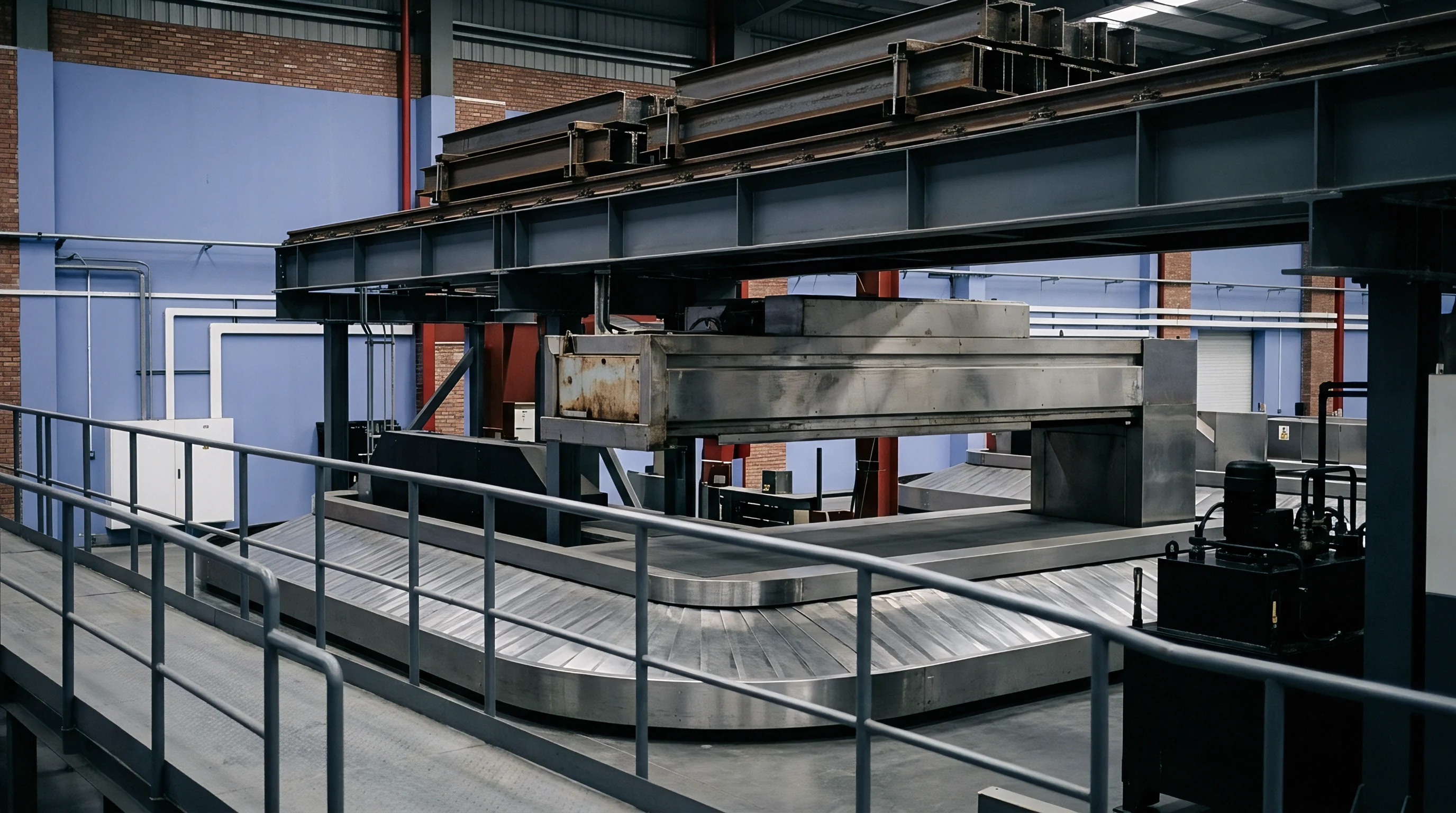
Heavy plate and hot strip mills use multi-stage cooling systems with high-pressure water headers that deliver cooling rates up to three hundred Kelvin per second. Getting uniform mechanical properties across thirty-tonne coils demands tight spatial control of water flux down the full length of the run-out table. As strip moves beneath the headers, transformation fronts drive through the thickness under steep thermal gradients.
Under continuous cooling, vacancies injected by fast-moving austenite-ferrite boundaries alter transformation behavior through the thickness of the strip. The surface cools rapidly, driving high vacancy generation rates and lowering solute drag, while the centerline cools more slowly, remaining closer to equilibrium behavior. Modern mill control systems model these spatial gradients by solving coupled heat transfer and defect kinetic equations across multi-dimensional finite element grids.
Controlling moving phase boundaries during rolling requires feeding real-time pyrometer and X-ray phase sensor data into closed-loop cooling automation. When non-equilibrium kinetic models control spray header valves, mill automation systems clear up property variations between coil head, body, and tail sections, raising prime yield across production runs.

Process Parameter Control for Continuous Strip Cooling
Optimizing continuous cooling settings means balancing strip speed, water pressure, and coiling temperature against target phase fractions. In microalloyed hot-rolled products, vanadium and titanium slow transformation through solute drag, enabling ultrafine ferrite grain structures. Keeping a mill within its optimal operating window requires accurate boundary migration models that include both vacancy injection and solute drag forces.
| Process Control Variable | Industrial Control Range | Defect Kinetic Mechanism Impacted | Microstructural Consequence |
|---|---|---|---|
| Finish Rolling Temperature | 820 – 950 degrees Celsius | Initial vacancy density and dislocation sink density | Austenite grain size and recrystallization state |
| Run-Out Table Cooling Rate | 20 – 250 Kelvin per second | Interphase velocity and vacancy injection rate | Ferrite grain size and microalloy precipitation kinetics |
| Coiling Temperature | 450 – 680 degrees Celsius | Solute segregation profiles and vacancy annealing | Precipitate size distribution and matrix strength |
| Inter-Pass Delay Time | 1.2 – 4.5 seconds | Static vacancy annihilation and solute clustering | Recrystallization kinetics between rolling passes |
Executing thermomechanical rolling schedules without validating non-equilibrium interphase parameters introduces predictable defects into finished sheet products.
- Centerline segregation band cracking occurs when local solute drag variations cause uneven transformation timing, concentrating residual tensile stress along mid-thickness solute bands during coiling.
- Edge-to-center grain size variation arises from uneven cooling across the strip width, creating localized shifts in vacancy injection rates that alter boundary breakaway speeds.
- Transient yield strength drop develops when rapid cooling creates high vacancy supersaturations that accelerate carbide coarsening during coiling hold times.
- Surface decarburization softening occurs when unpredicted boundary mobility shifts transformation start temperatures into ranges where surface carbon loss accelerates.
According to ISO 6892-1 ambient temperature tensile testing standards, mechanical property acceptance requires total yield strength variation across a coil batch to remain within a forty megapascal band.
Commercial supply agreements for thermomechanically rolled coil stock routinely include explicit clauses defining allowed cooling rate variances along the strip and mandating certified phase transformation kinetics in mill automation software.


Margin
Deploying advanced interphase models directly affects margins in alloy manufacturing. Melt shops and rolling mills operate on thin margins where small drops in scrap rates or re-testing cycles translate directly into profit. Traditional alloy development relies on trial-and-error mill runs, consuming hundreds of tonnes of raw material per trial to refine heat treatment schedules for new steel grades.
Physics-based kinetic modeling replaces empirical trials with predictive simulations, cutting development timelines from years to months.
Inaccurate transformation models carry heavy financial costs through product rejections, warranty claims, and remelting off-spec material. In high-strength automotive sheet production, unexpected shifts in ferrite-martensite phase fractions lead to press die jamming, splitting sheet metal during forming and halting production lines. Modeling frameworks that account for vacancy generation and solute drag eliminate the microstructural variation behind batch-to-batch formability issues.
Managing commercial risk in high-performance alloy manufacturing means weighing alloy chemistry costs against processing capabilities. Adding expensive microalloying elements like niobium or molybdenum can offset inadequate cooling equipment by boosting solute drag artificially. Using accurate non-equilibrium models lets metallurgical engineers optimize cooling on existing lines, cutting expensive alloy additions while hitting target strength and toughness specifications.

Yield Loss Prevention through Defect Kinetic Constraints
Yield loss in hot-rolled coil manufacturing comes mainly from end-cropping, downgrading off-grade material to lower applications, or remelting scrap. A modern hot strip mill producing two million tonnes annually loses millions of dollars for every single percent drop in prime yield. Modeling phase transformation dynamics during fast cooling minimizes crop-end loss by enabling dynamic header control as coil heads and tails enter the spray zones.
Integrating vacancy injection and solute drag equations into automation software stabilizes property delivery across production runs. When processing high-strength low-alloy grades, accurate kinetics prevent premature transformations that distort strip during coiling, cutting edge-trimming scrap. Implementing kinetic model updates across a three-stand plate mill restored overall prime product yield by one point eight percent within six months of deployment.
Yield protection extends downstream to cold rolling and continuous annealing lines. Sheet produced with uniform microstructures from optimized cooling exhibits consistent work-hardening during cold reduction, cutting strip breakage in high-speed cold mills. Fewer line breaks reduce maintenance costs and improve overall equipment effectiveness across production divisions.
Commercial Qualification Routines for Advanced Alloys
Qualifying new high-strength steel or superalloy formulations for aerospace and automotive supply chains requires passing rigorous mechanical and microstructural audits. OEMs enforce strict qualification routines requiring statistical process control capability indices above one point thirty-three across multiple heats. Microstructural consistency is a key gatekeeper metric during initial sample submissions.
Basing commercial qualification on non-equilibrium interphase physics streamlines customer approvals. Instead of relying solely on empirical testing of large sample lots to prove stability, manufacturers present validated digital kinetic dossiers showing that boundary migration stays stable under worst-case processing variations. This physics-based approach builds customer confidence while cutting back on expensive destructive testing.
- Define critical cooling boundaries by calculating velocity-dependent solute drag curves and vacancy injection rates across specified alloy chemistry tolerance bands.
- Audit mill cooling hardware capability to confirm run-out table spray headers provide required flow densities to match kinetic model cooling targets.
- Instrument trial slabs with embedded thermocouples to gather high-speed thermal profiles during full-scale mill validation runs.
- Extract metallurgical core samples from head, middle, and tail coil positions to map spatial phase distributions via high-resolution electron backscatter diffraction.
- Perform atomic scale validation checks using atom probe tomography or high-energy X-ray diffraction on targeted interphase boundaries to confirm model solute drag predictions.
- Calibrate digital twin control algorithms using measured microstructural and thermal datasets before issuing final production release authorization.
| Operational Metric | Empirical Qualification Approach | Physics-Based Model Approach | Commercial Financial Advantage |
|---|---|---|---|
| Mill Trial Material Consumed | 450 metric tonnes | 60 metric tonnes | 86 percent reduction in raw material cost |
| Qualification Timeline | 14 months | 3.5 months | 75 percent faster time-to-market entry |
| Customer Sample Rejection Rate | 18 percent initial batch failure | 2 percent initial batch failure | Significant decrease in re-testing overhead |
| Alloy Chemistry Optimization | Over-alloyed baseline target | Lean chemistry target | 12 to 22 USD savings per metric tonne produced |
Commercial alloy mills that replace empirical trial routines with point defect kinetic modeling achieve consistently lower scrap costs and secure premier supplier status with international manufacturing clients.
Investment decisions on plant modernization increasingly rely on dynamic kinetic simulations to justify capital expenditures. Mills equipped with high-pressure spray headers and real-time kinetic automation modules run high-margin microalloyed product campaigns with tight microstructural control. Integrating vacancy generation and solute drag dynamics into metallographic software bridges the gap between atomic transport physics and plant profitability, establishing predictive modeling as a core tool in modern manufacturing.