Managing Thermal Degradation and Scrap Inflation in Micro Run Soft Tool Cavities
Stabilizing soft tool cavity scrap demands active purge cadences, strict residence time caps, and separating tooling wear liabilities from machine setup cycles.


Melt
A 30-ton hydraulic press sits motionless at the far end of an injection hall in Ningbo, venting acrid fumes from an unpurged barrel. Inside the heated cylinder, twenty-eight grams of semi-crystalline polyetheretherketone sit exposed to 380 degrees Celsius across twelve minutes of unexpected stoppage. The molecular weight drops with every passing minute as polymer chains shear under sustained heat.
When the technician resumes cycling, the first eight shots emerge discolored, brittle, and undersized. The operator dumps them into a blue collection bin without recording the rejected resin on the shift ticket. The barrel temperature spiked.
The purge cycles consume machine time.
Micro run manufacturing using soft tooling, predominantly machined 7075-T6 aluminum or P20 pre-hardened steel inserts, alters the thermodynamic equilibrium typical of hardened steel production. Aluminum possesses a thermal conductivity near 130 watts per meter-kelvin, roughly four times that of standard tool steel. Heat dissipates rapidly from the runner system into the mold base, yet the absence of conformal cooling channels creates localized hot spots around deep ribs and thin shutoffs.
Barrel residence time becomes erratic when cycle intervals vary. In production runs limited to fifty or five hundred shots, startup stabilization consumes an unsustainable share of total resin volume.
Purge cycles running past six minutes in unvented aluminum tools degrade polyamides through silent thermal scission.
Standard injection barrels maintain a thermal gradient across three to five heating zones. In small-batch manufacturing, the shot volume often represents less than ten percent of the total barrel capacity. This volumetric disparity extends material residence time inside the heating cylinder beyond manufacturer recommendations.
Polycarbonate, for instance, tolerates 300 degrees Celsius for five minutes before transesterification degrades optical transparency and impact resistance. At eight minutes, thermal breakdown releases volatile gases that pit the soft cavity surface. Aluminum cavities suffer accelerated chemical attack when degraded fluoropolymers release hydrofluoric acid vapors during prolonged dwell periods.
Technicians on the shop floor frequently compensate for irregular heat distribution by adjusting global barrel temperatures rather than diagnosing cavity heat retention. When the nozzle temperature is raised fifteen degrees to overcome gate freeze in an unheated aluminum insert, the polymer in the transition zone undergoes severe degradation. The resultant scrap appears across subsequent cycles as silver streaking, splay, and structural voids.
The workshop manager insists that running the barrel hotter is the only reliable way to fill thin walls before the metal draws away the heat.


Cavity
Thermal gradients across soft cavity walls dictate the physical dimensions of every molded coupon. While hardened H13 tool steel maintains structural rigidity under uneven thermal expansion, aluminum grades experience measurable thermal growth during warm-up sequences. An aluminum core pin expanding by twelve micrometers at operating temperatures alters the shear rate of resin entering a narrow gate.
Gate freeze occurred prematurely. Surface finish degraded immediately. Scrap compounded across shifts.

Where Resides the Thermal Degradation Threshold?
Pinpointing the thermal breakdown point requires continuous monitoring of mold surface equilibrium rather than reliance on machine display panels. In micro runs, operators often cycle tools manually, introducing forty-second delays between parts while clearing runners. These delays allow aluminum cavities to cool below the glass transition point of incoming engineering resins.
The subsequent shot encounters chilled metal, resulting in poor weld line strength, delamination, and excessive injection pressures. Operators increase pack pressures to force material into freezing cavities, inducing residual stress that causes warpage hours later.
- Thermal Splay occurs when overheated resin releases gaseous byproducts that streak along the mold surface during filling.
- Cavity Pitting develops when acidic breakdown products chemically corrode untreated aluminum tool faces.
- Dimensional Shrinkage Variation arises as irregular mold surface temperatures produce inconsistent volumetric shrinkage rates across successive shots.
- Part Delamination results from injecting semi-solidified melt over chilled cavity zones, preventing molecular entanglement between flow fronts.
Soft tool longevity correlates directly with thermal control rigor. The following data contrasts common soft tooling alloys against standard production steel under identical micro run operating cadences with engineering resins.
| Tool Material | Thermal Conductivity (W/m·K) | Yield Strength (MPa) | Maximum Service Temperature (°C) | Thermal Expansion (µm/m·K) |
|---|---|---|---|---|
| QC-10 Aluminum | 160 | 550 | 180 | 23.0 |
| 7075-T6 Aluminum | 130 | 505 | 120 | 23.4 |
| P20 Steel | 29 | 830 | 400 | 12.8 |
| Copper Beryllium (C17200) | 105 | 1100 | 300 | 17.0 |
| H13 Hardened Steel | 24 | 1650 | 550 | 10.8 |
Aluminum transfers heat rapidly. This physical property prevents internal stresses from concentrating if the cooling medium flows continuously. However, micro run tooling often relies on straight-drilled cooling channels or simple conductive chill plates bolted to the mold platen.
Inadequate cooling line placement leaves deep cores isolated from the fluid circuit. Tool wear accelerated silently.
A stable mold surface temperature suppresses dimensional drift far better than extended packing stages.


Cycle
Production cadences in low-volume manufacturing suffer from erratic cycle timing that destabilizes melt quality. When an operator pauses production to inspect a part under an optical comparator, resin cooks inside the nozzle. Tool temperature drops sixty degrees during a three-minute inspection interruption.
Re-establishing thermal stability requires cycling five to ten discard shots. These discard shots, multiplied across fifty production interruptions, inflate raw material consumption by thirty to forty percent.
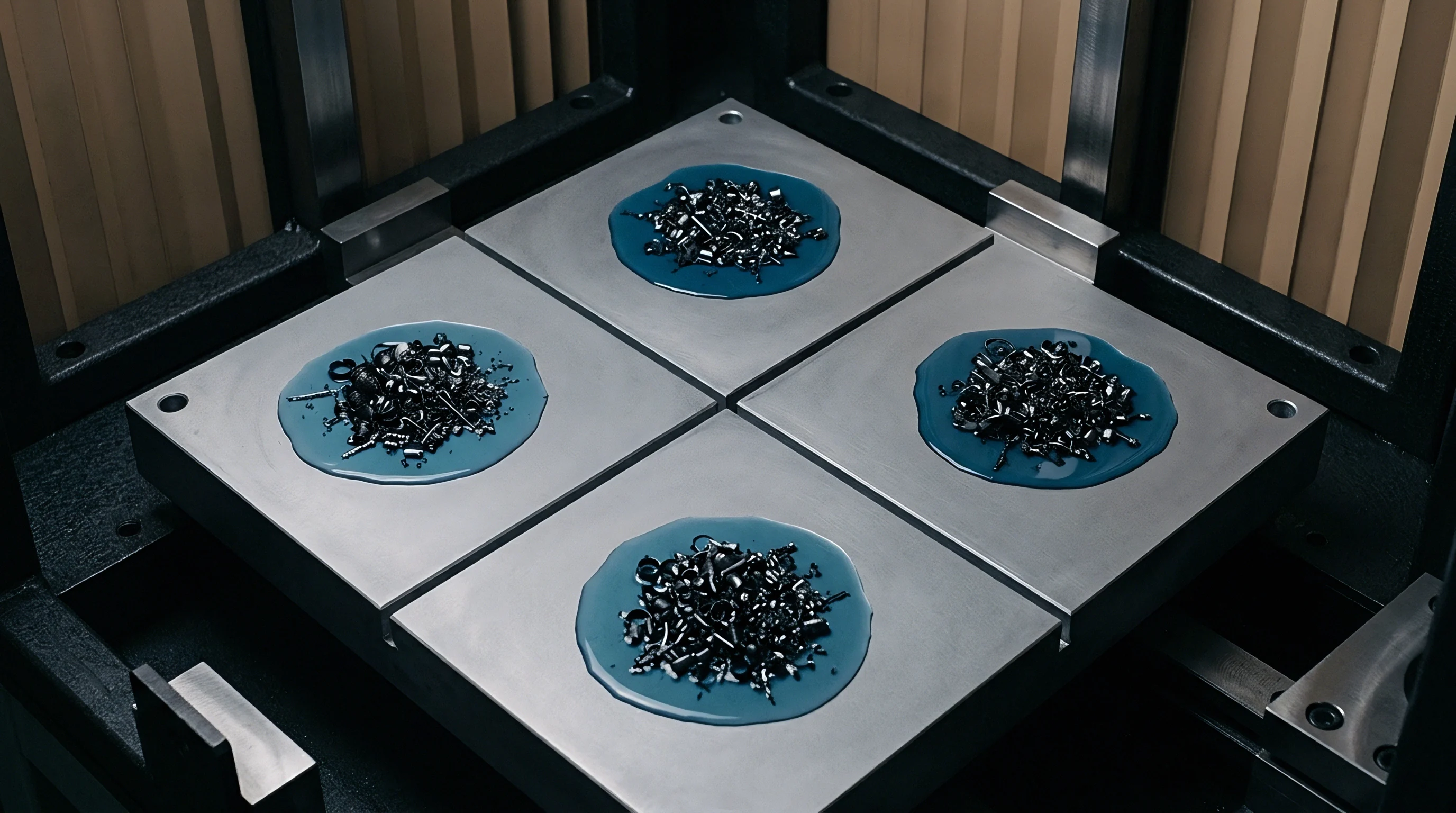
Could Mold Surface Chilling Suppress Scrap?
Surface chilling through recirculating water units prevents excessive heat accumulation in soft tools during sustained micro runs. Without active thermal regulation, aluminum molds slowly absorb heat over twenty consecutive shots, expanding the cavity dimensions and causing excessive flash at parting lines. Flash appeared along the parting line.
The cavity pressure spiked. The clamp pressure dropped.
- Barrel Purge Scheduling requires running inert high-molecular-weight polyethylene through the screw whenever interruptions exceed four minutes.
- Thermal Stabilization Cycles designate the first six parts after any machine stoppage as non-conforming scrap before automated dimensional verification begins.
- Cavity Temperature Verification uses surface thermocouple probes to confirm tool face equilibrium within three degrees Celsius prior to injection.
- Dwell Time Containment triggers an audible machine alarm if the screw remains forward in the pack position past twelve seconds.
Consider a micro run production scenario producing 250 units of an automotive sensor housing molded from 30 percent glass-filled polybutylene terephthalate. The tool consists of a two-cavity 7075-T6 aluminum insert. The nominal part weight measures 14 grams, with an 18-gram runner system, totaling 46 grams per shot.
Under steady-state operations, the injection cycle takes 22 seconds, resulting in a barrel residence time of 132 seconds inside a 20-millimeter screw barrel containing six shots of inventory. This residence time remains safely below the resin thermal degradation threshold of 300 seconds at 260 degrees Celsius.
Assume an unmonitored operation where the technician stops the press every 25 shots to manually de-gate parts and package them into blister packs. Each stoppage lasts seven minutes. During this stoppage, the 276 grams of resin in the barrel degrade thermally, dropping the tensile strength of subsequent shots by 22 percent due to polymer chain scission.
Recovering the process requires six purge cycles and four stabilization shots, consuming 460 grams of material per pause. Across ten stoppages, unrecorded purge scrap totals 4.6 kilograms, compared to a net finished product weight of only 3.5 kilograms. Material utilization drops to 43 percent, doubling resin procurement expenditures.
Machine pauses that exceed resin residence thresholds double material expenditures across short production lots.
Air cooling proved insufficient. If tool maintenance teams skip deep-cavity baffle checks, localized overheating burns parting surfaces, producing irreversible tool wash and permanent part flashing.

Tally
Direct costs in cross-border contract manufacturing routinely hide inside scrap handling protocols and material markup structures. Chinese injection molding workshops pricing micro runs often bill tooling at cost while embedding profit margins into per-part pricing or minimum order material requirements. When soft tooling degrades or requires repeated tuning, scrap inflation surfaces as an invoice discrepancy or an unannounced substitution of regrind material.
Uncontrolled scrap generation directly triggers clandestine regrind incorporation. When scrap rates exceed twenty percent on high-cost resins, workshops face severe margin erosion. To protect profitability, floor managers introduce pulverized runner systems and degraded startup parts back into the hopper.
The introduction of ten percent uncharacterized regrind lowers the heat deflection temperature of engineering thermoplastics and creates unpredictable stress fractures in finished components.
| Batch Quantity (Units) | Theoretical Resin (kg) | Startup Scrap (kg) | Interruption Scrap (kg) | Net Material Consumed (kg) | Effective Scrap Rate (%) |
|---|---|---|---|---|---|
| 50 | 2.3 | 1.8 | 2.4 | 6.5 | 64.6 |
| 100 | 4.6 | 1.8 | 3.2 | 9.6 | 52.1 |
| 250 | 11.5 | 2.1 | 4.8 | 18.4 | 37.5 |
| 500 | 23.0 | 2.4 | 6.2 | 31.6 | 27.2 |
| 1000 | 46.0 | 2.8 | 7.5 | 56.3 | 18.3 |
| Calculations assume a two-cavity aluminum tool, 46-gram shot weight, resin cost of 95 USD per kilogram, and manual de-gating cycles. | |||||
The financial ledger must account for scrap inflation during initial pricing negotiations rather than during post-production reconciliation. Contract terms must define specific material consumption allowances tied to verifiable production stages. Virgin resin certification must accompany incoming material verification records.
- Virgin Resin Verification mandates testing incoming pellets using differential scanning calorimetry to establish baseline melting points and purity.
- Regrind Prohibition Terms state explicitly that no ground sprues, runners, or rejected parts enter the feed hopper during production.
- Scrap Reconciliation Protocols require the physical collection and weighing of all purged material and startup shots prior to final billing.
- Tool Wear Amortization Limits establish clear criteria for replacing worn soft inserts before gate erosion generates unacceptable flash.
Contract clauses that tie invoice balances to verified scrap bin weights prevent unauthorized regrind blending on the shop floor.
When buyers fail to define scrap disposal ownership in manufacturing agreements, workshops routinely retain rejected parts for regrinding. Specification sheet ASTM D3835 defines standard capillary rheometer test procedures to verify resin melt stability. Incorporating this standard into micro run supply agreements establishes legally defensible purity standards that penalize unauthorized regrind blending.

Discharge
Managing the completion of a micro run involves formal tooling inspection and material balance clearance. Soft tools degrade geometrically during ejection cycles. Beryllium copper cores wear down, aluminum slide faces gall, and ejector pin holes elongate under mechanical stress.
The final parts of a five-hundred-piece lot rarely match the critical dimensions of the first fifty. The shot size drifted. Tool wear accelerated silently.
Degraded resin yields brittle parts.
Inspection intervals expanded unannounced. Before signing off on final product shipments, quality personnel examine cavity shutoffs for tool wash. Tool wash occurs when high-velocity glass-filled resins abrade soft aluminum parting surfaces, eroding steel edges and generating heavy flash.
Once an aluminum cavity washes out, repair requires welding and CNC re-machining, which often compromises base metal heat treatment and dimensional accuracy.
Final lot release depends on comprehensive chemical and mechanical validation of shipped components. Tensile testing verifies that residence time degradation did not reduce molecular weight below acceptable safety thresholds. Melt flow index testing of finished parts highlights thermal breakdown that visual inspection misses entirely.
An elevated melt flow rate indicates polymer chain fragmentation caused by excessive barrel heat or prolonged dwell periods during manual cycling pauses.
Whether micro run soft tooling can maintain molecular integrity and tight dimensional tolerances across intermittent production without dedicated closed-loop mold chilling circuits remains an ongoing challenge for overseas procurement operations.