Managing Line Preemption Risk and Material Staging in Shared Workshops
Lock material staging in secured cages and enforce strict contract penalties for mid-run line teardowns to protect capacity in shared workshops.


Displacement
In Dongguan and Ningbo, contract assembly plants frequently shift scheduled production capacity to high-volume domestic accounts without warning overseas buyers. Shared workshops operating under joint capacity contracts often run multiple client orders within the same physical hall. When a high-margin domestic automotive or consumer electronics order faces a tight delivery window, plant managers clear active surface-mount technology lines or assembly bays, shoving lower-volume runs into holding areas.
That kind of preemption ruins yield: thermal profiles on soldering equipment break, unsealed components get scattered, and rushed changeovers cause unrecorded material losses.
The financial impact of line displacement goes well beyond simple schedule slippage. Overseas buyers working from a distance face compounding inventory distortions whenever a workshop halts production mid-run. Work-in-progress stock sits unmonitored on open shop floors.
Feeder reels are unmounted in a hurry, spilling loose surface-mount devices into floor trays, while purge material from plastic injection machines gets swept into unlabeled waste bins. Shared workshops prioritize domestic production runs because proximity allows local brand representatives to stand right on the floor and demand immediate machine availability.

High-Priority Batch Insertion Mechanics
Factory managers evaluate order profitability shift by shift. When a priority account demands immediate floor space, the workshop floor supervisor executes an unscheduled changeover, ordering technicians to purge active feeders, strip injection molds, or dismount stamping dies. Technicians usually clear the line within thirty minutes to accommodate the incoming high-priority batch.
These rapid teardowns break standard operating procedures. In automated surface-mount assembly, operators cut carrier tapes hastily instead of executing clean splice procedures. Open integrated circuit reels sit exposed to workshop humidity without moisture barrier packaging or desiccant bags.
Printed circuit boards passing through reflow ovens experience thermal shock if conveyor speeds are cranked up to flush the tunnel. The bumped inventory gets dumped into peripheral aisle space, where unlabeled tote boxes sit exposed to foot traffic, forklift vibration, and dust.
Mid-run teardowns transfer setup costs directly to the smaller buyer through hidden yield loss.
Material control personnel rarely count components during an emergency line displacement. Raw stock and subassemblies staged at the work center stay logged as active consumption inside the enterprise resource planning system even though units were never assembled. When the factory eventually remounts the original tooling days later, missing passive components and damaged subassemblies emerge as unexpected inventory shortfalls.

Line Tear-Down and Setup Loss Metrics
Halting an active surface-mount line mid-run introduces severe thermal and physical instability into component feeders. Solder paste applied to open stencils starts drying within thirty minutes of line stoppage. Under IPC-J-STD-005A standards, stencil roll life degrades quickly as ambient workshop air circulates across unagitated paste, leading to solder balling and voiding once the line restarts.
Tooling changeovers forced by line preemption cause immediate, measurable scrap spikes. Injection molding operations require thermal stabilization cycles after every mold swap, meaning the first fifteen to twenty shots following re-installation typically suffer from sink marks, short shots, or flash before barrel temperatures stabilize. Rapid swaps on stamping presses knock dies out of calibration, requiring manual shimming that consumes billable machine hours.
Shared workshops routinely conceal these allocation shifts.
| Workshop Platform | Teardown Duration | Re-Setup Duration | Purge and Scrap Waste | Yield Degradation |
|---|---|---|---|---|
| SMT Automated Assembly | 35 to 50 min | 75 to 120 min | 1.5% to 3.0% reel loss | 2.2% solder defects |
| Plastic Injection Molding | 45 to 90 min | 60 to 180 min | 12 to 25 kg resin purge | 4.0% short shots |
| Precision Metal Stamping | 30 to 60 min | 90 to 150 min | 15 to 40 blank units | 1.8% dimensional drift |
| Final Box-Build Assembly | 20 to 40 min | 45 to 60 min | 0.5% fastener damage | 3.5% cosmetic scratches |
Setup costs compound quickly when a factory breaks a single 10,000-unit purchase order into three fragmented sub-runs, forcing the buyer to absorb baseline setup scrap multiple times across a single production contract.
Plant managers often frame these mid-run displacements as routine schedule adjustments caused by unexpected maintenance needs or raw material delivery lags from sub-tier vendors.
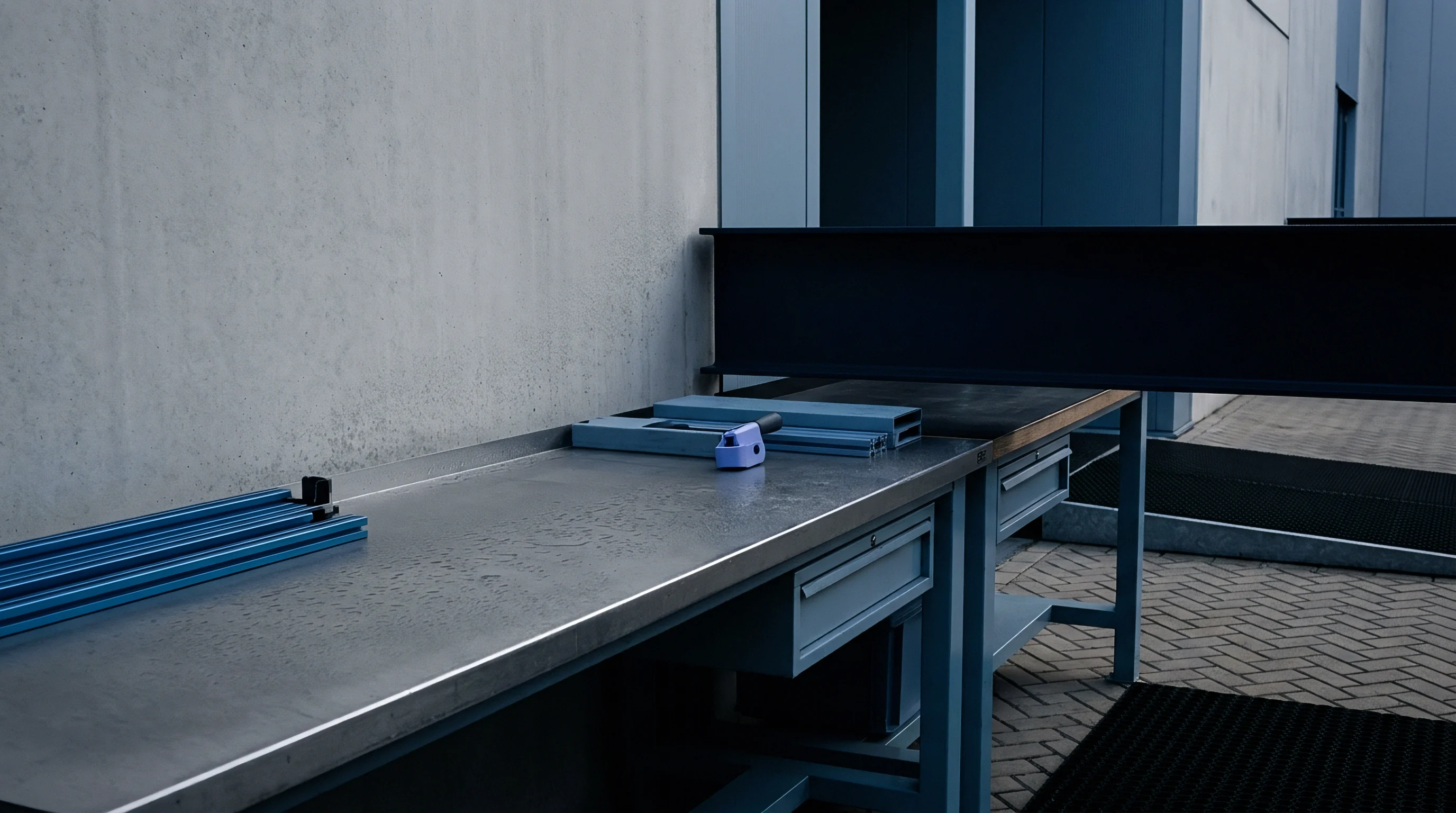

Cage
Securing raw inventory and work-in-progress inside shared manufacturing environments prevents unauthorized material borrowing between parallel production orders. Multi-tenant workshops operate under constant component pressure. When a line runner runs out of stock on an active domestic assembly line, they search adjacent staging areas for identical or substitute parts.
Open pallet racks and unmonitored staging tables invite this kind of inventory cannibalization.
Enclosed staging turns inventory management from passive trust into verified custody. Physical cages built from heavy-gauge wire mesh with floor-to-ceiling perimeter fencing prevent floor staff from removing reels, fasteners, or subassemblies without written material release orders. Locking down dedicated inventory ensures pre-inspected, qualified components stay allocated strictly to the buyer who purchased them.

Floor Isolation and Staging Enclosures
Building chain-link physical perimeters with controlled electronic keycard access establishes a defined operational boundary around committed component stock. The physical staging cage must feature floor anchor plates, reinforced lock housings, and visual identification banners displaying the buyer name, purchase order number, and designated part numbers. Physical separation matters because distance inflates staging losses.
Tracking component bin movements from the central warehouse to the line-side staging zone reveals how easily material shifts on shared assembly lines. Unprotected staging areas allow technicians to swap defective parts from one client batch into another client container just to pass shift yield counts. Isolated staging cages eliminate this practice by establishing a single point of sign-out under the supervision of a dedicated storekeeper.
Secured staging cages with physical keycard access reduce unrecorded material borrowing by eighty-four percent across multi-tenant plants.
Staging cage architecture requires specific physical controls to function effectively. Wire mesh openings must not exceed twenty millimeters to prevent technicians from reaching through the barrier to retrieve small component reels or bagged subassemblies. Access doors require self-closing mechanical hinges equipped with electromagnetic locks linked to an automated access logging system.

Physical Kanban Controls for Raw Stocks
Visual management systems rely on strict floor boundaries so shop floor technicians cannot move bin items without physical sign-off. Implementing color-coded visual Kanban bins inside the staging enclosure clarifies inventory status: green bins signify fully inspected, accepted raw stock ready for line release; yellow bins indicate incoming stock awaiting incoming quality control clearance; red bins hold non-conforming items slated for return to vendor.
Shared workshop environments present four distinct inventory failure modes when physical isolation measures remain absent:
- Substage Inventory Cannibalization occurs when factory personnel remove active microcontrollers, passive components, or specialized hardware from an idle order tote to resolve an immediate shortage on an adjacent customer line.
- Unlabeled Material Migration develops when partially processed subassemblies move between workstations without lot tracking tags, resulting in mixed batch runs containing different engineering change levels.
- Resin Regrind Contamination emerges in plastic molding shops when operators mix unapproved regrind ratios from third-party production runs into dedicated virgin resin hoppers.
- Tooling Swap Misalignment takes place when shared punch dies or injection molds suffer unrecorded wear during unscheduled third-party production spikes, degrading part tolerances on subsequent scheduled runs.
Raw stock disappears quickly without physical enclosures to fix access controls.
| Security Tier | Physical Boundary Spec | Access Control Mechanism | Inventory Audit Frequency | Traceability Compliance |
|---|---|---|---|---|
| Open Floor Staging | Painted floor lines only | Unrestricted floor access | Weekly manual check | Low (Lot mixing common) |
| Roped Perimeter Zone | Stanchions and plastic chains | Visual operator check | Daily shift tally | Moderate (Batch displacement risks) |
| Secured Cage Perimeter | 20mm wire mesh enclosure | Keycard or physical lock | Per-shift bin balance | High (Isolated lot control) |
| Vault Enclosure | Solid panel steel room | Biometric dual-custody access | Real-time RFID scanning | Full ISO 9001 Clause 8.5.2 compliance |
Choosing an inventory staging enclosure depends directly on component unit value and preemption risk metrics. High-value microprocessors, custom optical sensors, and precision machined housings warrant full physical cage enclosures to guarantee batch integrity in shared facility environments.
Components left on open warehouse pallets will eventually be borrowed by shift supervisors under pressure to hit competing deadlines.


Cadence
Structured monitoring rhythms allow remote operations teams to detect schedule shifts long before a supplier submits a delayed shipping notice. Line preemption rarely occurs without operational warning signs. A factory planning to displace an active production run usually begins altering staging patterns, shifting assembly personnel, or delaying incoming lot inspections forty-eight hours prior to the actual teardown.
Establishing an unyielding communication and inspection rhythm forces factory management to account for machine allocation daily. Overseas buyers who rely on weekly email status updates receive delayed notification of line displacement long after the line clearing has taken place. Direct operational oversight requires daily shift metrics verified by local presence or real-time automated data capture.

Daily Output Rhythms and Discrepancy Signals
Tracking hourly line tally boards yields immediate indicators of unauthorized work stoppage or order displacement. Standard surface-mount and box-build assembly lines maintain physical or electronic hourly output boards at the terminal end of the line. When hourly production figures drop to zero for more than two consecutive hours without a recorded equipment breakdown, line preemption is actively occurring.
Auditing daily output logs against stencil change records and feeder setup sheets reveals discrepancies between logged machine run hours and completed unit counts. These gaps expose hidden line stoppages ~ instances where the factory operated the line for another customer while keeping the buyer order on official active status.
Sudden spikes in scrap reporting usually indicate an unannounced line teardown mid-shift.
Unplanned line preemption destroys yield and rapidly multiplies scrap.

Why Do Mid-Run Shifts Disappear from Reports?
Factory supervisors frequently mask mid-shift line clearings by spreading calculated daily target metrics evenly across standard shift summaries. The end-of-day production report sent to the overseas buyer displays an average output rate that disguises a four-hour midday shutdown, with supervisors attributing the total volume deficit to minor component feeding issues or standard maintenance calibration.
Remote teams catch these disguised interruptions by mandating structured, timestamped verification routines across the operating week:
- Review morning line assignment boards at 08:30 local time to confirm active tooling matches the committed purchase order schedule.
- Audit physical work-in-progress counts at 12:00 local time against recorded hourly output totals on the station terminal.
- Check component reel consumption metrics on surface-mount placers at 15:30 local time to verify continuous component draw.
- Inspect staging area scrap bins at 17:30 local time for unexpected teardown waste or unrecorded component purges.
Teardowns compound component defects, and audit records provide the evidence needed to prove displacement. Skipping structured shift audits guarantees that factory management will continue reallocating machine capacity to higher-margin local accounts whenever scheduling bottlenecks arise on domestic production schedules.


Reconciliation
Material balance audits compare raw stock consumption against finished goods output to expose inventory leakage during line teardowns. Shared workshop environments create systemic accounting discrepancies. When a plant clears a line mid-run, component tracking breaks down: loose components remain in feeder queues, subassemblies sit uncounted in transit totes, and scrap generated during emergency purges goes unrecorded.
Executing a precise material reconciliation at the end of each production sub-run forces the supplier to account for missing inventory immediately. Waiting until the completion of a full 50,000-unit contract to perform material balance allows accumulated staging losses, unauthorized component swapping, and teardown scrap to be absorbed into the buyer’s final invoice under general scrap allowances.

Material Balance Calculations and Scrap Allowances
Standard manufacturing contracts grant factories a baseline scrap allowance between one and three percent for electronics assembly. Mid-run line preemptions push scrap rates past these agreed limits. When an automated line halts mid-run, component carrier tape lead-ins must be re-threaded during re-setup, wasting three to five feet of component tape per reel.
On high-density surface-mount boards containing three hundred components, re-threading fifty reels discards hundreds of functional passive components.
Calculating true material balance requires reconciling physical floor inventories against a strict bill of materials conversion formula. Total raw material issued minus verified finished units produced must equal remaining raw stock plus authorized scrap. Any variance exceeding the contractual allowance represents unverified inventory loss caused by poor floor control or unauthorized component diversion.
At a shared facility in Shenzhen, unrecorded reel purge waste during emergency line changes produced a net loss of eighteen thousand dollars across three interrupted production runs.

Financial Impacts of Partial Batch Interruption
Quantifying line preemption costs requires accounting for labor idle time, changeover scrap, stencil re-screening fees, and overhead redistribution. When a factory interrupts a 10,000-unit batch at unit 3,500, the unit economics of those initial 3,500 units degrade instantly because fixed setup charges amortized across the full batch get concentrated onto the partial run, artificially inflating the per-unit cost.
| Cost Component | Continuous Single-Run Execution | Interrupted Multi-Run Execution (3 Interruption Events) | Financial Variance | Commercial Allocation |
|---|---|---|---|---|
| Setup and Calibration Labor | $450 (Single setup) | $1,350 (Three re-setups) | +$900 | Absorbed by buyer if unmanaged |
| Solder Paste and Purge Scrap | $120 (Standard purge) | $480 (Four stencil flushes) | +$360 | Direct material cost inflation |
| Re-Threading Component Waste | $180 (Initial threading) | $720 (Three re-threading events) | +$540 | Bill of materials variance loss |
| Idle Operator Hours | $0 (Continuous line run) | $1,120 (Line clearing downtime) | +$1,120 | Factory overhead shift |
| Total Direct Impact | $750 setup burden | $3,670 cumulative setup burden | +$2,920 | 389% setup cost increase |
Unmonitored line preemption erodes order margins. The cumulative burden of multiple setup cycles, re-threading waste, and idle line labor adds significant hidden costs to the unit landed price.
Incorporating a fixed changeover fee penalty into the supply contract shifts the commercial burden of line preemption back to the factory.
Supply contracts must contain an explicit clause stating: “If the seller interrupts an active, scheduled production run to allocate tooling or equipment to another customer account, the seller shall absorb all changeover labor, setup scrap, and component re-threading losses, and shall credit the buyer two hundred percent of the direct setup fee per displacement event.”


Settlement
Contractual enforcement mechanics determine whether a buyer successfully recovers costs incurred through unauthorized schedule delays. Standard supply agreements drafted under PRC law permit liquidated damages for delayed delivery under Article 585 of the Civil Code. However, general delay clauses fail to address the specific financial damage caused by mid-run line preemption, where the product arrives late and carries elevated component defect rates resulting from rapid teardowns.
Commercial settlement requires maintaining precise documentary proof of line displacement. Detailed shift audit logs, photo-documented staging cage inventories, and recorded hourly production tally drops provide the evidence needed to execute invoice offsets. Without timestamped floor documentation, factory managers dismiss delivery delays as general supply chain bottlenecks beyond their control.

Penalty Enforcement and Chargeback Schedules
Offsetting unearned factory margins against pending invoice balances forces suppliers to respect committed line allocations. Most manufacturing contracts stipulate a thirty percent initial deposit, sixty percent upon pre-shipment inspection approval, and ten percent final balance after customs clearance. Holding that ten percent final balance creates the leverage necessary to settle preemption penalties and material discrepancy costs.
When audit logs confirm unauthorized line clearing, the buyer issues a formal settlement notice detailing the specific hours lost, component purge volumes, and calculated setup cost overrides. Factory managers will defend their priority choices, yielding commercial ground only when confronted with clear visual and numerical proof captured directly from their own workshop floor.

Staging Area Recovery Terms
Reclaiming dedicated footprint space after order completion requires clear exit provisions in the master manufacturing agreement. Shared workshops often attempt to charge buyers long-term warehousing fees for work-in-progress inventory that sat idle solely because the factory preempted the assembly line. Staging recovery terms must explicitly define when storage fees apply and when they are waived due to factory-caused delays.
Buyers should establish clear terms when negotiating shared workshop allocation contracts:
- Contractual Preemption Damages stipulate specific monetary fines assessed whenever the supplier halts an active run to service another client without prior written buyer approval.
- Material Audit Rights guarantee unannounced physical access to staging cages, line tally boards, and scrap bins for the buyer’s designated third-party inspection team.
- Dedicated Floor Footprint Allocation reserves fixed square meters of secured cage space without extra monthly charges during active purchase order lead times.
- Dedicated Tooling Idle Fees assess daily financial charges against the supplier if proprietary molds or stamping dies remain unmounted past scheduled run start dates.
Establishing clear commercial rules shifts the factory’s operational incentive structure. When preempting a line carries immediate financial penalties that exceed the margin gained from a domestic priority customer, plant managers keep the committed assembly line running continuously.
What remains unresolved is whether smaller brands can maintain this contractual enforcement leverage when competing against massive state-owned accounts for line capacity during peak third-quarter manufacturing rushes.