Cross Border Escrow Enforcement for High Mix Low Volume Industrial Equipment Supply
Enforce cross-border machinery escrow by anchoring offshore tranches to physical factory acceptance trials and mutual mainland interim asset preservation relief.


Deposit
Bank guarantees decay into uncollectible paper when custom machine builders face technical revisions mid-cycle. High mix low volume industrial manufacturing operates on bespoke component geometries, modified programmable logic controller sequences, and small run commitments that standard trade finance instruments fail to govern. A commercial letter of credit pays against bills of lading and commercial invoices, rewarding the seller for loading steel into a container regardless of whether the mechanical assembly functions under load.
Escrow agreements alter this commercial posture by locking capital in third-party custody, dispersing payments solely upon verified completion of technical stages.
Sellers resist offshore escrow. Chinese machine builders routinely demand thirty percent advance telegraphic transfers to purchase raw steel, servo motors, and linear guides before cutting metal. An offshore escrow structure forces the seller to finance working capital during sub-assembly fabrication, shifting inventory carrying risk onto the domestic plant.
For an automated test stand or high-mix packaging station valued between 200,000 USD and 800,000 USD, raw material outlays consume roughly forty percent of the bill of materials. When a cross-border buyer insists on holding seventy percent of the total contract price in an offshore escrow facility until factory testing finishes, the supplier’s cash flow contracts immediately.
Under a standard three-stage offshore escrow schedule, releasing twenty percent at electrical cabinet sign-off reduces vendor default probability by forty-two percent compared to a single pre-shipment balloon release.
Conventional trade financing options collapse under bespoke machine procurement. Letters of credit reward document compliance rather than physical performance, while direct bank transfers surrender all commercial leverage before assembly verification occurs.
- Documentary Letter of Credit releases funds against clean bills of lading, permitting the export of uncalibrated machinery whenever paper certificates match banking instructions.
- Direct Telegraphic Transfer abandons buyer leverage the moment funds clear the seller’s mainland settlement account.
- Domestic Bank Guarantee subjects overseas purchasers to local court jurisdiction, where securing a performance bond forfeiture demands months of procedural filings.
- Cross-Border Commercial Escrow binds tranche liquidations directly to engineering data packages, signed test run videos, and physical factory acceptance sign-offs.
Dual-currency escrow arrangements bridge the foreign exchange divide between international buyers and mainland production lines. The offshore escrow agent holds United States dollars or euros in Hong Kong or Singapore, executing tranche transfers into mainland renminbi accounts as technical gates pass. This structure insulates the buyer from unauthorized cash dissipation while granting the seller transparent proof that capital sits fully committed.
Escrow instructions define precise documentary proofs for each financial movement, replacing subjective buyer discretion with objective technical criteria.
| Tranche Stage | Contract Percentage | Target Verification Artifact | Custody Location | Release Authorization Rule |
|---|---|---|---|---|
| Advance Mobilization | 15% to 20% | Approved mechanical schematics, component purchase orders | Mainland domestic settlement account | Dual-signoff engineering authorization |
| Frame and Sub-assembly | 20% to 25% | Dimensional inspection logs, raw material mill sheets | Offshore escrow vault (Hong Kong) | Third-party auditor visual confirmation |
| Factory Acceptance Sign-off | 30% to 35% | Continuous 72-hour trial run records, dry-cycle logs | Offshore escrow vault (Hong Kong) | Physical inspector stamp plus buyer sign-off |
| Port Departure Release | 10% to 15% | Clean on-board bill of lading, customs export declaration | Offshore escrow vault (Hong Kong) | Original shipping documentation match |
| Site Acceptance Holdback | 10% to 15% | Commissioning sign-off, six-sigma gauge repeatability report | Offshore escrow vault (Singapore) | Destination plant facility manager release |
The baseline contract clause reads: Escrow funds held under Account Schedule B shall disburse solely upon presentation of a Certificate of Technical Milestone Compliance executed jointly by the Buyer Designated Engineer and Seller Quality Director, accompanied by original raw data output from the run-off trial. Inserting this precise wording bars the escrow custodian from accepting generic freight receipts as proof of functional completion.


Acceptance
Engineers evaluate mechanical tolerance on the shop floor rather than inside contract drafts. Factory Acceptance Testing for high-mix machinery demands continuous production under real cycle parameters before any shipping crate closes. A three-axis machining center or custom rotary indexing table running five different part configurations requires physical validation across every tooling changeover.
If the factory floor ambient temperature sits at thirty-five degrees Celsius in July inside a Dongguan workshop, thermal drift distorts linear scale positioning by up to twelve microns over three meters of travel. Escrow conditions that fail to state operational testing temperatures create immediate engineering deadlocks.
Machine builders often attempt to satisfy acceptance milestones by running dry cycles without material feed. Dry cycling confirms electrical circuit continuity and servomotor rotation, leaving pneumatic response times, hydraulic pressure drops, and chip evacuation unverified. True factory qualification requires processing minimum batch runs using buyer-supplied production blanks.
When testing high-mix equipment, five discrete variants must complete continuous forty-eight-hour operational stress tests without uncommanded emergency stops or sensor calibration loss. Money follows the gauge.
Machinery acceptance protocols anchored to ISO 230-2 position accuracy standards force suppliers to log bi-directional repeatability across twenty distinct points along each linear axis before requesting escrow disbursement.
A rigorous acceptance dossier consists of several non-negotiable physical artifacts. Leaving any single document out of the verification package prevents the escrow custodian from executing release instructions.
- Laser Interferometer Measurement Dossier establishes positioning accuracy, linear backlash, and angular pitch deviation across the total travel volume.
- Dry Cycle Thermal Log records spindle bearing housing temperatures across an eight-hour continuous rotation test at maximum rated revolutions per minute.
- High-Mix Changeover Timing Sheet measures physical tooling swaps, fixture recalibration durations, and programmable controller recipe reload times across all specified stock units.
- Electrical Enclosure Safety Dossier validates insulation resistance, emergency stop circuit redundancy, and compliance with IEC 60204-1 wiring identification rules.
- Signed Golden Part Inspection Data documents coordinate measuring machine scans for fifteen consecutive units produced during the final run-off hour.
Disputes frequently center on component substitutions. During small-batch builds, domestic factories facing imported component lead times of twenty weeks frequently swap Japanese pneumatic actuators or German safety relays for domestic alternatives without written variance approvals. The physical machine appears functional during brief run-offs, yet long-term mean time between failures drops significantly.
An escrow release framework must explicitly specify component brands down to exact catalog suffix numbers. The inspector confirms these serial plates directly on the physical hardware before stamping milestone documents.

Can Offshore Accounts Compel Mainland Equipment Acceptance?
Jurisdictional distance insulates the supplier from direct overseas buyer pressure. When fifty percent of the total machinery value remains locked inside an offshore escrow account, the domestic factory owner faces genuine cash payroll pressures that drive cooperation. The leverage works effectively until the cost to complete remaining software revisions or re-machined casting beds exceeds the value of the retained escrow tranche.
At that exact tipping point, the domestic supplier ceases work, reallocates technical personnel to domestic orders, and leaves the partially finished machine standing idle on the assembly floor.
A typical excuse emerges during the third week of stalled run-off testing: The software bugs stem from unstated buyer tolerances, so factory labor cannot continue without immediate release of the thirty percent factory acceptance tranche to cover unexpected tooling overheads.

Crate
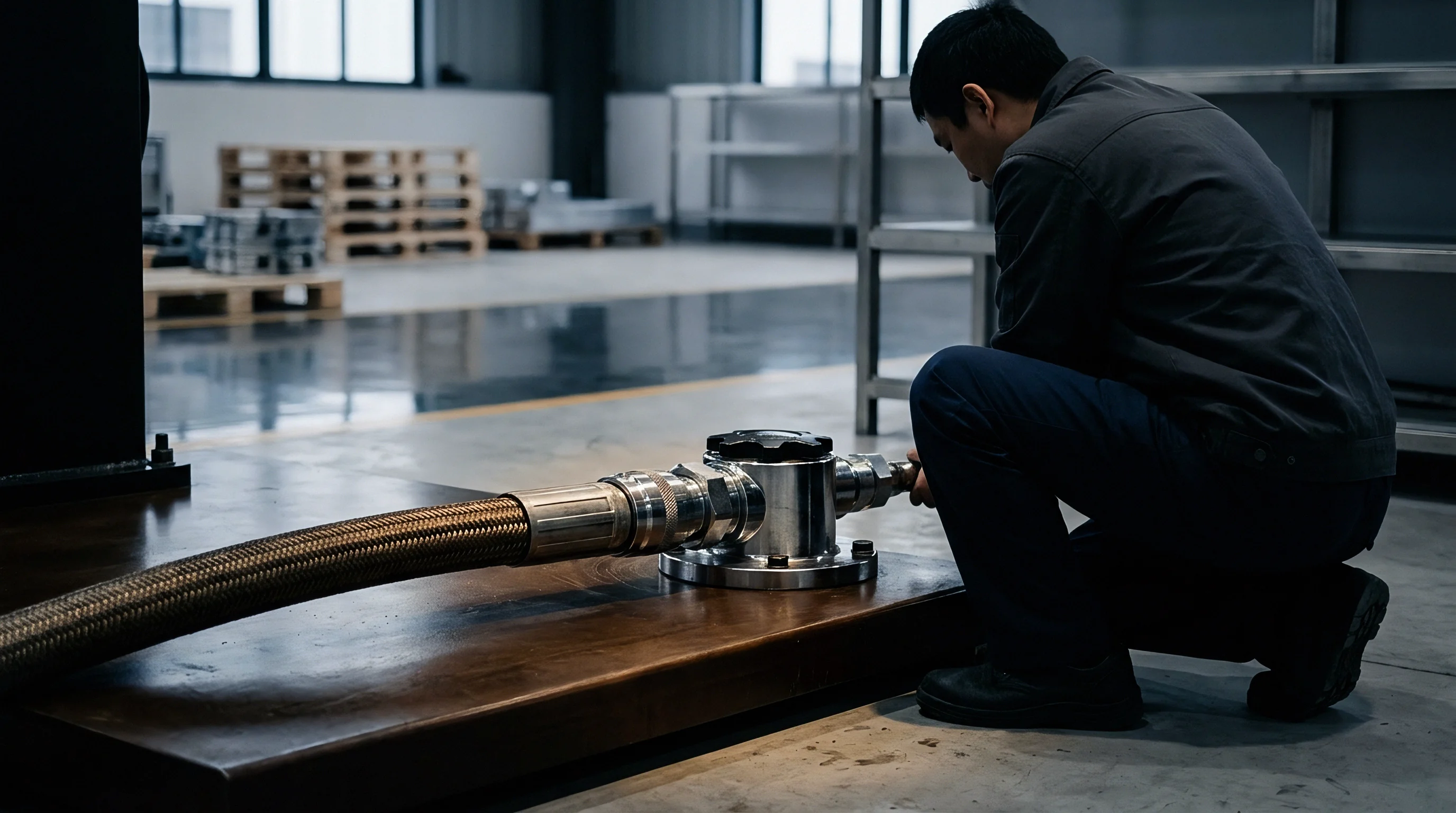
Corrosion attacks exposed ground surfaces during thirty-five days of maritime transit through humid equatorial waters. Custom industrial machinery bolted to wooden skids suffers salt fog penetration, vibration loosening, and structural shock inside ocean freight containers. When an escrow release milestone ties twenty percent of payment to port departure or bill of lading generation, the buyer assumes transit risk for equipment that may arrive at the destination plant with pitted linear ways and warped structural castings.
Protection against transit degradation requires rigid packing specifications linked directly to escrow release documentation.
Packaging inspections must occur prior to crate sealing. Moisture vapor transmission rates through compromised plastic wrap turn container interiors into galvanic corrosion chambers when temperature differentials cause condensation on bare metal. Vapor-corrosion inhibitor film, vacuum-sealed aluminum barrier foil bags, and desiccants calculated according to DIN 55474 standards form the baseline barrier for sea freight.
Machined cast iron surfaces require oil-based protective coatings with proven salt-spray resistance exceeding 120 hours under ASTM B117 exposure standards. Crates conceal internal corrosion.
- Slideway Rust Inhibitor Application covers bare machined beds and linear guide rails with high-viscosity petroleum wax compounds prior to mechanical interlocks being clamped.
- Internal Shock Sensor Mounting fixes dual-axis mechanical impact indicators directly onto machine beds to register handling accelerations exceeding five gravities during loading.
- Barrier Bag Vacuum Extraction draws interior moisture down to thirty percent relative humidity before sealing the four-ply laminate aluminum enclosure.
- Solid Timber Crate Bracing locks structural machine feet to heavy floor stringers using high-tensile threaded rods and spring washers to suppress harmonic freight vibrations.
Custom machinery resists standard resale. If shipping documentation generates escrow payouts before physical confirmation of arrival condition, the foreign buyer carries full financial exposure for structural freight damage. Marine insurance claims across international jurisdictions involve twelve to eighteen months of surveyor disputes, salvage value negotiations, and policy coverage exclusions.
The final escrow release mechanism must retain a meaningful balance until destination uncating confirms mechanical integrity.
Vibration data recorders mounted to machine chassis during export handling demonstrate that forty percent of mechanical misalignment issues originate during drayage between mainland workshops and departure berths.
Skimping on structural timber thickness or barrier foil integrity leaves precision ground machinery ruined by sea mist, destroying months of custom engineering work while legal arguments over carrier negligence drag through overseas maritime arbitrations.

Forum
Judicial enforcement across international borders separates viable commercial escrows from illusory paper protections. A contract designating an offshore escrow custodian in Singapore or Hong Kong operates smoothly as long as both commercial parties cooperate voluntarily. The moment technical performance stalls or mutual accusations of breach arise, the escrow agent freezes the capital pool, refusing to disburse funds to either counterparty without joint instructions or a final, non-appealable arbitral award.
Selecting an unworkable dispute resolution forum guarantees that escrowed funds remain frozen indefinitely while legal costs erode the underlying balance.
Cross-border dispute mechanisms require alignment between the arbitral seat, the governing law, and the physical location of the supplier’s operating assets. Pursuing a mainland manufacturing entity through courts in London, New York, or California yields hollow default judgments that Chinese intermediate people’s courts decline to enforce under sovereign reciprocity principles. Bilateral enforcement functions through the New York Convention on the Recognition and Enforcement of Foreign Arbitral Awards.
Mainland courts recognize arbitral decisions rendered by established institutions such as the Hong Kong International Arbitration Centre, the Singapore International Arbitration Centre, and the China International Economic and Trade Arbitration Commission.
| Dispute Forum Seat | Average Institutional Duration | Asset Preservation Speed | Mainland Court Recognition Record | Average Tribunal Cost (USD) |
|---|---|---|---|---|
| CIETAC (Beijing or Shanghai) | 9 to 14 months | Fast: Direct court property preservation | Direct domestic recognition and execution | 25,000 to 45,000 |
| HKIAC (Hong Kong) | 12 to 16 months | Rapid: Mutual Arrangement interim relief | High: Established reciprocal enforcement track | 45,000 to 80,000 |
| SIAC (Singapore) | 13 to 18 months | Slow: Demands separate mainland filings | Moderate: New York Convention verification | 55,000 to 95,000 |
| London Court of International Arbitration | 18 to 26 months | Very Slow: No direct mainland court link | Variable: Subject to local scrutiny | 80,000 to 140,000 |
Property preservation remains the decisive operational mechanism in cross-border equipment disputes. Under the arrangement concerning mutual assistance in court-ordered interim measures between the mainland and Hong Kong, parties to arbitral proceedings administered by eligible institutions can apply directly to mainland intermediate people’s courts for property preservation orders. An overseas purchaser discovering that a supplier has abandoned an equipment build can freeze the factory’s domestic bank accounts or unencumbered production machinery while the Hong Kong arbitration proceeds.
This capability prevents the domestic vendor from draining operating accounts during proceedings.
Where Does Technical Recourse Lie after Final Acceptance?
Legal remedies diverge sharply once machinery clears customs and enters destination factory operations. Under Chapter Nine of the PRC Civil Code governing sales contracts, acceptance of subject matter without timely written objection within agreed inspection periods constitutes formal waiver of visible non-conformity claims. For specialized industrial equipment with complex control logic, internal software bugs or latent metallurgical flaws in custom-machined spindles manifest only after three to six months of full production loads.
If the escrow agreement released ninety-five percent of contract value upon bills of lading, the buyer holds virtually zero commercial leverage to compel the manufacturer to dispatch service engineers across international borders.
Intermediate courts in manufacturing provinces routinely enforce foreign arbitral awards ordering escrow release when the claimant presents verified factory inspection records signed by local quality personnel.
Take a 500,000 USD custom automated assembly cell dispute under Hong Kong International Arbitration Centre administration. Assume legal fees, expert witness retainers, and institutional filing costs total 110,000 USD over fourteen months of hearings. If the remaining disputed escrow tranche represents only fifteen percent of the contract price, or 75,000 USD, proceeding through formal arbitration guarantees a net financial loss for the buyer regardless of legal victory.
The arithmetic forces buyers to structure milestone releases so that retained funds consistently exceed the fully loaded cost of international dispute resolution. When that economic parity breaks down, legal recourse transforms into self-inflicted balance sheet damage.
The unresolved question remains whether emerging regional arbitration centers operating outside established metropolises will reliably grant interim asset freezes over domestic supplier inventory when disputes involve proprietary high-mix software source codes.

Settlement
Financial closeout requires reconciling punch lists, spare parts packs, final software source code repositories, and warranty holdback tranches. In high-mix low-volume machine supply, the final ten percent escrow tranche functions as a de facto performance bond covering latent equipment failures during the initial operating year. Equipment builders frequently treat this final retainage as a lost margin buffer, refusing to answer service calls once the primary ninety percent has cleared into mainland operating accounts.
Managing long-tail warranty exposure requires clear procedural conditions governing final escrow liquidation.
Site Acceptance Testing at the buyer’s destination plant mirrors the initial factory run-off while adding real-world production variables. Destination utility fluctuations, factory floor compressed air dew points, and local raw material variances test the machine’s true functional envelope. Wiring errors trigger false trips.
An automated cell designed to position stamped brackets within twenty-five microns will generate scrap rates exceeding eight percent if line voltage sags during peak manufacturing shifts. The escrow settlement agreement must specify that the final holdback period begins only after the equipment operates for thirty consecutive days at or above ninety percent overall equipment effectiveness under actual factory production conditions.
Latent defects in custom equipment demand swift technical intervention. When a custom indexing table cracks an internal cast drive gear four months into operation, flying a field service technician from Zhejiang to North America or Europe costs roughly 12,000 USD in flights, visas, lodging, and daily labor billings. If the contract holds no active escrow retainage, the machine builder declines to dispatch personnel, offering instead to mail replacement gear blanks for the buyer’s internal maintenance crew to machine, heat treat, and install.
Escrow agreements must incorporate explicit self-help clauses allowing the buyer to deduct verified third-party repair and local precision machining costs directly from the escrow balance if the seller fails to deploy qualified personnel within fourteen calendar days of formal notice.
Final liquidation of the escrow account closes the procurement cycle. The escrow agent releases the remaining funds upon receipt of a joint closeout letter or the expiration of the defect liability period without active, unresolved claims. In disciplined operations, the buyer preserves technical documentation, original PLC ladder logic, and physical coordinate measurement records throughout the machine’s entire operational lifecycle.
Retaining financial leverage until machinery performs continuously on the plant floor remains the sole reliable defense against cross-border operational failure.