Contractual Remedies for Unauthorized Line Teardowns in Contract Manufacturing Plants
Unauthorized line teardowns trigger contractual re-qualification fees, line fee forfeitures, and direct damages enforceable via local Chinese arbitration.

Breach
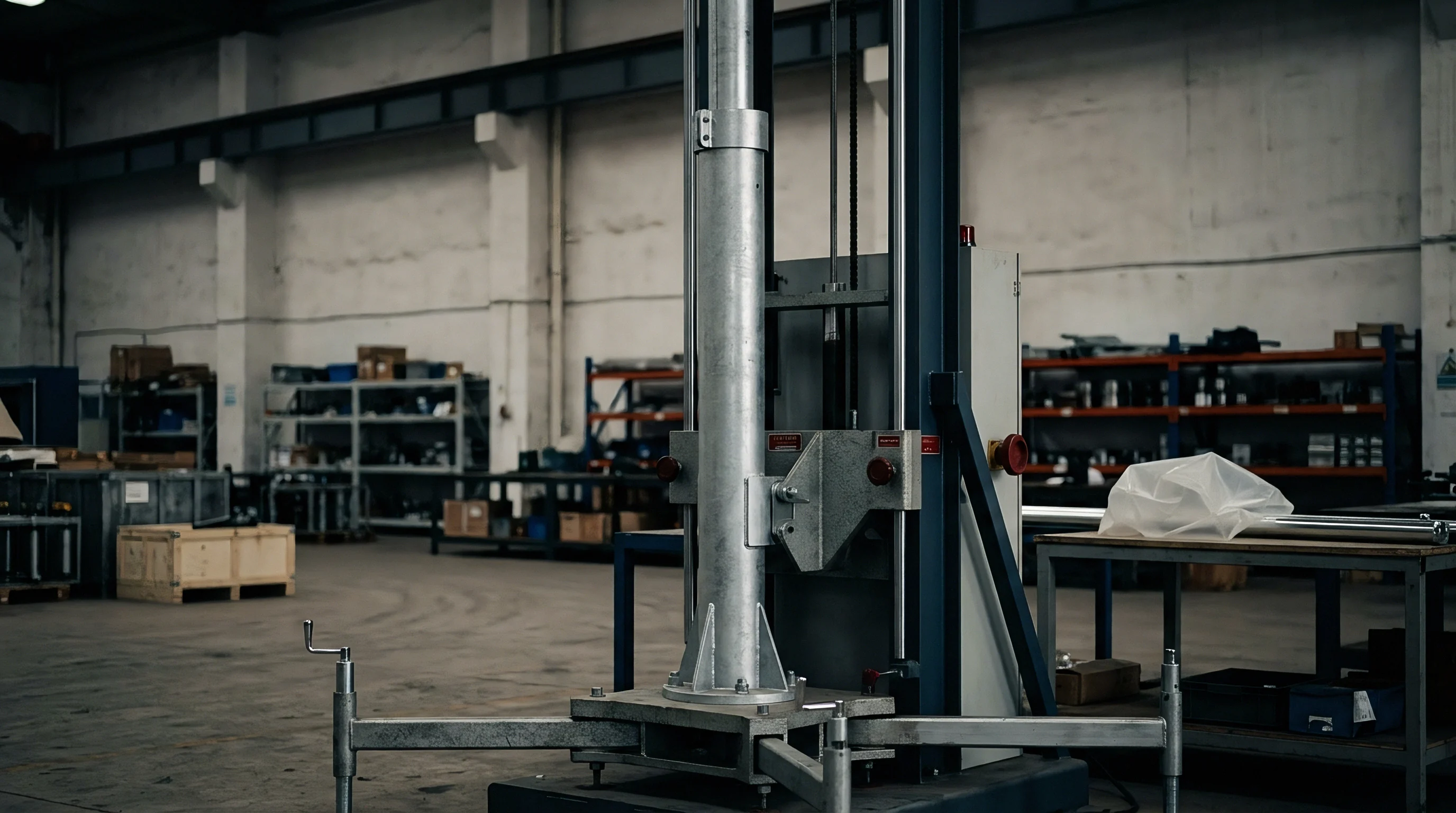
Unannounced dismantling of dedicated production equipment in contract manufacturing facilities occurs when factory management reallocates machinery, fixtures, or test stations to serve competing customer orders. Contract manufacturers face constant tension between line utilization targets and strict buyer exclusivity terms. When higher-margin spot orders arrive or volume commitments from another client surge, plant operations directors routinely dismantle reserved cells during quiet shifts.
Equipment gets moved, mounting jigs are unscrewed, and skilled operators shift to neighboring bays.

Mechanics of Unannounced Line Disassembly
Contract manufacturers operating under thin margins frequently reassign automated placement heads and testing stations during production lulls. The machinery stops. This practice disrupts process control limits established during sample qualification.
SMT placement machines, selective soldering equipment, and customized end-of-line test fixtures rely on precise physical leveling and calibrated thermal profiles. Tearing down a line to free up floor space alters feeder calibrations, misaligns conveyor rails, and degrades optical inspection baselines.
Factory managers rarely notify foreign buyers before breaking down a dedicated line. Unannounced moves void calibration certificates. Production logs often conceal these pauses by recording them as scheduled preventive maintenance or line retooling.
When the buyer’s purchase order releases, the factory reassembles the line in haste using substitute mounting hardware or uncalibrated replacement modules.
SMT placement machinery secretly shifted during night shifts creates micro-cracks in optical alignment rails that ruin subsequent placement accuracy.

Tooling Displacement and Capacity Siphoning
Factory directors reallocate reserved capital assets whenever spot order pricing from external clients exceeds the agreed contract margin. Capacity drops to zero. Customized aluminum stamping dies, plastic injection molds, and dedicated automated assembly nests get unbolted from main presses and transferred to unmonitored production bays.
This physical relocation causes immediate dimensional wear on guide pins and thermal cooling jackets.
Subcontractors frequently accept high-volume orders that exceed their nominal factory floor footprint. To accommodate these influxes, plant managers establish temporary sub-assembly stations in warehouse aisles while dismantling dedicated client cells. Tooling wear increases sharply.
These unauthorized shifts directly violate dedicated capacity agreements, introducing untracked environmental contamination, inconsistent torque settings, and unverified worker substitutions into the manufacturing flow.
The factory floor team moved the secondary assembly station to perform scheduled preventive maintenance and calibrate the testing rig.


Evidence
Establishing unauthorized equipment breakdown requires concrete factory floor telemetry that independent technical inspectors can document during physical visits. Floor supervisors sign daily logs. Relying on factory-provided written reports leaves buyers vulnerable to fabricated uptime metrics and scrubbed maintenance logs.
Objective verification depends on direct physical telemetry collected directly from power lines, PLC units, and worker access gates.

Telemetry Audits and SCADA Uptime Logs
Industrial power consumption tracking on main distribution breakers provides objective confirmation of machine operational status. Data logs do not lie. Modern automated assembly lines draw distinct electrical current signatures during active production cycles compared to idle states or complete power-downs.
Installing independent power monitoring meters on primary sub-panels allows buyers to continuously track line activity without relying on factory internal networks.
Programmable Logic Controller events register every physical interruption, emergency stop, and module disconnection. When a line undergoes unauthorized disassembly, PLC memory registers physical disconnect signals from sensor networks and pneumatic actuators. Technical auditors pull these raw event logs directly via onboard diagnostic ports, bypassing factory-managed supervisory control platforms.
Mismatches between billed production hours and PLC power signatures reveal unauthorized downtime.
Verification requires physical access. Physical asset auditing mandates systematic checking of physical floor parameters:
- Unregistered tooling swaps indicate that primary injection molds or stamping dies were transferred to non-contracted presses, altering critical dimensional tolerances across production batches.
- PLC timestamp mismatches expose periods where machine system clocks were intentionally rolled back to cover unapproved line teardowns during weekend shifts.
- Discontinuous batch serials confirm that production equipment ran external jobs between scheduled client runs, leaving residue and uncalibrated tooling behind.
- Displaced calibration tags show that secondary testing equipment was moved across factory bays without undergoing required recalibration routines.

Shift Roster Verification on Floor Operations
Turnstile badge access records cross-referenced against assembly skill matrices expose missing labor shifts. Specialized assembly cells require certified technicians to maintain yield rates. When factory management reallocates staff to other client lines, worker sign-in records on the dedicated line drop immediately.
Automated vision systems and serial barcode scanning stations also generate timestamped activity records that pinpoint exact operational pauses.
Audit procedures must compare building access turnstile logs against station log-in records. A line that shows active assembly status in factory reporting while turnstile logs confirm zero assigned operators in the dedicated bay reveals fabricated data. Retaining local third-party engineering auditors to perform unannounced floor audits during night shifts remains the most effective method for documenting unauthorized line movements.
Clause 14.3 of the Master Services Agreement reduces the buyer’s payment obligation for affected batches by forty percent whenever equipment telemetry records an unannounced gap in dedicated line power exceeding four consecutive hours.


Remedies
Contractual recovery relies on explicit agreement structures that convert operational downtime into enforceable monetary debts. The contract governs liability. General breach clauses in standard purchasing contracts rarely cover the complex losses resulting from unannounced equipment teardowns.
Buyers must establish specific liquidated damage schedules, line reservation fee forfeitures, and mandatory re-qualification cost recovery mechanisms before signing manufacturing agreements.

Who Bears Revalidation Expenses after Unannounced Line Disassembly?
Restoring a dismantled production cell to certified manufacturing status incurs significant expenses across calibration, scrap, and labor. Re-running formal Installation Qualification, Operational Qualification, and Performance Qualification validation runs consumes substantial engineering hours. The contract must explicitly assign all third-party engineering audit fees, golden sample recalibration charges, and component scrap costs directly to the supplier whenever unauthorized line disassembly is confirmed.
Rework costs escalate rapidly. Re-qualification requires full First Article Inspection of parts produced after reassembly. If the teardown damaged precision fixtures or optical sensor mounts, the contract must hold the supplier responsible for full replacement costs of customized tooling assets, alongside all lost production time measured against standard line yield rates.
| Failure Mode | Contractual Base Claim | Direct Cost Calculation ($/day) | Typical Settlement Ratio (%) |
|---|---|---|---|

Quantifying Capacity Reservation Fee Forfeiture
Financial losses compound rapidly when dedicated manufacturing spaces sit idle while replacement components are sourced. Take a dedicated four-zone surface-mount assembly cell with an agreed monthly capacity reservation fee of $45,000, operating on a planned 26-day monthly schedule. Assume an unannounced line teardown halts production for 8 business days during a peak shipping window.
Setup parameters shift.
The baseline reservation fee forfeiture calculates as $45,000 divided by 26 operating days, yielding $1,730.77 per day in wasted capacity fees. Over an 8-day stoppage, the direct fee forfeiture equals $13,846.16. Line re-qualification requires a complete 3-day Performance Qualification protocol costing $4,200 per day in engineering fees, adding $12,600.
Scrap generated during alignment runs accounts for 2,500 units at a unit cost of $6.50, totaling $16,250 in direct material loss.
Adding contractual liquidated damages set at a standard $2,500 daily operational downtime penalty ($20,000 across 8 days) brings total financial recovery to $62,696.16 for the single 8-day teardown event. These funds offset outstanding purchase order invoices or draw down directly from escrowed supplier security deposits.
A thirty-day unauthorized teardown of a four-zone SMT line generates $112,000 in unrecoverable re-qualification expenses and component scrap.
An operational decision framework helps buyers evaluate contract structures before committing capital to offshore plants:
- Define dedicated asset boundaries clearly within contract annexes, attaching explicit floor layout schematics and serial numbers for every reserved machine.
- Set mandatory daily liquidated damage figures based on lost gross margin rather than simple purchase order value.
- Establish an escrow account holding at least fifteen percent of total tooling value to cover potential re-validation costs.
- Include explicit clauses permitting instant buyer offset of audit and re-qualification fees against pending factory supply invoices.
Failing to specify exact daily penalty formulas in the original manufacturing agreement leaves buyers absorbing all line re-qualification expenses and customer chargebacks during line restoration.

Jig
Mechanical controls prevent equipment movement before commercial disputes arise inside factory bays. Relying solely on legal threats after a line is dismantled provides poor protection against missed customer delivery windows. Physical securing hardware, tamper-evident indicators, and dedicated enclosure locks create visible physical barriers against unapproved line modification.

Physical Security Sealing for Production Tooling
Tamper-evident serial tags attached to primary fixture mounting bolts detect unauthorized machine movement. High-tensile steel cables secured with uniquely numbered lead seals wrap around main structural frames and anchor points. Breaking a seal requires heavy cutting tools and immediately flags unauthorized maintenance or machinery displacement during routine floor checks.
Cell enclosure cages equipped with keyed lock systems prevent unauthorized personnel from entering the production zone during non-scheduled hours. Molds and customized stamping dies utilize heavy-duty RFID tracking tags permanently embedded into steel bolsters. Cellular-connected GPS and accelerometer modules mounted inside main mold bases transmit real-time movement alerts to off-site operations managers the moment a die is unbolted or tilted beyond thirty degrees.
| Protection Instrument | Implementation Cost | Verification Frequency | Enforceability Rating |
|---|---|---|---|

Weekly Verification Cadence for Dedicated Machinery
Operating rhythms established through scheduled and unannounced site checks enforce equipment continuous readiness. Local third-party inspectors follow a strict weekly audit protocol that verifies machine serial numbers, seal integrity, and physical station alignment against agreed master photos. Production halts on spot if seals show evidence of tampering.
Unannounced virtual audits supplement physical site visits. The factory management team must complete live video walkthroughs within thirty minutes of an off-site buyer request, broadcasting clear close-up footage of serial tags, line power status, and operator badge IDs. Any refusal or delay exceeding the thirty-minute response window automatically triggers a formal notice of contractual breach.
Physical inspection of serial tags on main fixture bolts reveals machine tampering far faster than reviewing monthly production spreadsheets.
Machinery locked inside secured wire enclosures on the factory floor stays intact far longer than machinery protected only by liquidated damages clauses on paper.


Arbitration
Legal enforcement across sovereign legal systems demands binding contractual structures designed specifically for local court systems. Foreign court judgments carry minimal weight in primary contract manufacturing hubs like China, Vietnam, or Mexico. To enforce contractual remedies for line teardowns, buyers must establish governing law and arbitration clauses that align with regional commercial codes and local court asset preservation procedures.

Enforcement Mechanisms under PRC Civil Law
Article 585 of the Chinese Civil Code governs liquidated damages, granting courts authority to adjust agreed penalties that exceed actual losses by thirty percent. Liquidated damages clauses set at exorbitant, arbitrary rates risk judicial reduction during proceedings. Contracts must explicitly detail how penalty calculations correspond to direct lost profits, unrecoverable overhead, and technical re-qualification expenses to survive judicial scrutiny.
Arbitration clauses choosing established regional centers, such as the China International Economic and Trade Arbitration Commission or the Shenzhen International Arbitration Court, deliver enforceable awards under the New York Convention. Contracts written in bilingual formats with Chinese as the controlling language prevent translation disputes regarding technical terms like cell teardown, dedicated lines, or tool displacement.
Risk mitigation requires a comprehensive pre-arbitration execution checklist:
- Bilingual contract alignment ensures Chinese language legal text strictly matches all technical definitions for line exclusivity and liquidated damages.
- PRC arbitration forum selection establishes jurisdiction under CIETAC or SHIAC rules rather than foreign courts that lack local enforcement powers.
- On-site security deposit offset authorizes direct deductions from supplier cash deposits or pending batch payments upon confirmed breach evidence.
- Escrowed master tooling ownership maintains registered legal title of custom dies with the buyer to enable rapid recovery via court order.

Asset Preservation Orders and Liquidation Dynamics
Securing property preservation orders through local Chinese courts freezes factory bank accounts before formal proceedings commence. The deposit absorbs the loss. Chinese courts frequently grant pre-litigation asset preservation orders when buyers submit clear telemetry evidence and post a counter-guarantee bond.
Freezing operational accounts creates immediate commercial leverage, encouraging suppliers to settle re-qualification claims rapidly without enduring years of arbitration.
Tooling recovery procedures must be specified in the master agreement. When unauthorized line teardowns compromise production integrity permanently, the buyer must hold explicit contractual rights to enter the facility with court marshals, seize proprietary dies, and transfer specialized assets to qualified secondary vendors without interference.
Legal scholars and corporate counsel continue to debate whether local Chinese courts will reliably enforce contractual penalty spikes triggered purely by IoT machine power telemetry without physical factory audit records.