Analytical Chemistry Methods for Latent Polymer Failure Inquiries across Sub-Tier Suppliers
Analytical screening via thermal and chromatographic methods catches sub-tier resin alterations before latent embrittlement triggers field failure.
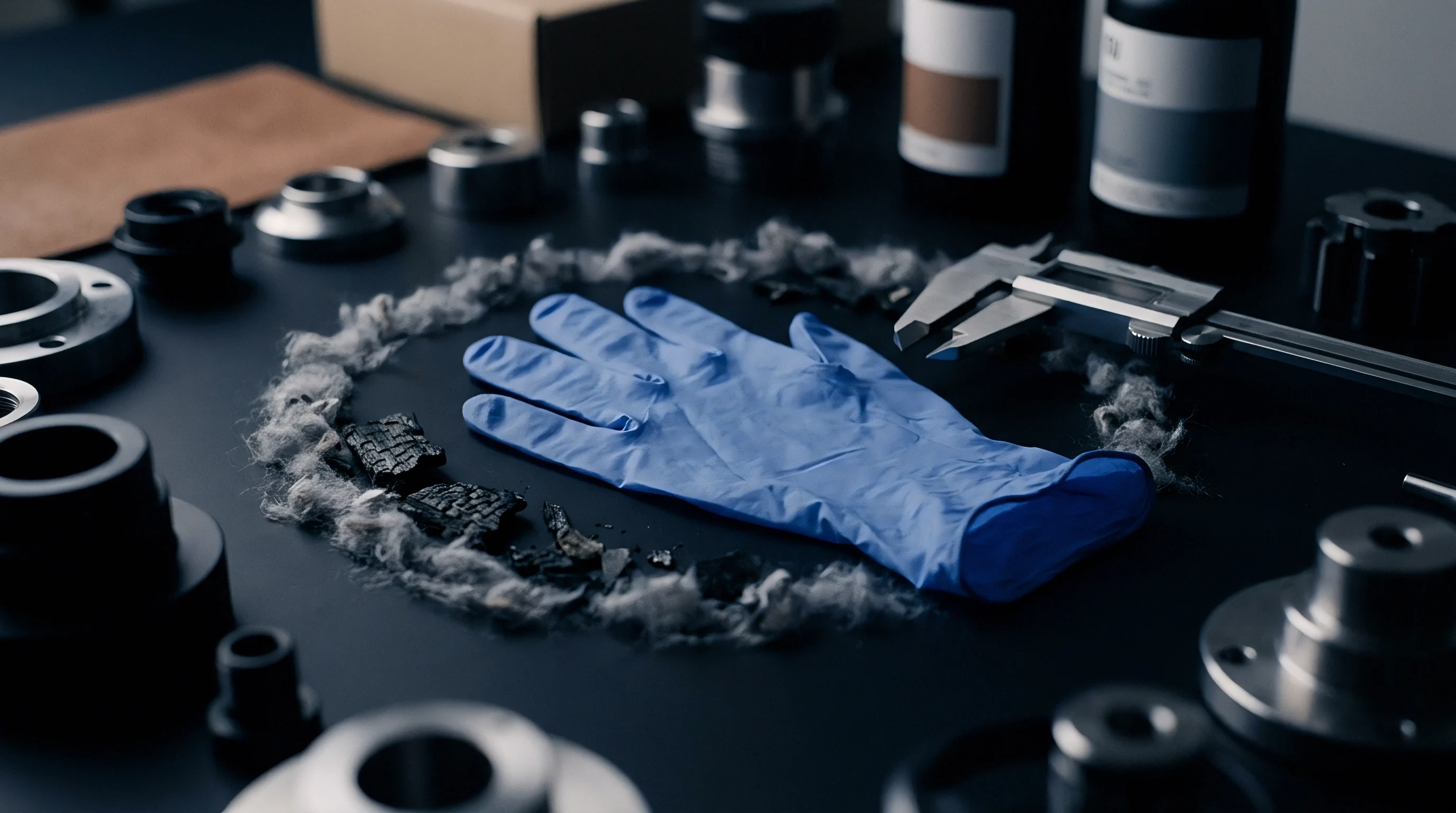

Fracture
Sub-tier compounders operating two or three steps removed from the primary contractor routinely alter resin formulations to protect thin operating margins. These modifications rarely trigger traditional receiving inspections, which rely on basic dimensional checks, melt flow index measurements, and short-term tensile testing. A polyolefin or engineering thermoplastic component produced with altered stabilizer packages, excessive regrind content, or unapproved plasticizers performs identically to a compliant part during initial factory assembly.
The latent defect remains hidden within the polymer matrix until long-term mechanical stress, environmental exposure, or thermal cycling causes sudden structural failure in the field.
Unapproved formulation changes systematically compromise the long-term integrity of molded and extruded components. When sub-tier suppliers substitute primary antioxidants such as hindered phenols with lower-grade phosphites, or cut primary carrier resins with off-spec industrial scrap, the polymer network loses its resistance to slow crack growth and environmental stress cracking. Cracking proceeds along amorphous inter-spherulitic boundaries.
The resulting embrittlement manifests six to eighteen months after deployment, turning an unmonitored material substitution into an expensive field recall.
Morphological Indictments in Polymer Microstructures
Scanning electron microscopy coupled with energy-dispersive X-ray spectroscopy reveals the microstructural signature of latent material degradation. When a sub-tier supplier introduces contaminated regrind or incompatible masterbatch carriers, phase separation occurs at the sub-micron scale. Microscopic void formation initiates along the interfaces between the matrix resin and unmixed polymer domains.
Under sustained working loads, these voids coalesce into craze zones that propagate under stresses well below the published yield strength of the virgin resin.
Fractographic examination of failure surfaces provides unambiguous physical evidence of the failure mechanism. Ductile overload leaves characteristic microvoid coalescence and elongation dimples across the fracture surface. Latent chemical degradation and environmental stress cracking yield brittle, mirror-like initiation zones accompanied by distinct beach marks or smooth radial bands.
Identifying these features pinpoints whether structural collapse stemmed from an unexpected mechanical impact or a compromised resin formulation delivered by a sub-tier vendor.
Brittle fracture surfaces without plastic deformation signal low-molecular-weight degradation rather than unexpected structural overload.

Environmental Stress Cracking and Chemical Vulnerability
Polymer chains under continuous internal or external stress undergo accelerated degradation when exposed to surface-active fluids. Environmental stress cracking occurs without direct chemical attack or polymer chain scission. Instead, liquid agents penetrate the microscopic amorphous regions between crystalline spherulites, facilitating tie-molecule disentanglement.
Sub-tier suppliers who alter plasticizer ratios or eliminate internal lubricants reduce the critical stress threshold required to initiate this fluid-assisted disentanglement.
| Failure Mode | Physical Mechanism | Root Sub-Tier Root Cause | Primary Analytical Method |
|---|---|---|---|
| Environmental Stress Cracking | Crystallite tie-molecule disentanglement under active fluid contact | Omission of stress-relieving plasticizers or addition of cross-linked regrind | Chromatographic extraction and strain-gauge fluid immersion testing |
| Thermal-Oxidative Embrittlement | Free-radical chain scission reducing mean molecular weight | Depletion or substitution of primary phenolic antioxidant packages | Oxidation Induction Time via Differential Scanning Calorimetry |
| Hydrolytic Cleavage | Nucleophilic attack on ester, amide, or carbonate backbone linkages | Inadequate desiccant drying during sub-tier processing of hygroscopic resins | Gel Permeation Chromatography and intrinsic viscosity measurement |
| Phase Separation Failure | Incompatible domain boundaries creating localized stress risers | Use of off-spec masterbatch carrier resins during color blending | Scanning Electron Microscopy and Atomic Force Microscopy phase imaging |
Evaluating chemical compatibility across sub-tier components demands rigorous screening. Standard receiving tests fail to detect reduced stress-crack resistance because the mechanism requires simultaneous exposure to stress and specific environmental agents over time. Clean resins resist environmental stress.
When sub-tier processing introduces residual thermal stresses alongside compromised stabilizer chemistry, the assembly degrades rapidly upon contact with ordinary cleaning agents, lubricants, or atmospheric pollutants.

Unapproved Regrind Infiltration across Supply Tiers
Thermal history accumulates with every processing pass through an injection molding machine or extruder. Each heating cycle cleaves polymer chains, broadens the molecular weight distribution, and consumes a fraction of the residual antioxidant package. Sub-tier molders frequently exceed specified regrind limits, mixing up to forty percent degraded runner material back into virgin resin lots without updating production logs or informing the primary contractor.
Sub-tier material alterations driving latent field failure center on four primary mechanisms:
- Antioxidant Depletion reduces the oxidative threshold of the polymer matrix, allowing rapid auto-oxidation under ambient thermal exposure.
- Chain Scission Acceleration lowers the number-average molecular weight, directly reducing impact resistance and fatigue life.
- Cross-Linked Gel Formation creates discrete rigid inclusions that act as internal stress concentrators during dynamic loading cycles.
- Volatile Contaminant Ingress introduces residual monomers and degradation byproducts that plasticize localized regions and induce phase instability.
Sub-tier suppliers often account for sudden physical embrittlement by claiming that factory storage temperatures exceeded specification, that ambient humidity degraded the raw pellets prior to processing, or that the primary contractor applied excessive torque during final product assembly.


Solvent
Dissolution and extraction techniques separate low-molecular-weight additives from the high-molecular-weight polymer matrix for quantitative chemical evaluation. Sub-tier compounders frequently alter additive formulations because primary antioxidants, ultraviolet stabilizers, and specialized flame retardants constitute a high percentage of raw material costs. Extracting these non-bound components with targeted organic media provides the raw sample required to detect formulation drift before parts enter assembly lines.
Selection of the extraction fluid depends entirely on the solubility parameters of both the base polymer and the target additives. Total dissolution followed by selective polymer precipitation yields complete recovery of additives without thermal breakdown. Alternatively, reflux extraction using a Soxhlet apparatus isolates volatile and semi-volatile compounds from insoluble thermosets or highly crystalline thermoplastics.
Standard receiving checks miss this subtle chemical drift when relying solely on physical dimensions.

Extraction Chemistry for Low Molecular Weight Additives
Quantifying stabilizer packages requires systematic isolation of additives from the polymeric core. Ground polymer particles, sized between 150 and 300 microns to maximize surface area without generating localized frictional heat, undergo solvent extraction under controlled temperature conditions. Dichloromethane, tetrahydrofuran, and toluene represent standard solvents used to swell the polymer matrix and free trapped low-molecular-weight species.
Soxhlet extraction routines running for sixteen hours yield high recovery rates for hindered amine light stabilizers and organophosphites. The extract solution is concentrated under a gentle nitrogen stream to prevent atmospheric oxidation of sensitive components prior to chromatographic analysis. Gas chromatography-mass spectrometry isolates individual additive fractions, allowing precise mass-to-charge matching against standardized chemical libraries.
Soxhlet extraction with dichloromethane for sixteen hours recovers over ninety-eight percent of unreacted plasticizers and phenolic antioxidants from polyolefin matrices.

Gas Chromatography and Pyrolysis Profiling
Direct thermal decomposition provides a powerful analytical route for insoluble or cross-linked polymeric materials. Pyrolysis-gas chromatography-mass spectrometry subjects micro-gram polymer samples to rapid thermal degradation at temperatures ranging from 500 to 800 degrees Celsius under an inert helium atmosphere. The resulting pyrolyzate fragment pattern acts as an unalterable chemical barcode for the baseline resin formula.
Pyrolysis profiling detects the presence of unauthorized recycled polymers, unapproved copolymer blends, and subtle resin grade substitutions. Chromatographic peaks corresponding to specific pyrolyzate fragments reveal whether a sub-tier supplier blended low-cost polystyrene into an acrylonitrile-butadiene-styrene component or substituted an industrial-grade polybutadiene binder. Sub-tier compounders alter resin ratios to shave pennies off part costs, assuming the primary buyer will never look beyond basic mechanical yield points.
Executing an extraction and chromatographic screening routine requires strict adherence to a validated analytical sequence:
- Cryogenic grinding of the sample component to a uniform particle size below 250 microns under liquid nitrogen.
- Accurate weighing of a two-gram analytical specimen into a cellulose extraction thimble inside a desiccated environment.
- Reflux extraction in a Soxhlet apparatus using analytical grade solvent for a minimum of twenty-four reflux cycles per hour.
- Evaporation of the extracted solution to dryness using a rotary evaporator held at 40 degrees Celsius under reduced pressure.
- Re-dissolution of the isolated residue in a precise volume of chromatographic grade acetonitrile for immediate high-performance liquid chromatography injection.

Where Do Sub-Tier Additive Substitutions Evade Audits?
Masterbatch dosing systems at sub-tier molding facilities represent a primary point of formulation vulnerability. Sub-tier operators often adjust gravimetric feeder rates down by two to five percent to save material costs during long production runs. Because color intensity can be maintained using cheaper, highly concentrated inorganic pigments, the parallel reduction in functional additives like processing aids and hindered amine light stabilizers remains completely invisible to visual inspection.
Laboratory liquid chromatography coupled with ultraviolet detection measures the exact parts-per-million concentration of functional additives in the molded part. Comparing the extract spectrum against the baseline ledger established during initial sample qualification exposes localized dosing reductions. A contract clause specifying that any deviation exceeding five percent from the approved additive baseline constitutes an immediate lot rejection empowers the primary contractor to issue formal non-conformance claims.
Supply agreements enforce analytical compliance by stating that any material change in stabilizer type, concentration, or carrier resin invalidates all prior component qualifications and shifts full financial liability for subsequent field failures to the supplying party.


Calorimetry
Thermal analytical methods measure the physical and chemical changes a polymer undergoes as a function of temperature and time. Differential scanning calorimetry and thermogravimetric analysis track thermal transitions, reaction kinetics, and composition ratios with high precision. These techniques expose sub-tier raw material substitutions by measuring enthalpy shifts, glass transition variations, thermal decomposition profiles, and oxidation induction times against approved golden sample benchmarks.
Base polymers undergo oxidation when thermal energy overcomes the activation barrier of the radical chain propagation process. Heat flow measurements during controlled heating ramps reveal the thermal history and morphological state of processed parts. Extruders degrade thermal stabilizers when run at excessive screw speeds or elevated barrel temperatures, consuming the polymer’s protective reserve before the component ever leaves the sub-tier factory floor.

Oxidation Induction Time as Stability Indicator
Oxidation induction time testing according to ASTM D3895 provides an accelerated metric for evaluating the residual thermal stability of polyolefin components. The test specimen heats under an inert nitrogen atmosphere inside the calorimetry cell until reaching an isothermal test temperature, typically 200 degrees Celsius. Once thermal equilibrium stabilizes, the cell gas automatically switches from nitrogen to pure oxygen.
The time elapsed between the oxygen stream introduction and the onset of exothermic thermal oxidation defines the stability metric.
Short stability durations indicate either an insufficient initial antioxidant formulation or severe thermal degradation during component molding. A compliant sub-tier component containing an intact primary antioxidant package maintains an oxidation induction time exceeding thirty minutes at 200 degrees Celsius. When sub-tier suppliers cut antioxidant loading or process resins at excessively high temperatures, the stability duration drops below five minutes, leaving the finished component vulnerable to ambient thermo-oxidative aging.

Thermogravimetric Quantification of Fillers and Volatiles
Thermogravimetric analysis monitors sample mass changes as a function of temperature under controlled atmosphere conditions. Heating a polymer specimen from ambient temperature to 800 degrees Celsius at a constant rate of 10 or 20 degrees per minute drives off volatile organic compounds, decomposes the organic polymer matrix, and leaves behind inorganic filler materials such as glass fiber, calcium carbonate, or talc.
| Polymer Family | Test Parameter | Standard Test Method | Acceptance Boundary Deviation |
|---|---|---|---|
| Polyamide 66 (30% Glass Filled) | Inorganic Residue Mass Fraction | ASTM E1131 / ISO 11358 | Max 1.5% absolute shift from qualified baseline |
| High-Density Polyethylene | Isothermal Oxidation Induction Time | ASTM D3895 / ISO 11357-6 | Minimum 30 minutes at 200 degrees Celsius |
| Polypropylene Copolymer | Melting Peak Enthalpy & Temperature | ASTM D3418 / ISO 11357-3 | Max 2.0 degrees Celsius shift in peak melting point |
| Polycarbonate / ABS Alloy | Glass Transition Temperature (Tg) | ASTM E1356 / ISO 11357-2 | Max 3.0 degrees Celsius shift in glass transition onset |
Discrepancies in the residual mass percentage expose sub-tier cost-cutting tactics directly. Sub-tier molders frequently alter glass fiber loadings to improve melt flow characteristics or reduce part weight without updating technical drawings. Volatiles exit early.
A drop in glass fiber content from thirty percent to twenty-two percent severely degrades structural stiffness and creep resistance under sustained mechanical stress.

Enthalpy Deviations and Crystallinity Anomalies
Integration of the endothermic melting peak during differential scanning calorimetry yields the enthalpy of fusion, expressed in Joules per gram. Comparing this measured enthalpy to the theoretical heat of fusion for a hundred percent crystalline reference polymer determines the degree of relative crystallinity within the processed component. Unapproved processing shifts, such as altered mold cooling rates or cold-mold cycling to shorten molding times, induce severe crystallinity anomalies.
Calculating the impact of sub-tier process deviations illustrates the magnitude of latent quality risks. Take a 50-tonne shipment of structural polypropylene components molded by a sub-tier vendor. Assume a baseline virgin resin exhibits an oxidation induction time of 42 minutes at 200 degrees Celsius, whereas incoming lot testing across five random samples yields an average stability duration of just 8.5 minutes with a standard deviation of 1.2 minutes.
The enthalpy of fusion drops from a baseline value of 98 Joules per gram down to 74 Joules per gram, indicating a significant reduction in spherulite development due to premature mold ejection.
Applying an empirical thermal-aging decay model demonstrates that a reduction in stability duration from 42 minutes to 8.5 minutes corresponds to an estimated eighty percent loss in thermal-oxidative operating lifespan at normal ambient conditions. The mechanical impact strength of the component degrades below design specifications within fourteen months of continuous field service. The latent defect hits the primary contractor as a wave of field warranty claims long after the sub-tier molder received payment for the production run.
Processing changes that shrink cycle times always compromise the long-term crystalline structure and residual thermal defense of technical polymers.


Spectra
Spectroscopic methods identify functional groups, chemical bond configurations, and molecular backbone architectures across raw resins and finished components. Infrared absorption signatures provide a rapid, non-destructive chemical fingerprint of polymeric materials. Comparing the infrared transmission or reflection spectra of sub-tier production samples against approved baseline spectra exposes subtle chemical substitutions, surface oxidation, and masterbatch carrier mismatches before parts undergo final assembly.
Attenuated total reflectance Fourier transform infrared spectroscopy eliminates complex sample preparation by analyzing component surfaces directly. Infrared light passes through a high refractive index crystal, such as diamond or germanium, creating an evanescent wave that penetrates a few microns into the polymer sample pressed against the crystal face. This technique captures surface chemistry profiles, making it ideal for detecting oxidation layer formation, lubricant blooming, and sub-tier mold release contamination.

Surface Oxidation Indices via Infrared Absorption
Thermal and photochemical degradation of polyolefins generates oxygenated species, including carbonyl, hydroxyl, and hydroperoxide functional groups. The growth of the absorption band centered near 1715 inverse centimeters corresponds to carbonyl stretch vibrations, providing a quantifiable metric for material degradation. The carbonyl index is calculated by dividing the peak absorbance of the carbonyl band by the absorbance of an invariant reference band, such as the methylene bending peak at 1460 inverse centimeters.
Quantifying surface degradation exposes parts that underwent severe thermal stress during sub-tier molding or prolonged outdoor storage. Base polymers undergo oxidation when exposed to solar radiation or elevated barrel temperatures. Molded components exhibiting a carbonyl index greater than 0.15 at the outer surface carry significant latent micro-cracking risks, even if the bulk mechanical properties meet initial receiving test thresholds.
A surface carbonyl index exceeding 0.15 indicates advanced thermal-oxidative degradation during molder processing, predicting premature surface crazing under working conditions.

Spectroscopic Fingerprinting of Masterbatch Carriers
Colorants and functional additives are delivered into polymer compounds using liquid or solid masterbatches. To reduce costs, sub-tier compounders frequently utilize low-grade universal carriers, such as ethylene-vinyl acetate or low-density polyethylene, regardless of whether the base polymer is polycarbonate, polyamide, or polybutylene terephthalate. Universal carriers melt at lower temperatures but create severe thermodynamic incompatibility within high-temperature engineering resins.
Analytical identification of unapproved carrier resins relies on subtracting the pure base polymer reference spectrum from the production component spectrum. Residual absorption bands at 1740 inverse centimeters (ester carbonyl) and 1240 inverse centimeters (ether linkage) confirm the presence of an unauthorized ethylene-vinyl acetate carrier within an engineering polymer matrix. These micro-domains of incompatible carrier resin act as internal stress concentrators, drastically reducing part fatigue limits.
Evaluating raw material consistency across sub-tier manufacturing locations demands a structured analytical verification workflow:
- Baseline Spectral Archiving records the full-range infrared absorption profile of qualified resin lots using both transmission and reflection modes.
- Automated Library Matching compares incoming component spectra against stored baseline ledgers using Pearson correlation coefficient algorithms.
- Functional Group Ratio Analysis measures specific peak area ratios to monitor plasticizer concentrations, copolymer ratios, and filler surface treatments.
- Micro-FTIR Chemical Mapping spatial profiles phase-separated domains and surface defects at a ten-micron spatial resolution.

Nuclear Magnetic Resonance for Copolymer Architecture
High-resolution nuclear magnetic resonance spectroscopy provides unambiguous structural characterization of polymer backbones, monomer ratios, and stereoregular tacticity. Proton and carbon-13 resonance spectra distinguish between random, block, and graft copolymers, exposing subtle resin grade swaps that infrared spectroscopy cannot fully resolve. Sub-tier vendors sometimes substitute lower-cost random copolymers for high-impact block copolymers to reduce raw material procurement costs.
Carbon-13 resonance spectra isolate distinct chemical shifts corresponding to monomer sequence distributions along the polymer chain. In a polypropylene-polyethylene copolymer component, calculating the relative signal intensities of the triad sequences reveals the precise distribution of ethylene units within the propylene matrix. Identifying a shift from a block copolymer architecture to a random copolymer architecture explains sudden drops in low-temperature impact resistance across sub-tier lots.
Will sub-tier suppliers accept analytical fingerprinting ledgers as binding material specifications during future commercial contract negotiations?


Audit
Establishing analytical control across sub-tier supply networks requires moving beyond static certificates of analysis. Sub-tier vendors often pass standard audits by submitting documentation generated from pristine virgin resin samples while running production orders using compromised material blends. Implementing a continuous, analytical baseline ledger forces sub-tier compounders to maintain strict formulation compliance across every shipped batch.
Analytical verification frameworks rely on secure retain sample workflows and unannounced bench sampling routines. Primary contractors must hold sealed baseline samples from initial component qualification rounds, stored in light-shielded, climate-controlled environments. These retain samples serve as the legal and scientific benchmark whenever latent field failures or incoming non-conformance disputes require forensic arbitration.

Multi-Tier Analytical Traceability Systems
Mapping the flow of raw polymers, masterbatches, and functional additives requires visibility into tier-two, tier-three, and tier-four suppliers. Primary contractors often lack direct contractual relationships with these deep sub-tiers, creating blind spots where unapproved material alterations occur without detection. Implementing mandatory raw material source declarations obligates direct tier-one suppliers to pass analytical baseline requirements down the entire manufacturing chain.
| Supply Tier Level | Analytical Testing Cadence | Primary Target Parameters | Commercial Non-Conformance Action |
|---|---|---|---|
| Tier 1 (Component Molder) | Every incoming lot (100% frequency) | Melt Flow Rate, FTIR Fingerprint, DSC Melting Peak | Immediate lot quarantine and sorting at supplier expense |
| Tier 2 (Resin Compounder) | Quarterly audit or lot changeover | OIT Stability, TGA Ash Content, Additive Extraction | Full batch rejection and sub-tier compounding halt |
| Tier 3 (Masterbatch Vendor) | Bi-annual audit or formulation change | Carrier Resin FTIR, Py-GC-MS Pigment Isolation | Invalidation of masterbatch approval ledger entry |
| Tier 4 (Raw Resin Synthesizer) | Annual baseline ledger re-qualification | Carbon-13 NMR Monomer Ratio, Molecular Weight via GPC | Removal from approved manufacturer vendor matrix |
Traceability protocols enforce accountability by requiring sub-tier compounders to retain a two-hundred-gram pellet sample from every raw resin batch used in production. These retain samples must be cataloged with corresponding lot numbers, processing parameters, and certificates of analysis. When quality anomalies emerge during component assembly, analytical cross-testing between the molder’s retain pellets and the finished components isolates whether the defect stemmed from raw material drift or improper molding execution.

Sampling Economics and Bench Retain Cadence
Designing a cost-effective analytical testing routine requires balancing laboratory testing expense against the financial exposure of latent field failures. Testing every incoming shipping container via high-resolution chromatographic and thermal methods generates unsustainable overhead costs. Conversely, relying solely on annual audit reports leaves the supply chain vulnerable to unannounced resin modifications.
Tiered verification strategies optimize analytical expenditure by matching testing frequency to supplier historical risk scores. High-risk sub-tiers, such as local compounders operating without ISO 17025 accredited internal laboratories, undergo mandatory FTIR fingerprinting and thermal oxidation testing on every delivered shipment. Low-risk vendors, operating under long-term analytical baseline agreements, transition to a skip-lot inspection cadence where one in every five shipments undergoes complete chemical extraction and chromatographic profiling.

Contract Enforcement through Fingerprint Ledgers
Commercial purchase agreements must incorporate explicit analytical chemistry standards alongside traditional mechanical drawings and dimensional tolerances. Incorporating infrared reference spectra, oxidation induction time minimums, and thermogravimetric ash content ranges into the binding technical dataset transforms subjective quality disputes into clear scientific determinations. When an incoming lot deviates from the recorded baseline signature, the primary contractor possesses indisputable analytical proof of material non-conformance.
Legal enforceability hinges on the precision of the contractually defined testing methods. Standard supply contract clauses must specify the exact analytical protocols, instrument operating parameters, and acceptable statistical variance thresholds used to determine compliance. Defining these parameters in advance prevents sub-tier suppliers from challenging laboratory findings using non-standard internal testing routines.
Failing to establish binding analytical baseline ledgers leaves primary contractors completely defenseless when latent polymer degradation causes catastrophic field product failures.