Meaning
Experimental procedure that subjects a product or material to extreme temperature fluctuations to identify potential weaknesses in its design or manufacturing process. This method of thermal stress testing is a fundamental part of the reliability assessment for electronic components, mechanical assemblies and composite materials. It involves placing the test samples in a specialized chamber that can rapidly cycle between high and low temperature extremes, such as from minus forty to one hundred and twenty-five degrees celsius.
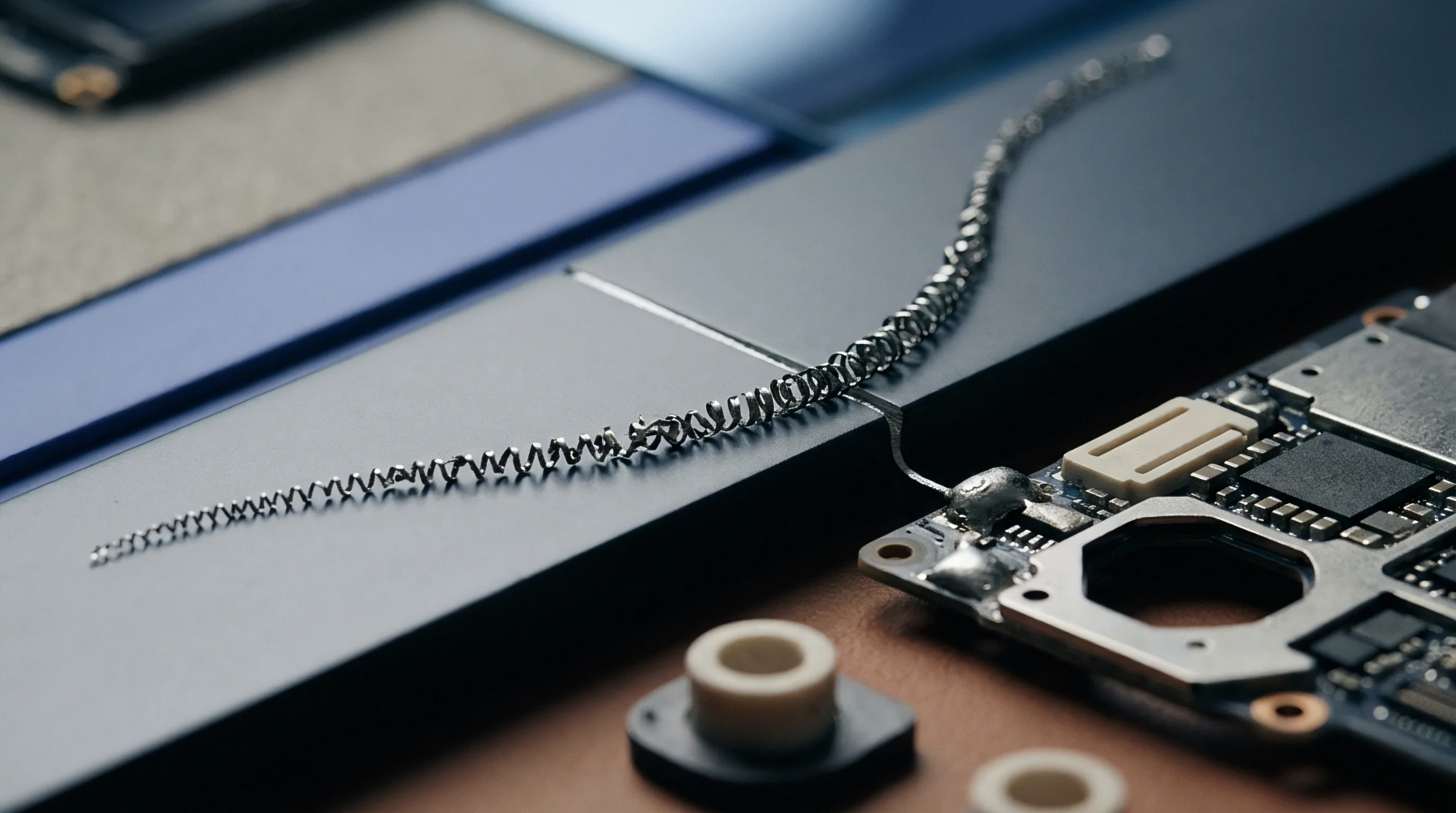
The goal is to induce mechanical strain through the repeated expansion and contraction of different materials that are bonded together. This process uncovers defects such as cracked solder joints, delaminated layers and broken wire bonds that might not be detected during a standard functional test at room temperature.
Temperature Cycle
The effectiveness of the evaluation depends on the range of the temperatures, the rate of change and the amount of time the sample stays at each extreme. A typical thermal stress testing profile includes a “dwell time” at the peak and the valley temperatures to ensure that the entire mass of the component has reached thermal equilibrium. The speed at which the temperature changes, known as the ramp rate, determines the intensity of the stress applied to the material interfaces.
Faster ramp rates, often found in highly accelerated life testing, are more likely to cause brittle fractures in materials with different coefficients of thermal expansion. Slow ramp rates are used to simulate the gradual heating and cooling that occurs during the normal daily operation of a device. Engineers must choose a profile that is stressful enough to find flaws but not so extreme that it creates failure modes that would never happen in the real world.
Failure Analysis
Once the testing is complete, the samples are carefully inspected to understand how and why they were damaged. Thermal stress testing often leads to fatigue failures, where a material slowly weakens over hundreds of cycles before finally breaking. In electronics, the most common failure is the cracking of the solder balls that connect a chip to the circuit board.
These cracks are often invisible to the naked eye and require the use of x-ray inspection, acoustic microscopy or cross-sectional polishing to identify. By mapping the location and the nature of the failures, manufacturers can identify which parts of the design are the most vulnerable. This information is used to improve the layout of the circuit board, select more compatible materials or adjust the manufacturing parameters.
For example, if a specific component consistently fails, the engineer might choose a different package type or add a support structure to reduce the mechanical strain on its connections.
Product Life
The results of these tests provide the data needed to estimate the expected duration of a product’s useful service. Thermal stress testing is used to calculate the number of cycles a design can withstand before the probability of failure becomes too high for the intended application. This is particularly important for products used in the automotive and industrial sectors, where the cost of a field failure can be extremely high.
Manufacturers in China often use these tests to qualify their products for international markets, as they provide a verifiable proof of quality. The test reports include the detailed profile of the temperature cycles, the number of cycles completed and a statistical analysis of the failure rates. This documentation is essential for meeting industry standards and for building trust with global customers.
By identifying and fixing weaknesses early in the development cycle, companies can significantly reduce their long-term warranty costs and improve their brand reputation. The final result of a successful testing program is a product that is both robust and reliable in a wide range of environmental conditions.