Coupled Hydrostatic Stress and Vacancy Diffusion in Microelectronic Solder Joints
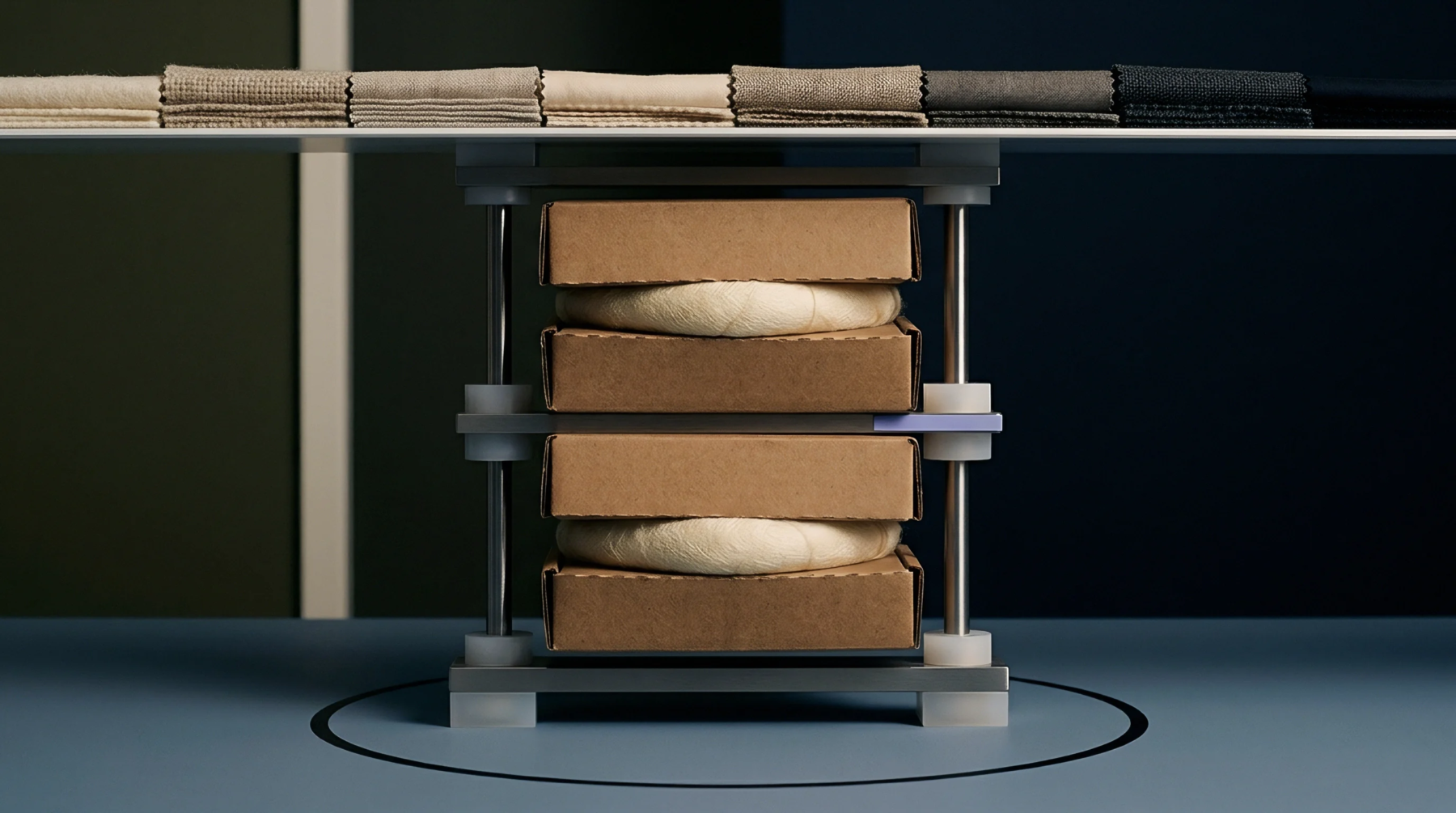
Coupled hydrostatic stress gradients drive vacancy diffusion toward intermetallic boundaries, requiring fast reflow cooling and underfill constraint tuning.
Mechanical phenomenon in composite structures describes the difference in expansion or contraction rates between two adjacent materials as the ambient temperature changes. The state of thermal mismatch identifies the internal strain gradient that develops when stiff layers like silicon and organic polymers are bonded together and subjected to processing or operation. It governs the level of residual stress that remains in a semiconductor package after curing and determines the probability of warpage or interfacial fracture during subsequent assembly steps.
This concept provides the theoretical foundation for material selection inside any multi-layer industrial product.
Difference in behavior stems from the unique coefficient of thermal expansion inherent in each chemical phase and structural form. When thermal mismatch is present, the material with the higher expansion rate attempts to expand further, but its movement is restricted by the adjacent lower-expansion layer through the common boundary. This instrument measures the magnitude of the force trying to peel the two layers apart or shear the mechanical anchors between them.
The authority that oversees design rules inside a wafer fab calculates these forces to set minimum bond areas and maximum allowable trace widths. If the mismatch is too large, it results in a bimetallic strip effect where the whole assembly bends into a concave or convex shape. This bending is the primary source of yield loss during high-precision pick and place operations because the nozzle cannot achieve a flat contact on a curved surface. statutory tolerances for flat substrates require that engineers balance the materials by placing counter-tensioning layers on the opposite side of the board. accuracy in these calculations depends on knowing how these constants shift with temperature, as a value stable at twenty degrees may spike at two hundred during lead-free reflow.
Initiation of a permanent defect often begins at the sharp corner of a hard material where the shear intensity from the expansion difference is most concentrated. inside the logic of managing thermal mismatch, the focus shifts to avoiding abrupt transitions in physical properties across the volume of the part. finding high rates of delamination after standard stress tests reveals that the cohesive strength of the interface was lower than the mechanical pull generated by the temperature swing. to fix this, developers utilize intermediate layers with stepped property values to move the stress away from sensitive silicon surfaces into more compliant resin zones. this strategy allows the bulk of the expansion force to be absorbed within the flexible glue rather than being transmitted to the brittle active circuits. because the consequence of an error is often an undetectable hairline fracture, checking the results requires non-destructive acoustic microscopy to see through the opaque levels. the executable remedy for high localized stress consists of adding dummy copper structures that act as a mechanical buffer. practitioners rely on standardized models that link specific chemical formulas to their expansion behavior to minimize risky experimentation. reliable performance depends on the zero-stress state where the bond was initially formed which acts as the reference for all future mechanical calculations.
Storage and transport conditions contribute to the cumulative fatigue as cycles accumulate even before the device reaches the factory floor. when evaluating the effect of thermal mismatch, logistics teams maintain records of environmental monitoring during deep-sea transit or warehouse stays. significant temperature swings in a non-regulated container can initiate the very micro-cracks that later lead to catastrophic failure during the intensive soldering process. managing this chain allows groups to identify why specific containers exhibit higher return rates despite leaving the source in perfect status. practitioners use these maps to justify the added cost of humidity and temperature control during critical cross-border movements. boundaries of safe storage are mapped by thermal sensors that record the duration of stay at high thermal deltas. eventually, the integrity of the entire supply chain relies on these small choices of material compatibility. the goal is a stable package where each component stays within the elastic domain of its neighbor. final confirmation of design success comes from successful long term qualification runs in high stress environments.
Coupled hydrostatic stress gradients drive vacancy diffusion toward intermetallic boundaries, requiring fast reflow cooling and underfill constraint tuning.
Expertise is a utility, not a secret. sentiention™ publishes its working knowledge as open reference: intelligence layer covering the materials it sources, the markets it enters, and the reference that serves both.