Meaning
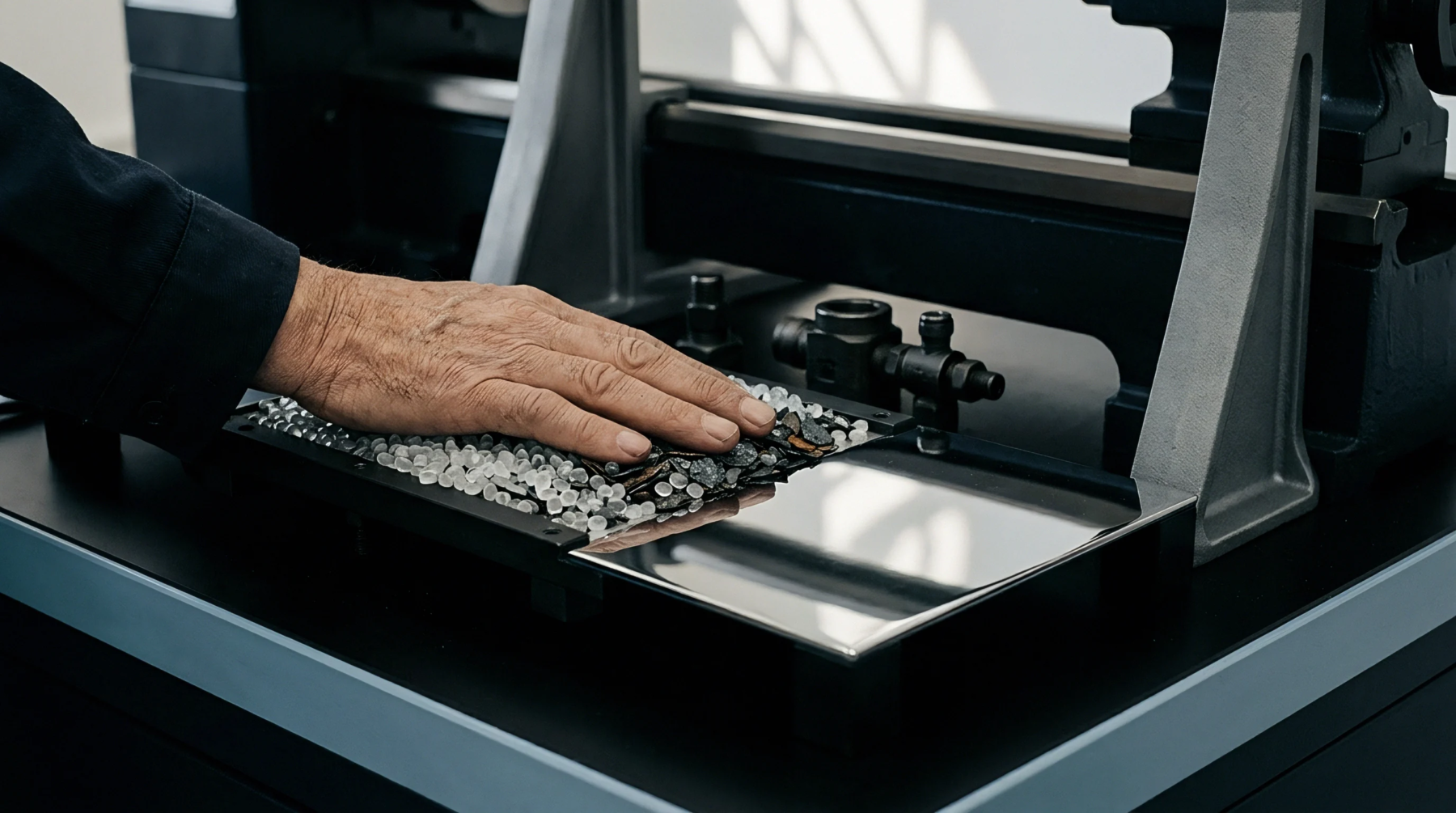
Rate of water absorption by granulated scrap polymer increases compared to virgin pellets due to changes in physical structure. In regrind moisture uptake, the recycled material gains water more rapidly from the air. This behavior requires modified drying procedures to prevent hydrolytic degradation.
Surface Area
Granulating molded parts produces irregular particles with a higher surface-area-to-volume ratio than spherical virgin pellets. This increased surface area provides more contact points for water molecules to interact with the polymer matrix. The larger exposure area allows moisture to penetrate the material more quickly, which shortens the time required for the resin to reach moisture saturation.
Storage Influence
Recycled material is often stored in open containers or non-sealed bins within the production hall where it is exposed to ambient humidity. This exposure leads to rapid water accumulation because the material has already undergone one thermal cycle, which can increase the density of polar end groups. These chemical shifts make the recycled polymer more hydrophilic than the original virgin resin.
Processing Yield
High moisture levels in the regrind material require extended drying times or higher drying temperatures to reach acceptable levels. If the recycled polymer is not dried properly, it causes gas bubbles, splay and loss of mechanical strength in the finished parts. Managing this absorption behavior allows factories to increase the percentage of recycled material they can safely use without reducing the overall quality of their products, which helps reduce material waste and improves the economic efficiency of the injection molding facility.