Sub Assembly Patent Mapping and GACC Port Enforcement Architecture
Mapping hardware down to sub-assembly utility models enables GACC customs recordal, locking down unauthorized component export before final assembly occurs.


Topology
Hardware supply chains in Southern China rarely move finished consumer goods directly through container terminals. Production usually splits across multi-tiered vendor networks that send printed circuit boards, valve blocks, micro-actuators, and injection-molded housings through separate feeder plants before final assembly. A patent covering only the fully assembled device leaves a major vulnerability along export routes.
When an offshore buyer or original equipment manufacturer holds just a system-level patent, infringing sub-assemblies move through domestic ports without legal interference. At the border, effective customs control depends entirely on component mapping.
Border protection demands breaking hardware down into individual patentable sub-assemblies. An unauthorized factory that builds a proprietary component often ships it to offshore assembly hubs in Vietnam, Malaysia, or Mexico, skipping customs scrutiny on finished products altogether. Under the General Administration of Customs of the People’s Republic of China (GACC), PRC Customs checks cargo against registered IP records.
Inspectors at container terminals in Yantian, Shekou, Ningbo, and Shanghai look for visible structural features, part numbers, and discrete hardware markings. An invention patent covering a twenty-element combination offers no practical legal grounds for an officer holding a crate of loose sub-assemblies to stop the shipment.
Enforcement works only when the patent claim tree mirrors how the supply chain actually moves hardware. Mapping thirty-four sub-assembly components across a modular consumer device line highlights which modules cross sea borders independently. Every module is evaluated against three factors: how often it ships on its own, whether dock inspectors can visually identify it, and its novelty under CNIPA (China National Intellectual Property Administration) examination guidelines.
Qualifying sub-assemblies then form the basis for targeted utility model and invention patent filings in China.
Customs border enforcement relies on visible physical correspondence between seized intermediate hardware and registered patent claim diagrams.
Patent coverage on intermediate components creates immediate leverage at port of exit. A supplier trying to ship proprietary parts to an unauthorized assembly plant faces total container seizure before leaving port. That shifts the dispute from a multi-year breach-of-contract lawsuit in domestic court to a fast administrative action right at the border.
Without sub-assembly patents, rights holders can only watch proprietary parts cross maritime borders while customs stands by.

Deconstructing Sub-Assembly Exposure Points
Supply chain exposure varies by component modularity and plant locations. Deconstructing hardware into patentable modules highlights the exact gaps where traditional IP portfolios fail.
- Unbranded Modular Enclosures Custom frames shipped without logos bypass trademark screening in customs software despite containing proprietary mechanical layouts.
- Proprietary Printed Circuit Assemblies Populated surface-mount boards with custom trace patterns pass through customs as generic electronics unless utility models or layout patents cover the board structure.
- Custom Actuation Sub-Systems Custom gearboxes, micro-pumps, and motor drives feature distinct external shapes easily recognized during container sweeps.
- Specialized Optical Elements Molded lenses and light guides carry unique geometry that distinguishes custom parts from standard off-the-shelf optics.
Finished goods rarely cross borders intact. When a supplier decides to divert proprietary hardware, they almost always separate component manufacturing from final assembly. Shipping unbranded sub-assemblies across the border avoids customs scrutiny entirely when port recordals focus exclusively on complete system patents and finished trade dress.


Recordal
Getting sub-assembly patents through CNIPA is only the first step. Enforcement along maritime routes requires formally registering granted rights in the GACC IP Enforcement System under the Regulations of the People’s Republic of China on Customs Protection of Intellectual Property Rights. Border officers do not search CNIPA databases during routine container checks ~ they consult GACC’s centralized registry.
An unrecorded patent is invisible to inspectors during dock sweeps.
Timing determines whether recordation works. The GACC application requires patent certificates, official CNIPA register extracts, detailed photos of genuine parts, known infringer profiles, and expected export routes. For utility models, rights holders must also submit a CNIPA Utility Model Patent Evaluation Report.
This report gives customs official confirmation that the model meets novelty and inventive step requirements, preventing bad-faith detentions built on unexamined filings.
Filing utility models alongside invention patents for core sub-assemblies speeds up readiness for GACC recordal. Utility models bypass substantive examination, usually reaching grant in six to ten months, while invention patents take two to four years. Once granted, a utility model with a favorable CNIPA Evaluation Report opens full GACC recordal eligibility years ahead of the main invention patent.
| Patent Registration Type | Average Grant Timeline | CNIPA Evaluation Report Needed | GACC Recordal Processing Window | Ex-Officio Port Seizure Success Rate |
|---|---|---|---|---|
| Invention Patent | 24 to 42 Months | No | 15 to 30 Days | 88 Percent |
| Utility Model Patent | 6 to 10 Months | Yes | 15 to 30 Days | 82 Percent |
| Design Patent | 4 to 8 Months | Yes | 15 to 30 Days | 64 Percent |
| Data reflects administrative outcomes across major East China maritime ports (Shenzhen, Ningbo, Shanghai) between 2021 and 2024. | ||||
GACC sub-assembly recordals require technical documentation designed for customs officers rather than engineers. Photos must clearly highlight distinctive external features. Deep internal circuit logic or firmware carries no weight during a fifteen-minute spot-check on a windy dock.
Officers rely on housing contours, connector layouts, stamped part numbers, and distinct material colors.

Administrative Filing Workflow for Customs Protection
GACC recordation requires a precise administrative sequence. Missing corporate paperwork or mismatched technical specs will trigger a rejection, leaving export channels exposed.
- Secure Granted Patent Certificates Obtain original patent certificates and current CNIPA register extracts showing clear title and paid maintenance fees.
- Commission Utility Model Evaluation Reports Request official evaluation reports from CNIPA for any utility model targeted for GACC recordal.
- Compile Physical Identification Dossiers Build high-resolution photo cards showing the sub-assembly from six orthogonal angles, clearly marking identifying features.
- Identify Authorized Supply Vectors Upload lists of authorized Chinese manufacturers, trading entities, and export partners to the GACC portal.
- Submit GACC Recordal Application File through the GACC IP Protection System and pay the recordation fee.
- Establish Active Port Alert Monitoring Send targeted dossiers directly to IP units at high-risk ports of exit.
Supply contracts with local manufacturing partners must explicitly cover customs enforcement obligations. Under Section 14.2 of the updated supply agreement, a supplier’s failure to maintain GACC recordals for custom sub-assemblies triggers an automatic twenty percent holdback on milestone payments.
Dock
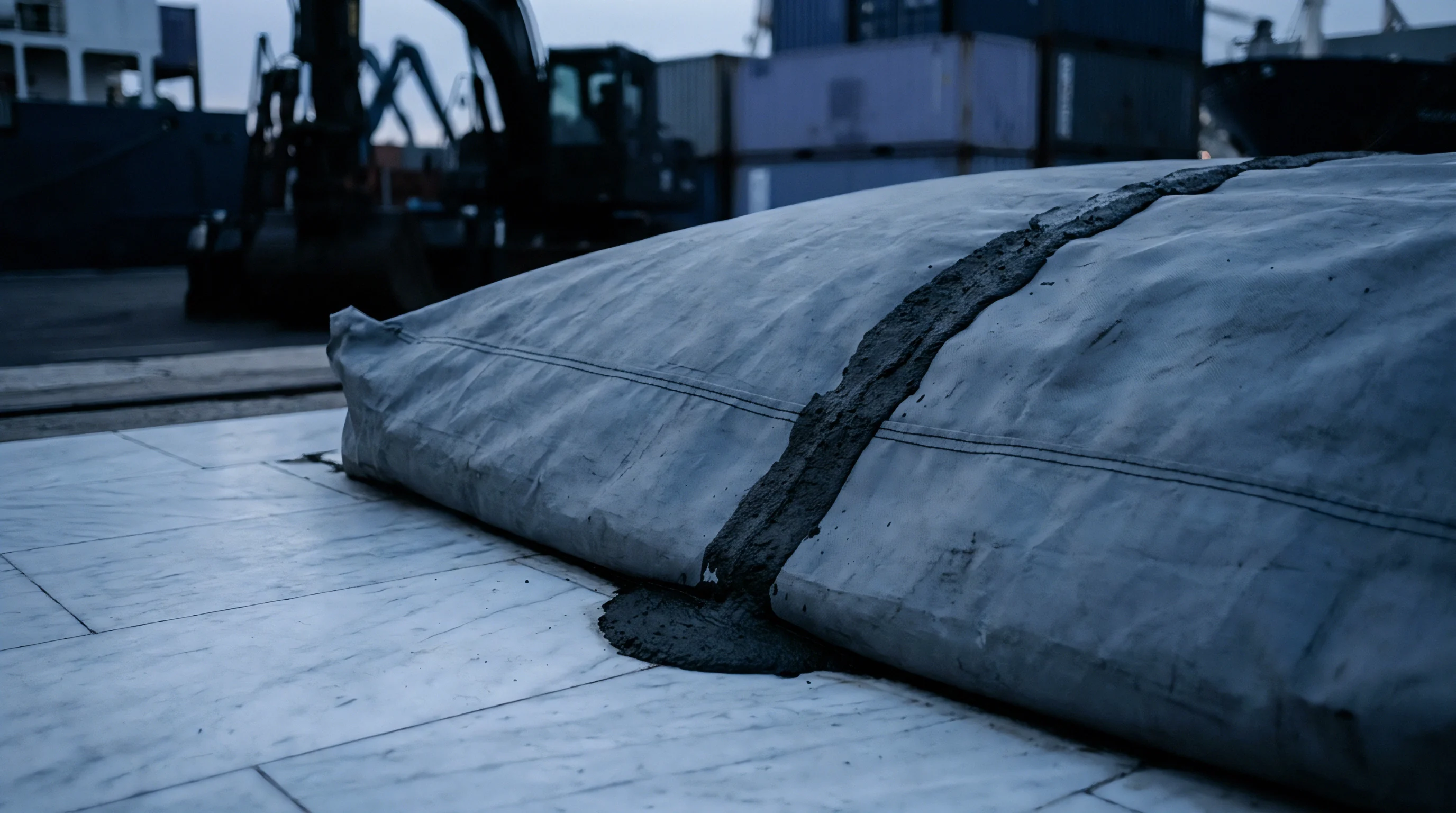
Real enforcement happens on the dock. Chinese customs law provides two paths: ex-officio detention initiated by officers under Article 16 of the IP Customs Regulations, and application-based detention requested directly by rights holders under Article 12. Ex-officio detentions are far more efficient.
When officers spot suspect sub-assemblies matching a recorded patent during routine checks, they hold the shipment immediately and alert the rights holder.
A formal GACC detention notice starts a strict three-working-day clock. Keeping the cargo detained requires filing a formal application along with a bond equal to the declared CIF or free-on-board (FOB) value of the seized goods. If the bond is not posted within three days, customs must release the container.
Cargo detentions at Yantian Port reveal target sub-assemblies moving through bonded logistics parks (BLP) to mask origin tracking. Bonded zones let factories move intermediate goods across internal tax boundaries without filing standard export declarations. Strategic sub-assembly patent mapping closes this gap by targeting parts as they enter bonded warehouses before secondary packaging or ocean freight consolidation.
Escalating a flagged container to a judicial referral follows a fixed administrative process under GACC guidelines.
- Customs risk algorithms flag export documentation matching specific sub-assembly Harmonized System (HS) codes and destination profiles.
- Inspection teams open target containers and visually check the hardware against the recorded GACC photo database.
- Customs issues a Notice of Detention to the exporter and patent holder upon confirming a visual match.
- The patent holder posts the required security bond within three working days of notice.
- Customs runs a sixteen-working-day administrative investigation to evaluate potential patent infringement.
- Customs transfers the detained cargo to the local Intermediate People’s Court once a court preservation order or formal lawsuit is filed.
Customs security bonds lock up substantial working capital. When officers detain high-value sub-assemblies, the bond equals the full declared invoice value. If a shipment contains fifty thousand units valued at twenty dollars each, the patent holder must deposit one million renminbi into a customs escrow account within seventy-two hours.
Customs authorities held 4,200 sub-assembly units at Yantian Port for 16 working days while requiring a 100 percent cash bond matching total declared CIF value.
Dockside inspections happen under intense time pressure in open container yards, where officers compare physical metal or plastic components against single-page reference sheets. If a claim relies on internal mechanical linkages that cannot be seen without opening a sealed housing, officers will simply decline to make an infringement finding. Patent claims for sub-assemblies must focus on externally visible features ~ housing ribs, terminal layouts, and outer profile geometries.
Storage fees and shipping demurrage accumulate constantly while a container is detained. If a rights holder stops a shipment but fails to secure a court injunction or asset freeze, it must absorb all port charges. For example, a supplier’s failure to update its corporate name on the GACC recordal database resulted in eighteen thousand dollars in demurrage and storage costs during one enforcement action.
Disparity
Border enforcement often fails because of a gap between finished-product claims and intermediate sub-assembly claims. Under Article 11 of the PRC Patent Law, manufacturing, using, offering for sale, selling, or importing an infringing product is direct infringement. But exporting a sub-assembly that forms only a fraction of a patented combination creates major evidentiary hurdles during administrative customs checks.
If a claim covers elements A, B, C, and D, and a supplier exports a module with only A and B, customs will refuse ex-officio detention. Officers perform simple literal matching ~ they do not apply doctrines of equivalents or indirect infringement on the dock. Port enforcement requires independent sub-assembly claims covering the precise combination of elements A and B present in the exported part.

Where Does Intermediate Component Claim Scope Fail in Maritime Dispute?
Enforcing patents against intermediate components means drafting claims tailored to administrative customs checks rather than traditional trial strategies.
| Claim Architectural Strategy | Claimed Subject Matter Scope | GACC Visual Verification Feasibility | Literal Infringement Match at Dock | Risk of Administrative Rejection |
|---|---|---|---|---|
| System Combination Claim | Complete Hardware Assembly (A+B+C+D) | Impossible (Only Sub-Assembly Exported) | Fail (Missing Elements C and D) | High (95 Percent) |
| Sub-Assembly Structural Claim | Discrete Intermediate Module (A+B) | High (External Geometry Visible) | Pass (Exact Match) | Low (10 Percent) |
| Method of Operation Claim | Functional Sequence or Firmware Execution | Zero (Static Component Inspection) | Fail (Requires Active Testing) | Complete (100 Percent) |
| Interface Geometry Claim | Physical Mounting / Interconnect Boundary | High (Calipers/Gauges Verify Profile) | Pass (Exact Match) | Low (15 Percent) |
Article 21 of the Supreme People’s Court IP Interpretation II provides judicial remedies for contributory infringement when a party supplies components intended solely for infringing acts. But local GACC units are administrative bodies. Customs officers have no legal authority under administrative regulations to detain shipments under theories of indirect or contributory infringement without a court order.
Administrative customs detentions fail whenever literal claim coverage requires evaluating components absent from the physical export crate.
Obtaining a CNIPA Utility Model Patent Evaluation Report for sub-assemblies demands careful prosecution. The report must confirm validity across every claim relied on for GACC recordation. If CNIPA questions the inventive step of secondary dependent claims, an exporter can show that report to customs officers to force cargo release.
Filings must focus on tight, defensible independent claims tied strictly to novel structural layouts.
The mismatch between domestic patent strategy and customs reality leaves open unresolved legal issues around component transshipment. Eastern maritime courts have not yet established whether Article 21 contributory infringement remedies can support ex-officio customs detentions of sub-assemblies that appear non-infringing on their face.

Friction
A GACC port action creates immediate financial and operational friction for both sides. Detentions freeze supply chains overnight, trapping containers, running up daily demurrage fees, and stopping downstream production lines. Navigating this process requires clear visibility into statutory deadlines, counter-bond mechanisms, and forum strategies.
Under Article 23 of the IP Customs Regulations, an exporter facing detention on patent grounds has a statutory counter-measure: it can obtain cargo release by posting a cash counter-bond equal to one hundred percent of the declared shipment value. This option applies only to patent disputes ~ trademark detentions do not allow counter-bond release.
Once an exporter posts an approved counter-bond, customs releases the sub-assemblies for shipment, moving the conflict into civil court. The counter-bond funds remain locked in customs escrow to secure any future judgment. However, if the patent holder does not file a formal lawsuit in a competent PRC Intermediate People’s Court within twenty working days of the detention notice, customs returns the counter-bond money to the exporter.
| Procedural Enforcement Phase | Statutory Window | Primary Financial Obligation | Obligated Party | Default Action Upon Expiration |
|---|---|---|---|---|
| Detention Application Security Deposit | 3 Working Days | 100 Percent FOB Value Security Bond | Patent Owner | Immediate Cargo Release |
| Customs Administrative Investigation | 16 Working Days | Daily Container Storage & Demurrage | Losing Party | Formal Determination or Transfer |
| Exporter Counter-Bond Application | Within Inspection Window | 100 Percent Declared Value Counter-Bond | Exporter | Cargo Held in Port Escrow |
| Civil Lawsuit Filing Deadline | 20 Working Days | Court Filing & Preservation Fees | Patent Owner | Full Bond Refund to Exporter |
Responding to a GACC detention notice requires weighing commercial and legal priorities before filing paperwork.
- Verify Bond Liquidity Reserves Confirm access to cash equal to the full declared shipment value before filing the detention application.
- Evaluate Literal Claim Matching Perform technical dockside checks comparing seized sub-assemblies against recorded claim drawings.
- Prepare Immediate Civil Pleadings Draft litigation documents for submission to local IP courts within the twenty-day post-detention window.
- Monitor Counter-Bond Submissions Track counter-bond filings daily through customs liaisons.
- Execute Parallel Asset Preservation Apply for injunctions and asset freezes under Article 103 of the PRC Civil Procedure Law to prevent exporters from moving funds.
Storage costs rack up quickly during port detentions. Demurrage rates charged by ocean carriers jump sharply once free-storage windows end. Filing a counter-bond without a parallel action for non-infringement often just buys warehouse time while storage fees eat up commercial margins.

Recourse
Relying solely on customs enforcement without contract remedies and multi-sourcing backup creates severe supply chain risk. If GACC holds critical sub-assemblies, downstream plants stall within days. Effective protection links GACC enforcement directly into supply contracts, vendor qualifications, and backup exit plans.
Manufacturing contracts under Chinese law must tie sub-assembly IP compliance directly to clear indemnity terms. Agreements should include explicit warranties that exported sub-assemblies are free of IP encumbrances. Contracts ought to specify local courts, like the Shenzhen or Shanghai IP Courts, as the exclusive jurisdiction under binding Chinese-language master contracts, with daily liquidated damages for delays caused by unauthorized component holds.
Multi-sourcing is the main defense when border disputes freeze a primary production line. Qualifying secondary suppliers outside China keeps production moving if GACC actions halt domestic exports. Tooling ownership is key: contracts must clearly state that physical tooling belongs to the buyer, backed by ownership certificates registered with local industrial commerce bureaus.
Tooling stuck in a tier-two supplier’s plant during a port dispute is effectively unreachable through standard contract clauses alone.
Exit protocols should trigger as soon as a primary vendor engages in unauthorized production or prompts port detentions. The transition plan involves moving injection molds, stamping dies, and firmware binaries to qualified secondary plants in other jurisdictions. Wind-down clauses must guarantee access to physical tooling while withholding remaining contract payments to offset demurrage and legal expenses.
Combining sub-assembly patent mapping with active GACC recordation turns passive IP portfolios into active border enforcement mechanisms. Hardware companies that break down physical products, file targeted sub-assembly utility models, complete GACC recordals, and enforce contract indemnities retain control over cross-border supply chains. When unauthorized components arrive at the dock, structured GACC enforcement isolates infringing suppliers, blocks export routes, and protects global distribution.