Remittance Verification for Capital Account Foreign Exchange Transfers
Remittance verification requires reconciling corporate registry changes, tax clearance receipts, and SAFE registrations before designated banks wire capital.


Rubric
Cross-border capital account transfers leaving Mainland China face scrutiny through the State Administration of Foreign Exchange regulatory perimeter. Unlike current account settlements that process commercial invoices and trade bills directly, capital account outflows require proof of statutory entitlement, asset verification, tax clearance, and registration before commercial banks execute outbound foreign currency wires. Regulatory compliance shifts from administrative approvals toward designated commercial bank reviews, where institutional liability for unauthorized capital flight rests directly upon the settlement clerk and branch compliance officer.
The regulatory architecture operates under Circular 13, formally known as the Notice on Further Simplifying and Improving Foreign Exchange Administration Policies for Direct Investment, alongside the Foreign Exchange Administration Regulations of the People’s Republic of China. Circular 13 delegated capital account direct investment foreign exchange registration from SAFE branch offices directly to authorized domestic banks. This devolution increased documentary standards rather than relaxing oversight.
Bank compliance departments assume regulatory responsibility under the SAFE inspection regime, applying strict evidentiary burdens to cross-border equity transfers, enterprise liquidations, outbound loans, and capital reductions.
A cross-border capital remittance remains legally stalled until the paying bank validates the underlying corporate registration record against the tax clearance filing.
Outbound capital flow categories require distinct procedural tracks. Foreign direct investment deregistration demands equity transfer agreements, audit reports of liquidation balance sheets, and prior approval filings. Cross-border security transfers require registration under Circular 29 guidelines.
Share buybacks and overseas listings proceed under Circular 37 for domestic individual shareholders or Circular 7 for employee equity incentives. Every outbound remittance track relies on a verified paper and electronic chain connecting the initial capital inflow registration to corporate equity registries and tax filings.

Regulatory Framework Governing Outbound Transfers
Article 19 of the Foreign Exchange Administration Regulations mandates authentic trade or transaction backgrounds for cross-border payments. For capital accounts, settlement banks cross-check three records before entering the SAFE Capital Account Information System. The bank inspects the State Administration for Market Regulation enterprise filing, the corporate income tax clearance dossier from the State Taxation Administration, and the historical capital registration confirmation issued during original inbound capitalization.
The Tax Record-Filing for Outbound Payments under Service Trade and Other Items regime, enforced jointly through STA and SAFE Announcement No. 40 and updated via Announcement No. 19, establishes statutory withholding thresholds. Outbound cross-border remittances exceeding fifty thousand US dollars derived from capital account dispositions require online tax clearance filings. The system issues a filing code that the receiving bank cross-examines against municipal tax databases prior to releasing foreign exchange tranches.
Any variance between declared liquidation surplus and the historical registered capital account cancels the transfer.

Designated Bank Review Responsibilities
Commercial banks function as front-line examiners under the PRC banking system. Bank settlement officers examine original documentation to verify that capital remittance values correspond precisely to underlying legal actions. Safe-harbor procedures require banks to review:
- Corporate resolution records proving board and shareholder approval for the underlying equity sale or enterprise wind-down under the revised PRC Company Law.
- Tax record-filing receipts matching the liquidation proceeds after statutory deductions for enterprise income tax, stamp duty, and applicable withholding levies.
- Capital account registry sheets generated through the SAFE direct investment foreign exchange platform, showing zero outstanding equity deficits or cross-border liabilities.
- Special liquidation audit reports compiled by a licensed Chinese Certified Public Accountant validating asset realization schedules and creditor distributions.
Settlement departments check these materials against national administrative databases. Inconsistencies between tax filings and audited net asset valuations stall outbound transactions indefinitely.


Dossier
Assembling a capital remittance submission requires structural synchronization between commercial documentation and regulatory filings. Discrepancies between historical business registration and banking transaction records halt outbound wires during initial bank screening. When foreign investors exit an onshore foreign-invested enterprise through equity liquidation or asset sales, documentary proof must demonstrate the lawful lifecycle of the original capital injection.
A complete exit filing package bridges corporate registry changes, tax assessments, and SAFE platform records. The documentary dossier demonstrates corporate standing, tax compliance, and commercial authenticity through sworn records.
| Remittance Channel | Primary Statutory Instrument | Core Evidentiary Documents | Reviewing Authority |
|---|---|---|---|
| Enterprise Liquidation | Circular 13, PRC Company Law Art. 233 | Liquidation audit report, gazette notices, tax clearance receipt, SAMR deregistration certificate | Designated settlement bank |
| Equity Transfer Outbound | SAFE Circular 19, STA Announcement No. 40 | Equity transfer agreement, valuation report, tax withholding clearance form, board resolutions | Designated settlement bank |
| Capital Reduction Outbound | PRC Company Law Art. 224, Circular 13 | Newspaper reduction notice, balance sheet, amended articles of association, creditor notification proofs | Designated settlement bank |
| Cross-Border Security Enforcement | SAFE Circular 29 Provisions | Neibaodai registration certificate, loan contracts, default notice, debt service tracking sheet | Designated settlement bank and SAFE |
Every foreign currency wire requires an unbroken chain of corporate records. A missing original verification certificate from a capital injection ten years prior prevents processing liquidation dividends, because the reviewing officer cannot verify that the original funds entered the country lawfully.

Tax Clearance and Withholding Reconciliation
Cross-border equity transfers invoke PRC Enterprise Income Tax liabilities under Article 19 of the Enterprise Income Tax Law. Outbound remittances payable to non-resident enterprises trigger a standard ten percent withholding tax on net capital gains, reduced only where a bilateral double taxation agreement applies and proper treaty filings occur under STA Announcement No. 35.
Net taxable gain equals the total transfer consideration minus the historic paid-in tax basis of the equity. Tax authorities inspect the original capital account contribution slips, historical bank credit advices, and accounting voucher records to establish this baseline. If an enterprise lacks contemporaneous documentation of historical capitalization, local tax officers assess the basis at zero, imposing withholding tax across the entire gross proceeds.

Verification Sequence for Equity Divestment
- Valuation confirmation establishes the transfer price through a licensed Chinese appraisal firm when state-owned or highly regulated asset holdings are involved.
- Share purchase execution binds buyer and seller under PRC governing law, specifying gross transaction consideration, withholding liabilities, and banking payment logistics.
- Tax declaration submission settles outbound capital gains obligations with the municipal tax bureau holding primary tax jurisdiction over the target enterprise.
- Bank data reconciliation uploads clearance forms to the SAFE Capital Account Information System to unlock outbound foreign currency wire authorizations.
Omission of any step exposes both parties to statutory administrative fines and freezes transaction proceeds onshore under PRC foreign exchange control protocols.

Knot
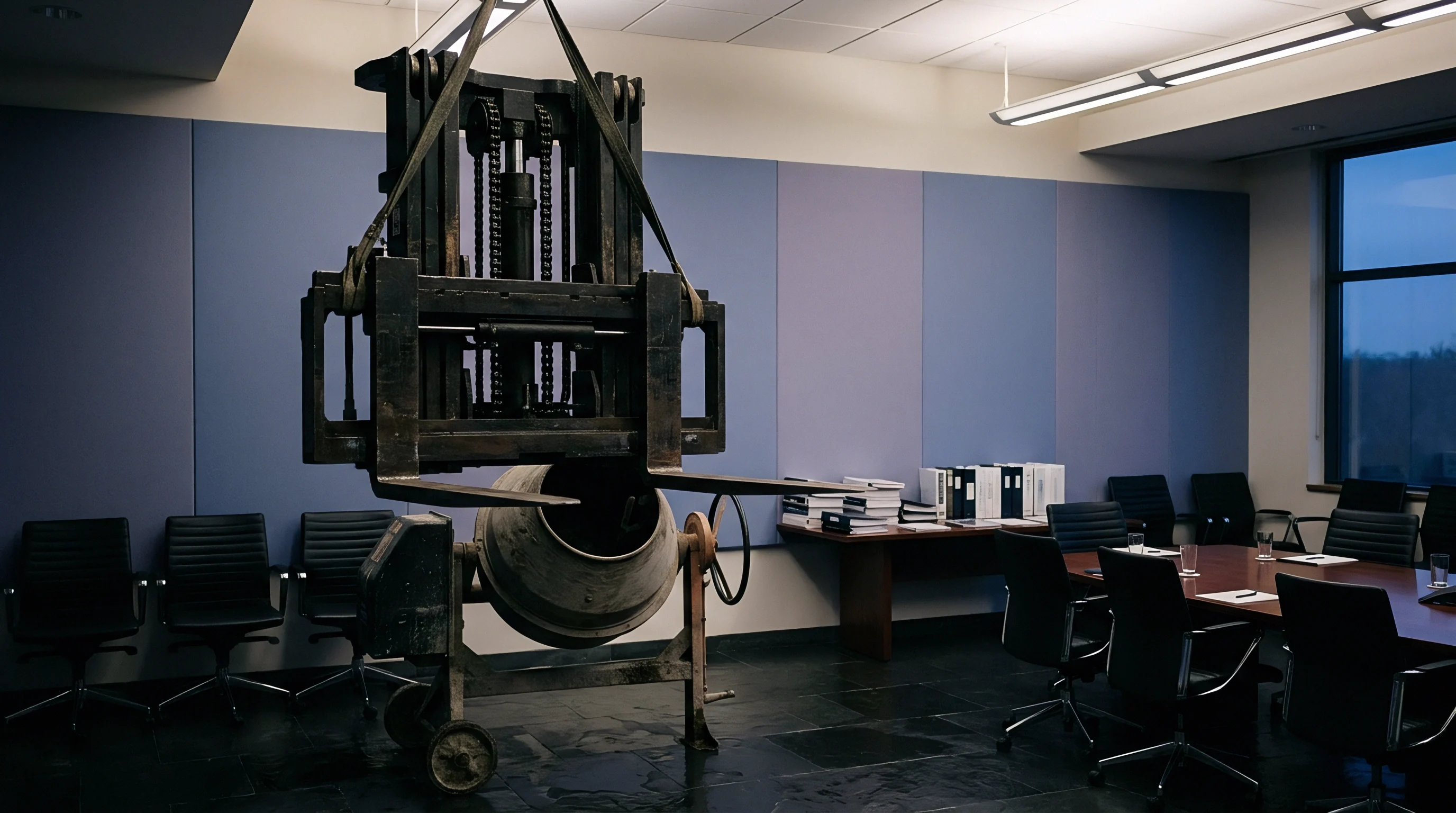
Structural transaction bottlenecks emerge when corporate documentation clashes with regulatory restrictions. The operational friction point rarely centers on commercial agreement terms between the transacting parties. Regulatory delay concentrates inside the mechanical reconciliation between the State Administration for Market Regulation corporate registry and the State Administration of Foreign Exchange capital platform.
Under the revised PRC Company Law effective July 1, 2024, capital reduction and liquidation mechanisms carry strict creditor notification timelines. Failure to navigate these formal prerequisites prevents banks from clearing outbound remittances.

Why Capital Reductions Freeze at Bank Compliance Desks?
Foreign investors frequently utilize asymmetric or formal capital reductions to repatriate surplus cash without winding down corporate structures. Article 224 of the PRC Company Law requires companies to notify creditors within ten days of a capital reduction resolution and publish an announcement in the National Enterprise Credit Information Publicity System or official newspapers within thirty days. Creditors hold thirty days from receipt of individual notice, or forty-five days from public notice, to demand debt repayment or guarantees.
Bank foreign exchange examiners reject capital reduction remittances if newspaper notices fail to mention the exact reduction sum, omit the currency denomination, or proceed before the forty-five-day creditor claim window lapses entirely. Safe settlement requires calculating this statutory waiting window from the final newspaper publication date rather than the board resolution date.
Capital reduction proceeds cannot exit a domestic account while an active creditor objection remains unresolved on the administrative registry.
The bank settlement officer confirms that the registered capital recorded with the State Administration for Market Regulation has been officially decreased on the revised enterprise business license. Remittance attempts launched before SAMR registration updates complete trigger automatic rejections on the SAFE Capital Account Information System platform. Outbound wires halt immediately.

Neibaodai Default Complications
Cross-border guarantee structures, known as Neibaodai, encounter substantial scrutiny upon loan default. In a standard Neibaodai structure, an onshore entity provides collateral or standby letters of credit to an onshore bank, which issues an offshore bank guarantee backing offshore foreign currency credit facilities. When an offshore borrower defaults, the offshore lender demands payment from the onshore guarantor bank.
Enforcement verification requires establishing that the underlying offshore borrowing complied strictly with SAFE Circular 29 restrictions. circular requirements dictate that borrowed offshore funds must be deployed strictly in offshore operational projects, prohibiting direct or indirect repatriation of loan proceeds into Mainland China via debt or equity. When the onshore bank applies to convert RMB reserves into foreign currency to satisfy the offshore guarantee, SAFE investigates historical fund flows. Discovery of circular debt mechanics, where offshore loan proceeds were lent to Hong Kong shell vehicles and round-tripped into Mainland supply operations, voids remittance eligibility.
The onshore collateral remains frozen while regulatory authorities audit the transaction for foreign exchange evasion.
Foreign exchange authorities assess penalties scaling up to thirty percent of the improperly remitted capital value under Article 39 of the Foreign Exchange Administration Regulations.


Clearance
Achieving regulatory clearance requires methodical alignment between domestic corporate actions and multi-agency regulatory interfaces. The foreign exchange settlement framework links enterprise accounts to state systems. Bank foreign exchange departments utilize the Capital Account Information System, an administrative tracking tool operating across Chinese domestic and international banking sectors.
The system traces every foreign currency dollar entering a foreign-invested enterprise from original paid-in capital accounts to final distribution or return. Discrepancies between cumulative registered capital records and outbound remittance figures require explicit reconciliation through updated registration filings.

Reconciliation Parameters for Bank Execution
When reviewing capital account outbound transfers, commercial bank settlement teams apply four validation standards:
- Corporate identity consistency ensures enterprise names, legal representative identities, unified social credit codes, and registered addresses match identically across SAMR, STA, and SAFE electronic databases.
- Transaction quota parity verifies the transfer sum remains within statutory limits established by the liquidation balance sheet or audited equity transaction value.
- Tax withholding parity confirms that every dollar of assessed non-resident enterprise income tax, individual income tax, and value-added surcharges matches official electronic clearance certificates.
- Account status integrity verifies that the remitting entity maintains an active, non-restricted capital foreign exchange account free of regulatory investigation flags or unpaid customs duties.

Structured Wind-Down Capital Remittance Mechanics
Executing an enterprise wind-down requires coordinated administrative staging. Liquidation committees must follow strict filing chronologies to secure tax approvals and banking releases.
| Stage | Operational Action | Statutory Governing Authority | Processing Horizon |
|---|---|---|---|
| Stage 1: Liquidation Formation | Shareholder liquidation resolution; formation and registration of liquidation group | SAMR; Company Law Art. 229 | 10 business days |
| Stage 2: Creditor Notice | Publication via National Enterprise Credit Information System; formal notices to creditors | Company Law Art. 235 | 45 calendar days minimum |
| Stage 3: Tax Clearance | Settlement of outstanding taxes, audit of final liquidation income, issuance of formal tax clearance | State Taxation Administration | 30 to 90 business days |
| Stage 4: SAMR Deregistration | Filing of liquidation report, cancellation of enterprise legal person status and business license | SAMR | 10 to 15 business days |
| Stage 5: SAFE Deregistration | Cancellation of direct investment foreign exchange registration; bank platform release | Designated settlement bank | 5 to 10 business days |
| Stage 6: Bank Capital Outflow | Conversion of RMB liquidation proceeds into foreign exchange; wire transfer offshore | Designated settlement bank | 3 to 7 business days |
Liquidation balance sheet accounting must balance completely before Stage 5. Bank compliance officers refuse to open the outbound wire channel if uncollected intercompany trade receivables, unresolved customs tariff liabilities, or unpaid local employee severance allocations remain listed on liquidation statements.
Liquidation funds remain held inside an escrow clearance account until the final bank wire executes, ending the operational lifecycle of the foreign enterprise in China.