Judicial Enforcement of Equipment Retention Waivers in Chinese Insolvency Disputes
Unregistered equipment retention waivers fail against Chinese bankruptcy administrators, turning proprietary machinery into unsecured insolvency liquidation assets.

Grid
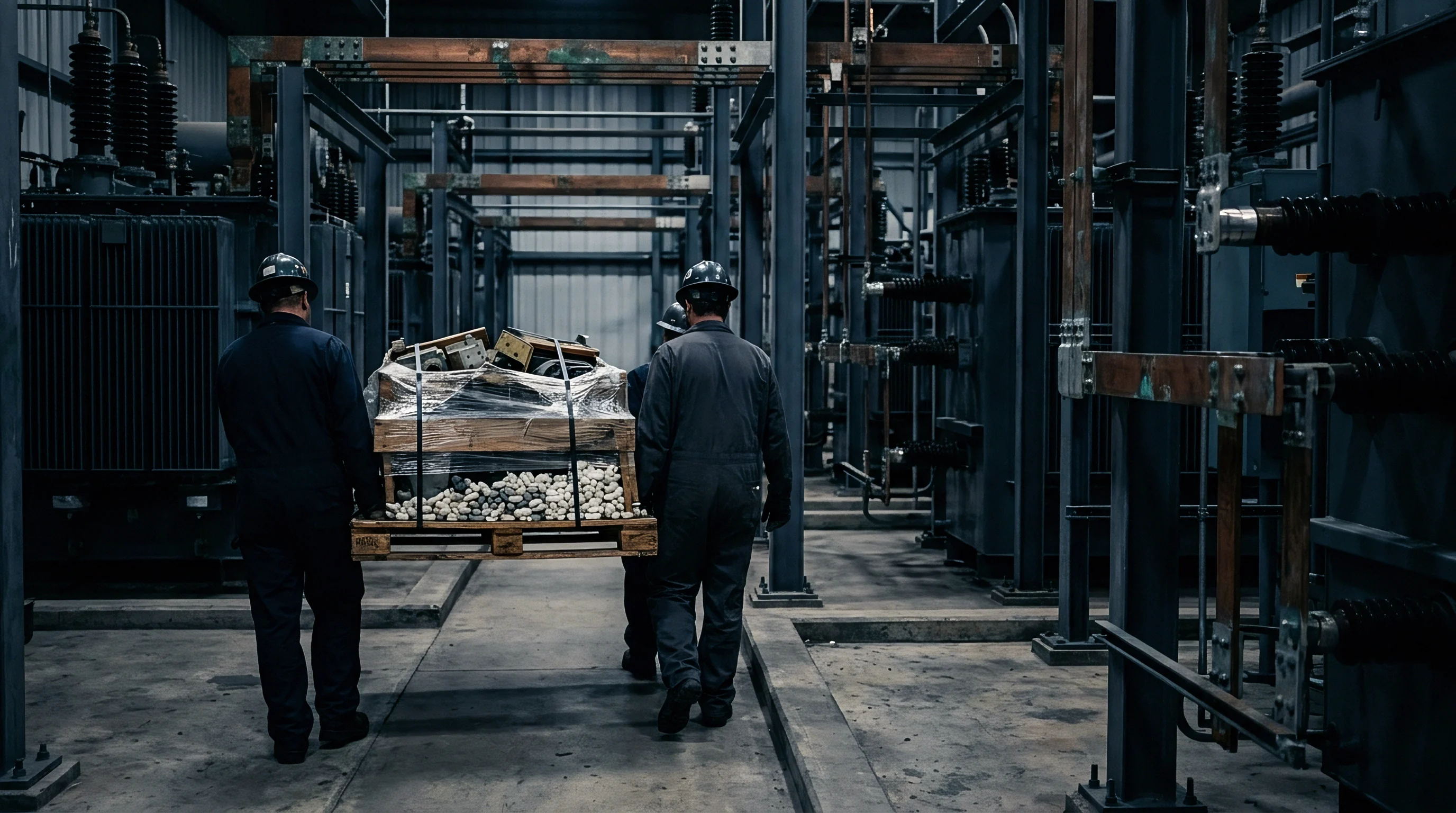
Equipment cross-border placements at Chinese contract manufacturing facilities face immediate exposure under the property law provisions of the Civil Code. Foreign asset owners frequently deploy proprietary machinery, specialized tooling, or assembly cells to mainland suppliers under bailment, leasing, or retention of title arrangements. When the local supplier enters formal bankruptcy proceedings under the Enterprise Bankruptcy Law, the legal characterization of the equipment determines whether the asset remains recoverable or merges into the general insolvency estate.
Title registration fails.
Under Article 641 of the Civil Code, a seller or lessor retaining title to equipment cannot assert that ownership interest against a bona fide third party unless the title retention is registered on the Credit Reference Center of the People’s Bank of China. The public registry platform, known as Zhongdengwang, serves as the central notice board for non-possessory security interests and title retention agreements across the People’s Republic of China. Failure to record the retention agreement within ten days of equipment installation degrades the retention right from an absolute property ownership claim into an unperfected security interest.
An unregistered title retention claim suffers a hundred percent reclassification into unsecured bankruptcy claims upon the debtor court accepting an insolvency petition under Article 54 of the Supreme People Court Secured Transactions Interpretation.
The judicial treatment of retention rights shifts when an insolvency petition is formally accepted under Article 2 of the Enterprise Bankruptcy Law. Article 54 of the Supreme People’s Court Interpretation on the Application of the Secured Transactions Provisions of the Civil Code clarifies the consequences of non-registration. If the asset owner failed to register the retention clause on the public registry platform prior to the bankruptcy court’s acceptance of the insolvency filing, the bankruptcy administrator possesses legal grounds to treat the title retention as an unperfected security interest.
Consequently, the foreign asset owner loses the right to demand direct return of the equipment, and the asset becomes part of the insolvency estate subject to general creditor liquidation distribution.
| Filing Status | Registry Platform | Civil Code Basis | Insolvency Classification | Enforcement Remedy |
|---|---|---|---|---|
| Unregistered Retention Clause | None | Article 641 Paragraph 2 | Unsecured General Claim | Pro-rata liquidation dividend payout only |
| Late Registration (Post-10 Days) | PBOC Credit Reference Center | Article 641 / PMSI Rules | Standard Secured Interest | Priority distribution behind perfected PMSI holders |
| Timely Registration (Within 10 Days) | PBOC Credit Reference Center | Article 641 / PMSI Priority | Super-Priority Secured Interest | Full Article 38 EBL right of separation granted |
| Contractual Retention Waiver Signed | Registry and Local Court | Article 447 Waiver Rules | Unencumbered Asset in Estate | Zero asset separation or priority recovery permitted |
Purchase money security interest rules provide a narrow ten-day window for equipment suppliers seeking super-priority status. Under Civil Code Article 416, a vendor retaining title or holding a purchase money security interest must complete the public notice filing within ten days after delivering the equipment to the factory floor. Meeting this deadline allows the security interest to take priority over previously registered floating charges or fixed mortgages held by third-party institutional lenders over the supplier’s plant assets.
Missing the ten-day deadline strips the asset owner of purchase money priority, leaving the retention clause subordinate to municipal bank mortgages registered prior to delivery.
The registry record holds.
The equipment bailment terms clear all statutory lien claims under Civil Code Article 447 provided the owner files serial registration within ten days of delivery.
Clause
Contractual waivers designed to protect foreign machinery routinely collide with statutory lien rights granted under Article 447 of the Civil Code. Chinese processing suppliers and assembly plants hold statutory possessory liens over goods, components, and tools sitting in their physical custody if processing fees, assembly costs, or storage expenses remain unpaid. When financial distress hits a contract manufacturer, the factory management or its appointed insolvency administrator asserts possessory liens over all foreign-owned equipment on site, attempting to set off unpaid manufacturing fees against the physical machinery.
Possession creates presumed ownership.
To preempt statutory possessory liens, foreign asset owners require suppliers to execute explicit lien waivers prior to delivering tooling or manufacturing lines. Under Article 447, parties can contractually exclude possessory liens through written agreements. However, Chinese courts apply strict scrutiny to equipment retention waivers executed by financially troubled suppliers.
A vague release of claims fails to override statutory lien protections. The waiver must identify the exact serialized equipment, explicitly reference Article 447 of the Civil Code, and state unequivocally that the contract manufacturer waives all possessory retention and lien rights over the specified assets regardless of outstanding processing debts.
An explicit waiver of statutory lien rights under Civil Code Article 447 prevents the insolvency administrator from holding specialized tooling as security for general processing debt.
Commercial liens between business entities involve additional statutory hurdles under Civil Code Article 448. Between commercial parties, a possessory lien generally extends to property that does not belong to the same legal relationship as the underlying debt, unless the contract explicitly prohibits such cross-collateralization. Foreign buyers placing moulds at a factory for one product line frequently find those moulds seized by the supplier for unpaid invoices belonging to an entirely different assembly project.
A robust equipment waiver must specifically negate commercial liens across unrelated contracts, barring the supplier from converting third-party tooling into collateral for general corporate receivables.
- Vague Asset Specifications Equipment retention waivers that reference general product categories or unlisted tooling rather than exact factory serial numbers and asset tags are routinely invalidated by Chinese bankruptcy courts.
- Missing Administrative Chop Retention waivers executed without the official corporate seal or signed solely by an unauthorized plant manager fail to bind the insolvency administrator during liquidation proceedings.
- Omission of Statutory Terms Contracts asserting general title retention without explicit reference to Civil Code Article 447 possessory lien waivers allow administrators to maintain physical custody over machinery.
- Unregistered Tripartite Bailments Agreements involving third-party financiers that omit formal registration on the PBOC Credit Reference Center platform remain ineffective against execution creditors.
Tripartite structures involving third-party equipment financiers, foreign buyers, and domestic manufacturing plants demand rigorous legal mechanics. The foreign equipment owner must execute a tripartite bailment and retention waiver directly with both the manufacturing entity and its primary domestic operating bank. If the domestic manufacturer pledged its entire plant equipment under a blanket mortgage to a local bank before accepting the foreign tooling, the bank’s mortgage registration on the PBOC system automatically encompasses all physically annexed machinery unless the bank signs a formal non-disturbance and retention waiver.
Obtaining the primary lender’s written waiver prevents the bank from foreclosing on foreign assembly cells during factory distress.
The factory manager claimed that local tax authorities prohibited the removal of tooling until all pending municipal trade assessments were fully settled.

Contest
Acceptance of an insolvency application by a Chinese court triggers immediate statutory control over all physical assets located on the debtor facility. Under Article 25 of the Enterprise Bankruptcy Law, the court-appointed insolvency administrator takes charge of the debtor’s property, books, chops, and physical plant operations. Civil enforcement actions against the debtor’s assets, including private repossession efforts or pre-insolvency court seizures, are suspended under Enterprise Bankruptcy Law Article 19 upon the formal acceptance date.
Bankruptcy stays civil enforcement.
The primary legal mechanism for recovering foreign machinery from an insolvent factory is the Right of Separation under Article 38 of the Enterprise Bankruptcy Law. Article 38 allows legal owners to retrieve property held by the debtor that does not belong to the debtor’s estate. The asset owner submits a formal application for separation to the insolvency administrator, accompanied by comprehensive documentary proof establishing absolute ownership, serial number matching, import documentation, and registry filings.

Can Administrators Overrule Prior Lien Waivers?
Insolvency administrators frequently reject separation claims by relying on possessory lien assertions or citing gaps in the physical documentation trail. Administrators carry a statutory duty to maximize the insolvency estate for general creditors. If an equipment retention waiver was signed within one year prior to the bankruptcy court’s acceptance of the insolvency petition, administrators may challenge the waiver under Enterprise Bankruptcy Law Article 31, arguing that waiving lien security constituted an improper gratuitous transfer or preferential debt arrangement during financial distress.
| Document Category | Primary Issuing Body | Verification Requirement | Administrator Challenge Vector |
|---|---|---|---|
| Tax Invoice (Fapiao) | State Taxation Administration | Matches buyer tax identification and machine serials | Invoice lists local manufacturer as purchasing entity |
| Customs Import Declaration | General Administration of Customs | Identifies foreign entity as ultimate consignee and owner | Duty-free import tariff classification disputes |
| PBOC CCRC Registration | Credit Reference Center | Filing timestamp precedes insolvency acceptance date | Late registration falling inside PMSI ten-day window |
| Serial Identification Log | Joint Factory Audit Report | Bears corporate chop of supplier and physical metal tag | Unstamped photographic evidence rejected as hearsay |
The legal representative signs.
Proving physical ownership requires an unbroken chain of commercial evidence that satisfies rigid judicial evidentiary standards in Chinese courts. Foreign purchase contracts alone are insufficient to establish title against a domestic insolvency administrator. The equipment owner must present state-issued tax invoices, customs import clearance documents listing the foreign entity as owner, machinery serial logs, and past maintenance records verified by joint factory audits.
Discrepancies between the asset description in the bailment contract and the physical nameplate on the machine lead to immediate rejection of the separation request by the administrator.
Physical possession combined with a missing machine invoice creates a legal presumption of debtor ownership that outweighs foreign bailment contracts in administrator asset inventories.
Litigation delays asset recovery.
When an administrator denies an Article 38 application for separation, the equipment owner must file an Asset Separation Dispute Lawsuit in the bankruptcy court designated over the insolvency proceedings. Under Article 119 of the Civil Procedure Law, the owner files suit against the bankruptcy administrator directly. The litigation stays physical liquidation of the disputed machinery, but the foreign owner bears the burden of proving that the contractual lien waivers remain legally binding and that title was never transferred to the insolvent supplier.
Whether Chinese insolvency courts will eventually treat CCRC equipment registrations as conclusive proof against possessory liens remains an unsettled issue across provincial appellate jurisdictions.

Arbitrage
Judicial enforcement of machinery recovery orders encounters procedural friction between specialized insolvency panels and execution courts. Bankruptcy panels operating within intermediate people’s courts focus on corporate restructuring, asset preservation, and equitable debt distribution. Civil execution divisions operate under strict procedural rules governing physical asset seizure, auctioning, and physical handover.
When a foreign owner wins a civil court judgment affirming ownership of tooling, the bankruptcy panel handling the supplier’s insolvency can stay physical execution of that judgment to protect the going-concern value of the debtor’s business.
Regional judicial approaches to equipment retention waivers show notable variance across China’s major industrial manufacturing hubs.
People’s courts in Jiangsu Province and Zhejiang Province lean heavily toward preserving industrial supply chains during bankruptcy reorganizations. If specialized foreign equipment is fully integrated into an automated production line that the court-appointed administrator plans to sell as an operating package, the court frequently denies physical separation under Enterprise Bankruptcy Law Article 38. Instead, the court directs the foreign owner to accept pecuniary compensation based on liquidation appraisal values.
In contrast, courts in Guangdong Province and Shanghai Municipality show higher adherence to strict PBOC registry records, granting physical separation orders for serialized machinery if CCRC registration was perfected prior to the bankruptcy acceptance date.
- Submit formal Article 38 separation demand to the court-appointed insolvency administrator containing CCRC filings and state tax invoices.
- Obtain official written rejection or dispute notice from the insolvency administrator within the fifteen-day statutory review period.
- File an asset recovery lawsuit in the specialized bankruptcy tribunal of the intermediate people’s court handling the main insolvency case.
- Apply for a court property preservation order under Civil Procedure Law Article 103 to prevent the administrator from selling or moving the machinery.
- Attend court-mandated asset identification and serial verification audits conducted on the factory floor with court bailiffs present.
- Obtain final court judgment confirming right of separation and securing an official execution order directed to the court bailiff force.
Property preservation orders serve as an indispensable tactical tool during recovery litigation. Under Article 103 of the Civil Procedure Law, the equipment owner files an urgent application requesting the court to seal, freeze, or preserve the machinery sitting inside the bankrupt factory. To obtain a property preservation order over physical machinery, the applicant must post financial counter-security, typically in the form of a litigation guarantee insurance policy issued by an approved domestic insurer, equal to twenty to thirty percent of the appraised machinery value.
Sealing the equipment stops the administrator from operating the machines or incorporating them into reorganization asset auctions.
Local courts handling bankruptcy reorganizations consistently prioritize operational continuity over foreign equipment recovery claims when machinery is integrated into active assembly lines.
Fapiao records establish ownership.
Court-appointed asset appraisals introduce substantial financial discounts during contested recovery actions. When an administrator refuses physical separation, courts commission local valuation firms to determine the liquidation value of the foreign machinery. Appraisal agencies in secondary manufacturing districts frequently apply aggressive physical depreciation models, valuing specialized high-precision machinery at scrap metal rates or local secondary market figures.
These depressed valuations reduce the cash compensation awarded to foreign owners who are denied physical asset separation, forcing asset owners to weigh court litigation against negotiated administrator settlements.
Direct buyouts negotiated with bankruptcy committees yield faster physical equipment returns than contested repossession actions in court.

Reckoning
Financial losses during equipment recovery stem from cumulative administrative costs, court fees, asset valuation write-downs, and prolonged production downtime. Foreign buyers operating without registered retention waivers face immediate asset write-offs when Chinese contract manufacturers enter liquidation. A complete financial analysis must measure the net realized value of repossessed machinery against the direct legal, logistical, and settlement expenditures required to execute physical recovery under Chinese bankruptcy court supervision.
The administrator denies recovery.
Unregistered security interests subordinate.
Consider a practical scenario involving a foreign original equipment manufacturer that installed high-precision CNC machining tooling valued at 4,200,000 RMB at a supplier facility in Suzhou, Jiangsu Province. The domestic supplier entered formal insolvency proceedings, and the court-appointed administrator seized the entire plant facility. The administrator asserted a statutory possessory lien under Civil Code Article 447 for 1,100,000 RMB in alleged unpaid processing and storage fees, refusing to acknowledge an unregistered equipment retention waiver executed eighteen months earlier.
The foreign equipment owner faced a strategic choice between formal judicial litigation under Enterprise Bankruptcy Law Article 38 or executing a negotiated administrative settlement release.
Storage costs accumulate monthly.
Proceeding through court litigation required filing an asset recovery lawsuit in the Suzhou Intermediate People’s Court. Court litigation fees calculated under the Measures for Payment of Court Costs amounted to 37,400 RMB. Litigation guarantee insurance premiums for the required property preservation order cost 25,200 RMB.
Retaining local legal counsel to handle two court instances and coordinate bailiff execution required 180,000 RMB. Court-appointed asset appraisal fees added 45,000 RMB. During fourteen months of litigation and execution stays, factory storage, climate control, and protective preservation expenses totaled 210,000 RMB.
The court confirmed ownership but ruled that physical separation was impossible because the tooling was permanently integrated into the factory’s automated line, awarding cash compensation based on a court liquidation valuation of 2,400,000 RMB. Net cash recovery after deducting 497,600 RMB in legal, court, storage, and appraisal expenses landed at 1,902,400 RMB, representing a 54.7 percent loss relative to original equipment value.
Appraisal fees erode asset value.
Direct negotiation with the bankruptcy committee offered an alternative resolution route. The insolvency administrator proposed releasing the physical tooling immediately in exchange for a negotiated settlement payment of 550,000 RMB, settling the alleged possessory lien dispute without court litigation. Logistics, dismantling, and specialized transport expenses to move the tooling to an alternative qualified supplier in Zhejiang Province totaled 120,000 RMB.
Legal negotiation fees amounted to 60,000 RMB. Physical repossession was completed within forty-five days, allowing the foreign manufacturer to resume production line operations and save approximately eleven months of factory downtime. Net expenditure under the negotiated settlement totaled 730,000 RMB, preserving 82.6 percent of the equipment’s operational utility value.
- Registration Perfection Standard Filing retention waivers on the PBOC Credit Reference Center within ten days of delivery eliminates administrator leverage and establishes super-priority status against execution creditors.
- Evidentiary Chain Rigor Preserving original state-issued tax invoices, customs clearance entries, and serialized joint inspection logs prevents administrators from claiming equipment ownership for the bankruptcy estate.
- Integration Risk Assessment Placing specialized tooling into integrated domestic manufacturing lines increases the risk that local bankruptcy courts will deny physical separation under Enterprise Bankruptcy Law Article 38.
- Settlement Economics Threshold Negotiating cash releases directly with bankruptcy committees yields higher capital preservation than contesting asset appraisals through prolonged intermediate court litigation.
Executing an entry strategy for foreign equipment in China demands complete alignment between commercial contracts, registry filings, and insolvency exit planning. Contractual retention waivers signed without public recordation on the CCRC platform provide zero protection against court-appointed administrators. Mapping the physical position of machinery, establishing unbroken tax evidence, and executing timely registry filings represent the only enforceable line of defense when a domestic manufacturing partner enters insolvency.
Failing to register retention waivers on the public registry leaves foreign equipment vulnerable to liquidation distribution among local unsecured creditors.