Enforcing Civil Pre-Suit Asset Preservation Orders over Disputed Tooling Assets in PRC Courts
Enforcing pre-suit tooling freezes in PRC courts requires rapid asset identification, preservation insurance counter-security, and filing within thirty days.

Gate

Statutory Standards under Civil Procedure Article 104
Article 104 of the PRC Civil Procedure Law grants foreign rights holders an emergency mechanism to freeze production assets prior to launching formal litigation or arbitration. Emergency property preservation orders require the applicant to establish that unpreserved assets face imminent relocation, destruction, or transfer by the possessor. Local intermediate courts hold jurisdiction.
The applicant submits filing documents directly to the court located where the machinery resides or where the respondent maintains legal domicile. Courts enforce strict deadlines. Judges evaluate whether delaying preservation until formal suit filing would cause irreparable commercial harm or prevent enforcement of a final monetary or asset-return judgment.
Success under Article 104 depends on demonstrating an ongoing, explicit threat to the physical integrity or physical possession of the production assets. Evidence of a manufacturing supplier threatening to scrap, sell, or modify custom injection moulds during an unpaid billing dispute satisfies this threshold. Courts require documentary proof showing that the applicant requested the return of the equipment and that the supplier refused compliance.
The emergency application must demonstrate that ordinary pre-suit demand letters failed to protect the underlying equity. Upon formal submission, the court must issue its procedural ruling within forty-eight hours.
An applicant submitting a pre-suit property preservation petition in the Shanghai Intellectual Property Court faces a forty-eight hour statutory ruling window once full counter-security is deposited.
Procedural Gateway and Evidentiary Proof Requirements
Securing an emergency preservation order requires executing sequential procedural steps before court marshals deploy to a factory site.
- Submission of the pre-suit application to the primary or intermediate court holding physical jurisdiction over the manufacturing facility.
- Provision of underlying contract documents, title registrations, or mold deposit agreements proving lawful equity in the machinery.
- Production of contemporaneous evidence establishing imminent threat of asset destruction, covert relocation, or unauthorized production.
- Delivery of financial counter-guarantee instruments covering the full collateral valuation set by the court within forty-eight hours of application filing.
- Execution of the court preservation ruling and immediate transmittal to the judicial enforcement division for physical execution on the shop floor.
Failing to submit complete evidence of asset location or filing in a court without geographic jurisdiction over the physical equipment leads to immediate rejection of the emergency petition, exposing the assets to rapid supplier concealment.


Bond
Security Valuation and Counter-Guarantee Instruments
Chinese courts require property preservation applicants to post full counter-security before executing an asset freeze. This mandatory guarantee covers prospective financial losses suffered by the respondent if the pre-suit preservation order is later determined to be wrongful. Judicial practice in major industrial centers historically required cash deposits equal to one hundred percent of the declared asset value.
Modern court practice accepts litigation preservation guarantee insurance issued by licensed Chinese commercial insurers, substantially lowering upfront capital requirements.
Intermediate courts calculate security thresholds based on the replacement value of the tooling and the prospective business interruption loss generated if production lines halt. When a frozen mould represents a single-source component for the supplier’s other commercial clients, courts increase counter-security requirements to offset third-party plant downtime claims. Securitization structures vary significantly in capital efficiency, cash lockup duration, and judicial acceptance across Chinese provincial jurisdictions.
Preservation insurance policies issued by state-underwritten Chinese insurers eliminate capital lockup while meeting intermediate court collateral thresholds.

Sizing Guarantee Costs across Securitization Structures
Choosing an acceptable counter-security structure dictates the liquidity footprint of pre-suit enforcement.
| Security Mechanism | Capital Lockup | Premium Rate Range | Court Acceptance Level | Liquidity Impact |
|---|---|---|---|---|
| Cash Collateral | 100% of Asset Value | 0.0% | Universal Acceptance | Severe cash freeze until final judgment |
| Commercial Bank Guarantee | 100% Cash Backed | 0.5% to 1.5% Annually | High Acceptance | Restricts credit lines during dispute |
| Preservation Guarantee Insurance | Zero Capital Lockup | 0.15% to 0.50% One-Time | High in Tier 1 and Tier 2 Cities | Preserves working capital for litigation |
| Fixed Asset Pledge | Pledged Real Property | Evaluation Fees Apply | Moderate (Requires Local Assets) | Restricts Chinese affiliate real estate |
Assessing a disputing tool valued at RMB 5,000,000 illustrates the cost differential across guarantee methods. Posting cash requires transferring RMB 5,000,000 directly into the court’s escrow account, locking those funds for twelve to twenty-four months while the underlying main action resolves. Utilizing litigation preservation guarantee insurance requires paying an underwriter a non-refundable one-time premium between RMB 7,500 and RMB 25,000 based on a 0.15 percent to 0.50 percent risk assessment rate.
The insurer issues an institutional guarantee letter directly to the handling judge, satisfying Article 104 statutory security requirements without absorbing corporate cash flow.
Miscalculating prospective business disruption damages when sizing the guarantee insurance policy leads to under-insured applications that courts reject without civil review.

Die

On-Site Seizure Protocols and Asset Identification
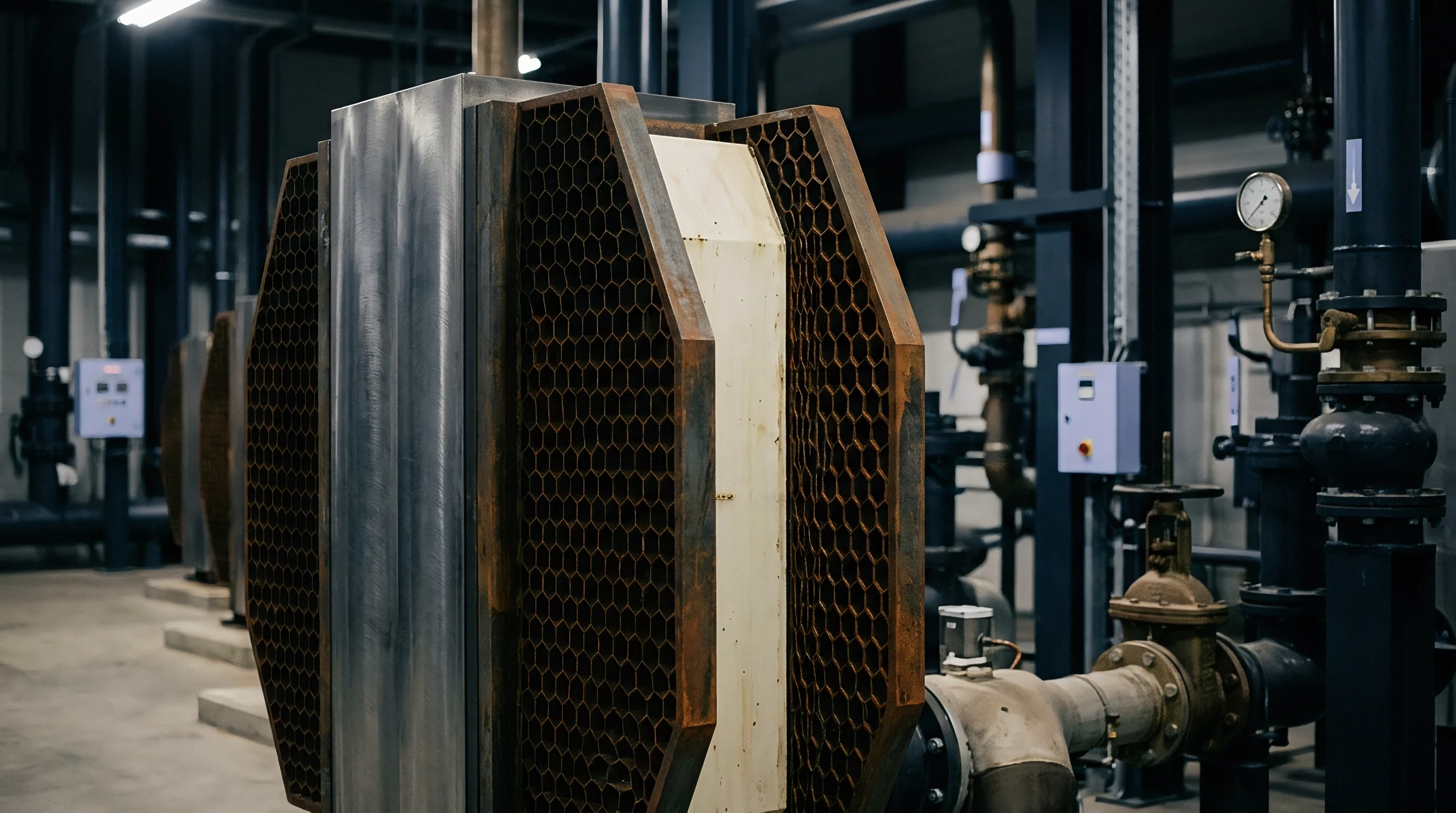
Execution marshals enforce preservation orders on factory premises using two distinct statutory methods: on-site sealing or physical removal off-site. On-site sealing leaves the machinery inside the supplier’s facility while attaching paper judicial seals and official freeze notices across control panels, platen structures, and hydraulic manifolds. This method prohibits physical moving, modification, or commercial operation of the sealed machinery.
On-site sealing relies heavily on local administrative compliance. Factory managers face criminal detention under Article 314 of the PRC Criminal Law if they intentionally tear paper seals or operate frozen machinery during unmonitored night shifts.
Physical removal off-site transfers frozen assets directly into a court-designated neutral warehouse. This intervention eliminates the risk of covert production, component cannibalization, or deliberate tool degradation. Physical removal requires booking heavy rigging equipment, flatbed transport logistics, and specialized crane operators experienced in handling precision manufacturing equipment.
Judges inspect physical tags. Rights holders must provide precise serial numbers, CAD dimensional drawings, engraved identifier photographs, and unique physical markings in the initial enforcement application to enable immediate identification by court marshals on a crowded shop floor.
A judicial paper seal applied to a five-tonne injection mould prevents lawful transportation but cannot mechanically prevent machine operation without physical chain locks.
Factory Execution Risks and Physical Interference
Enforcing a court freeze inside a hostile manufacturing facility exposes physical equipment to specific physical and operational disruption vectors.
- Concealed asset relocation ~ Transferring high-value injection blocks or specialized stamping dies to unlisted sub-tier subcontracting workshops prior to court marshal arrival on site.
- Seal tampering and night shifts ~ Operating sealed machinery outside ordinary business hours while leaving paper judicial seals visually intact along outer protective guards.
- Access obstruction by workforce ~ Staging labor disputes, unpaid wage demonstrations, or physical plant blockades to prevent court officers from entering the shop floor.
- Component stripping ~ Removing critical core pins, customized hot runner systems, or specialized electrical control boxes before enforcement officers complete physical inventory taking.
Off-site storage fees, heavy crane transport costs, and specialized rigging logistics accumulate rapidly during extended court freezes, as one supplier observed when noting that daily warehouse demurrage charges eventually surpassed the original commercial value of the seized steel core.


Plea

Statutory Lien Claims under PRC Civil Code Article 447
Manufacturing suppliers facing property preservation orders frequently assert statutory lien rights under Article 447 of the PRC Civil Code. Article 447 allows a contractor to detain client property lawfully in its possession if the client fails to pay outstanding debts arising from processing, manufacturing, or repair contracts. Suppliers attempt to characterize custom production equipment as collateral for disputed component piece-rate invoices, unpaid warehousing fees, or alleged engineering change overheads.
Legally severing the machinery ownership title from recurring manufacturing fee disputes neutralizes this defensive strategy.
To defeat a statutory lien claim, the rights holder must prove that the underlying agreement explicitly prohibited the creation of liens over client-owned equipment or that the debt claimed by the factory does not arise directly from the fabrication of the specific asset seized. Under Chinese bailment and processing contract jurisprudence, a factory cannot lawfully detain a client’s property for debts arising from entirely separate purchase orders or unrelated product lines. Clear separation of contract terms establishes that the tooling asset remains an independent bailment rather than collateral for commercial receivables.
A contractual clause vesting immediate title in the foreign buyer upon payment of the first tooling milestone defeats statutory processing liens under intermediate court review.

Documentary Rebuttal Architecture for Foreign Rights Holders
Defeating factory lien arguments requires assembling a comprehensive evidentiary package before filing property preservation petitions.
- Separate tooling ownership agreements ~ Independent legal contracts executed in Chinese that sever equipment ownership explicitly from recurring component procurement purchase orders.
- Itemized bank remittance records ~ Wire transfer receipts specifically matching milestone purchase orders for machinery creation rather than general inventory settlement invoices.
- Asset acceptance sign-offs ~ Signed equipment commissioning certificates confirming client title transfer prior to commercial deployment on the supplier’s production floor.
- Bailment registration logs ~ Signed loan certificates explicitly designating the manufacturing facility as a temporary bailee holding zero equity interest in the assets.
Including the phrase “the contractor waives all statutory lien rights under Civil Code Article 447 over all custom equipment, inserts, and master fixtures funded by the buyer” in master supply agreements prevents suppliers from asserting lawful detention defenses during enforcement hearings.

Forum
What Triggers Automatic Dissolution of a Tooling Freeze?
Preservation orders issued under Article 104 carry a strict statutory expiration clock. The applicant must file a formal civil lawsuit or initiate institutional arbitration within thirty calendar days from the date the court executes the asset freeze. The judge must lift the property preservation order immediately if the applicant fails to present proof of action initiation within this thirty-day window.
Court marshals will remove paper seals, return seized equipment to the supplier, and release the applicant’s counter-security to cover any damages incurred by the factory during the temporary freeze.
When the underlying contract contains an offshore arbitration clause, such as HKIAC, SIAC, or CIETAC, the applicant must file its notice of arbitration and obtain institutional confirmation within the same thirty-day timeframe. The applicant then submits the official notice of arbitration acceptance issued by the arbitral institution directly to the Chinese enforcement judge. Coordinating offshore arbitral filings with mainland judicial execution timelines requires advance preparation of translated arbitration notices, power of attorney documents, and corporate qualification certificates notarized by Chinese consular channels.

Harmonizing Arbitral Filings with Court Preservation Directives
Navigating jurisdictional boundaries requires strict adherence to institutional filing procedures and statutory cross-border handoffs.
| Forum Type | Filing Window | Intermediary Tribunal Confirmation | Court Preservation Enforcement | Dissolution Trigger |
|---|---|---|---|---|
| PRC Domestic Court Litigation | 30 Calendar Days | Direct Case Acceptance (立案) | Executed by Domestic Enforcement Division | Failure to pay court acceptance fee within 7 days |
| CIETAC Domestic Arbitration | 30 Calendar Days | Notice of Arbitration Acceptance | Transmitted via CIETAC to Local Court | Withdrawal of arbitral claim by applicant |
| HKIAC / SIAC Offshore Arbitration | 30 Calendar Days | Institutional Notice of Arbitration | Enforced via Mainland-HK Arrangement | Failure to submit certified notice to PRC judge |
| Specialized IP Courts | 30 Calendar Days | Formal Acceptance of IP Claim | Executed by Specialized IP Enforcement Team | Settlement without judicial confirmation |
Whether foreign arbitral tribunals can order emergency interim relief over assets situated on the mainland without prior local court property preservation applications remains an active area of procedural variation among coastal Chinese courts.

Yield

Commercial Settlement Dynamics Following Judicial Seizure
A successful property preservation order dramatically alters commercial bargaining leverage between rights holders and non-compliant suppliers. Freezing critical production machinery disrupts the factory’s operational throughput, preventing them from fulfilling orders for other commercial customers using shared press beds or auxiliary systems. This operational standstill incentivizes factory management to negotiate a structured release agreement rather than engage in prolonged litigation.
Pre-suit preservation transforms abstract contract claims into immediate physical realities on the manufacturing floor.
Commercial settlement agreements negotiated immediately following a judicial freeze must incorporate precise asset extraction terms. Settlements must specify physical turnover procedures, police escort protocols, mutual release of financial claims, and formal withdrawal of the court preservation order. The agreement must require the supplier to grant unrestricted factory access to logistics personnel and crane contractors chosen by the buyer.
Retaining court marshals on-site during settlement execution prevents last-minute physical extortion or asset damage during loading operations.

Physical Extraction Logistics and Factory Exit Execution
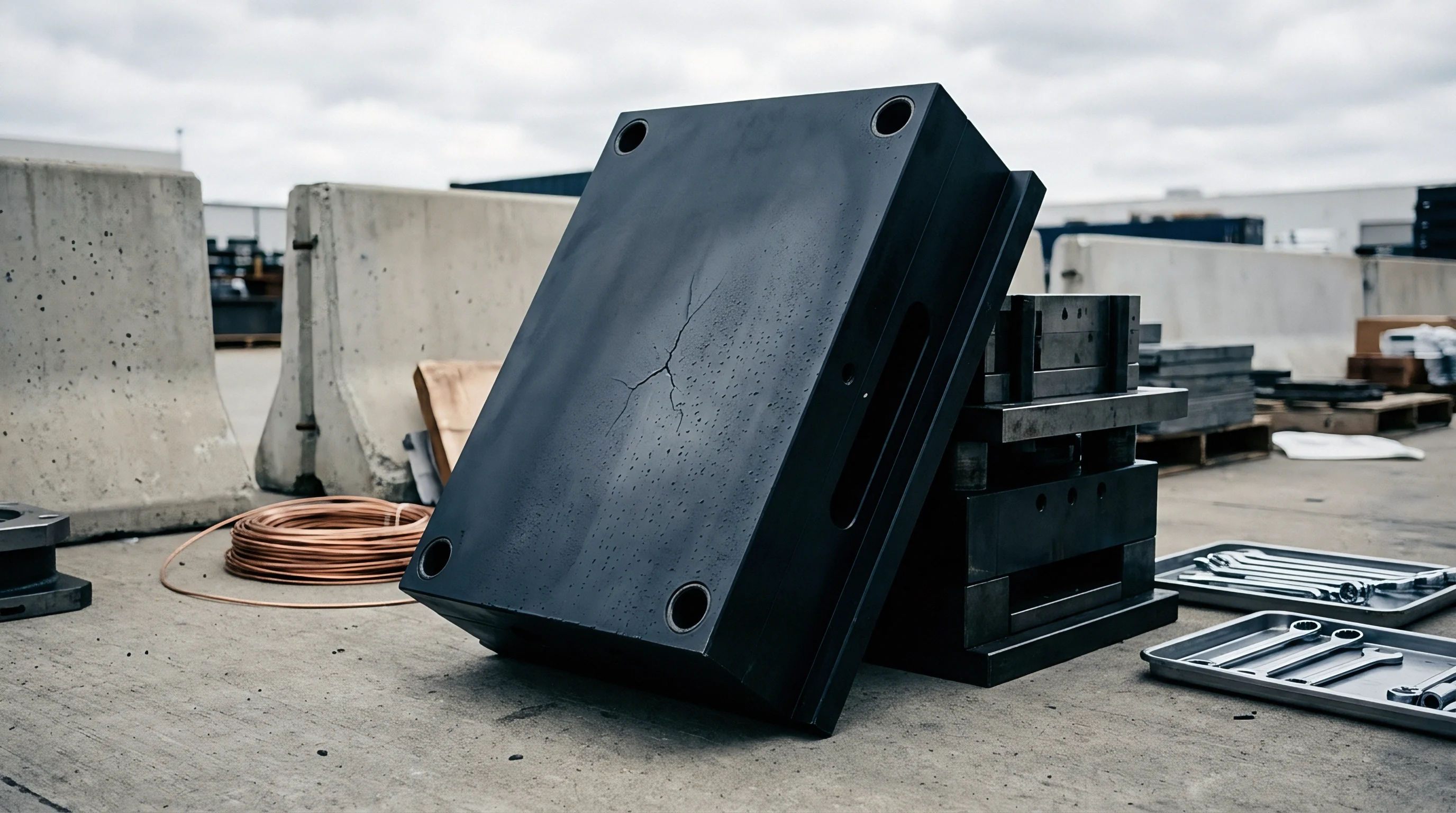
Executing physical equipment extraction requires coordinating transport engineering, judicial supervision, and customs records updating. The rights holder schedules flatbed heavy transport trucks, industrial riggers, and specialized protective packing teams to arrive at the factory simultaneously with the court enforcement marshal. The marshal formally serves the judicial unsealing order, supervises the physical unbolting of machinery from floor pads, and monitors loading onto outgoing transport.
Factory personnel must sign a physical handover inventory protocol confirming the condition and component completeness of every extracted asset before trucks exit factory gates.
Following successful physical extraction, the rights holder completes final legal and regulatory exit steps in China. If the extracted equipment contains proprietary intellectual property registered with PRC Customs under customs IP recordation systems, export verification documents must be updated to permit legal export out of Chinese territorial waters. The applicant files a formal motion with the issuing court to lift the preservation order and release the posted litigation insurance policy, terminating ongoing financial liabilities.
Completing these regulatory steps severs operational dependence on the non-compliant supplier, securing full possession of proprietary manufacturing assets while bringing judicial enforcement proceedings to a structured conclusion.