Quantifying Financial Liabilities from Factory Quality Failures and Logistics Chargeback Mechanics
Factory failure cost recovery succeeds through immediate receiving dock triage, auditable debit notes, and cross-border contract terms enforceable in China.

Dock
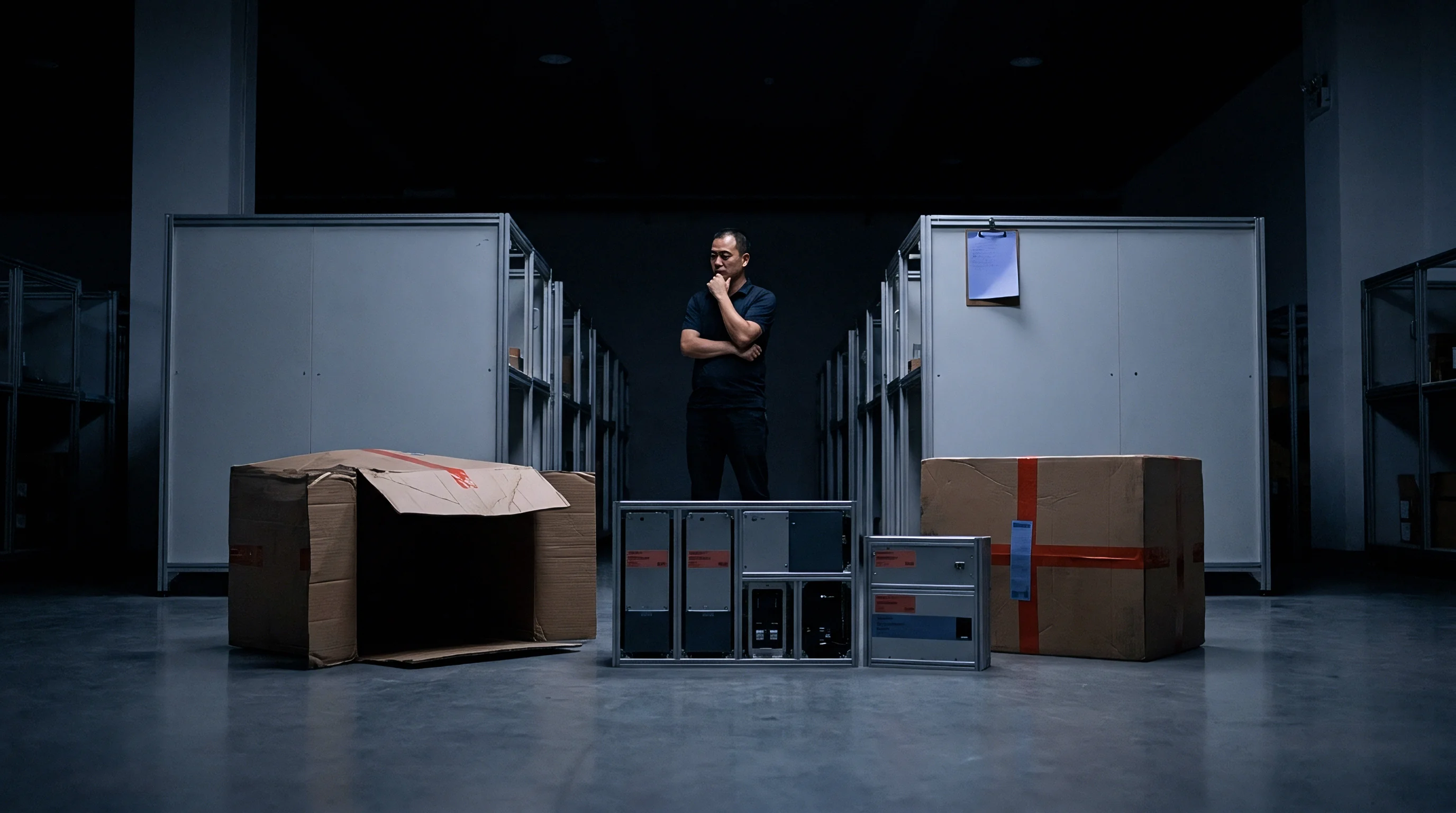
Receiving inspection manifests arrive at the distribution center terminal hours before container seals break. When unsealed cartons reveal dimensional drift or wet packaging, warehouse supervisors halt sorting lines. Receiving docks operate under appointment windows.
A carrier detention clock begins ticking sixty minutes after arrival. Unloading crews isolate suspected pallets on staging aprons while photographic evidence enters the warehouse management system. Documenting non-conformance at the unloading threshold establishes legal custody boundaries before domestic transit companies sign freight bills.
Inbound quality control technicians pull cartons according to ISO 2859-1 sampling plans, measuring outer carton crush ratings, barcode scannability, and internal part tolerances. A single pallet exhibiting split corner posts or scuffed finish indicates systemic packaging collapse during maritime stowage. Distribution facilities cannot absorb uninspected inventory into active pick locations without risking wholesale retail rejection.
Inspection records log ambient temperature, seal serial numbers, container floor moisture percentages, and pallet wrap integrity.
A twenty-foot container incurring secondary off-dock inspection generates 420 dollars in daily storage fees when port congestion extends dwell time past four days.

Inbound Receiving Triage
Pallet staging bays fill rapidly during unscheduled physical audits. Receiving managers establish quarantine perimeters using barcode holds in enterprise software, preventing warehouse personnel from staging failed units into fulfillment racks. The facility assigns immediate quarantine license plates to suspect containers.
Each license plate anchors downstream recovery ledgers. Warehouse teams document carton drops, broken strapping, and internal polybag moisture levels. Color-coded placards mark physical holds on the apron floor.
Sorting operations divide questionable inventory into distinct work streams. Fast-moving stock with cosmetic packaging flaws moves to secondary re-boxing stations. Units displaying internal functional shortfalls enter long-term secure containment.
Distribution managers balance sorting velocity against detention fees charged by drayage carriers waiting on terminal turnarounds. Fast containment limits operational drag throughout downstream channels.

Quarantine Hold Administration
Enterprise resource systems lock compromised stock codes across distribution nodes simultaneously. Quality engineers issue non-conformance reports within four hours of pallet scanning, attaching high-resolution photography, batch stamps, and calibrated micrometer readings. The vendor receives immediate electronic notification containing container bill numbers, purchase order references, and sampling defect percentages.
Moisture destroys sensitive circuit traces. Preserving unworked sample cartons in locked inspection cages defends subsequent liability claims against manufacturer disputes regarding post-arrival contamination.
Failure to segregate non-conforming shipments immediately upon gate arrival exposes buyers to full inventory acceptance liabilities under destination commercial statutes.

Breakdown
Financial liability models partition factory failure expenses into immediate physical remediation and secondary network disruption. When an offshore manufacturing partner ships sub-par assemblies, direct costs compound across handling, rework labor, and terminal disposal. Freight forwarders demand advance cash settlement.
Quantifying these outflows demands line-item precision that isolates factory-induced errors from domestic transit damage.
Scrap valuation begins with invoiced free-on-board unit costs, customs duties paid, ocean tariff surcharges, and destination drayage outlays. Incomplete documentation forfeits recovery. Labor expenses compound when third-party logistics warehouses bill value-added services at forty-five to seventy-five dollars per man-hour.
Rework requires dedicated floor space. When rework requires precision tooling or cleanroom environments unavailable at standard cross-dock depots, travel expenses for specialized factory technicians shift onto the recovery balance sheet.
Administrative overhead charges capture management hours spent coordinating emergency triage calls, drafting defect dossiers, and rerouting replacement components. Standard commercial supply agreements peg administrative markups at ten to fifteen percent of gross remediation labor. The inventory loss register tabulates raw production waste, secondary freight to processing depots, testing labor, packaging disposal fees, and final landfill tipping costs.
Secondary sorting conducted inside overseas regional distribution hubs prices labor at eight times typical manufacturing assembly rates.

Direct Remediation Cost Accounting
Re-boxing operations demand replacement blister packs, printed barcodes, instruction booklets, and master cartons flown in from regional converters. Third-party testing laboratories bill accelerated metallurgical and environmental stress tests to determine the failure perimeter across suspected date codes. The table below outlines direct remediation expenses across three operational severity tiers, derived from audited third-party logistics facility rate schedules in coastal distribution hubs.
| Severity Category | Physical Inspection Method | Warehouse Labor Rate | Direct Packaging Cost | Administrative Burden |
|---|---|---|---|---|
| Tier 1 Cosmetic Flaw | Visual 100 Percent Sort | 45 Dollars Hourly | 1.20 Dollars Unit | 8 Percent Surcharge |
| Tier 2 Dimensional Drift | Go-No-Go Gauge Fixture Sort | 58 Dollars Hourly | 3.50 Dollars Unit | 12 Percent Surcharge |
| Tier 3 Functional Defect | Electrical Bench Testing | 85 Dollars Hourly | 7.80 Dollars Unit | 15 Percent Surcharge |
Rework line yields dictate whether sorting remains economically viable. When sorting yields drop below eighty-five percent acceptable stock, continuous labor burns capital faster than wholesale container scrapping. Warehouse supervisors monitor sorting throughput per shift.
Sorting stations log defective parts individually.

Downstream Factory Disruption Metrics
Assembly line stoppages trigger liquidated damages clauses in modern supplier contracts. When defective raw castings or electronic sub-assemblies halt domestic manufacturing cells, idle line penalties accrue by the quarter-hour. Unscheduled downtime burns overhead allocation rates across entire manufacturing plants.
Secondary packaging collapses under humidity. The accounting department tabulates stranded direct labor, unabsorbed facility depreciation, and rescheduling overtime needed to recover missed end-customer delivery windows.
Recovery filings include specific operational categories that capture every direct monetary outflow caused by offshore manufacturing non-conformance:
- Secondary sorting fees capture external third-party contractor hourly billing, staging square-footage charges, and supplemental lighting equipment leased during lot segregations.
- Emergency tooling modification encompasses emergency machine shop revisions, replacement cutting inserts, and jig re-calibration performed to accommodate oversized supplier stampings.
- Scrap destruction charges represent certified environmental disposal costs, waste container haulage fees, and witness verification expenses for regulated component classes.
- Rescheduling penalty surcharges cover customer service credits, freight rerouting compensations, and production schedule shuffling fees assessed by domestic assembly plants.

Worked Allocation Model for Contaminated Lots
Assume an inbound lot of 10,000 electric water pumps arrives at a West Coast distribution terminal under a purchase order unit value of 24.00 dollars FOB Ningbo. Inbound receiving inspection isolates dimensional warping on the motor mounting flange across four test cartons. Destructive testing on twenty-five pumps reveals an underlying eight percent seal failure rate across the lot.
The buyer commits the entire 10,000-unit lot to one hundred percent bench testing and flange face milling.
Warehouse space allocation runs twelve days at 250 dollars daily apron rent, totaling 3,000 dollars. Dedicated test technicians process thirty units per man-hour at an audited third-party labor rate of 55 dollars per hour, creating 333.3 labor hours valued at 18,331.50 dollars. Specialized machine shop resurfacing costs 4.20 dollars per unit across the 9,200 salvageable pumps, adding 38,640 dollars.
The remaining 800 unrecoverable units represent total scrap. Scrap cost includes 19,200 dollars in landed purchase value, 1,440 dollars in unrecoverable customs tariffs paid at 7.5 percent, and 2,160 dollars in pro-rata ocean freight allocations. Scrap disposal fees run 650 dollars for metal recycling haulage.
Administrative claims handling costs add a standard twelve percent surcharge onto gross labor and sorting fees, yielding 2,559.78 dollars. Total calculated factory quality liability equals 85,981.28 dollars, representing an operational cost surcharge of 8.60 dollars against every imported pump.
Remediation expenses that exceed the initial purchasing price of the underlying lot remain valid claims when supported by timecard audits and third-party facility invoices.


Freight
Maritime contracts and intermodal shipping tariffs generate aggressive financial liabilities when quality failures interrupt cargo movement. When an overseas vendor provides defective packaging that splits under transit compression, shipping lines hold consignees liable for container contamination and crane delays. Ocean carriers disclaim internal packaging liability.
Terminal operators levy daily punitive charges the moment free time expires on container yards.
Demurrage starts running when import containers sit uncleared on ocean marine terminal docks past permitted laytime, typically four to five days after discharge. Cargo shifts rapidly during transshipment. When customs brokers freeze entry documentation because an offshore vendor mislabeled product classifications or enclosed non-conforming wooden dunnage lacking ISPM-15 heat-treatment stamps, containers enter terminal storage holds.
Port demurrage scales from 150 dollars daily during initial overstay to over 400 dollars daily after day ten.
Detention penalties accrue once drayage truckers pull containers off terminal property but cannot return empty equipment within allowable free time windows. When receiving warehouses refuse delivery because pallets collapsed inside the box, the drayman leaves the container on chassis in an off-dock yard. Daily chassis rental fees compound container detention rates.
Transit vibration loosens terminal fasteners. Equipment demurrage and detention charges transform a low-margin purchase order into a significant operational deficit within two business weeks.
Containers sit on the demurrage clock while quality documentation moves across oceans.

Demurrage and Detention Chargebacks
Logistics chargeback ledgers assign responsibility for transport delays according to root-cause non-conformance audits. When vendor packaging failures trigger drayage driver delivery refusals, direct accessorial charges shift back to the factory ledger. The table below delineates typical equipment and accessorial chargeback rates incurred during maritime quality holds across major North American intermodal gateways.
| Chargeback Line Item | Billing Foundation | Standard Daily Rate | Compounding Factor |
|---|---|---|---|
| Port Demurrage | Ocean Terminal Space Utilization | 220 to 450 Dollars | Escalates Every 5 Calendar Days |
| Equipment Detention | Steamship Box Usage Beyond Free Time | 175 to 325 Dollars | Flat Daily Post Free Window |
| Chassis Split Surcharge | Tri-Axle Drayage Repositioning | 110 to 185 Dollars | Per Intermodal Gate Movement |
| Hazardous Quarantine Fee | Spill Containment Apron Rental | 550 to 950 Dollars | Mandatory Fixed Daily Surcharge |
Containers sit on the demurrage clock. When ocean equipment incurs detention due to factory labeling non-conformance, the accounts payable team issues chargeback debits matching steamship line invoices cent for cent.

Air Transport Premium Allocations
Customer stock-out penalties frequently compel buyers to authorize emergency air transport charters when seafreight production lots fail destination receiving audits. Air charter rates from southern Chinese manufacturing hubs to North American air cargo hubs hover between 4.80 and 8.50 dollars per chargeable kilogram during baseline seasons, spiking above 11.00 dollars per kilogram during fourth-quarter peak intervals. Pallets fail under warehouse humidity.
When a production quality escape forces replacement components onto cargo aircraft, the differential expense between original maritime shipping rates and emergency air freight constitutes recoverable direct economic harm.
Documenting air freight recoveries demands a strict evidentiary progression to survive supplier challenge during quarterly contract reconciliations:
- Original ocean bill of lading manifest records establish baseline sea freight costs per unit.
- Destination quarantine inspection reports confirm physical non-conformance of the maritime delivery.
- End-customer purchase order cancellation notices demonstrate immediate stock-out emergencies.
- Commercial air waybills and freight forwarder settlement receipts verify paid air transport charges.
- Accounting reconciliation schedules calculate the precise net differential between ocean and air outlays.

Retail Compliance Deductions
Big-box retailers and national distributor networks enforce draconian vendor compliance manuals that penalize non-conforming barcode scans, late arrivals, and carton weight deviations. Retail compliance chargebacks deduct directly from buyer remittances without prior arbitration. On-Time In-Full performance failures trigger standard retail fines between three and five percent of the gross purchase invoice value.
Destructive packaging failures that jam automated distribution center conveyor sorters yield incident fees exceeding 500 dollars per jammed chute alongside mandatory hourly sorter downtime charges.
The vendor insists that ocean transit humidity caused carton softening rather than structural flaws in the corrugated flute material.


Offset
Recovering quantified quality losses across international borders requires rigorous accounting instruments that operate within legal clearing structures. Unilateral invoice deductions provoke immediate supplier pushback and production stoppages when handled outside established contractual frameworks. Chinese manufacturing partners frequently suspend open production tooling the moment an overseas customer withholds payments on active shipments.
The warehouse issues the debit note. The accounting department formalizes chargeback claims through structured documentation packages that reconcile against open accounts payable.
Debit notes establish formal commercial claims against outstanding trade debts. A defensible debit package incorporates the initial non-conformance report, photographic proof, calibrated testing laboratory logs, detailed remediation labor timesheets, third-party logistics freight invoices, and specific purchase order cross-references. Customs valuations exclude disputed offsets.
Transmission occurs through registered commercial channels with acknowledged receipt time stamps. Sunk tooling expenses remain unrecoverable. Establishing a contractually defined seven-day rebuttal window prevents open-ended supplier stalling while preserving audit integrity.
Article 584 of the PRC Civil Code limits compensatory damages to direct losses foreseeably resulting from non-conforming manufacturing performance.
Debit Note Issuance Mechanics
Commercial deduction packages must present transparent arithmetic to prevent supplier operational boycotts. When factory managers review debit notices, they verify every labor rate against local market averages and cross-reference third-party logistics invoices. Providing unredacted service receipts from testing laboratories and freight forwarders disarms common factory counterclaims regarding inflated domestic handling rates.
Destruction certificates demand witnessed signatures. Clear commercial paperwork turns contested claims into settled ledger balances.
Operational frameworks utilize specialized commercial tools to execute liability recovery across ongoing trade relationships:
- Open account withholdings deduct agreed quality chargebacks directly from pending payments on subsequently approved manufacturing production batches.
- Tooling security retainage holds back ten to twenty percent of total mould purchase capital pending successful destination production runs.
- Revolving escrow reserves maintain cash balances inside neutral financial facilities to fund unexpected receiving sorting expenses without stalling baseline production.
- Standby letters of credit grant buyers unilateral drawing rights upon presentation of independent third-party survey inspection failure certificates.

Cross Border Settlement Constraints
Chinese foreign exchange regulations administered by the State Administration of Foreign Exchange restrict arbitrary invoice netting and off-ledger settlements. Domestic manufacturing entities must balance customs export declarations against incoming foreign currency remittances to clear tax rebate filings and maintain clean banking status. When an overseas customer withholds payment via an informal debit note, the factory cannot match the lower cash transfer against the higher customs export declaration value.
This discrepancy freezes the supplier’s export value-added tax rebate claims, creating immediate tax friction with local authorities.
To satisfy foreign exchange compliance rules, suppliers and buyers must execute bilateral credit memos or formal settlement agreements that state the commercial dispute resolution explicitly. The document references the original customs export declaration number, describes the quality deficiency, and specifies the agreed financial adjustment. The factory then presents this bilateral settlement to its clearing bank to justify the discounted inward foreign currency remittance.
The customs entry remains open. Without formal settlement documentation, Chinese factories routinely reject debit notes even when acknowledging liability on technical grounds.
| Remittance Settlement Instrument | State Foreign Exchange Friction | Export Tax Rebate Feasibility | Supplier Liquidity Drag |
|---|---|---|---|
| Unilateral Invoice Short Payment | Severe Bank Blockage | Freezes Export Tax Rebates | Immediate Line Stoppage Risk |
| Bilateral Credit Adjustment Memo | Fully Compliant With Documentation | Preserves Rebates on Net Total | Moderate Negotiated Deduction |
| Escrow Drawdown Reimbursement | Neutral Off-Shore Settlement | Unimpacted Inward Remittances | Minimal Operational Disruption |
| Direct Wire Defect Indemnity | Requires Commercial Arbitration Award | Requires Tax Audit Exception | High Bureaucratic Delay |

Can Inbound Defect Costs Trigger Automatic Setoff?
Standard purchase contract terms do not grant buyers automatic rights to deduct unliquidated quality damages from unrelated purchase orders without explicit contractual authorization. When purchase agreements lack structured setoff provisions, unilateral deductions constitute technical payment defaults under international commercial law, entitling suppliers to withhold subsequent shipments. Factory ledgers record raw material scrap.
Inserting bilateral setoff language into manufacturing master agreements grants buyers explicit authority to net validated remediation invoices against open production accounts payable balances.
Under Section 14 of the standard international manufacturing supply agreement, verified remediation expenses documented by third-party receipts become liquidated debts deductible from outstanding payables upon fourteen days written notice.
Default
When factory quality escapes cause catastrophic commercial failure or when defect liabilities exceed open accounts payable balances, recovery shifts from administrative netting to legal default remedies. Navigating cross-border supplier default demands an understanding of PRC contract jurisprudence and local enforcement mechanics. Foreign court judgments carry virtually no enforcement value in mainland Chinese jurisdictions due to the lack of reciprocal enforcement treaties with major Western trading nations.
Supply contracts must designate domestic arbitration commissions located in hubs such as Shanghai, Beijing, or Shenzhen to yield enforceable awards.
The Civil Code of the People’s Republic of China governs domestic supply contracts and quality defect remedies. Article 584 defines liability for breach of contract, stipulating that damages must equal the losses caused by the breach, including profits that would have been earned, provided they do not exceed the foreseeable losses at contract execution. Article 585 permits parties to agree on liquidated damages, but courts or arbitral tribunals retain statutory discretion to reduce penalties that excessively exceed actual losses or increase penalties that fall below actual remediation costs.
Statutory Remedies under Civil Law
Article 610 of the PRC Civil Code grants buyers the right to reject delivery or rescind the entire contract when product non-conformance prevents the realization of the contract’s fundamental purpose. Rescission extinguishes the buyer’s payment obligations and entitles the buyer to demand restitution of advance deposits alongside storage and preservation expenses. Article 617 cross-references general breach provisions when goods fail quality standards, authorizing buyers to demand repair, replacement, price reduction, or direct financial damages based on the nature of the non-conforming goods.
Formal default notices require notarized service and rigorous evidence preservation. Commercial parties must conduct joint sample sealing protocols or retain Chinese notary public officials to oversee unboxing and laboratory testing inside bonded warehouse zones. Unilateral foreign inspection certificates carry minimal evidentiary weight before Chinese arbitral panels when the supplier was denied reasonable opportunities to inspect the damaged cargo or participate in joint sampling procedures.

Scrap Destruction and Mitigation Rights
Commercial law imposes strict loss mitigation duties on injured buyers. When defective inventory sits in expensive third-party logistics facilities, buyers cannot permit storage charges to accrue indefinitely while disputing liability with manufacturers. The buyer must mitigate damages by selling salvageable inventory for scrap, conducting localized reworking where economically viable, or proceeding with certified commercial destruction.
Documenting certified destruction prevents counterfeit re-entry of rejected goods into secondary gray markets while creating clean evidentiary proof of total loss for arbitral presentation.
Whether foreign buyers can successfully recover indirect customer goodwill losses and retailer concession fines remains an open question subject to the strict foreseeability limitations enforced by Chinese arbitral tribunals.