Low Volume Contract Manufacturing Capacity Allocation Basics
Securing low-volume manufacturing capacity requires explicit changeover fee structures, verified component staging, and direct floor auditing of machine scheduling.


Slot
High-volume lines dictate the operating rhythm of most manufacturing plants. A facility turning out two hundred thousand plastic enclosures a month organizes staffing, raw material staging, and shift schedules around uninterrupted runs. Squeezing in eight hundred units disrupts that baseline: operators have to halt the machine, drop the tooling, purge hoppers, and reset sensors.
Those changeover hours cost the plant real machine time and labor. If an order comes in without accounting for that downtime, dispatchers simply let it slide to the back of the queue.
Getting onto the schedule comes down to changeover mechanics. Switching an automated surface-mount technology line from an industrial gateway board to a compact wearable assembly ties up the line for ninety minutes to three hours. Pick-and-place heads sit idle while technicians swap nozzles by hand and recalibrate optical inspection profiles.
Plant management measures those idle hours directly against whatever margin a short run might bring.
A 4-hour setup time on a 50-tonne injection molding press adds 3.20 USD per unit on a 500-piece batch but drops to 0.16 USD per unit on a 10,000-piece batch.

Changeover Windows and Machine Time Competition
Tooling swaps and recalibration eat directly into hours reserved for primary production. Once setup stretches toward twenty percent of total run time, a contract manufacturer considers the batch a loss on paper. Schedulers push these short jobs into graveyard shifts or wedge them between large campaigns.
That leaves the buyer exposed: if the high-volume run ahead of them hits scrap issues or component shortages, the plant will bump the short setup to keep the main line running.
Buyers manage this friction by writing explicit machine allocation rules straight into the purchase agreement. Defining the setup parameters up front turns a disruptive short run into a predictable, paid block of time for the factory floor.
| Batch Volume Scale | Tooling Setup Time (Hours) | Setup Overhead Cost per Unit (USD) | Line Downtime Scrap Rate (%) | Recommended Capacity Mechanism |
|---|---|---|---|---|
| Micro-Batch (100–500 units) | 3.5 to 5.0 | 4.20 – 8.50 | 4.5% – 6.0% | Dedicated Off-Shift Bench |
| Small-Run (501–2,500 units) | 2.0 to 3.5 | 0.95 – 2.80 | 2.0% – 3.5% | Shared Line with Reservation Fee |
| Medium-Run (2,501–10,000 units) | 1.0 to 2.0 | 0.18 – 0.65 | 0.8% – 1.5% | Standard Master Production Schedule |

Minimum Economic Run Parameters
Contract facilities set minimum batch thresholds so non-productive setups do not chew through their base margins. Standard quotes tend to mask these changeover expenses, padding individual piece prices or tucking clearance fees into general non-recurring engineering costs. Breaking out those line items gives buyers the leverage to negotiate arrangements that make short runs commercially viable for the shop floor.
- Dedicated Setup Amortization billing machine prep as an explicit line item guarantees plant compensation regardless of delivered lot size.
- Staged Raw Material Verification confirming component arrival before booking machine time prevents empty setup slots on critical equipment.
- Standardized Mold Base Usage using universal master frames cuts die changeover on hydraulic presses from four hours to forty minutes.
- Off-Shift Machine Allocation running graveyard or weekend shifts takes advantage of idle machine capacity without fighting daytime production for line space.
When capacity tightens, main production overruns routinely push small-batch setups into weekend shifts when certified technicians are off the clock.


Queue
Floor dispatchers lean heavily toward high-volume accounts whenever floor space or machine time tightens. In multi-tenant workshops across Eastern China, orders move through staging areas at dispatcher discretion rather than by purchase order date. Without explicit scheduling commitments in the contract, short-run jobs sit in holding areas while managers push high-margin volume work onto the floor.
Stagnant work-in-progress inventory brings both schedule and quality problems. Parts staged along busy transit aisles pick up shop dust, absorb ambient moisture, and risk hits from forklift traffic. Keeping an order moving through this environment means tracking material movement directly in the factory execution system long before the boards hit the feeders.

Preemption Risks and Work-in-Progress Stagnation
Schedules slip fast when large volume orders land on the floor, bumping smaller lots out of their slots. Contract manufacturers seldom volunteer that an order has been sidelined; weekly progress spreadsheets will list a run on schedule until the delivery date passes, at which point the buyer learns assembly has not even started.
Preventing this displacement takes deliberate floor-level checks rather than waiting on weekly email summaries. Tying progress milestones to calendar dates requires the factory to commit physical machinery and labor to the job rather than juggling it indefinitely.
Short production runs scheduled immediately before a factory’s major seasonal shutdown face double the standard defect rate due to temporary shift staffing.

Can Shared Production Lines Deliver Stable Low Yield Runs?
Running different jobs over shared surface-mount equipment introduces mechanical drift and feeder contamination. Rapid turnover between unrelated board layouts degrades solder paste rheology and triggers false calls on automated optical inspection stations. Short runs bear the brunt of these startup fluctuations because the job wraps before process technicians have time to dial in stable parameters.
- Confirm component availability at the factory receiving dock seventy-two hours prior to scheduled line startup.
- Audit machine assignment status on the factory execution system board twenty-four hours before production begins.
- Deploy an on-site quality inspector to sign off on first-article inspection during the initial fifteen minutes of machine operation.
- Secure completed work-in-progress inventory in designated staging areas immediately following batch teardown to prevent part cannibalization.
Work orders left in raw material staging past three days without an assigned machine lose standing and drift further down the floor schedule.


Penalty
Short-run manufacturing agreements need firm financial boundaries if they are going to hold a factory manager’s attention. Standard contract templates offer vague completion dates that give low-volume buyers no real leverage when schedules slip. Without financial penalties tied directly to missed setup windows, suppliers will quietly divert capacity to higher-volume clients whenever demand spikes.
Balanced contracts distribute this risk explicitly across both parties. If a buyer delivers consigned parts late, the factory charges an agreed line-idle fee to recoup lost machine capacity. If the plant misses the reserved changeover window, it waives setup charges or credits the active lot price.

Capacity Reservation Structures and Fee Schedules
Setting daily holding charges for tooling left mounted on inactive stamping presses prevents disputes over idle equipment. Clear limits turn operational headaches into standard accounting entries, cutting down on arguments once the run wraps up.
- Unfunded Line Reservations booking capacity without upfront financial commitments invites preemption the moment a larger client needs machine time.
- Vague Changeover Chargebacks open-ended hourly setup rates allow the shop to shift maintenance overhead straight onto the buyer invoice.
- Uncapped Minimum Spend Commitments rigid quarterly spend requirements leave the buyer on the hook when inbound supply chains stall.
- Asymmetrical Cancellation Terms letting the plant slip delivery dates without consequence while penalizing buyer delays unbalances the entire operating agreement.
Under Clause 14.2, the buyer compensates the plant for idle press time at 45 USD per hour if consigned parts arrive more than forty-eight hours past the agreed setup window.

Gauge
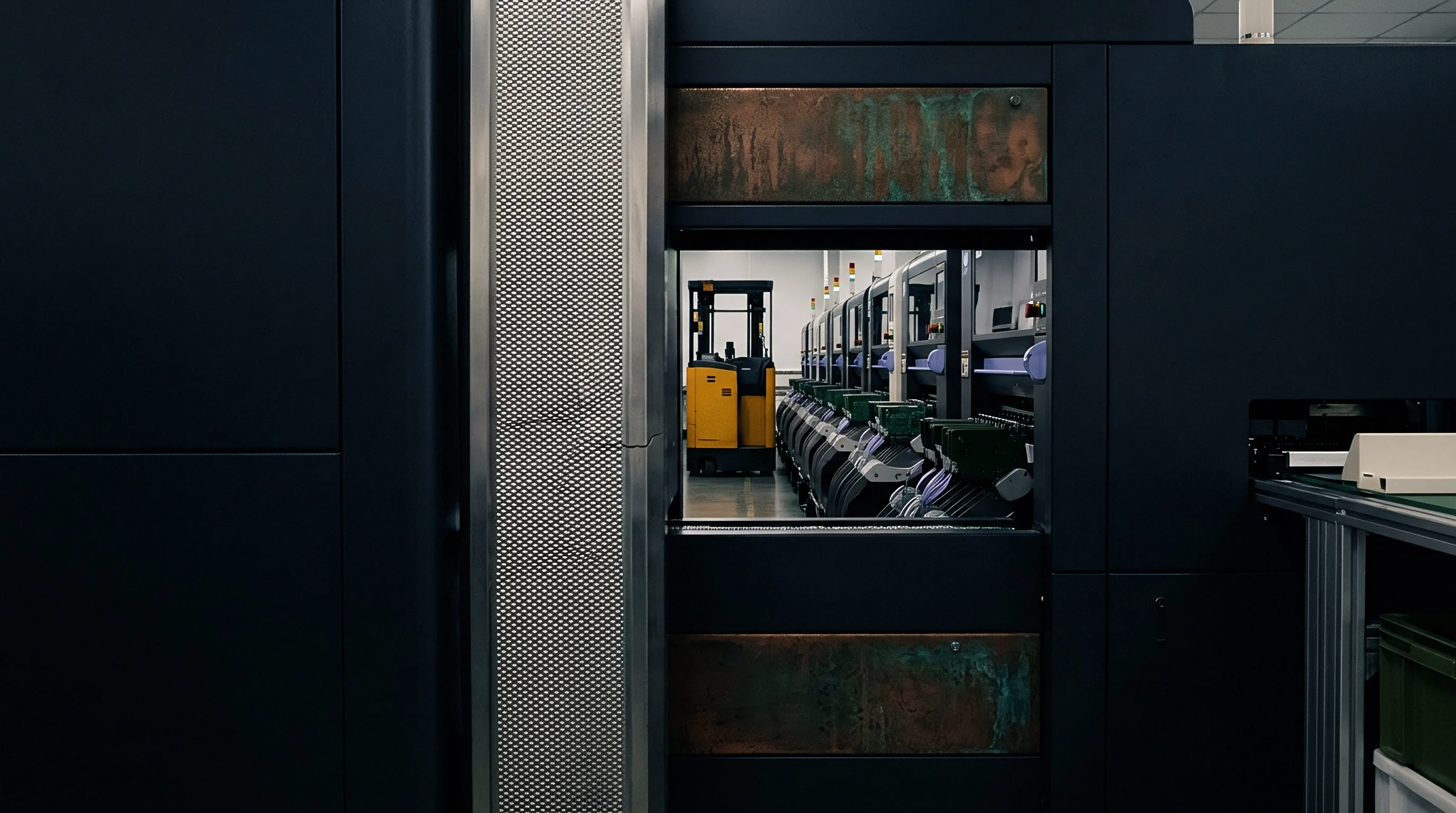
Verifying machine availability requires inspecting floor dispatcher screens and operator shift logs in person. Relying on remote status reports leaves buyers blind to shop floor realities; an update might claim assembly is under way while the tooling still sits unmounted on a storage rack. Walking the line to check actual machine states, cycle speeds, and scrap bins confirms whether a run is actually moving forward as agreed.
Overall Equipment Effectiveness data shows how a supplier balances shared equipment. On micro-batches, availability numbers dip because changeovers take up so much of the operating window. When those metrics sag, supervisors pull senior operators onto continuous, high-volume lines, leaving short runs in the hands of junior shift trainees.

Physical Floor Audits and Machine Utilization Records
Walking the floor turns up unassigned work-in-progress parked near secondary CNC cells. Checking machine maintenance tags, traveler cards, and raw staging bins flags bottlenecks days before they appear in formal management reports.
| Floor Inspection Parameter | Expected Standard Target | Observed Low-Volume Deviation | Root Cause Mechanism | Corrective Action Threshold |
|---|---|---|---|---|
| SMT Line Changeover Time | ≤ 45 minutes | 110–140 minutes | Feeder reel misconfiguration and manual loading | Mandatory pre-kit staging 2 hours prior |
| Operator Qualification Level | Grade A Certified | Grade C Trainee | Senior staff reallocated to high-volume lines | Mandate named technician sign-off |
| First-Article Inspection Rate | 100% Pass Rate | 82% Pass Rate | Thermal profiling inaccuracy during cold start | Enforce 10-unit sacrificial run protocol |
| Work-in-Progress Transit Time | ≤ 15 minutes | 180+ minutes | Secondary machining cell buffer congestion | Establish direct bench-to-dock routing |

Cycle Time Auditing and Labor Allocation Controls
Timing the assembly bench with a stopwatch reveals whether operator pacing matches quoted rates. Suppliers frequently quote small lots using standard high-volume assembly speeds, but manual throughput routinely falls thirty to forty percent on short runs because technicians never reach the speed that comes with continuous repetition.
- Electronic Dispatch Logs auditing terminal entries tracks actual line startup against promised dispatch dates.
- Feeder Reel Pre-Kitting Records checking preparation cards confirms the SMT line has verified parts ready before line clearance begins.
- Operator Assignment Sheets cross-referencing shift rosters verifies that experienced technicians remain assigned to small-batch benches.
- Scrap Material Bin Tares weighing scrap tubs at the workstation gives an unfiltered look at yield during initial machine setup.
ISO 9001 Section 8.5.1 requires documented traceability for machine operator qualification on specialized low-volume assembly cells.
Consider a run of 1,200 industrial control modules evaluated across three production approaches. Option A uses a manual bench: setup takes 1.5 hours, unit cost reaches 18.50 USD, defects average 0.5 percent, and the job finishes in four days. Option B routes the lot through a high-speed shared SMT line: setup runs 4.0 hours, unit cost falls to 14.20 USD, but cold-start thermal instability pushes defects to 3.2 percent, and line interruptions drag delivery out to twelve days.
Option C books night shifts on the main automated line: setup requires 2.5 hours, unit cost sits at 15.80 USD, the defect rate settles at 1.8 percent, and the run finishes in six days. For mission-critical electronics, Option A shields product yield despite steeper upfront labor, whereas Option C balances cost against lead-time predictability for ordinary commercial hardware.
Whether Tier-2 suppliers will ever adopt automated micro-batch scheduling without demanding guaranteed margins remains an open question across the industry.

Invoice
Cost accounting for short-run production reveals expenses that a standard bill of materials overlooks. Small-batch economics hinge on overhead absorption, amortized setup labor, and non-standard packaging charges. When manufacturing schedules slip from poor line allocation, buyers often resort to air freight to hit downstream fulfillment commitments, wiping out whatever margin the project retained.
Managing the total cost of low-volume builds demands clear visibility into how the plant amortizes tooling and calculates scrap. A standard factory quote assumes the two percent scrap allowance common to continuous production. On a five-hundred-unit order, tuning and aligning the machine can consume twenty units right away, generating a four percent loss before production even gets under way.

Landed Economics of Micro-Batch Manufacturing
Early prototype quotes rarely account for machine changeovers, custom component trays, or incoming material handling fees. Without those expenses itemized up front, the final invoice can easily outrun initial budget estimates.
Unscheduled line changeovers double the scrap rate during the first fifty units of any low-volume assembly run.

Scrap Allowance Allocation and Rework Chargebacks
Component loss runs high during initial passes as operators adjust line speed and feeder registration. Setting explicit scrap thresholds in the contract prevents surprise surcharges from appearing on the final invoice after a short run finishes.
Leaving setup windows out of formal purchase orders leaves buyers covering air-freight penalties on late shipments while remaining liable for idle line charges whenever scheduling stalls.