Establishing Physical Tooling Control Protocols to Prevent Unauthorized Subcontracting Leakage
Enforce physical tooling control by embedding IoT shot counters, applying mechanical cavity locks, and executing native bailment contracts with gate security controls.
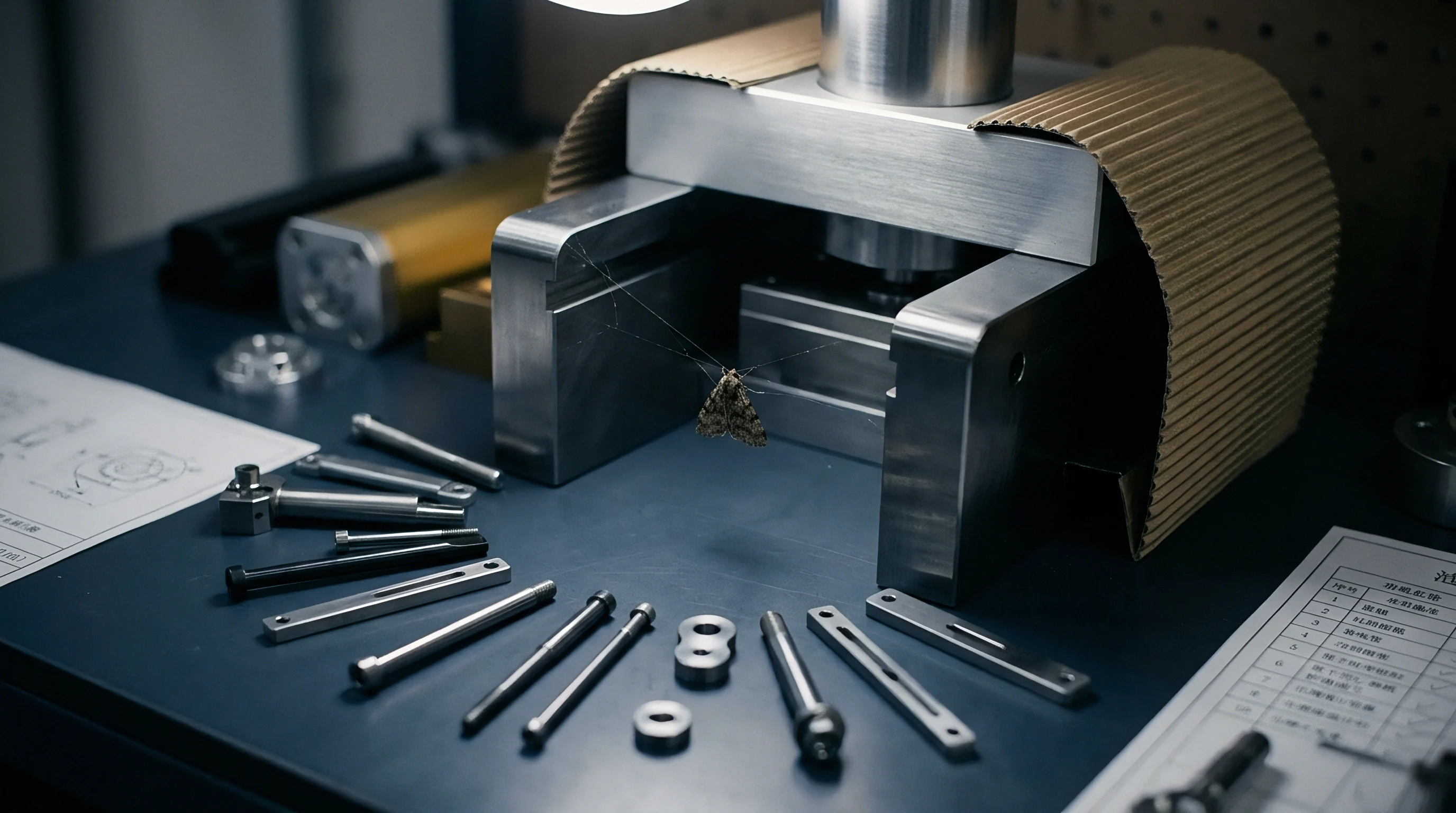

Lock
Securing high-value production assets against off-shift utilization requires hardware controls that physically restrict mold movement and press mounting. Secondary tier manufacturers operating under tight margin pressures routinely run unrecorded production shifts using authentic customer dies during evening hours. Preventing this unauthorized volume demands physical lockout mechanisms integrated directly into the mold base, rendering the tool non-operational unless authorized personnel unlock the mounting infrastructure with physical keycards or timed mechanical releases.

Mechanical Anti-Tamper Enclosures and Asset Tagging
Die sets leaving standard machining facilities often lack tamper-resistant shielding around key operational features. Machine operators can bypass basic plate clamps within minutes using standard shop wrenches. Encasing critical leader pins, ejector plate return pins, and hydraulic core-pull cylinders within hardened steel security housings creates an immediate physical barrier to unauthorized press mounting.
Steel dies wear down. Installing heavy-duty, hardened steel lockout plates across the primary clamp slots prevents the tool from seating into standard hydraulic or mechanical press platens. These plates utilize key-coded tubular locks with specialized bolt geometries that reject standard workshop tools.
Without the proprietary key, attempting to force the lockout mechanism damages the alignment bushings, rendering the tool useless for precision molding.
Unmonitored tooling sitting idle on a factory floor inevitably migrates to active injection presses during unannounced night shifts.
Stainless steel asset tags must be permanently affixed to the mold base using anti-tamper blind rivets and resin-bonded weld seams. Etching a unique 2D DataMatrix code alongside serial numbers directly into the tool steel prevents tag swapping between active and retired die sets. When field inspectors conduct site visits, visual verification takes seconds, verifying that the physical asset on the floor matches the active production contract.
Die Set Physical Anchor Systems
Securing the mold inside an enclosure during transport or downtime requires robust anchor points that prevent partial disassembly. Unscrupulous suppliers sometimes detach individual cavity blocks from an multi-cavity injection mold to run secondary production on smaller, lower-cost presses while leaving the main frame behind. Heavy-duty enclosure boxes constructed from structural steel tubing feature internal locking bars that cross both the parting line and back plates simultaneously.
Factory security holds the key. Applying serial-numbered, high-security bolt seals across the primary split line of the protective enclosure ensures that opening the casing requires bolt cutters. The seal numbers map directly to the daily shipping ledger and press clearance records.
Breaking a seal without a signed job order triggers an immediate audit of all raw material inventory on site.
| Lockout Mechanism Type | Physical Security Level | Bypass Resistance Time | Installation Complexity | Primary Operational Failure Mode |
|---|---|---|---|---|
| Hardened Clamp Slot Lockout Plates | High | 45 to 60 minutes | Low (External Bolting) | Key loss requiring precision EDM destructive removal |
| Parting Line Cable Lock Belts | Medium | 10 to 15 minutes | Very Low (Wrap & Crimp) | Physical cutting via standard angle grinder |
| Hydraulic Core Line Lockout Valves | High | 30 to 45 minutes | Medium (Manifold Integration) | Fluid leakage degrading pressure retention over time |
| Ejector Plate Mechanical Stop Collar | Very High | 90 to 120 minutes | High (Internal Pocket Machining) | Debris accumulation jamming the manual release keyway |
Failing to establish physical locking mechanisms hands the factory complete operational discretion over tool utilization, resulting in uncompensated asset wear, premature cavity degradation, and direct product leakage into secondary domestic retail channels.


Cavity
Direct product traceability relies on microscopic identifiers embedded within the tool steel itself. Every part falling from a mold carries the permanent physical footprint of the specific cavity block that formed it. Modifying cavity surfaces with customized micro-features ensures that authentic parts remain distinct from goods produced on unauthorized duplicate molds manufactured without buyer permission.

Micro-Marking and Cavity Identification Inserts
Precision sub-tier machine shops can duplicate external mold dimensions within days using modern CNC sinker EDM equipment. Replicating microscopic, variable-depth surface laser etchings inside the active cavity walls requires significantly higher technical effort. Inserting hardened sub-cavity steel plugs containing sub-millimeter geometric code patterns creates a non-replicable signature on every molded plastic component or metal die-casting.
Subcontractors operate on thin margins. Standardizing cavity numbering across multi-cavity tools serves as the first line of defense against partial mold cloning. Each cavity position receives an explicit index mark, such as cavity identifier 01 through 16, combined with a microscopic batch date wheel insert that machine operators adjust daily.
Unapproved duplicate molds rarely feature active date wheels due to the maintenance burden, exposing counterfeit goods instantly during market sampling.
ISO 20492 standards governing tooling management stipulate that physical ownership plates must remain permanently attached to die bases throughout all manufacturing lifecycle phases.
Installing high-frequency vibration sensors within the core and cavity backing plates provides additional verification. These internal elements detect the mechanical impact profile of the press closing cycle. Deviations in closing force or cycle timing indicate that parts are being run on non-calibrated presses or that cavity blocks have been removed for unauthorized off-site duplication.
Why Do Secondary Tier Suppliers Gain Unauthorized Access to Proprietary Injection Molds?
Primary contract facilities often face sudden capacity bottlenecks during peak commercial seasons. Rather than declaring a schedule delay and incurring contract penalties, plant managers transfer active tools to unvetted sub-tier machine shops situated within the same manufacturing cluster. These secondary facilities operate without security controls, running extra shifts to produce overage units that enter black-market distribution.
- Verify that all cavity insert retaining screws carry tamper-evident epoxy plugs before mounting the tool to the press platen.
- Inspect cavity surface polishing under ten-times optical magnification to confirm the presence of localized laser micro-texturing.
- Cross-check physical part weight against the baseline specification sheet using a digital balance calibrated to two decimal places.
- Document the exact index position of all removable cavity date wheel inserts before authorizing the initial production run.
- Audit ejected runner scrap for corresponding cavity index numbers to confirm that no cavities have been blocked off or isolated.
When questioned about unexplained cavity surface wear, factory representatives routinely claim that abrasive resin additives caused sudden wall erosion rather than admitting the tool ran fifty thousand unauthorized cycles during weekend operating windows.


Telemetry
Digital monitoring instruments embedded within the mold structure bridge the distance between the buyer desk and the factory floor. Continuous automated tracking eliminates reliance on self-reported vendor production logs. Modern IoT stroke logging hardware operates independently of plant infrastructure, transmitting cycle counts, geographic location, and operational temperature profiles directly to external servers via global cellular networks.

Cellular Shot Counter Hardware Specifications
Autonomous shot counters must function without external wiring or connection to the press power supply. Integrating long-life lithium thionyl chloride battery packs inside milled pockets within the tool base provides continuous power for up to five years or two million machine cycles. Internal inductive pulse sensors register every closure of the parting line, storing time-stamped cycle records inside non-volatile onboard memory chips.
Data arrives every hour. Internal cellular modems utilize NB-IoT or LTE-M low-power wide-area network protocols to bypass factory Wi-Fi security firewalls entirely. When the mold closes, the counter increments, records ambient temperature, and buffers the data payload.
At pre-set intervals, the device wakes, connects to local cellular towers, and offloads the accumulated event logs to a central management database.
| Telemetry Unit Class | Battery Life Expectancy | Cellular Protocol | Enclosure Rating | Maximum Operational Temperature |
|---|---|---|---|---|
| Compact Mold Counter LTE-100 | 3 Years (1,000 shots/day) | NB-IoT / LTE-M | IP67 (Dust/Waterproof) | 120 degrees Celsius |
| High-Temp Sensor Pack HT-500 | 5 Years (2,000 shots/day) | 3G / 4G Fallback | IP68 (Hermetic Seal) | 180 degrees Celsius |
| Satellite-Linked Heavy Die Tracker | 2 Years (Continuous) | Iridium / Cellular | IP69K (High Pressure Wash) | 85 degrees Celsius |
Signal loss triggers an alert. Encasing telemetry units within solid steel blocks attenuates radio frequency transmission unless external surface patch antennas are installed. Using flush-mounted, impact-resistant polyetheretherketone antenna covers allows signal propagation while protecting the internal electronics from high-pressure washdowns and industrial shock loading.

Real-Time Geofencing and Movement Alarms
Tracking physical movement prevents unauthorized transport between approved production sites and unlicensed subcontractor facilities. Onboard multi-constellation GPS and cellular tower triangulation modules determine asset position continuously. Defining a tight virtual geofence around the primary vendor facility address ensures immediate detection if the tool leaves the premises.
Integrated three-axis accelerometers monitor physical motion. Sudden tilt angle changes or continuous vibration profiles characteristic of road transport activate emergency high-frequency transmission modes. The system sends instant push notifications and email alerts to supply chain managers the moment an asset crosses the geofence perimeter without a cleared logistics ticket.
Section 8.2 of standard international manufacturing bailment contracts mandates that moving tooling assets outside designated facility coordinates without written authorization constitutes immediate breach and triggers asset repossession.
Reviewing historical shot frequency curves exposes micro-anomalies that signal illicit production. Operating presses at sub-optimal cycle speeds during off-hours creates distinct frequency signatures compared to standard qualified day-shift operations. Analyzing these telemetry logs reveals unauthorized utilization patterns long before physical component wear manifests on finished production parts.
Standard master supply agreements must include explicit provisions stating that any attempt to shield, disconnect, or tamper with internal telemetry hardware results in an immediate ten percent contract price penalty alongside legal forfeiture of remaining tooling amortization payments.

Ledger
Reconciling raw resin consumption against verified finished goods output isolates physical inventory leakage points. Material balances calculate expected weight against actual shipped components, highlighting discrepancies caused by unrecorded production runs. Combining rigorous scrap mass auditing with precise component weight monitoring exposes unauthorized factory volume before goods clear export customs.

Material Mass Balance and Scrap Rate Audit
Raw resin arrives in bags. Tracking the exact mass of engineering resins delivered to the molding facility creates a mathematical ceiling on total achievable component production. The mathematical expression governing resin balance tracks raw input mass (Minput) against total component mass (Mparts), runner system scrap (Mrunner), and verified process loss (Mloss):
Minput = sum Mparts + sum Mrunner + Mloss
Process loss in modern injection molding setups should never exceed two percent of total throughput mass under qualified operating conditions. Unaccounted material loss exceeding this threshold indicates that raw resin is being diverted into unauthorized production shifts using the client mold base.
Weight records do not lie. Conducting random mass audits requires weighing one hundred consecutive molded parts on a calibrated electronic scale alongside their associated cold runner systems. Comparing total shot mass against the bill of materials baseline reveals whether machine operators are under-packing cavities or running modified wall thicknesses to stretch raw material stock across extra unrecorded units.
Worked Example of Unexplained Tooling Amortization
Analyzing tooling lifespan degradation requires comparing cumulative physical telemetry shot records against cumulative customer purchase orders. Assume a client contracts a single-cavity mold with a certified tool steel lifespan of 500,000 cycles, priced at a baseline tooling cost of $50,000 USD. The contractual component purchase order covers 200,000 finished parts, with a calculated tooling amortization fee of $0.10 USD per part added to the unit piece price.
Assume field telemetry data extracted during a routine engineering audit shows the actual shot count logged on the internal counter stands at 380,000 cycles, while customer inventory records confirm receipt of only 200,000 finished units. Assuming a standard qualified process scrap rate of 1.5 percent, the expected total shots logged should equal 203,045 cycles. The unexplained surplus shot count equals:
Surplus Shots = 380,000 – 203,045 = 176,955 cycles
Evaluating this surplus shot volume against the $0.10 USD per shot amortization rate exposes an uncompensated asset wear value of $17,695.50 USD. Furthermore, assuming each shot yields a finished part weighing 150 grams using resin costing $3.00 USD per kilogram, the unauthorized production volume consumed 26,543.25 kilograms of resin valued at $79,629.75 USD. The financial impact spans both uncompensated tool wear and severe intellectual property leakage into market channels.
Unaccounted shot variance exceeding two percent of total purchase order volume signals structural inventory leakage or active unauthorized subcontracting.
Night shifts conceal volume. Establishing an unannounced physical audit routine where inspectors cross-reference resin inventory levels on Friday evening against Monday morning stock balances identifies off-hours machine usage without needing permanent floor staff.
A reliable operational benchmark dictates that any tool showing more than three percent shot count deviation from purchase order delivery volumes must undergo immediate physical teardown and cavity wear measurement before approving subsequent production batches.


Egress
Factory gate security protocols represent the final physical boundary preventing unauthorized asset removal from primary vendor grounds. Logistics channels out of major industrial parks rely on documented gate clearance forms signed by plant operations managers. Controlling these physical exit channels prevents tools from migrating to low-cost regional machine shops during scheduled production lulls.
Physical Gate Pass Protocols and Logistics Control
Securing workshop perimeters demands strict clearance controls managed directly by security officers operating independently of production personnel. Facility exit gates must require an official, serial-numbered physical gate pass carrying corporate seal stamps and explicit authorization signatures from the client regional supply chain director.
The gate officer signs the log. Registering every heavy transport vehicle entering or leaving the compound prevents unrecorded die transport during off-peak hours. Gate personnel must cross-check vehicle license plates, driver identification details, and physical crate serial tags against cleared shipping manifests before opening perimeter barrier gates.
Physical perimeter security fails the moment factory gate guards accept verbal approvals from plant superintendents without written client sign-off.
Implementing visual inspection stations at loading docks ensures security staff can verify crate contents before loading onto transport trucks. Rejection must occur immediately if transport crates lack anti-tamper locking cables or if seal numbers fail to match clearance documentation exactly.

Transport Crate Securing and Transit Monitoring
Protecting die sets during transport between authorized manufacturing sites requires heavy-duty transit crates built from structural steel frames. Standard wooden crates can be easily dismantled and reassembled without leaving obvious trace evidence, allowing unauthorized tool extraction during transit.
- Reinforced structural steel transit frames with fully welded corner brackets prevent crate dismantling via standard hand tools during overnight vehicle stops.
- Serial-numbered high-security cable seals looped through steel container door handles detect unauthorized crate opening during transit across provincial boundaries.
- Shock and tilt logging indicators mounted inside transit enclosures register excessive physical impacts or improper orientation during transport loading cycles.
- Independent cellular tracking devices concealed inside fake structural frame tubes provide continuous location updates during long-distance domestic freight movements.
Unapproved molds yield bad parts. Inspecting transit crates upon arrival at secondary processing sites confirms that security seals remained intact throughout the entire transportation route.
Will regional transport drivers honor physical transit seal requirements when local factory managers offer cash incentives to bypass clearance checkpoints?


Escrow
Legal bailment infrastructure under applicable host nation contract law forms the foundation for enforceable asset control across foreign jurisdiction boundaries. Physical possession of tooling by a contract manufacturer creates an inherent risk of ownership ambiguity unless legal bailment agreements explicitly declare the asset as buyer-owned property on loan for specific production orders.

PRC Legal Bailment Structures and Asset Registration
Structuring formal bailment agreements requires drafting native-language legal instruments that explicitly state tooling ownership remains entirely with the buyer throughout the asset lifecycle. These documents must identify the tool base by unique serial numbers, cavity configurations, and original purchase invoice values. Registering these assets with local commercial administration authorities creates a public record of legal title, defeating claims by factory creditors seeking to seize workshop equipment during vendor bankruptcy proceedings.
Tooling bailment requires proof. Placing physical bilingual ownership identification plates directly onto the non-molding surface of the die base reinforces legal title. The plate text must state in clear local language that the physical asset belongs exclusively to the client, is leased temporarily for contracted production runs, and is strictly exempt from vendor asset pledges or third-party mortgages.
- Native language bailment contracts clearly defining physical asset title, allowed production locations, and explicit prohibitions against unauthorized movement or cloning.
- Official company chop validation on every agreement page, ensuring legal enforceability within local municipal civil courts.
- Detailed physical asset schedules listing precise dimensions, cavity counts, serial numbers, and baseline mold weights to prevent asset substitution.
- Third-party storage escrow arrangements defining immediate asset transfer protocols to neutral warehouse facilities during commercial dispute resolution phases.
- Unannounced physical inspection covenants granting buyer representatives unrestricted access to production floors to audit tool condition and usage logs.

Repossession Execution and Physical Tooling Recovery
Executing physical repossession of tooling assets when a vendor breaches production contracts requires detailed advance logistics planning and rapid local execution. Repossession takes three days. Dispatching legal representatives alongside armed security escorts and heavy transport equipment ensures immediate access to factory premises once court injunctions or bailment recovery notices are served.
Pre-arranging logistics support with regional crane operators and heavy machinery transport contractors eliminates delays during on-site asset recovery actions. Upon entering the facility, recovery teams verify tool serial numbers against bailment registry documents, apply protective shipping locks, and load the assets onto waiting transport vehicles for immediate transfer to neutral escrow storage sites.
Maintaining continuous physical custody over tooling assets through active telemetry, mechanical lockout hardware, strict material accounting, and legal bailment structures isolates manufacturing operations from unauthorized subcontracting risk, preserving product intellectual property and brand commercial equity.