Determining True Ex Works Baselines in Cross Border Sourcing
True Ex Works baselines require stripping out domestic VAT refund margins, overstated material scrap allowances, and bundled packaging or drayage fees.


Origin
Cross-border procurement teams routinely encounter factory price lists labeled under standard delivery terms that obscure true manufacturing expenses. Suppliers operating in international export hubs frequently present Ex Works (EXW) pricing that bundles internal factory overhead, unadjusted value-added tax assumptions, and domestic transport cushions into a single baseline figure. Disentangling these layers demands dissecting physical shop floor operations from commercial delivery terms.

Distinguishing Commercial EXW from Incoterms Compliance
International trade contracts published by the International Chamber of Commerce define point-of-sale risk strictly at the seller premises without obligation to load outbound vehicles. Commercial quotations labeled as EXW by foreign vendors rarely reflect pure factory gate handoffs. Overseas suppliers regularly embed export packing upgrades, inland warehouse staging fees, and local port drayage allocations directly into quoted unit prices.
Factory management uses bundled EXW pricing to shield internal yield losses and local transport margins from foreign buyer audits. When a buyer accepts a commercial EXW quote without unbundling its sub-components, the baseline financial model carries embedded markups that compound across future volume increases. Establishing a true baseline requires auditing individual line items starting from raw material entry through line assembly, primary packaging, and factory gate exit.

The Four Cost Layers Suppressed inside Factory Quotations
Suppliers in export hubs build non-manufacturing expenses directly into initial line-item figures to protect operational margins against foreign currency shifts. Isolating true factory cost requires breaking down the four distinct financial strata present in supplier quotations:
Direct material costs form the first layer, often inflated by assumed scrap rates that exceed real machining loss. Direct assembly labor represents the second layer, calculated using standard time estimates rather than actual floor cycle times. Factory overhead forms the third layer, carrying unallocated shop floor downtime and facility maintenance charges.
The final layer consists of domestic inland transport buffers, where suppliers add pre-carriage allowances even when quoting origin terms.
When pressed on why internal palletization fees remain embedded within itemized quotes, floor managers routinely argue that separating line assembly from protective export wrapping introduces unnecessary administrative friction.


Rebate
Tax structures governing Chinese manufacturing create a significant divergence between domestic supply quotes and international purchase benchmarks. Factory pricing presented to foreign buyers often obscures the impact of state tax policy on final unit economics. Isolating true net cost requires evaluating domestic value-added tax (VAT) application alongside export tax rebate schedules administered by national tax authorities.

Tax Refund Differentials across HS Code Classifications
The State Taxation Administration of the People’s Republic of China applies specific value-added tax rates upon raw materials while returning variable percentages upon export. The standard domestic VAT rate stands at thirteen percent for most manufactured industrial components. Export VAT rebate rates vary from zero percent to thirteen percent based on Harmonized System (HS) code classifications assigned to the finished product.
When an export component qualifies for a full thirteen percent export VAT rebate, the supplier recovers the entire input VAT paid on raw materials upon customs clearance. Suppliers quoting international buyers in foreign currency often base their initial EXW calculation on gross domestic prices inclusive of unadjusted VAT, effectively retaining the state tax refund as hidden factory margin.
| Component Category | HS Code Series | Domestic VAT Rate | Export Refund Rate |
|---|---|---|---|
| Stamped Steel Enclosures | 7326.90 | 13% | 13% |
| Injection Moulded ABS Housings | 3926.90 | 13% | 13% |
| Populated Printed Circuit Boards | 8534.00 | 13% | 13% |
| Bare Copper Interconnect Wiring | 7413.00 | 13% | 0% |

Unbundling Value Added Tax from Net Unit Cost
Determining the net unit price involves isolating the thirteen percent domestic tax invoice fee from the exact export refund percentage declared at customs exit. Consider a scenario involving a stamped steel enclosure with a quoted gross domestic factory price of 100 RMB. The base cost excluding domestic VAT equals 88.50 RMB, derived by dividing 100 RMB by 1.13.
If the product carries a full thirteen percent export refund, the true net EXW baseline equals 88.50 RMB when exported directly by a licensed export entity.
If the export refund rate for a specialized copper alloy component drops to nine percent while carrying a thirteen percent domestic input VAT, the factory incurs an unrefunded four percent tax leakage. The true net export EXW baseline then equals 88.50 RMB multiplied by 1.04, yielding 92.04 RMB. Foreign buyers evaluating factory quotations must verify the exact export HS code classification to determine whether the supplier’s EXW quote reflects true net tax positioning.
Failing to adjust initial factory quotes for export tax refund rates inflates baseline component commitments by up to thirteen percent across multi-year supply agreements.


Yield
Factory estimates for raw material consumption frequently overstate true volumetric needs by wide margins. Standard quotation templates allow suppliers to embed high processing loss assumptions into initial unit cost calculations. Establishing an accurate baseline requires analyzing raw bill-of-materials weight against finished component mass and evaluating secondary scrap recovery values.

Quantifying Raw Material Scrap Allowances and Recovery Value
Stamping operations and injection moulding runs generate remnant offcuts that retain substantial scrap resale value on local secondary metal and resin markets. Machining an aluminum heat sink from solid extrusion bar stock may result in a forty percent metal removal rate. Suppliers routinely charge foreign buyers for the full gross billet weight while omitting the credit generated from selling aluminum turnings back to regional metal recyclers.
A supplier refusing to publish offcut metal resale pricing retains hidden margin inside material loss calculations.

Why Do Quoted Processing Costs Exceed Benchmarked Machine Hours?
Machine cycle times displayed on quotation sheets often include setup buffers and planned downtime that exceed actual floor performance. Isolating accurate conversion baseline rates requires conducting on-site cycle timing and scrap mass measurement using a standardized auditing process.
- Weigh unmachined billet stock prior to loading into the automated milling machine.
- Measure the finished part mass following secondary deburring and surface treatment.
- Calculate gross volumetric loss by subtracting net component weight from raw stock input.
- Apply current regional scrap market commodity rates to credit back scrap residue revenue.
Automated CNC turning centers running 6061-T6 aluminum alloys achieve predictable processing times when tool wear parameters remain optimized. Suppliers operating older equipment build extra machine-hour allocations into unit quotes to offset poor tooling maintenance and elevated scrap rates. Buyers establish baseline conversion parameters by indexing machine time strictly against automated cycle standards established during initial prototype qualification runs.
Factories maintaining open transparency on scrap weight loss consistently deliver higher dimensional accuracy on production runs.

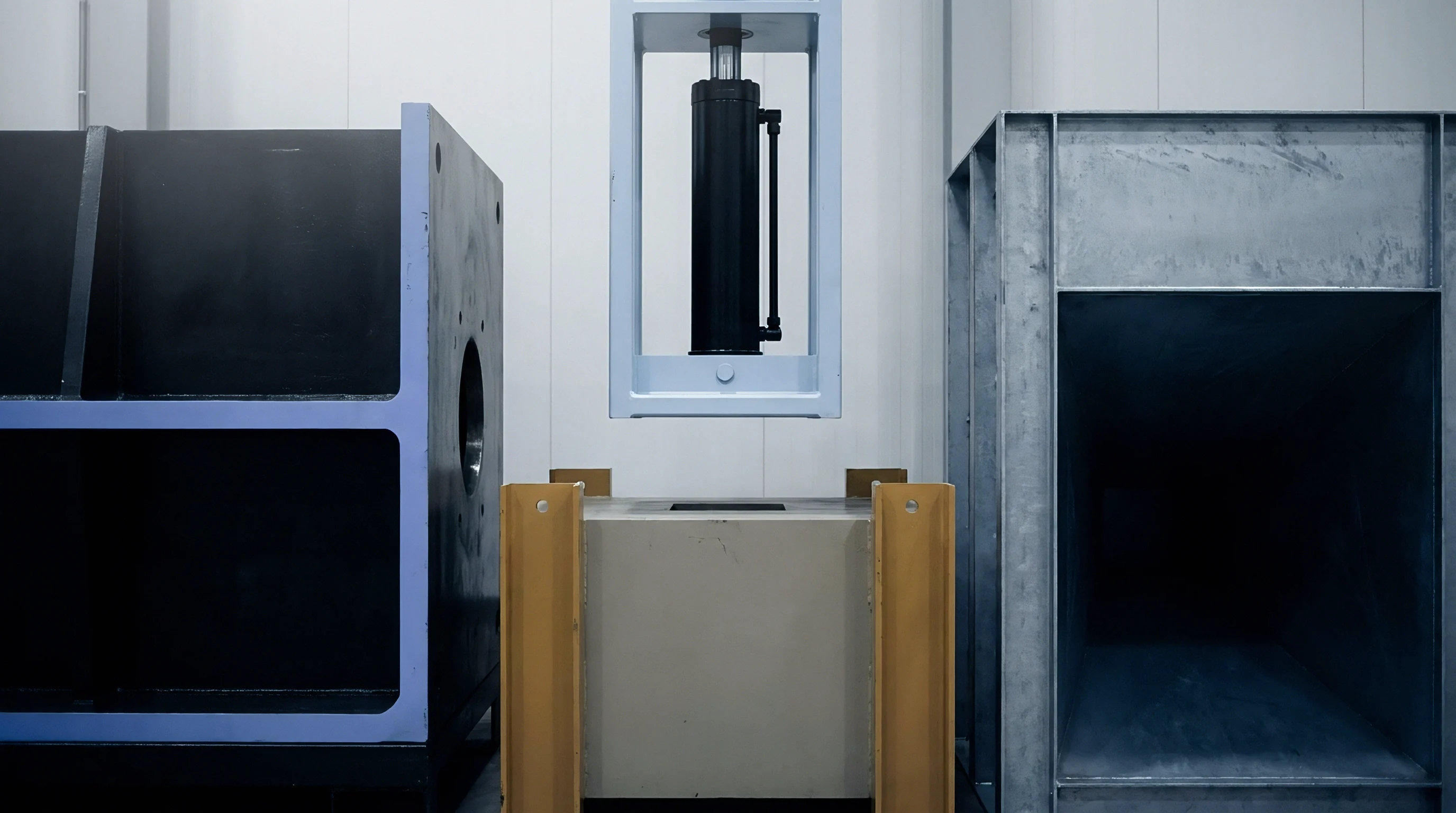
Dock
Physical transfer of finished goods from assembly bays to transport vehicles marks the exact boundary where operational liability moves between commercial counterparties. Misunderstandings regarding factory gate handoffs create unexpected expenses for international logistics teams. Defining precise physical handover terms prevents double-paying for cargo preparation and inland drayage.

Isolating Packaging Mechanics from Unit Price
Standard cardboard cartons suitable for domestic warehousing collapse under the stacking loads of ocean freight. Factory quotes categorized as EXW often include basic domestic packaging while charging extra for ocean-worthy export crating, fumigated ISPM-15 wooden pallets, and moisture-barrier vacuum bagging.
| Operational Handoff Step | Standard EXW (Seller Gate) | EXW Loaded Option | FCA (Named Factory Dock) |
|---|---|---|---|
| Export Packaging Application | Seller Responsibility | Seller Responsibility | Seller Responsibility |
| Vehicle Cargo Loading | Buyer Responsibility | Seller Responsibility | Seller Responsibility |
| Export Customs Declaration | Buyer Responsibility | Buyer Responsibility | Seller Responsibility |
| Pre-Carriage Inland Transport | Buyer Responsibility | Buyer Responsibility | Buyer Responsibility |

Delineating Risk Transfer at Factory Gates
Container loading operations on factory grounds involve fork truck maneuvers that place unpalletized cargo at risk of point-load damage. Standard EXW terms under Incoterms 2020 place loading risk entirely upon the buyer. If factory workers drop a pallet while loading the buyer’s truck, financial loss falls upon the buyer unless modified contract terms specify otherwise.
Specifying delivery under unmodified ICC EXW terms obligates the buyer to absorb cargo damage caused by factory forklift operators during vehicle loading.
Clarifying structural packaging specifications and loading duties upfront prevents transit disputes and protects product integrity. Sourcing organizations audit factory gate transfer practices using a systematic compliance checklist:
- Unlabeled Wooden Pallets introduce customs rejection risk at destination ports when ISPM-15 heat-treatment stamps are missing from structural runners.
- Excessive Outer Carton Air causes structural collapsing when ocean container pallet stacks exceed three tiers high.
- Omitted Container Moisture Bags results in surface oxidation on machined steel faces during multi-week ocean transit cycles.
- Unbracketed Heavy Assemblies shift inside ocean containers during transport, breaking outer wooden protection.
Inserting standard Incoterms 2020 EXW Loaded clauses into purchase agreements shifts forklift damage liability back to the supplier during vehicle loading operations.


Ledger
Constructing transparent financial records relies on separating raw material indices from conversion overhead and fixed tooling amortization. Baseline pricing established during initial negotiation degrades unless governed by open-book commercial structures. Procurement teams maintain long-term price integrity through continuous indexing and scheduled audit routines.

Structuring Open Book Should Cost Breakdowns
Procurement teams establish credible target prices by auditing component bill of materials against spot raw metal indices. Open-book should-cost models isolate raw material mass, machine run time, secondary surface finishing, overhead percentages, and factory profit margins into independent accounting cells.
Aluminum housing baselines drop by seven percent when spot ingot prices fall below two thousand dollars per metric ton for two consecutive quarters.
Separating tooling amortization from piece price prevents perpetual overpayment. Factories frequently amortize mold costs across initial unit run quantities. Sourcing teams ensure unit prices drop once initial tooling volume thresholds are reached by establishing explicit volume-based price adjustment schedules.

Quarterly Indexation and Baseline Adjustment Routines
Contractual price adjustment mechanisms tie unit rates to published commodity exchanges such as the London Metal Exchange or Shanghai Futures Exchange. Sourcing directors implement systematic reviews to govern multi-year purchase agreements:
- Validate Material Weight Basis against CAD solid model volume calculations before accepting factory material quotes.
- Audit Machine Cycle Time on floor production runs rather than accepting preliminary engineer estimates.
- Lock Foreign Exchange Conversion rates to central bank monthly averages to prevent artificial currency markups.
- Verify Export Tax Classifications against current state customs schedules every six months.
Establishing true baseline figures transforms price discussions into structured operational reviews. Buyers maintain commercial control over long-term sourcing programs by updating raw material indices, tracking machine efficiency, and verifying export tax adjustments every quarter.