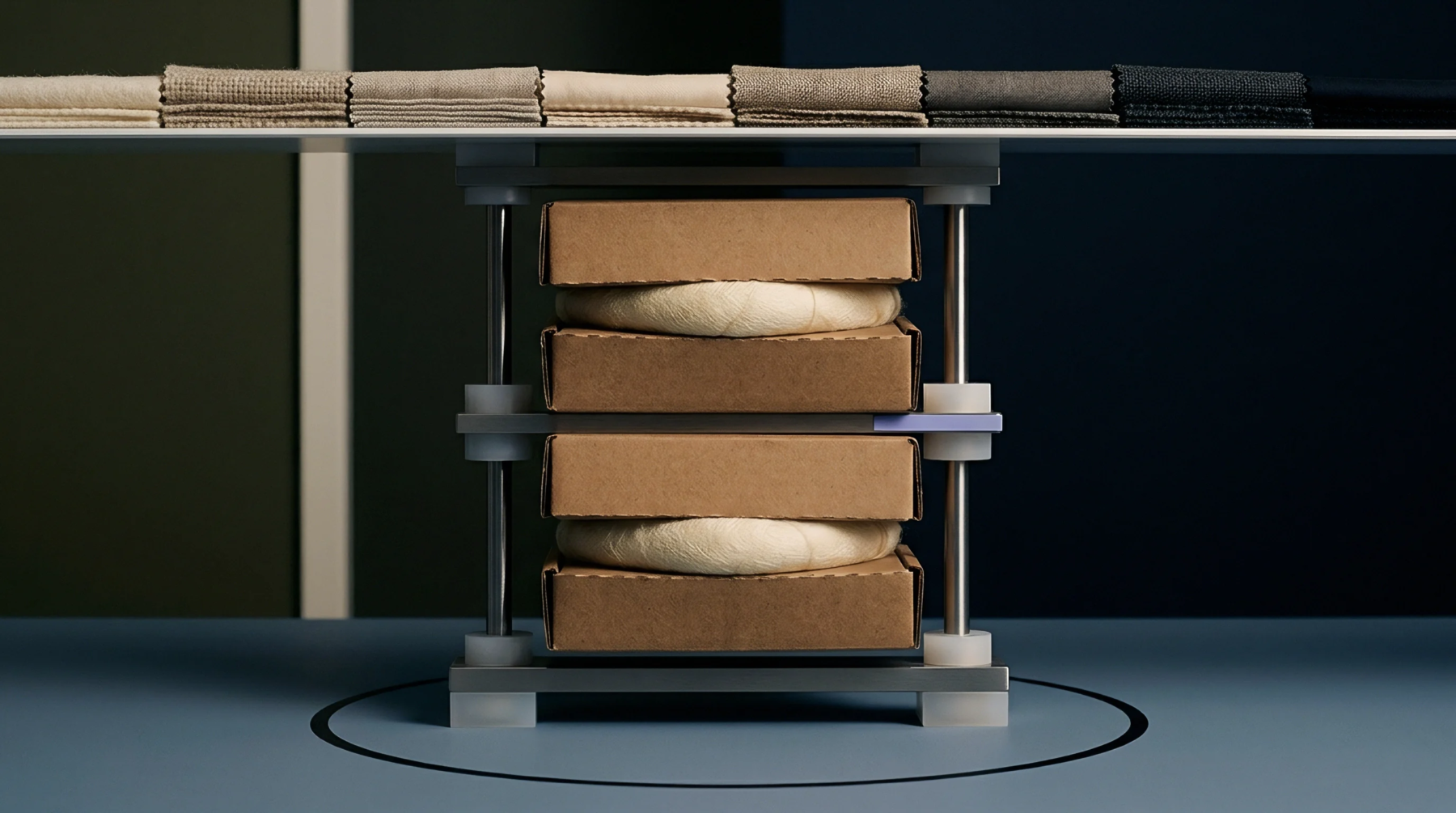
Coupled Hydrostatic Stress and Vacancy Diffusion in Microelectronic Solder Joints
Coupled hydrostatic stress gradients drive vacancy diffusion toward intermetallic boundaries, requiring fast reflow cooling and underfill constraint tuning.
Measure of the ability of a multi-layer material system or electronic device to maintain structural and functional integrity under repeated shifts between low and high extreme temperatures. The concept of thermal cycling reliability identifies the fatigue life of solder joints, interfaces and structural glues that endure the mechanical stresses caused by expansion and contraction. It governs the operational guarantee given to users of industrial or consumer electronics that must operate in environments with varying thermal signatures.
This metric sets the standard for pass/fail criteria during the product qualification phase before mass fabrication begins in the assembly plant.
Fatigue analysis involves placing the subject in an environmental chamber where it undergoes hundreds of transitions from deep cold to intense heat within defined ramp and soak periods. When evaluating thermal cycling reliability, the chamber maintains specific dwell times at the peaks to ensure that internal temperatures equalize throughout the package volume. This instrument measures the time it takes for a crack to initiate and travel through a load bearing structure like a copper pillar or an underfill layer.
The force driving these cracks is the mechanical mismatch between materials that want to change size at different rates for every degree of temperature shift. Accurate counts of the cycles until the first failure allow engineers to fit the results into an acceleration model, effectively predicting how the device will age in the hands of the end consumer over five or ten years. If the reliability limit is set at one thousand cycles, and failures occur at eight hundred, the packaging design must be fundamentally revised.
Every failure point is characterized using sectioning techniques to confirm whether the break happened in the bulk material or at a specific chemical interface. practitioners value these tests as the best empirical simulation of the harsh reality of real world usage.
Degradation happens because the elastic and plastic deformation cycles consume the initial ductility of the metallic interconnects inside the chip. Inside the context of thermal cycling reliability, the search for the root cause often finds that micro-cracks cluster near sites of high impurity or where the geometry concentrates stress. The presence of brittle intermetallic compounds at a solder interface significantly lowers the tolerance for repeated expansion, leading to early separation.
Developers focus on choosing solder alloys with fine grain structures and high creep resistance to absorb the shocks of thermal shifts. Adding an underfill material that has an expansion coefficient halfway between the chip and the substrate can essentially clamp the structure, distributing the stress evenly and increasing the life by several thousand percent. The boundary of this success is reached if the underfill itself cracks or delaminates from the edge, creating a new site for localized failure. consistent quality in the application of these materials ensures that the final assembly meets the high durability standards needed for telecommunications or automotive grade hardware. reliability squads often implement pre-baking routines to remove moisture before cycling, as internal steam pressure from high heat would otherwise cause instantaneous internal rupturing.
Validation procedures in manufacturing specify the minimum number of cycles a component must endure based on the target application and safety margins. Success in maintaining thermal cycling reliability relies on strictly controlling the purity of the chemicals and the precision of the thermal maps used during design. If the cooling profile inside the real world device is steeper than predicted, the failure happens faster than in the controlled laboratory environments. companies manage this gap by setting testing limits that are fifty percent more aggressive than the expected operational load. this margin ensures that even batches on the edge of the specification window remain safe for market release. accurate tracking of the serial numbers through the testing phase allows for the correlation of specific raw material lots with early failure events. managing this loop between the reliability lab and the procurement team prevents the use of low grade ingredients that cannot handle the thermal fluctuations of a high speed circuit. executable remedies for poor testing results consist of changing the bond spacing or increasing the thickness of the support layers. overall assurance of functionality depends on this invisible cycle of destruction and revision.
Coupled hydrostatic stress gradients drive vacancy diffusion toward intermetallic boundaries, requiring fast reflow cooling and underfill constraint tuning.
Expertise is a utility, not a secret. sentiention™ publishes its working knowledge as open reference: intelligence layer covering the materials it sources, the markets it enters, and the reference that serves both.