Structuring Enforceability under PRC Civil Code Article 585 for Supply Chain Contamination
Enforce PRC supply chain contamination damages under Article 585 by embedding pre-agreed loss formulas, notarized sampling, and direct set-off clauses.

Sieve
Incoming Material Verification Limits
Raw material purity specifications written into standard international procurement contracts routinely fail during incoming receiving inspection in Chinese manufacturing hubs. Chemical resins, specialty gas precursors, electronic subcomponents, and active pharmaceutical ingredients arrive with certificates of analysis that meet nominal lot tolerances on paper. Standard laboratory testing at receiving facilities checks isolated chemical indicators, missing low-concentration trace contaminants that degrade downstream product batches.
Resin contamination halts assembly. Supply chains collapse quickly. A batch of specialty polymer carrying fifty parts per million of unreacted monomer passes standard density tests at the receiving dock, only to outgas during thermal vacuum molding, rendering three days of cleanroom electronics assembly useless.
Buyers operating cross-border supply chains frequently assume that standard quality warranties protect against batch contamination. Under People’s Republic of China contract law, general promises of quality do not establish an immediate quantitative basis for financial recovery when latent contamination downstream destroys work-in-progress inventory. Receiving inspection protocols operate on statistical lot acceptance samples, which fail to catch localized contamination pockets inside bulk container shipments.
Establishing legal liability demands linking incoming raw material lot identity to specific downstream batch failure logs prior to mixing or processing.
Incoming chemical purity documentation rarely reflects downstream thermal degradation behavior under full production velocity.

Batch Segregation and Sample Retention
Preventing cross-contamination claims requires structural segregation of incoming supplier deliveries before material enters main production silos. Unverified raw materials dumped directly into shared storage vessels destroy evidentiary traceability, leaving the buyer unable to isolate which supplier delivered the contaminating agent.
- Bulk Storage Blending eliminates individual lot identity, allowing suppliers to claim contamination occurred inside the buyer’s internal transfer lines.
- Delayed Reagent Testing allows volatile chemical contaminants to evaporate or alter, obscuring original off-specification delivery conditions.
- Unsealed Sample Storage corrupts reference control lots, invalidating subsequent analytical laboratory submissions during court proceedings.
- Missing Transport Logs breaks the chain of custody between the manufacturing plant dock and regional distribution centers.
Contamination spreads across batches. Implementing physical lot isolation at the dock creates the technical foundation for legally binding claims. Retaining sealed split samples from every incoming transfer vessel provides the baseline evidence needed when latent contamination surfaces weeks later in finished market inventory.
The supplier claims trace chemical variance sits within natural batch tolerances and attributes the contamination to ambient processing humidity.


Statute

PRC Civil Code Article 585 Statutory Framework
Article 585 of the PRC Civil Code governs contractual liquidated damages and pre-agreed loss calculation methods. The statute allows contracting parties to define specific damage amounts or establish explicit computation formulas for breach of contract. Chinese judicial practice grants courts and arbitration tribunals broad discretionary authority to modify contractual liquidated damages that deviate significantly from actual sustained losses.
| Remedy Structure | Judicial Reduction Exposure | Evidentiary Burden on Buyer | Enforcement Rate Range |
|---|---|---|---|
| Fixed Flat Penalty | Extreme reduction risk down to material replacement cost | Low initial filing burden; high burden to defend against reduction | 10% to 30% of contract clause value |
| Unliquidated Actual Loss Claim | Zero reduction risk; subject to strict foreseeability limits | Extremely high; complete financial audit of operational loss mandated | 40% to 60% of claimed damages |
| Dynamic Formula-Based LD | Minimal reduction risk when tied to verifiably agreed cost heads | Moderate; proof of operational event triggers formula metrics | 75% to 95% of formula calculation |
Article 585 Clause 2 empowers Chinese judges to adjust agreed damages upon application by a breaching party. When contractual damages fall below actual losses, the non-breaching party can petition the court for an increase. When agreed damages exceed actual sustained losses by an excessive margin, the breaching party can request a judicial reduction.
PRC courts measure excessive liquidated damages against direct, indirect, and operational losses resulting from the breach.
Contractual liquidated damages set without pre-agreed financial calculation metrics collapse to actual material value before Chinese judges.
The Thirty Percent Excess Benchmark
Judicial interpretations issued by the Supreme People’s Court establish that agreed liquidated damages exceeding actual proven losses by thirty percent are deemed excessively high under Article 585. PRC courts exercise this reduction authority regularly. Judicial reduction trimmers act fast.
Chinese courts trim excess penalties. When a buyer inserts a severe penalty clause into a manufacturing agreement, the Chinese supplier routine files an Article 585 reduction defense during litigation, claiming the penalty bears no reasonable relationship to raw material costs.
Article 584 of the PRC Civil Code establishes the foreseeability rule for contract breach compensation. Liquidated damages structured under Article 585 must reflect losses that the breaching party foresaw or ought to have foreseen at the time of contract execution. Establishing foreseeability demands explicitly itemizing downstream financial consequences directly inside the contract text.
Listing production line downtime rates, cleanroom decontamination fees, scrapped sub-assembly values, and downstream customer delivery penalties inside the contract creates an unassailable record of mutual foresight prior to shipment. Inserting an arbitrary flat penalty rate without pre-establishing baseline operational metrics exposes the contract to mandatory judicial reduction down to raw material replacement value.

Formula

Does Dynamic Calculation Prevent Judicial Penalty Reduction?
Dynamic loss formulas built into contract schedules withstand judicial reduction because they derive damage figures directly from verifiable operational variables rather than fixed arbitrary sums. PRC tribunals view pre-agreed financial formulas as legitimate estimations of loss under Article 585 Clause 1. Liquidated damages need proof.
When a contract defines liquidated damages through a clear mathematical formula incorporating hourly line downtime rates, unit scrap values, and certified laboratory re-testing fees, judges treat the resulting figure as an agreed calculation of actual loss rather than a punitive penalty.
Factory downtime penalties calculated at twelve thousand dollars per hour hold firm in Shanghai tribunals when tied to signed equipment yield schedules.
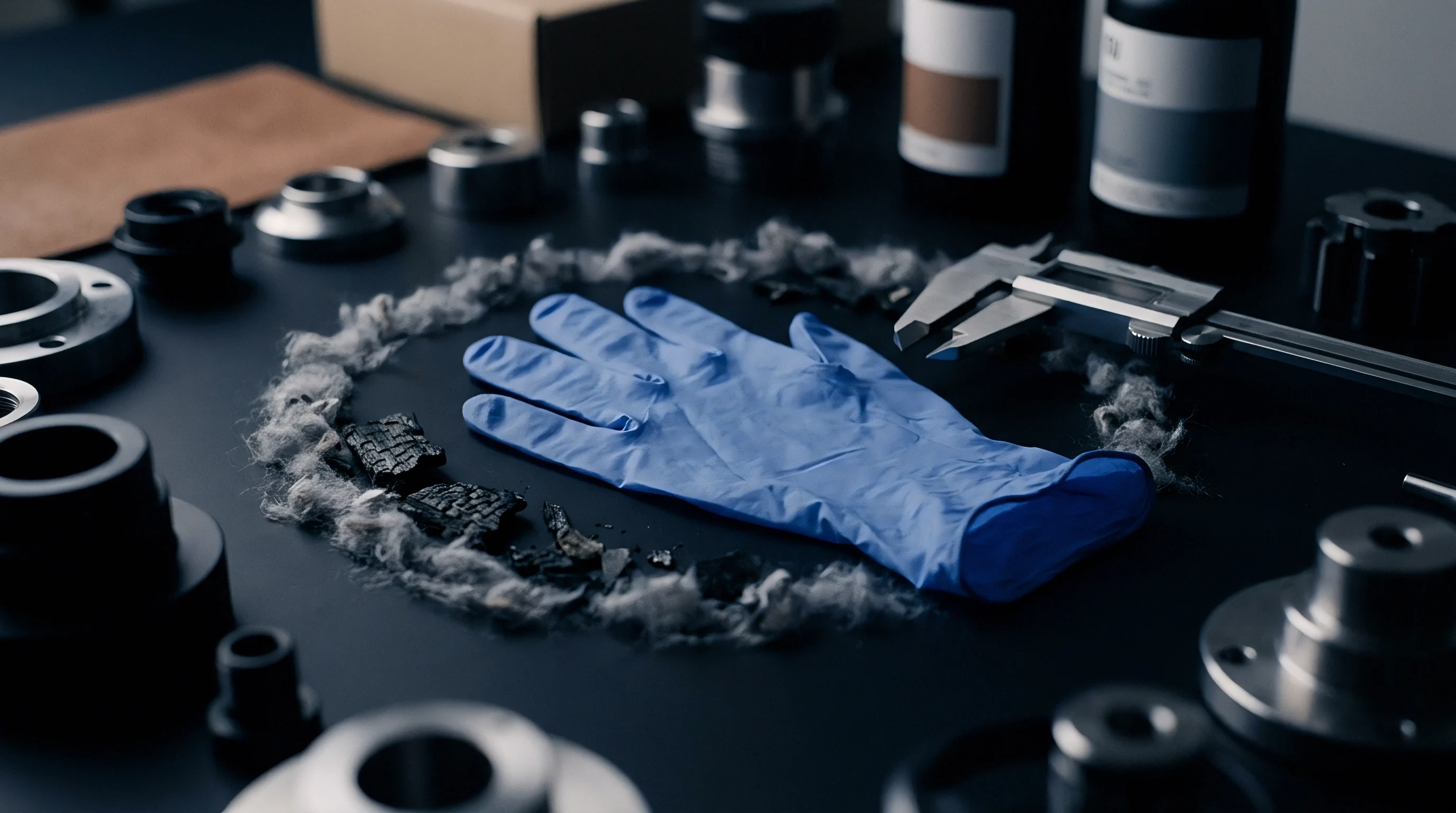
Pre-Agreed Damage Heads and Line Shutdown Metrics
To secure full enforceability under Article 585, the contract must define every component of loss arising from contamination. Contamination events in advanced manufacturing cause immediate line stoppages, requiring multi-day decontamination sequences before production resumes. If these financial components are left unliquidated, Chinese courts frequently disallow downstream assembly downtime compensation, categorizing operational losses as indirect or remote consequential damages.
| Loss Category | Contractual Formula Metric | Required Evidentiary Submissions |
|---|---|---|
| Line Downtime Compensation | Fixed hourly downtime rate multiplied by verified line outage hours | SCADA automated plant logs and certified shift supervisor records |
| Scrapped Component Loss | Bill of materials unit cost plus accrued processing labor per scrap unit | Internal scrap destruction receipts and batch inventory ledgers |
| Decontamination & Remediation | Direct contractor cost plus chemical flush material expenses | Third-party remediation invoices and hazardous waste disposal manifests |
| Re-Certification Laboratory Fees | Published standard rate per analytical testing sequence | CNAS-accredited laboratory invoices and official test receipts |
Structuring damage schedules around verifiable operational metrics eliminates judicial discretion to rewrite contract figures. The contractual schedule must stipulate that contamination in any incoming lot entitles the buyer to suspend payables across all open purchase orders pending laboratory verification. Linking incoming purity thresholds directly to downstream unit yield formulas gives the buyer immediate legal authorization to withhold payments without breaching payment obligations under PRC law.

Worked Computation of Contamination Liquidated Damages
Take a 30-tonne delivery of semiconductor-grade cleaning solvent contracted at three thousand US dollars per tonne, total lot value ninety thousand dollars. The material contains twenty-two parts per million of metal ion impurities, violating the contract specification limit of zero point five parts per million. The solvent enters three automated cleaning lines before detection, contaminating five thousand silicon wafer units in process.
The contract contains a dynamic Article 585 damage schedule defining line downtime at ten thousand US dollars per hour, scrapped wafer base valuation at one hundred fifty US dollars per unit, and mandatory chemical decontamination at a flat twenty-five thousand US dollars per line.
- Record immediate line stoppage timestamp and secure automated plant operational logs signed by the facility engineer.
- Calculate raw material replacement loss equal to thirty tonnes at three thousand US dollars, yielding ninety thousand US dollars.
- Compute line downtime damages across three lines operating twenty-four hours to flush system components, yielding seven hundred twenty thousand US dollars.
- Multiply five thousand destroyed wafer units by the agreed one hundred fifty US dollar unit base value, yielding seven hundred fifty thousand US dollars.
- Add three line decontamination procedures at twenty-five thousand US dollars each, adding seventy-five thousand US dollars.
The total liquidated damages calculated under the contractual formula equal one million six hundred thirty-five thousand US dollars against a ninety thousand dollar raw material delivery. Because each input variable matches a pre-agreed metric inside Contract Schedule C, a CIETAC tribunal enforces the total figure, rejecting supplier motions for Article 585 reduction. Clause 14.3 fixes downtime compensation at twenty thousand US dollars per eight-hour shift-block and binds both parties to accept this rate as a liquidated pre-estimate under Article 585, preventing judicial recalculation during tribunal proceedings.


Evidence

Chain of Custody and Notarial Sampling
Evidence preservation governs litigation outcomes in Chinese courts. Unilateral laboratory test reports generated by foreign buyers carry almost zero evidentiary value before PRC judges. Chinese civil procedure mandates strict proof of chain of custody for physical evidence.
Unnotarized samples fail in court. Document every sampling step. If a buyer extracts a chemical sample from a contaminated tank without following notarized joint sampling procedures, the court routinely excludes the test results as unverified hearsay under Supreme People’s Court Evidence Rules.
Unilateral buyer test certificates carry zero weight in PRC courts without joint notarized sample preservation.
Securing actionable proof requires engaging a local Chinese notary public (公证处 – gōngzhèngchù) to witness sample extraction at the facility. Notarial preservation of evidence (证据保全 – zhèngjù bǎoquán) creates a legally irrebuttable presumption of authenticity in Chinese civil litigation. The notary seals three identical sample bottles on site: one for primary laboratory analysis, one for supplier verification, and one master retain sample stored at the notary office.

Accredited Laboratory Certification Requirements
Testing must occur at accredited independent laboratories located within mainland China. Submitting analytical certificates from foreign university labs or non-accredited corporate facilities guarantees evidentiary rejection by local Chinese tribunals.
- CMA Accreditation (China Metrology Accreditation) proves the testing laboratory complies with statutory Chinese measurement standards.
- CNAS Certification (China National Accreditation Service for Conformity Assessment) establishes laboratory analytical competence under international testing protocols.
- Notarized Sample Transfer documents physical delivery from the production plant directly to the accredited testing center.
- Joint Testing Execution permits supplier technical representatives to observe analytical procedures, preventing subsequent claims of procedural error.
Combining CMA-certified laboratory findings with a notarized evidence preservation record locks the technical fact of contamination into the judicial record. Chinese judges rarely overturn accredited domestic analytical reports when backed by notarial seals. Retaining sealed sample splits under notary seal creates an unassailable evidentiary baseline before PRC arbitration panels.
Recourse

Set-Off Rights against Payables
Securing cash recovery through PRC litigation against a domestic supplier takes twelve to twenty-four months. Winning a court judgment offers little relief if the supplier transfers assets or liquidates operating accounts during trial proceedings. Contractual set-off clauses under Article 568 of the PRC Civil Code provide the primary commercial defense against supplier insolvency.
Set-off rights protect working capital. Standard purchase orders offer nothing.
Article 568 authorizes parties to offset mutual liabilities that are of the same type and mature at the same time. The contract must explicitly stipulate that contamination damages calculated under Article 585 formula schedules automatically convert into liquid commercial debts suitable for immediate set-off against outstanding payables across all active supply contracts. Without this contractual link, Chinese suppliers frequently obtain court injunctions forcing buyers to settle outstanding invoice payables while contamination litigation remains pending in court.
Letters of Guarantee and Escrow Mechanics
Relying exclusively on set-off mechanics exposes buyers when incoming shipment values exceed outstanding payables. Securing bank performance guarantees (履约保函) issued by onshore Chinese banks provides direct cash recourse upon delivery of a certified contamination notice.
Contractual sub-tier pass-through provisions allow primary component integrators to transfer contamination liability directly down to raw material sub-suppliers. When a sub-tier chemical supplier delivers contaminated solvent to a tier-one component maker, the master purchase agreement must grant the ultimate buyer step-in rights to enforce Article 585 liquidated damage claims directly against the sub-tier entity. Whether PRC courts will recognize automatic set-off execution when the underlying contamination damages remain contested under an unliquidated counter-claim leaves recovery timing uncertain.

Dispute
Arbitration versus PRC Court Jurisdiction
Choosing the correct dispute resolution forum dictates whether Article 585 damage formulas survive judicial scrutiny. PRC court judges operate under heavy institutional pressure to settle disputes and maintain local commercial stability, leading them to exercise Article 585 reduction powers aggressively to protect local manufacturing employers. Arbitrators presiding at established institutions demonstrate significantly greater respect for commercial freedom of contract and pre-agreed financial formulas.
Foreign awards face local scrutiny. Tiered clauses survive judicial review. Clause drafting should mandate arbitration before the China International Economic and Trade Arbitration Commission (CIETAC) in Beijing or Shanghai, or the Shanghai International Arbitration Center (SHIAC).
CIETAC panels regularly enforce dynamic contamination formulas when supported by valid notarial evidence, rejecting supplier arguments for arbitrary judicial reduction.

Defense Strategies against Invalidation Claims
Suppliers fighting contamination claims standardly invoke force majeure defenses under Article 180 of the PRC Civil Code, arguing raw material impurity resulted from upstream utility failures or environmental regulatory shutdowns. Contracts must explicitly define upstream utility outages, raw material market shortages, and sub-tier supplier defaults as commercial operating risks rather than force majeure events.
Defending an Article 585 liquidated damage clause requires proving the buyer took reasonable steps to mitigate downstream loss under Article 591 of the PRC Civil Code. Upon detecting trace contamination, the buyer must immediately halt affected production lines, isolate contaminated inventory, and issue formal written notice to the supplier. Failure to execute prompt line stoppages allows the supplier to argue that downstream damages expanded due to buyer negligence, granting the court valid statutory grounds to reduce final liquidated damages under Article 585.
China International Economic and Trade Arbitration Commission panels routinely enforce pre-calculated operational downtime rates when backed by notarized test certificates and clear contractual definitions.