PRC Property Preservation Bond Calculation and Tooling Injunction Execution Timelines
Property preservation in PRC tooling disputes demands cash or guarantee bond coverage up to 30 percent of asset value before court execution within 48 hours.

Statute

Provisional Protection Frameworks under Civil Procedure Law
Articles 103 and 104 of the PRC Civil Procedure Law govern judicial orders designed to freeze assets or restrain actions during manufacturing disputes. Pre-litigation property preservation allows a buyer to apply for asset freezes before formal arbitration or court filing when delay threatens irremediable harm. Article 103 addresses preservation during pending litigation, whereas Article 104 establishes emergency preservation mechanisms that mandate court action within 48 hours of application submission.
Supreme People’s Court Interpretation 2016 Number 22 clarifies that industrial tooling, specialized injection moulds, and assembly line dies fall under preserveable property categories when clear ownership documentation exists.
Preservation applications submit to the local People’s Court holding geographical jurisdiction over the physical equipment or the respondent enterprise. The court examines property titles, equipment purchase contracts, tax invoices, and proof of prior payment before granting an order. Judges demand strict proof of asset specification, requiring serial numbers, factory floor locations, and current operational status.
Vague asset descriptions lead to immediate administrative rejection.
A property preservation order issued prior to formal litigation lapses automatically if the applicant fails to initiate court proceedings or arbitration within 30 days of execution.

Property Preservation versus Behavioral Injunction Scope
Judicial enforcement distinguishes physical asset seizure from operational restraint orders. Property preservation under Article 103 physically seals equipment or restricts its legal transfer, mortgage, or disposal. Behavioral injunctions, governed by SPC Interpretation 2018 Number 24, prohibit a supplier from using specific moulds to produce goods for third parties or altering physical tooling structures during dispute resolution.
Courts demand higher evidentiary thresholds for behavioral injunctions than for physical property freezes. An applicant proving ownership of a steel mould easily secures a physical preservation order, yet proving that a supplier is actively running unauthorized production batches demands targeted evidence like customs export logs, sample serial matches, or witness testimonies. When physical removal of heavy stamping dies is logistically impossible without damaging plant infrastructure, courts combine property preservation with behavioral prohibitions.
Standard supply contracts that specify exclusive submission to the Shenzhen Court of International Arbitration with explicit submission to Article 104 emergency preservation rules allow foreign buyers to obtain preliminary injunctions before domestic arbitral panels convene.

Bond
Financial Undertakings and Security Ratios
Judicial preservation requires security to cover potential losses suffered by the respondent if the applicant loses the underlying lawsuit. Supreme People’s Court rules fix pre-litigation property preservation security at an amount equal to the requested preservation value, though judges frequently reduce cash requirements when commercial guarantee mechanisms are provided. Intermediate People’s Courts across Tier 1 industrial hubs accept litigation guarantee insurance policies issued by licensed domestic insurers in place of full cash deposits.
Courts inspect original invoices. Insurance policies lower cash drag. Cash deposits yield zero interest inside court custody accounts throughout trial proceedings.
Commercial insurance premiums range between 0.15 percent and 0.60 percent of the total preservation value, determined by the strength of underlying title documents and the clarity of dispute liability.
| Preservation Category | Statutory Security Ceiling | Accepted Collateral Forms | Typical Cash Percentage | Execution Decision Window |
|---|---|---|---|---|
| Pre-Litigation Emergency Preservation (CPL Art 104) | 100% of target asset value | Cash deposit, bank guarantee, approved property policy | 20% to 100% depending on court local rules | 48 hours from application receipt |
| In-Litigation Property Preservation (CPL Art 103) | 30% of target asset value or total dispute claim | Litigation guarantee insurance, real estate title, cash | 0% to 10% with insurance policy endorsement | 5 days from application acceptance |
| Behavioral Injunction Restraining Tooling Operation | Calculated based on estimated monthly downtime loss | Strictly cash or Tier-1 commercial bank guarantee | 50% to 100% of projected losses | 7 days from initial hearing |
Bond Calculation Methodology for High-Value Tooling
Calculating the precise security requirement for a complex injection mould assembly involves balancing asset book value against potential business interruption liabilities. Take a 40-tonne automotive stamping die set with an original purchase price of 2,400,000 RMB, located at a tier-two supplier facility in Zhejiang province. Assume the foreign buyer applies for pre-litigation preservation to recover the die set due to breach of exclusivity and unauthorized third-party production.
The applicant presents proof of full payment, including the official VAT invoice and bank remittance advice. The court sets the underlying preservation target at 2,400,000 RMB based on invoice value. Under standard Zhejiang Intermediate Court practice, the required security structure follows one of two distinct financial paths:
Under a cash-only mandate, the court requires 2,400,000 RMB transferred directly into the court deposit account before the enforcement bailiff departs for the site. Under a litigation guarantee insurance structure, the applicant purchases a policy from a licensed domestic insurer for a premium of 0.35 percent, amounting to 8,400 RMB. The insurer submits its underwriting documentation alongside a corporate guarantee letter, satisfying court security rules while holding applicant cash outlay to the policy premium.
The choice between collateral instruments directly governs liquidity preservation and enforcement velocity.
- Cash Escrow Placement locks capital inside non-interest-bearing court accounts for twelve to twenty-four months during active litigation.
- Litigation Guarantee Insurance substitutes cash with institutional underwriting, expediting court review through pre-approved judicial insurance frameworks.
- Real Estate Title Mortgages pledge domestic immovable property, though property appraisal delays extend application timelines by three to four weeks.
- Bank Guarantees provide unassailable security to courts, yet domestic banks demand full cash collateral or existing credit line deductions from foreign applicants.
Selecting an unapproved insurer or under-calculating potential supplier downtime losses causes immediate court rejection of the security dossier, leaving critical production tooling vulnerable to rapid physical relocation or intentional damage.


Cast

Physical Identification Protocols for Factory Tooling
Courts execute property preservation orders only on items clearly identified in judicial documentation. Serial numbers prove title. Bailiffs verify steel engravings.
Generic equipment descriptions fail at the factory gate when target tooling sits among hundreds of visually identical molds. Applicants must supply complete technical proof packages prior to requesting judicial preservation.
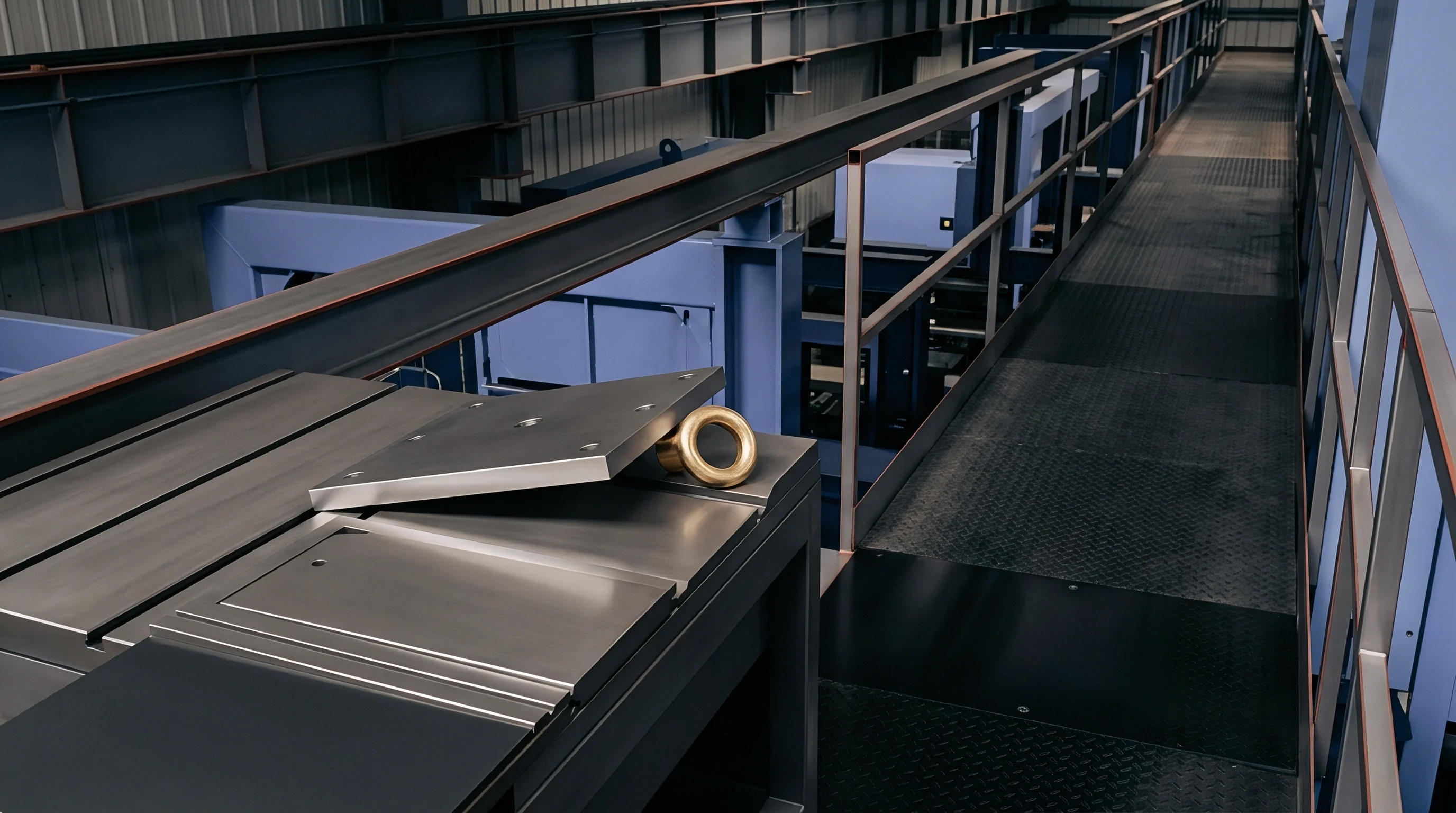
Physical marking must occur prior to equipment installation at the supplier facility. Custom steel stampings carrying the buyer legal name, asset registry identifier, and drawing control reference should be deeply cut into non-wearing mould plates. Surface stickers, paint marks, or removable tags offer zero evidentiary value during contested enforcement actions.
Tooling title claims fail in domestic courts when equipment serial numbers on physical dies do not match invoice schedules exactly.
Documentation Dossiers for Enforcement Success
Securing a physical seizure order requires assembling an unassailable ownership dossier. Judges reject applications that rely on informal purchase orders or unverified email correspondence. The court demands a unbroken chain of custody and clear proof of consideration paid.
- Bilingual Master Tooling Agreement executed under PRC law, explicitly stipulating title retention with the buyer regardless of physical custody or location.
- Individual Equipment Schedule identifying mould dimensions, cavity counts, gross weight, serial markings, and exact physical coordinates inside the target plant.
- Official PRC Value-Added Tax Invoice listing the precise tooling description, supplier corporate name, and explicit itemized pricing matching bank payment receipts.
- Bank Remittance Documentation showing full payment settlement from the buyer account directly to the supplier corporate bank account registered on the invoice.
- On-Site Asset Audit Record carrying photos of the installed die set with clearly visible engraved serial numbers and timestamped plant floor locations.
Suppliers routinely attempt to block execution by asserting that the dies on the factory floor are proprietary replacements constructed at their own expense rather than the customer original equipment.


Injunction
Emergency Relief for Unauthorized Tooling Usage
Behavioral orders under SPC Interpretation 2018 Number 24 target unauthorized commercial exploitation of buyer-owned tooling assets. When a supplier uses custom injection moulds to manufacture knock-off products for domestic e-commerce channels, physical property preservation alone fails to stop immediate market infringement if the court leaves the moulds on-site under a administrative freeze. The buyer requires a behavioral injunction prohibiting plant staff from running the machinery.
Emergency rulings arrive fast. Judges demand clear proof. Securing an injunction requires establishing three distinct conditions: clear legal ownership of the intellectual property or physical tooling, irreparable harm caused by ongoing unauthorized operation, and a balance of hardship favoring the applicant.
Irreparable harm exists when unauthorized production compromises strict product safety certificates, leaks proprietary designs before global product launches, or creates market saturation with inferior sub-specifications.

What Evidence Converts Property Preservation into Immediate Tooling Execution?
Converting a property preservation order into an immediate physical extraction order requires proving that leaving the tooling on supplier premises poses an unacceptable risk of destruction or conversion. Courts prefer leaving heavy industrial equipment on-site under court seals due to transport logistics. Moving tooling to a neutral warehouse demands compelling physical evidence of supplier non-compliance.
Evidentiary submissions must demonstrate that the supplier has tampered with existing judicial seals, attempted to move the equipment off-site, or threatened to destroy internal cavities. Notarized evidence collected by local PRC investigators showing late-night production runs on locked tooling provides immediate grounds for judges to order police-assisted equipment extraction.
Whether regional courts will consistently apply behavioral injunction mechanisms to prevent third-party tooling usage when the supplier claims a statutory lien over equipment for unpaid operational overhead remains an open procedural question.

Clock

Execution Timelines and Enforcement Mechanics
Timelines for judicial preservation follow strict legal deadlines established by the Civil Procedure Law. Understanding the exact sequence of judicial actions prevents operational gaps during critical supplier disengagements. The process moves from initial application through judicial review, security verification, execution transfer, and physical enforcement.
Local enforcement officers execute. Security checks prevent asset removal. Delays compromise tooling recovery.
The execution timeline moves through six distinct phases once application documents enter court custody:
- Filing of pre-litigation emergency application along with litigation guarantee insurance documentation at the competent People’s Court.
- Judicial review of evidence package and approval of preservation security by the presiding judge within 48 hours under Article 104 rules.
- Issuance of formal Property Preservation Ruling (Cai Chan Bao Quan Cai Ding Shu) and immediate internal transfer to the Court Enforcement Bureau.
- Enforcement officers dispatch to the target facility within 5 days of ruling issuance, accompanied by applicant representatives and logistics specialists.
- Physical application of court seals, chain locks, and formal execution notices onto the tooling or immediate extraction onto flatbed transport trucks.
- Filing of formal litigation or arbitration by the applicant within 30 days of preservation execution to maintain judicial freezes throughout the dispute.
| Execution Stage | Statutory Window | Practical Field Timeframe | Primary Risk Factor Delay |
|---|---|---|---|
| Application Review & Bond Audit | 48 hours (Emergency) | 2 to 4 business days | Insurance policy underwriting verification bottlenecks |
| Ruling Transfer to Enforcement Bureau | Immediate | 24 to 48 hours | Internal court bureaucratic queue allocation |
| Field Execution & On-Site Seizure | 5 days from ruling | 3 to 7 business days | Local plant security resistance or locked gates |
| Post-Preservation Action Launch | 30 calendar days | Filing on day 15 to 20 | Drafting arbitral claims across international forums |

Enforcement Bureau Dynamics and Logistics Management
Enforcement bailiffs operate with statutory authority under Article 114 of the Civil Procedure Law, which penalizes non-compliant respondents with corporate fines, asset seizures, and criminal detention for corporate representatives who obstruct court execution. Bailiffs arrive unannounced at supplier facilities to preserve evidence and prevent equipment relocation.
Applicants must supply logistics support for physical seizures. Courts do not possess flatbed trucks, heavy-lift cranes, or secure storage warehouses. The applicant arranges riggers, transport logistics, and neutral storage facilities in advance, holding teams on standby within 30 minutes of the factory gates.
When bailiffs authorize physical removal, the applicant logistics crew extracts the equipment under direct judicial supervision.
Preparation of transport logistics before court bailiffs step onto the factory floor determines whether physical extraction completes within a single operational day.


Settlement

Counter-Guarantees and Asset Release Mechanics
Article 107 of the Civil Procedure Law permits a respondent supplier to apply for the release of preserved property by providing a sufficient counter-guarantee. Counter-guarantees (Fan Dan Bao) must match or exceed the monetary value of the preservation order or the total claim value in the underlying lawsuit. Courts accept cash deposits paid into judicial accounts or irrevocable bank guarantees issued by accredited financial institutions.
Counter guarantees unlock equipment. Suppliers frequently seek counter-guarantee releases when preserved tooling blocks production lines for non-disputing commercial customers. A supplier paying a cash counter-guarantee to the court gets the judicial seals removed, allowing plant managers to resume production while monetary disputes proceed through trial.
Receiving cash collateral inside court registry accounts provides the foreign buyer with ultimate recovery security, transforming a difficult physical asset recovery struggle into a straightforward financial claim against deposited funds.
Exit Planning and Tooling Recovery Strategy
Executing an exit from a compromised domestic supplier requires integrating property preservation tools directly into supply chain wind-down schedules. Buyers must avoid premature notification of contract termination before securing property preservation rulings and organizing local logistics teams. Premature termination leads suppliers to hide custom dies, disassemble specialized tooling components, or file preemptive domestic court actions alleging unpaid development expenses.
Orderly disengagement requires parallel preparation of court filings, insurance bond issuing, freight transport staging, and alternate supplier qualification. Securing the preservation order ensures the buyer maintains operational leverage during final commercial settlement negotiations or arbitral proceedings.
Contract drafting that includes explicit tooling access rights, pre-agreed valuation formulas for bond calculations, and clear asset labeling obligations establishes the foundation for rapid judicial execution when supply relationships break down.