Managing Contributory Infringement Risks for Overseas Component Procurement in China
Managing contributory patent infringement in China requires CNIPA clearance searches, non-staple tooling control, and PRC-governed indemnities.


Fault
Procuring custom fabricated parts in China exposes foreign buyers to joint tort liability under Article 1169 of the PRC Civil Code when those components directly facilitate patent infringement by an assembler or downstream vendor. Article 21 of the Supreme People’s Court Provisions on Several Issues Concerning the Application of Law in the Trial of Patent Infringement Disputes (II) defines contributory liability through two objective tests: actual or constructive knowledge of the underlying patent, and the provision of raw inputs, components, or intermediate sub-assemblies specifically tailored for the patented technical solution without substantial non-infringing uses. Overseas buyers who furnish specifications, engineering drawings, or gerber files to local contract manufacturers create direct paper trails that PRC intellectual property courts interpret as active inducement or contributory assistance.
The Beijing Intellectual Property Court and intermediate courts in Shenzhen treat component purchasers as co-defendants when supply contracts indicate clear commercial direction. A foreign entity sending a computer-aided design model to a machine shop in Dongguan does not remain insulated behind cross-border purchase orders. Chinese courts review technical exchanges on WeChat, email attachments containing dimensional tolerances, and statements of work to establish whether the procurement team knew of existing utility model or invention patents registered in China.
A component lacking non-infringing utility creates an irrebuttable presumption of contributory fault once the patent registration reaches public gazette publication.
Contributory liability under Chinese jurisprudence does not require proof of conspiratorial meetings or formal partnership agreements. The legal test evaluates whether the component represents an indispensable element of the patented claim, and whether the foreign buyer acted with objective awareness of the patent scope. Article 1169 treats aiding and abetting identically with direct execution, rendering the overseas component procurer jointly and severally liable for damages alongside the domestic manufacturing entity.

Judicial Standards for Contributory Liability
Judicial evaluations of contributory fault center on three distinct evidentiary layers examined during preliminary hearings:
- Documented Engineering Prompts reveal direct instructions to replicate patented dimensions, proprietary interfaces, or patented circuit topologies.
- Commercial Exclusivity Covenants prevent the component supplier from selling the specific part to unrelated commercial third parties.
- Cease And Desist Notifications served on overseas headquarters establish constructive knowledge across the international supply chain.
Courts reject defenses based on overseas consumer end-use. If manufacturing, testing, or intermediate assembly occurs inside the borders of the People’s Republic of China, jurisdictional authority binds the contracting buyer. Civil damages escalate quickly.
Where bad faith or intentional inducement is proven under Article 71 of the PRC Patent Law, tribunals apply punitive multipliers between one and five times the calculated illegal gains or royalty baselines.
A buyer who supplies technical drawings assumes the full burden of clearing the Chinese patent register before releasing production tooling.
Die
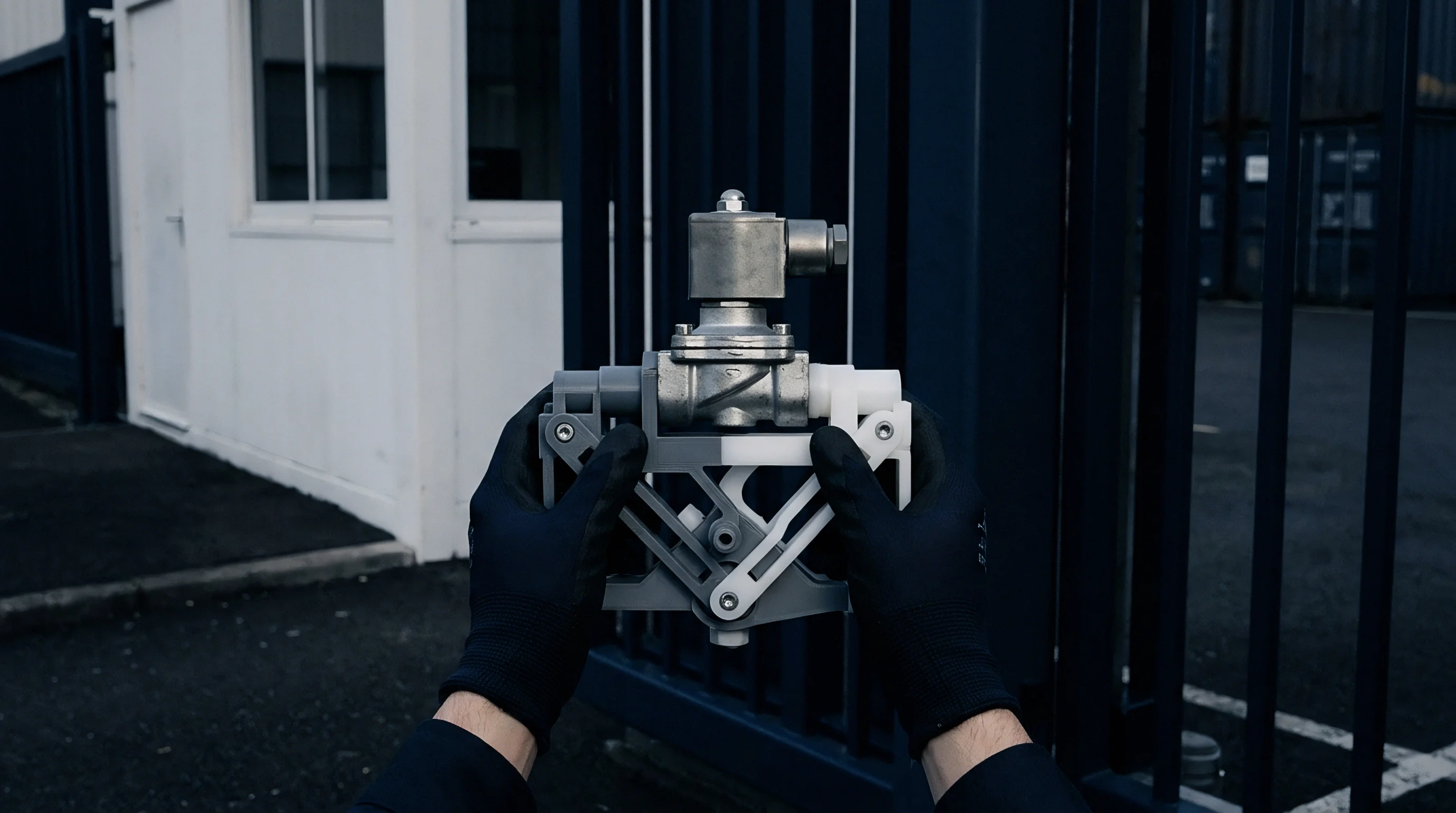
Tooling determines liability. The physical design of an injection mould, die-casting tool, or stamping matrix establishes whether a component qualifies as a staple commercial item or a dedicated infringing accessory. Under Chinese patent enforcement doctrine, staple items carry general commercial applications across multiple industries and do not trigger contributory infringement when sold without instruction.
A custom casting die, fabricated strictly to execute a patented structural rib or latched mechanism, removes the defense of alternative commercial utility.

Which Components Trigger Direct Accessory Liability?
PRC courts distinguish standard fasteners, resistors, and basic extruded profiles from specialized stampings, custom heat sinks, and masked microcontrollers. When a component operates solely within the claim boundaries of a PRC patent, the manufacturer and the sourcing buyer forfeit the staple-article safe harbor.
| Component Classification | Physical Characteristics | Substantial Alternative Utility | Contributory Liability Exposure |
|---|---|---|---|
| Standard Catalog Hardware | Off-the-shelf screws, standard DIN rails, commercial diodes | Broad industrial application across unrelated apparatus | Negligible unless packaged with specific assembly guides |
| Modified Platform Sub-Assemblies | Standard electric motors with proprietary mounting brackets | Secondary industrial machines with slight re-machining | Moderate, contingent on direct assembly documentation |
| Dedicated Molded Enclosures | Custom injection housings matching patented contours | None outside the targeted end assembly | Severe joint liability under SPC Judicial Interpretation II |
| Pre-Programmed Gate Arrays | System-on-chip units flashed with dedicated control routines | Zero functional operation outside the patented system | Strict accessory infringement with joint financial exposure |
The distinction between dedicated tooling and generic machinery dictates judicial outcomes in intermediate people’s courts. In electrical and mechanical disputes, judicial appraisal centers inspect tooling geometries and factory logs to evaluate whether the physical apparatus can produce parts for non-infringing assemblies and confirm production timelines. If the die contains cavities specifically mapped to patented utility model claims, the procurement contract proves complicity.
A dedicated tooling asset holding zero alternative utility exposes the purchaser to full joint damages under PRC Civil Code Article 1169.
Consider a structured assessment of procurement exposure for a high-volume overseas buyer sourcing custom sub-assemblies. The worked construction assumes a batch order of 100,000 custom injection-molded hinge assemblies produced in Zhejiang Province for an export brand owner. Each component costs 4.20 US dollars ex-factory, representing a landed procurement commitment of 420,000 US dollars.
The domestic patent holder files an infringement complaint with the Ningbo Intermediate People’s Court, targeting both the local injection molding factory and the overseas buyer as joint tortfeasors.
The dispute centers on a utility model patent covering an internal dampening chamber inside the hinge. The foreign buyer designed the internal cavity, commissioned the specialized four-cavity steel mould for 48,000 US dollars, and retained tooling title. The judicial appraisal panel determines that the tooling cannot stamp standard hinges without destroying the internal dampening channels.
Consequently, the component possesses zero substantial non-infringing utility.
Under the statutory framework of Article 71 of the PRC Patent Law, the court calculates damages using the patent holder’s lost operating profits or the infringer’s gross margins. Assuming an established market price of 8.50 US dollars per completed unit and a verifiable gross margin of 28 percent for the patentee, the economic baseline represents 238,000 US dollars in lost profits across the 100,000-unit production run. If the court establishes that the foreign buyer had notice of the patent through international PCT publications or prior market presence, the tribunal can find willful joint infringement.
Imposing a conservative double punitive multiplier brings the joint damages figure to 476,000 US dollars, exceeding the total raw value of the component manufacturing contract.

Tooling Escrow and Secondary Utility Verification
Managing the physical status of tooling assets protects the overseas buyer from unintentional contributory exposure. Tooling agreements must document non-infringing structural options or modular inserts. The physical structure of production dies permits modular design choices that affect contributory liability determinations:
- Interchangeable Core Inserts allow injection moulds to switch between patented and unpatented internal cavity configurations within four production hours.
- Bespoke Secondary Machining Protocols reserve claim-specific surface cuts for downstream facilities located outside Chinese jurisdiction.
- Tooling Ownership Logs confirm physical custody, serial identification, and prevent unauthorized third-party batch runs for local gray markets.
When overseas buyers abandon tooling or omit strict serial registration, local workshops often continue running parts to amortize setup costs, distributing specialized items directly into domestic supply channels. The overseas entity then finds its name attached to domestic infringement actions initiated against local trading companies.
Defense arguments before intermediate tribunals typically center on claims that CAD models and fabrication timelines were delivered without disclosure of local patent restrictions.


Clearance
Freedom to operate evaluations conducted strictly in Western jurisdictions leave fatal blind spots in Chinese manufacturing centers. A component deemed clear under US or European patent classifications may infringe an unexamined utility model patent registered with the China National Intellectual Property Administration (CNIPA). Chinese utility model patents undergo preliminary examination without automatic substantive novelty assessments, entering the public registry in twelve months.
Sourcing agents encounter thousands of localized utility model filings held by competitors, former joint venture partners, or opportunistic regional manufacturers.
Clearance workflows must audit China’s domestic patent registry before releasing purchase orders. The analysis requires searching Latin-script designations, transliterated brand names, specific International Patent Classification codes, and Chinese-character terminology across technical claim sets.
| Search Parameter | Domestic Invention Patents | Domestic Utility Models | Design Patents |
|---|---|---|---|
| Examination Standard | Substantive examination for novelty, inventiveness, and practical utility | Formalities review and preliminary examination without substantive audit | Formalities check and visual novelty review against prior publications |
| Time to Grant | Twenty-four to thirty-six months from filing date | Six to twelve months from filing date | Five to eight months from filing date |
| Enforcement Longevity | Twenty years from initial filing date | Ten years from initial filing date | Fifteen years for filings after June 2021 |
| Infringement Threat Level | High technical certainty, heavy commercial damages | Extreme proliferation, fast injunctions, weaponized filings | High border seizure risk for customized external shapes |
| Data reflects CNIPA examination workflows and the 2021 Fourth Amendment to the PRC Patent Law. | |||
Customs recordation represents the operational frontline where contributory infringement paralyzes international logistics. Under the Regulations of the People’s Republic of China on Customs Protection of Intellectual Property Rights, domestic patent owners register their granted patents directly with the General Administration of Customs (GACC).
Customs authorities operating under GACC recordations seize targeted component shipments within seventy-two hours of export declaration upon bond posting.
When an overseas buyer procures custom parts, the domestic freight forwarder submits the export declaration to Chinese customs. If the component matches the structural drawings or images filed in the GACC database, customs officers hold the cargo and dispatch detention notices to both the exporter of record and the rights holder. The rights holder posts a nominal financial bond, typically capped at 100,000 RMB, to formalize a twenty-working-day administrative detention.

Border Detention Mechanics
Export clearance halts upon cargo detention, starting a statutory countdown. Resolving customs interdictions involves specific administrative responses:
- Administrative Counter-Bonds filed under Article 24 of the Customs IP Regulations allow the release of goods covered by utility model or design patents upon posting cash security equal to the declared cargo value.
- Patent Evaluation Reports obtained from CNIPA establish the underlying validity or vulnerability of unexamined utility model patents relied upon by the detaining party.
- Administrative Civil Conversion occurs when the rights holder files a formal patent infringement lawsuit in an intermediate people’s court within the statutory twenty-day window.
Should the overseas buyer fail to secure a release or invalidate the registered utility model, the cargo faces destruction at the exporter’s expense, accompanied by administrative fines reaching thirty percent of the declared export valuation.
Unexamined utility model patents recorded with Chinese customs cause cargo abandonments that destroy international delivery commitments.
Covenant
Western-style intellectual property warranties drafted under foreign governing law fail to insulate procurement operations in Chinese legal proceedings. Standard contractual language affirming that goods will be delivered free of rightful claims provides little defense before a PRC tribunal applying Article 1169 of the Civil Code. Chinese courts adjudicate tort liability according to territorial fault principles rather than private contractual indemnities.
A foreign corporate entity cannot contract out of statutory contributory tort duties through a boilerplate indemnification clause executed under foreign law.

What Language Defeats Upstream Knowledge Presumptions?
Effective procurement agreements address evidentiary rebuttals rather than abstract promises. Under PRC evidence rules, an overseas buyer must establish objective diligence to defeat the judicial inference of knowing assistance. Contracts drafted under PRC law and designating Chinese courts or regional arbitration commissions, such as CIETAC or SCIA, carry immediate procedural weight.
Specific contractual provisions must govern technical representations. The agreement must formally assign the duty of freedom-to-operate clearance within mainland China to the supplier, require the delivery of an unredacted search report, and obligate the supplier to maintain dedicated production logs.
A contract clause mandating verified CNIPA search disclosures establishes documentary evidence of commercial good faith before intermediate people’s courts.
Contractual warranties must address the allocation of administrative and judicial liabilities arising from dedicated components. When a supplier affirms the non-infringing status of a sub-assembly, the clause must establish immediate financial remedies enforceable against domestic bank accounts:
The supplier represents and warrants that the components, tooling, production processes, and associated manufacturing instructions supplied under this agreement do not infringe any patent, utility model, design, or trade secret registered in the People’s Republic of China. In the event that customs authorities detain components or a third party asserts patent infringement claims before an administrative bureau or people’s court, the supplier shall deposit a cash indemnity bond into an escrow account within five business days, bear all expenses associated with administrative counter-bonds, and hold the buyer harmless from all damages, legal fees, and operational losses resulting from such claims.
This provision binds the domestic supplier to the immediate procedural realities of customs detentions and court proceedings. Without an express escrow requirement, indemnification commitments remain theoretical recovery rights requiring years of cross-border litigation while cargo remains seized at the wharf.
The standard procurement agreement incorporating PRC-governed indemnities and domestic escrow mechanisms shifts financial risk from the foreign buyer to the domestic operating entity.

Severance
Ending a relationship with a Chinese component manufacturer requires operational precision to avoid residual infringement exposure. Sourcing changes frequently trigger retaliatory IP litigation. When an overseas company moves production to a secondary workshop or transfers sub-assembly operations to another country, the displaced supplier holds technical drawings, production tooling, and historical component designs.
Displaced vendors frequently file utility models or design patents based on the foreign buyer’s unpatented product iterations, using those registrations to paralyze subsequent export shipments.
Tooling recovery must proceed concurrently with contract termination. If the original supplier retains injection moulds or stamping dies, that vendor can manufacture identical parts for unauthorized distribution, creating fresh contributory exposure for the brand owner whose trademarks or part numbers appear on the castings. The buyer must physically audit the factory floor, verify the serial numbers of retrieved tooling, and take custody of all specialized dies before serving the termination notice.
Chinese contract law requires formal settlement agreements specifying the destruction of technical documentation, the deletion of digital CAD files, and the transfer of any registered utility models or design rights developed during the commercial engagement. Where the domestic supplier registered manufacturing patents covering tooling adaptations, the foreign party must secure an absolute assignment recorded with CNIPA prior to final payment release.
Tax clearance and final accounts settlement link directly to intellectual property clean-up. Outstanding manufacturing payables represent the foreign buyer’s primary leverage to extract patent assignments and tooling releases. Releasing final settlement funds before retrieving production dies and validating the patent register surrenders commercial control.
Whether regional Chinese intermediate courts will continue enforcing unexamined utility model detentions against foreign-owned tooling in the face of ongoing international patent law reforms remains an unresolved operational dilemma.