Evidentiary Preservation Protocols for Electronic Trade Secrets in Chinese Intermediate Courts
Digital evidence preservation in Chinese Intermediate Courts requires notarized write-blocked disk imaging and strict cryptographic chain of custody records.


Sieve
Electronic trade secret disputes in Chinese Intermediate Courts hinge on securing unalterable digital evidence before the defendant gets wind of the lawsuit. Under Article 32 of the PRC Anti-Unfair Competition Law, a rights holder establishes a prima facie civil claim by showing that its technical or commercial information meets the statutory definition of a trade secret, that the defendant had access, and that the defendant’s proprietary assets are substantially identical. Proving the secret nature of technical data takes both documented security measures and definitive digital proof that the secret existed in a specific state at a verified time.
Internal corporate server logs, unnotarized git commits, and simple export files rarely survive cross-examination in Chinese Intermediate Intellectual Property Divisions. Defense counsel routinely points out that administrative access makes internal logs vulnerable to retroactive timestamp edits or source file modifications. Admissible pre-litigation collection requires formal digital forensic capture under the supervision of a Chinese notary public or through validated cryptographic deposit methods.
Forensic disk imaging captures bit-stream copies of target hardware, including unallocated disk space, system registries, and swap files. Standard protocols call for a primary raw bit-stream image accompanied by an expert witness affidavit that details the forensic machine configuration, write-blocker serial numbers, and exact environmental parameters during extraction.
Generating cryptographically secure hashes immediately upon image creation establishes file integrity. Functions such as SHA-256 convert disk image data into unique alphanumeric strings. If even a single byte inside the image changes later, the resulting hash shifts entirely, making tampering obvious.
The Supreme People’s Court rules on intellectual property evidence dictate that digital records missing verifiable hash records fail to prove technical originality.
The table below summarizes primary electronic evidence preservation channels recognized across Intermediate Intellectual Property Courts in cities such as Beijing, Shanghai, Guangzhou, and Shenzhen.
| Preservation Channel | Execution Mechanism | Verification Standard | Court Acceptance Rate | Primary Vulnerability |
|---|---|---|---|---|
| Notarial Screen Capture and Export | Notary public observes local screen operations and signs physical certificate | Notary seal and physical log of manual keystrokes | High for basic web pages and email interfaces | Excludes unallocated storage space and system metadata |
| Forensic Disk Bit-Stream Mirroring | Write-blocked physical extraction creating raw E01 or DD image files | Dual SHA-256 hash match against physical source drive | Absolute for hardware, local servers, and firmware repositories | Requires direct physical or administrative machine access |
| Third-Party Timestamp Deposit | Automated cryptographic hash deposit with National Time Service Center alignment | Root certificate verification and continuous block hashing | High for cloud repositories and continuous software builds | Fails if local source environment was corrupted prior to hashing |
| Court Evidence Preservation Order | Judicial execution officers enforce ex parte physical seizure and drive cloning | Court clerk chain of custody seal and forensic examiner signature | Conclusive across all Intermediate IP Courts | Demands substantial financial guarantee and explicit initial proof |
Chinese courts prioritize formal notarial certificates under Article 69 of the PRC Civil Procedure Law. A notary public oversees the extraction, verifies the physical hardware, logs network IP addresses, and seals the storage media in tamper-evident packaging. That notarized dossier turns raw electronic records into high-weight documentary evidence.
When choosing a notary office, foreign litigants need to spell out the exact technical steps for the notary to record. Notaries are not forensic computing specialists. Providing clear, written technical instructions avoids omitting critical hardware identifiers, network MAC addresses, or environment variables during extraction.
Preserving source code repositories, vector CAD drawings, and chemical manufacturing formulas requires isolating target machines from public networks before running forensic tools. Plugging a drive into an active network during capture risks background updates or cloud sync, which alters system timestamps and undermines the notary’s certificate.
An initial filing stumbles when foreign software developers rely on Western electronic signature logs without securing local Chinese notarization. Overseas digital affidavits require consular legalization or Hague Apostille certification to enter Chinese court records. Uncertified foreign logs are routinely tossed out during pre-trial evidence exchange.
A non-disclosure agreement clause requiring immediate local forensic mirroring upon suspicion of exfiltration shifts digital extraction costs directly onto breaching domestic contractors.
Chain
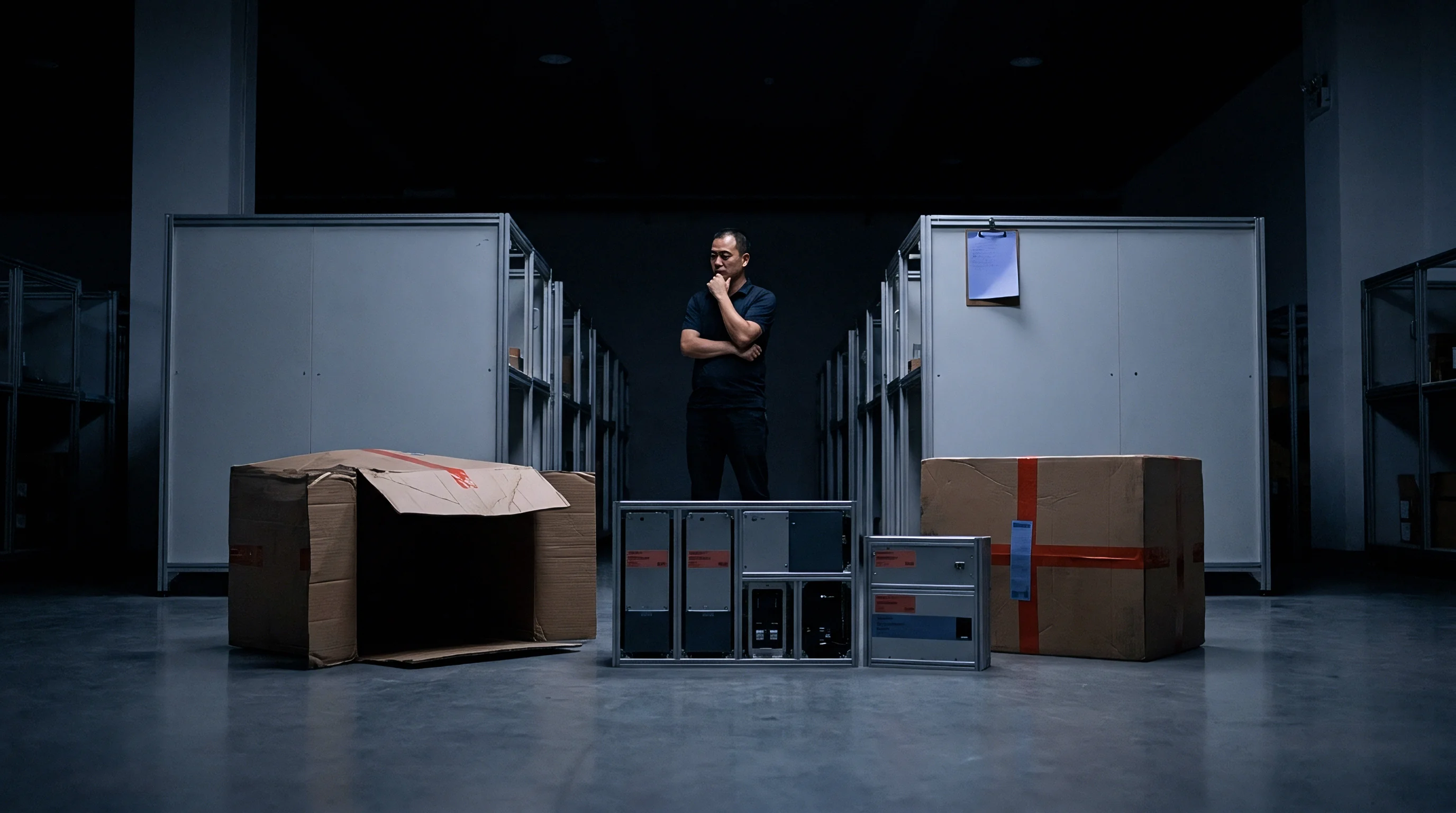
An unbroken chain of custody determines whether an Intermediate Court accepts digital records during technical cross-examination. Collection protocols must track everyone who handles physical drives, access keys, or virtual storage nodes from initial capture right up to trial. A single gap in machine access logs or physical custody documentation gives defense counsel room to challenge file integrity.
Judicial blockchain platforms run by Intermediate Courts integrate timestamping authorities, certified notary servers, and forensic laboratories into unified deposit channels. Uploading binary file hashes directly to court-sanctioned blockchain nodes creates a tamper-evident record of the file’s exact state and timestamp. Chinese evidence rules explicitly acknowledge the authenticity of data preserved through verified judicial blockchain infrastructure.
Deployment details influence how courts weigh electronic timestamps. Judges verify root authority origin before accepting hash records, and using timestamps synchronized with the National Time Service Center offers solid legal proof of timing accuracy.
- System Cleanliness Verification requires formatting the forensic workstation drive using DOD 5220.22-M standards and logging a clean status certificate before connecting to the target system.
- Write-Blocker Engagement requires installing hardware write-blockers between the target drive and the examiner system to block OS-level file modifications during connection.
- Cryptographic Hashing Generation requires generating SHA-256 hashes immediately before imaging and comparing them against post-image outputs.
- Physical Casing Enclosure requires placing original drives and destination media in anti-static, tamper-evident forensic bags sealed with numbered, notarized security tape.
- Log Document Generation requires completing a standardized transfer form that records serial numbers, user identities, physical addresses, and exact timestamps for every transfer.
Isolating trade secret files from everyday operational code calls for dedicated storage infrastructure. Mixing proprietary formulas into general enterprise drives weakens claims of protective measures under AUCL Article 9. Courts examine internal security controls to verify that trade secrets were restricted to essential personnel through strict access credentials, hardware locks, and encrypted folder structures.
Contractual non-disclosure commitments missing granular access permissions fail the statutory test for reasonable confidentiality measures under Chinese trade secret law.
Foreign enterprises storing IP on international cloud servers face specific jurisdictional hurdles in Chinese Intermediate Courts. Moving electronic files out of China for litigation review risks violating cross-border data rules under the PRC Data Security Law and Personal Information Protection Law. Because local courts reject evidence derived from unlawful data exports, litigants must perform forensic extractions and notary verifications within mainland Chinese borders.
Leaving hardware drives unsealed while transporting them from a factory to the notary public ruins the entire chain of custody.


Wedge
When trade secrets face immediate deletion or alteration by a departing employee or domestic competitor, plaintiffs petition Intermediate Courts for evidence preservation orders under Article 84 of the PRC Civil Procedure Law. This operates as an ex parte enforcement action: court officials, accompanied by execution officers and technical experts, enter the defendant’s premises unannounced to seal hardware, copy server databases, and secure physical tooling.
Courts demand strict procedural compliance before issuing pre-litigation preservation orders. Plaintiffs must prove that evidence is at imminent risk of destruction or loss, which would jeopardize civil litigation. Applications must specify exact target locations, hardware specifications, and descriptions of the requested digital files.

When Does an Ex Parte Order Grant Computer Access?
Judges grant direct computer access when an applicant presents concrete evidence that the defendant holds confidential files, alongside proof that standard discovery will fail. Courts require applicants to post cash bonds or court-approved litigation insurance before granting orders. These bonds protect defendants against business disruption costs if the underlying claim falls flat.
Judges set bond amounts based on the defendant’s operational scale, target hardware values, and potential disruption costs. The worked calculation below shows how financial guarantees are structured across Chinese Intermediate Intellectual Property Courts.
Assume an application targets a competitor’s manufacturing server infrastructure containing allegedly stolen CAD schematics. The line generates RMB 40,000,000 in annual output. The plaintiff asks for a full server shutdown, physical hard drive removal, and on-site forensic disk cloning over a forty-eight hour window.
The Intermediate Court calculates the required bond using three risk factors. First, operational downtime costs for two days come to RMB 220,000 per day based on gross margin reports. Second, expert witness and court forensic execution expenses total RMB 60,000.
Third, potential equipment damage and server restoration funds add RMB 100,000. The court sets the pre-litigation bond at RMB 600,000, payable in full to the court’s escrow account via cash deposit or irrevocable bank guarantee before execution.
| Court Jurisdiction | Minimum Cash Deposit Share | Litigation Insurance Acceptance | Average Execution Lead Time | Execution Success Rate |
|---|---|---|---|---|
| Beijing Intellectual Property Court | 30 percent of total bond value | Accepted from court-approved insurers | 48 to 72 hours post-approval | 88 percent |
| Shanghai Intellectual Property Court | 20 percent of total bond value | Accepted with property counter-guarantee | 24 to 48 hours post-approval | 92 percent |
| Guangzhou Intellectual Property Court | 50 percent of total bond value | Accepted for established corporations | 48 to 96 hours post-approval | 81 percent |
| Shenzhen Intermediate IP Division | 25 percent of total bond value | Fully accepted via automated platforms | 24 to 48 hours post-approval | 94 percent |
During execution, officers often run into anti-forensic tactics like remote wiping software, encrypted drive partitions, or sudden physical destruction of hardware. Chinese civil law authorizes judges to fine corporate officers up to RMB 1,000,000, detain non-compliant personnel, and draw adverse evidentiary inferences against defendants who tamper with devices during execution.
Establishing identity between stolen files and corporate assets requires precise search queries for the execution team. Broad requests for all source code or complete financial registries get rejected as fishing expeditions. Requests need to target specific directory names, file extensions, unique variable names, or internal project code words.
When execution teams arrive, domestic suppliers frequently object that local drives contain third-party customer data and argue that cloning violates commercial privacy.

Sift
Extracted files shift from raw digital evidence to technical proof through judicial appraisal, or sifa jianding. Intermediate Courts lack in-house capability to evaluate complex software code, semiconductor layouts, or chemical formulas. They delegate comparative technical assessments to external, registered appraisal institutions chosen by court lottery or mutual agreement.
Judicial appraisal agencies follow strict statutory evaluation rules. The panel receives sealed forensic disk images directly from court clerks, compares secret information against public technical records to confirm non-public status, and performs side-by-side code comparisons, circuit mapping, or chemical analysis to establish identity.
Cross-examining appraisal panel findings requires thorough technical prep. Litigants retain expert advisors to audit methodologies, diff outputs, and database schema mappings for procedural flaws or wrong technical thresholds. Spotting flawed metrics or uncalibrated forensic tools in a report offers solid grounds to challenge judicial findings.
- Non-Public Technical Analysis demonstrates that technical secrets were not generally known or easily accessible within the industry before the alleged infringement.
- Similarity Assessment Metrics establishes structural, functional, or literal identity between preserved defendant code and plaintiff trade secrets.
- Access Path Verification traces network logs, physical badge records, and USB device logs to show how defendants accessed confidential files.
- Commercial Valuation Determination quantifies R&D investments and calculates competitive advantages gained through unauthorized trade secret use.
Protecting proprietary information during court proceedings requires seeking protective orders under Article 27 of the SPC Judicial Interpretation on Trade Secrets. Without them, introducing technical secrets into court filings exposes proprietary data to defense counsel, corporate executives, and competitors during cross-examination.
Court-issued confidentiality orders restrict trade secret viewings to qualified outside counsel and accredited forensic experts, prohibiting access by target firm operational executives.
Judges enforce confidentiality orders by setting up controlled viewing rooms, barring electronic copying, disconnecting review terminals from networks, and requiring counsel to sign personal non-disclosure undertakings with financial penalties. Violating these terms constitutes a severe breach of PRC civil law, triggering judicial sanctions and potential criminal liability.
A central question remains with foreign cloud-hosted repositories: how can an Intermediate Court force a reluctant foreign corporate owner to grant administrative access to offshore cloud servers during judicial appraisal without breaching foreign server privacy laws?

Tally
Converting preserved digital evidence into financial remedies requires tying trade secret theft directly to defendant profits or plaintiff losses. Under Article 17 of the Anti-Unfair Competition Law, successful plaintiffs recover actual economic losses caused by infringement. Where those are hard to quantify, courts award damages equal to the infringer’s illicit profits, plus reasonable legal and preservation expenses.
Preserved digital evidence underpins these financial calculations. Accounting extractions, ERP logs, sales tax receipts, and shipping manifests seized during preservation reveal actual sales volumes, unit margins, and delivery schedules. When defendants refuse to produce internal books, courts shift the burden of proof, adopting the plaintiff’s financial estimates grounded in seized shipping logs or public tax filings.
| Damages Metric | Evidentiary Requirement | Preservation Basis | Statutory Limits | Punitive Multiplier |
|---|---|---|---|---|
| Plaintiff Commercial Loss | Documented reduction in market share, lost unit sales, and price depression | Internal historical sales databases and canceled client contracts | No statutory cap; verified actual loss | 1x to 5x for intentional infringement |
| Infringer Illegal Gains | Extracted accounting ledgers, ERP sales logs, and bank transaction histories | Court-ordered evidence preservation of internal server software | No statutory cap; verified profits earned | 1x to 5x for willful infringement |
| Statutory Discretionary Award | Proof of valid trade secret status, infringement existence, and value metrics | Notarized technical dossiers and judicial appraisal reports | Up to RMB 5,000,000 per cause of action | Not applicable to statutory awards |
| Preservation and Legal Costs | Invoices, notary fee receipts, forensic consultant bills, and legal retainer contracts | Physical payment vouchers and bank transfer confirmations | Fully recoverable if deemed reasonable | Not subject to punitive multipliers |
Punitive damages kick in when plaintiffs prove willful, malicious theft under aggravating circumstances. Electronic communications showing deliberate espionage, wiping software used to erase digital trails, or organized theft trigger statutory multipliers ranging from one to five times base damages.
A solid preservation strategy captures financial evidence alongside technical files. Securing source code while failing to grab customer databases, price lists, and operational ledgers leaves plaintiffs unable to substantiate profit claims, forcing reliance on statutory damages capped at RMB 5,000,000.
Preserving documentation of evidence collection fees, notary charges, forensic consulting invoices, and legal retainers enables courts to award full cost recovery on top of primary infringement damages.
Securing an enforceable financial judgment depends on executing pre-litigation asset freezes at the same time as digital evidence preservation applications.